A computerized maintenance management system (CMMS) is a software system that holds equipment records, schedules service, and tracks every repair from the first request to the signed-off work order.
The point of a CMMS is one shared record per machine. The shop sees what service is due, what was done, and which machines keep coming back. Clue is a CMMS built for construction fleets, where machines run on engine hours and move between job sites every week.
Key Takeaways
- A CMMS puts work orders, service schedules, inspections, parts and machine history in one record.
- The U.S. Department of Energy (DOE) estimates preventive maintenance saves 12 to 18 percent over a reactive program.
- DOE also reports that more than 55 percent of maintenance at the average facility is still reactive.
- A CMMS covers maintenance. An enterprise asset management (EAM) system covers the whole asset life.
- The software records and schedules work. A mechanic still diagnoses and repairs the machine.
CMMS vs. Spreadsheets and Paper Logs
A CMMS and a spreadsheet both hold a list of machines, but only one of them connects a machine to the work done on it. A spreadsheet stores what someone typed. A CMMS calculates what is due from live meter readings and keeps the repair history attached to the asset. That difference shows up the week a machine changes hands between job sites.
| Dimension | CMMS | Spreadsheets and paper logs |
|---|
| Service due dates | Calculated from live meter readings | Typed in and updated by hand |
| Work order history | Attached to the machine record | Spread across files and folders |
| Inspection findings | Open a work order automatically | Re-keyed by someone, or lost |
| Parts and costs | Linked to the work order that used them | Tracked apart from the repair |
| Who can see it | The whole shop, including the field | Whoever has the file open |
| Audit trail | Time-stamped for each entry | Depends on the person |
What CMMS Stands For
CMMS stands for computerized maintenance management system. The name describes software that helps a team plan, assign and record maintenance across its equipment.
Teams use a CMMS to set service schedules, assign work, and keep a repair history tied to each machine. It brings inspection findings, service needs, parts use and completed work into one record. The system does not inspect or repair anything. A mechanic still checks the machine, decides what work it needs, and records the result.
What a CMMS Does Day to Day
A CMMS does six jobs day to day, and most shops adopt them in roughly this order. Each one feeds the next, so the value compounds as more of the work moves into the system.
| Capability | What it does | What it produces |
|---|
| Work orders | Assign each repair or service task with the issue, machine and work needed | A signed-off record per job |
| Preventive maintenance | Set service by engine hours, miles or calendar date | A due list the shop can plan around |
| Inspections | Give operators a repeatable daily checklist | A defect report routed to the shop |
| Asset records and history | Hold make, model, serial, meter readings, service dates and notes | One history per machine |
| Parts and inventory | Track parts on hand, used and due for reorder | True cost against each repair |
| Reporting | Show upcoming service, overdue work and repeat repairs | A priority list for the week |
Four of those six are where Clue does the work directly. Scheduling and closing out repairs sits in Clue's equipment maintenance software. The operator checklist that feeds it runs through Clue's safety and inspection tools, which matters because OSHA already requires that pre-shift check under 29 CFR 1926.601(b)(14). Parts on hand and reorder points live in Clue's inventory management. What the week actually cost surfaces in Clue's equipment reporting and analytics.
How Contractors Use a CMMS
Contractors use a CMMS differently than a plant does, because construction maintenance follows machines across changing job sites. Equipment runs on engine hours instead of miles, comes from many makers, and breaks down far from the shop. The record has to travel with the machine, and a field finding has to reach the shop the same day.
- Engine-hour service: Set preventive maintenance by engine hours, so service follows run time instead of the calendar.
- Inspection findings: When an operator fails an item on a pre-shift walkaround, the shop reviews that defect and opens a repair against the machine.
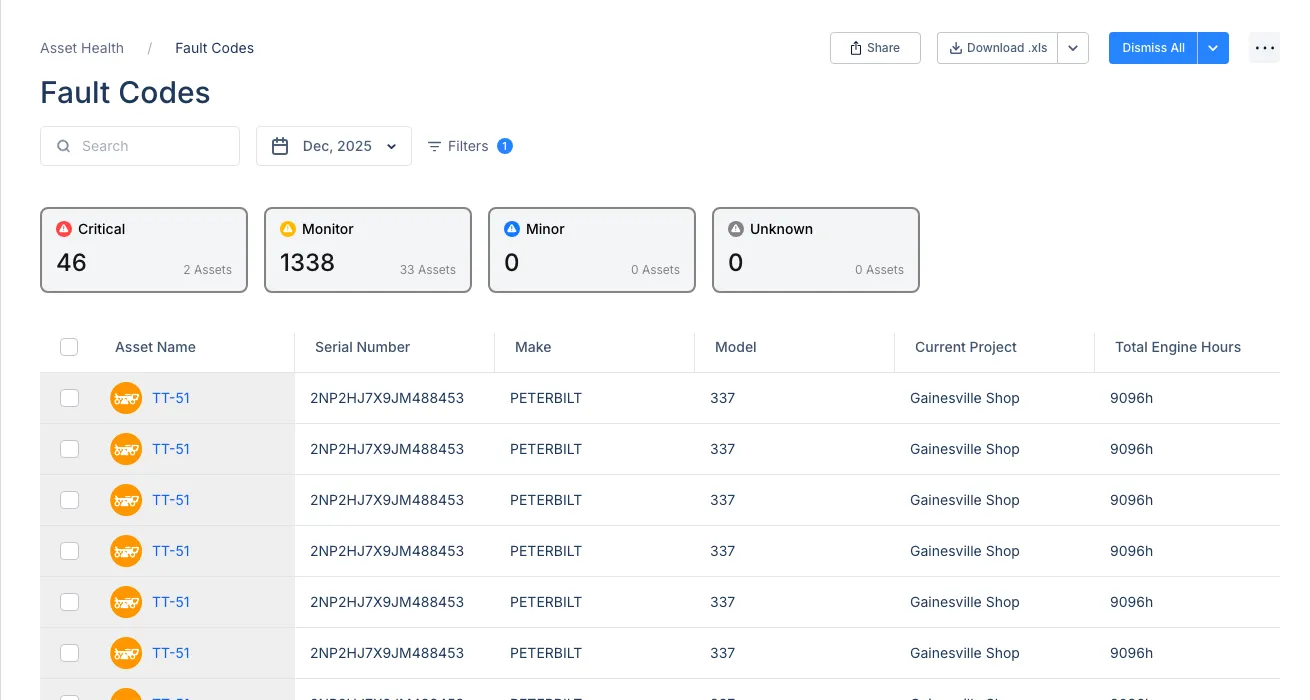
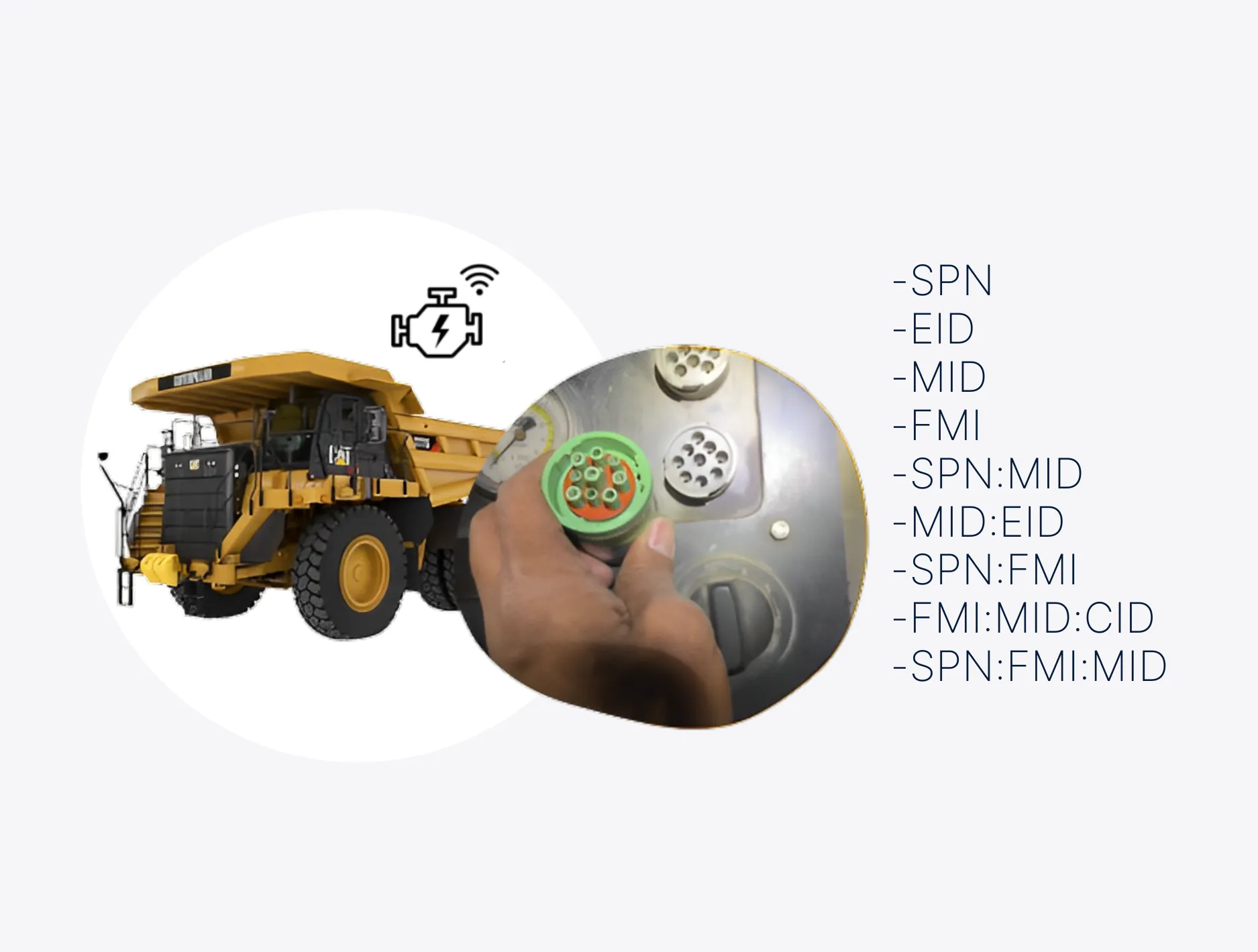
- Fault codes: Review fault codes next to operator notes and machine history before sending a technician.
- One history per machine: Keep service dates, inspection findings, repairs and meter readings in a single record across every job site.
A failed inspection item does not wait for someone to retype it. Clue's maintenance management platform opens the mechanic work order on its own, with the machine and the reported defect already attached.
Why a CMMS Pays Off for an Equipment Fleet
A CMMS pays off by moving work out of the reactive column, and DOE has put numbers on what that shift is worth. Its O&M Best Practices Guide estimates a preventive program saves 12 to 18 percent against a reactive one, and that condition-based work saves a further 8 to 12 percent against preventive.
Reactive maintenance is basically the "run it till it breaks" maintenance mode. — U.S. Department of Energy, O&M Best Practices Guide, Release 3.0, Chapter 5
DOE puts the average facility at more than 55 percent reactive, 31 percent preventive and 12 percent predictive. It also reports that facilities running a working predictive program see breakdowns fall 70 to 75 percent and downtime fall 35 to 45 percent. A CMMS is the record that makes that shift possible, because you cannot schedule against history you never wrote down.
An Example: One Week of Work Orders
For example, take a single week on a mid-size fleet. An excavator hits 500 engine hours, so the system opens a preventive work order before anyone notices. An operator fails a light on a morning inspection, and that finding becomes a second work order the same hour. A hydraulic hose lets go on a loader, which opens a breakdown work order with the parts tagged to it. Three jobs, three records, one history per machine.
CMMS vs. EAM vs. Fleet Management Software
CMMS, EAM and fleet management software overlap, and the difference between them is scope rather than quality. Buyers often compare them side by side without noticing they answer different questions, which is how a team ends up with software that tracks location when it needed service history.
| Software | Main job | Covers |
|---|
| CMMS | Organize maintenance work | Work orders, PM schedules, inspections, parts, history |
| EAM | Manage the whole asset life | Purchase, maintenance, cost, depreciation, disposal |
| Fleet management | Track use and location | Location, utilization, fuel, telematics, drivers |
CMMS Questions Contractors Ask
Contractors ask these CMMS questions most often during buying conversations. Each answer stands alone, so you can drop one into an internal brief without rewriting it. Where a figure comes from DOE, the answer names the source so a reader can check it.
What does CMMS stand for?
CMMS stands for computerized maintenance management system. It is software for planning, assigning, tracking and recording maintenance work across a set of equipment. The system holds the schedule and the history. People still perform the inspections and the repairs it records.
What is the difference between a CMMS and an EAM?
A CMMS vs. EAM comparison comes down to scope. A CMMS focuses on maintenance work, schedules and repair history. An EAM covers an asset from purchase to retirement, including cost and depreciation. Many EAM products include CMMS features inside them.
Is a CMMS the same as fleet management software?
Fleet management software and a CMMS overlap, but their main jobs differ. Fleet software tracks where machines are and how much they are used. A CMMS organizes service, repairs and equipment history. Construction teams often run both, with the meter readings flowing from one into the other.
How long does a CMMS take to implement?
A CMMS implementation depends on how many machines you have and how much history you move over. A small fleet can run its first work orders in days once the asset list and meter readings are loaded. Adding parts, costs and full service history takes longer and is worth staging.
Does a CMMS replace the mechanic?
A CMMS does not replace the mechanic. It records what is due, what was found and what was done. The mechanic still inspects the machine, diagnoses the fault and performs the repair. The software removes the paperwork around that work, not the work itself.
How does a CMMS reduce downtime?
A CMMS reduces downtime by moving work from unplanned to planned. DOE reports that facilities with a working condition-based program see downtime fall 35 to 45 percent and breakdowns fall 70 to 75 percent. The record of past failures is what makes the next one predictable.