Run to failure maintenance is a planned choice to repair assets after they stop working. Unlike breakdown maintenance, it fits low cost assets when work continues, safety is not at risk, and a spare is ready. Learn when to use it, when to avoid it, and how to manage downtime.
Get helpful fleet management content delivered to your inbox.
Run to failure (RTF) maintenance is a planned strategy chosen on purpose for specific low-risk assets that run until they fail.
The choice is made before an asset fails. The plan names each asset, what counts as failure, and who repairs or replaces it. It also sets the response: keep a spare nearby, swap in a replacement, or repair the item when work allows.
Run to Failure vs. Breakdown Maintenance
The fastest way to understand run to failure is to see what it is not:
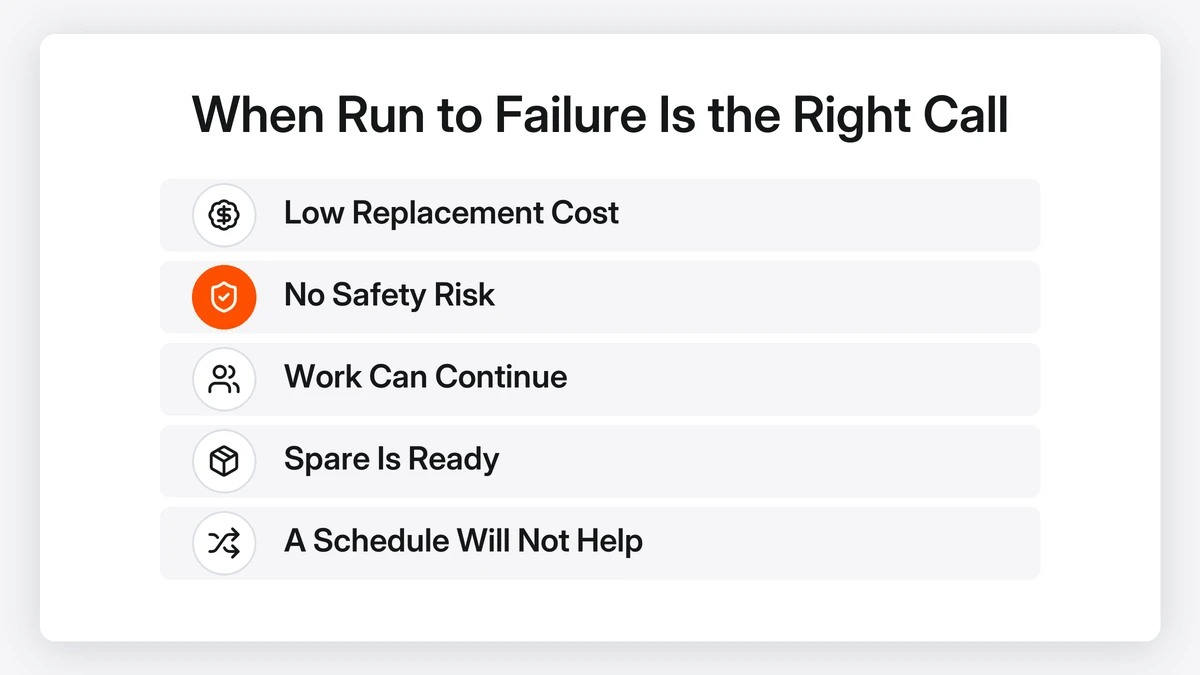
Low replacement cost: If replacing an item costs less than servicing it, run to failure can be a sensible choice. A work light or wiper blade may fit when a replacement is easy to keep nearby.
No safety risk: Choose only items whose failure cannot injure someone or make another part unsafe. A light bulb or a low-risk hand tool may qualify after a shop review.
Work can continue: An item can fit when its failure does not stop a crew or delay a job. A spare small pump may cover a noncritical task while a failed unit is replaced.
Spare is ready: Keep a replacement on the shelf or confirm it is easy to get. This can work for cheap filters on noncritical gear or common hand tools.
A schedule will not help: For some items, failure happens at random, so a set service schedule will not prevent it. Run to failure may suit a simple item such as a work light if its failure has little impact.
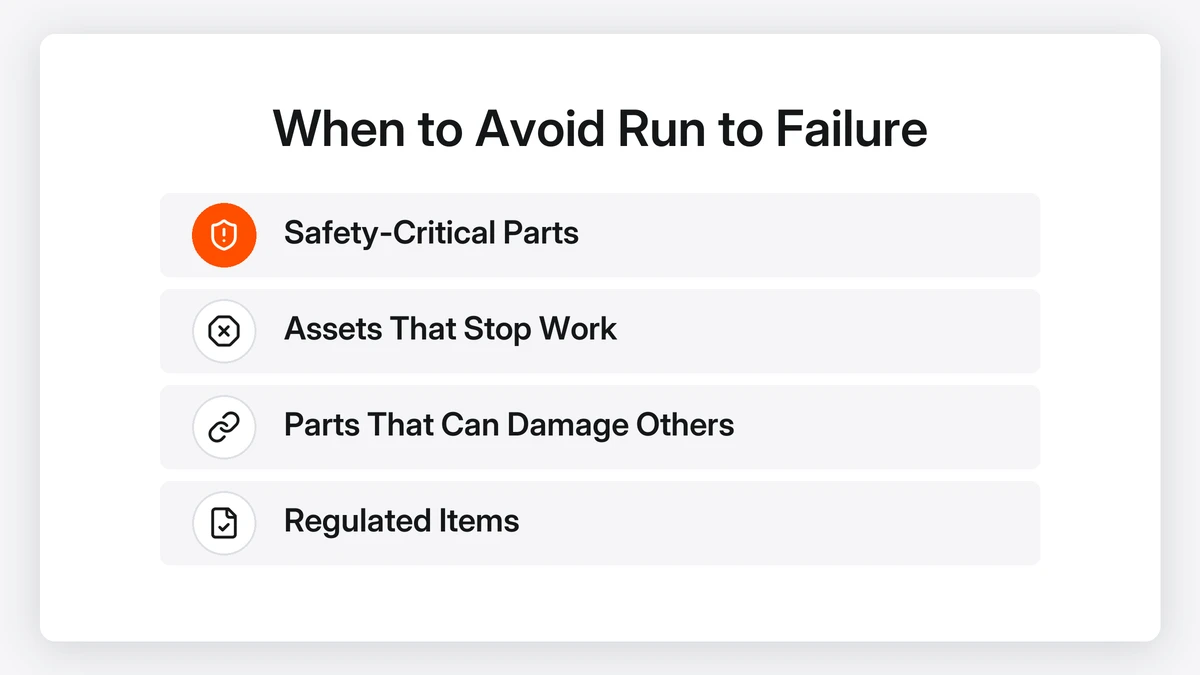
When to Avoid Run to Failure
Safety-critical parts: Keep brakes, steering, hydraulics that hold a load, and rollover protective structures (ROPS) on an inspection or service plan. A failure can put operators and crews at risk.
Assets that stop work: Do not choose a main excavator or haul truck when its failure would stop a crew or job. The wait for repair can affect the rest of the schedule.
Parts that can damage others: Avoid run to failure for an engine, turbo, or final drive. A small fault can lead to more repair work and higher cost if it spreads.
Regulated items: Follow required inspections for truck items covered by Department of Transportation (DOT) rules. Use a DVIR to record vehicle inspection findings.
How to Run a Run to Failure Program
Name the assets: List each item assigned to run to failure. Record why it qualifies and who owns the decision, so the whole shop follows the same plan.
Set the response: Keep spares or a replacement plan ready before a failure. Note where the part is, how to order it, and what temporary swap is safe.
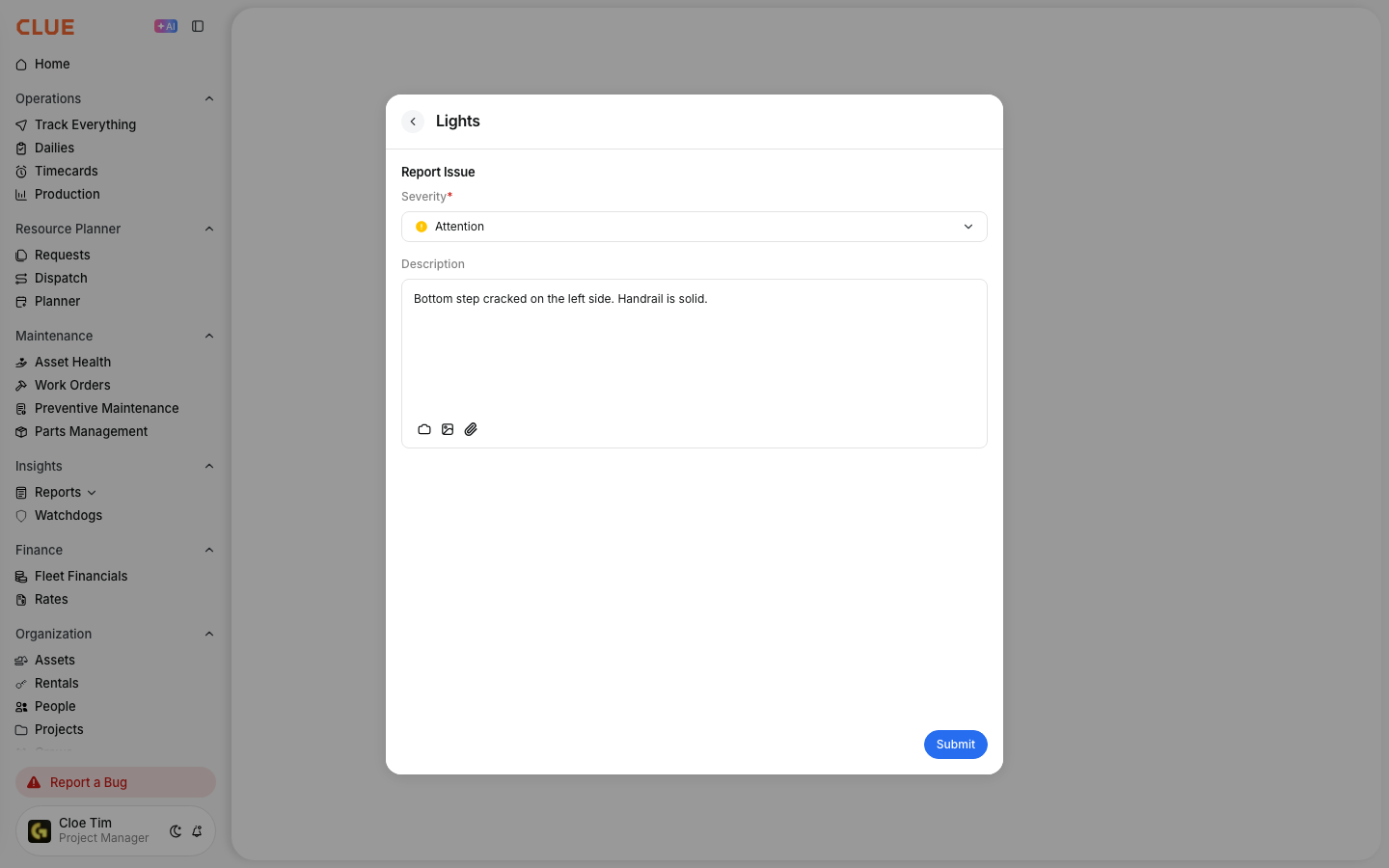
Record each failure: Open a work order when an asset fails. Add the repair, parts, and cost so the shop can see how often the item fails and what the fixes cost.
Review the list: Check an item if it fails more often or costs more than expected. Move it to preventive maintenance when planned service can reduce risk or cost.
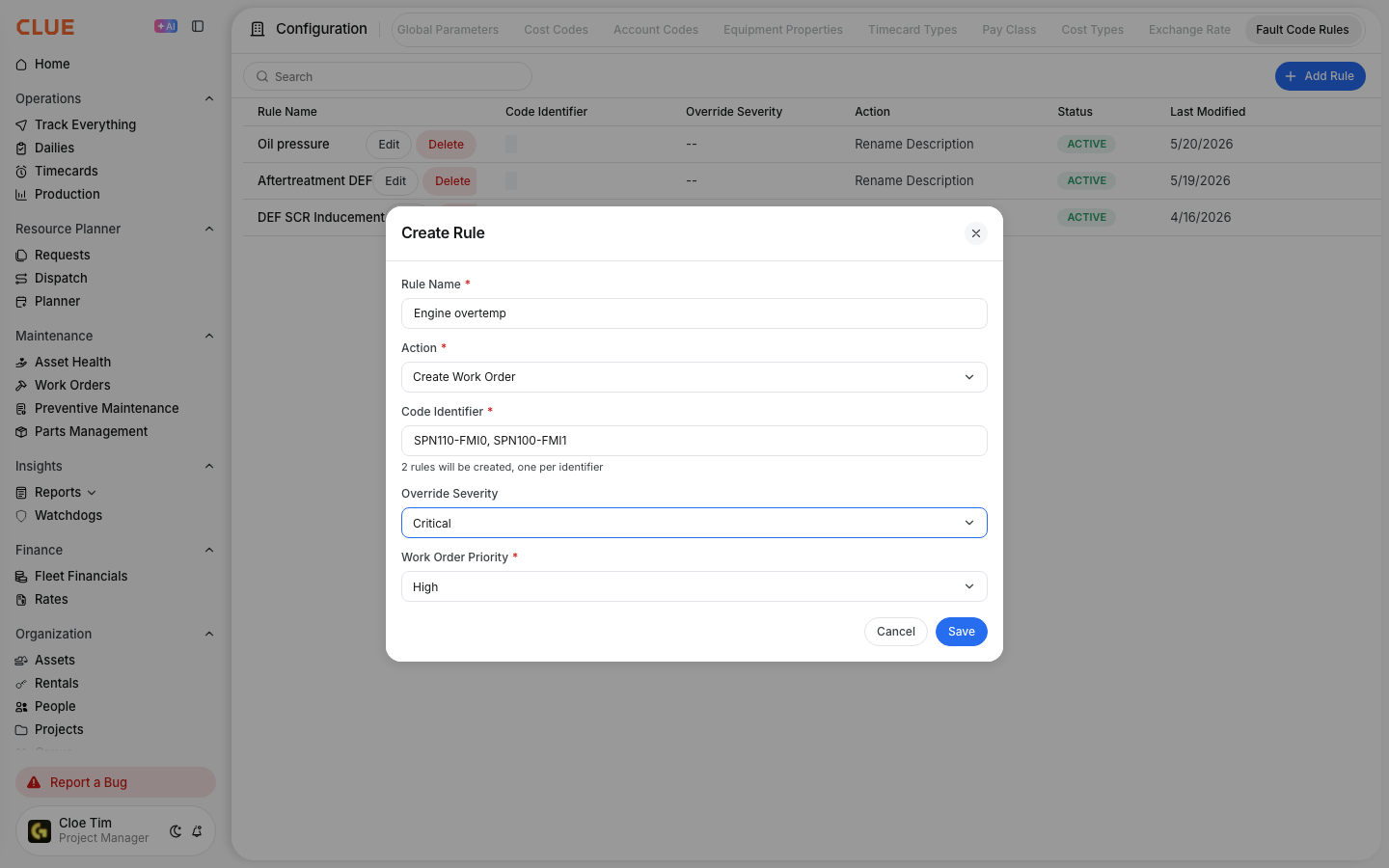
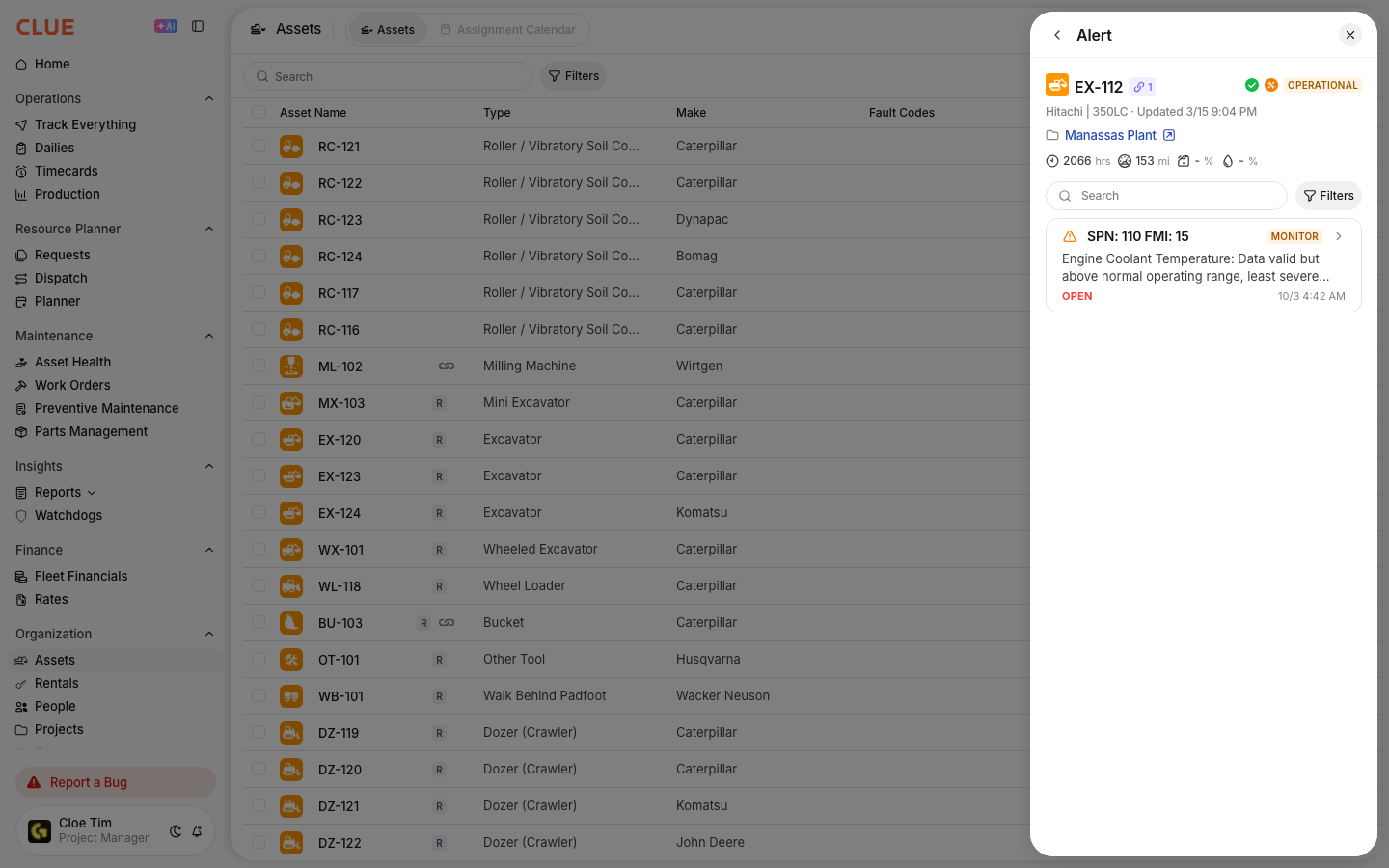
In Clue, a work order can be set to the Breakdown type, with added parts tagged automatically as breakdown parts for accurate cost tracking.
FAQs
Is run to failure the same as reactive maintenance?
No, reactive maintenance means fixing whatever breaks without a plan. RTF is chosen in advance for certain assets.
What is an example of run to failure maintenance?
A contractor may let a low-cost work light or wiper blade run until it stops working, if a replacement is ready and failure creates no safety risk or work delay.
Is run to failure cheaper than preventive maintenance?
Only for low-cost, low-risk assets, where replacing the item can cost less than routine service. For critical equipment, failures usually cost more through downtime and damage to other parts.