A contractor wins a nine month site job that needs a second excavator. One quote is a loan. Another is a lease. A rental company prices the unit by the month. The monthly numbers look close. No one has checked how many hours the current excavator ran last year.
That payment does not show the full cost. Fees, resale value, hours, and return terms can change the comparison. A route that fits one job can also tie up cash for years. Fleets using construction equipment management software to track hours and costs may already have the data to compare their options. This guide covers common financing routes, 2026 rates and terms, ways to use your fleet data, and what to prepare before you speak with a lender.
What Is Heavy Equipment Financing?
Heavy equipment financing is a way to pay for equipment over time through a loan, lease, credit line, or rental agreement. The equipment itself often secures the deal. Lenders may review the unit’s age, hours, condition, and resale value along with your business finances.
Financing is the norm, not the exception. The Equipment Leasing & Finance Foundation’s 2026 Horizon Report found that 87% of U.S. businesses used some form of financing for their equipment and software acquisitions in 2025, and about 70% of construction equipment acquisitions were financed. The equipment finance industry grew to roughly $1.5 trillion in 2025. New business volume rose 6.8% that year, according to the ELFA Survey of Equipment Finance Activity.
Those details affect what the equipment may be worth during and after the agreement. Knowing how equipment depreciation works can help you discuss the unit’s changing value with your accountant or lender.
Heavy Equipment Financing Options Compared
| Option | Who Owns the Unit | Best For | Watch Out For |
|---|---|---|---|
| Equipment Loan | You | Long-term use and equity | Down payment and resale risk |
| Dealer or Manufacturer Financing | Usually you | A new unit with a promotion | Full price and model restrictions |
| Finance Lease ($1 Buyout) | You after buyout | Long-term use with set payments | Final buyout and accounting treatment |
| Fair Market Value Lease | Lessor until purchase | Lower payments and shorter use | Hours, condition, and return charges |
| Rental With Purchase Option | Depends on purchase | Testing a unit or uncertain work | High cost if kept long |
| Business Line of Credit | You, if purchased | Smaller units and attachments | Variable rates and short-term fit |
| SBA Loan | You | Qualifying small businesses | Paperwork and approval time |
| Sale-Leaseback | Lessor | Cash from owned equipment | Ongoing cost to use your unit |
8 Heavy Equipment Financing Options for Contractors
Heavy equipment financing affects how much cash stays available for payroll, materials, maintenance, and project mobilization. The right arrangement depends on how long you expect to keep the machine, how consistently it will work, and what happens when the agreement ends.
Compare each option against realistic operating hours, total payment obligations, equipment ownership and operating costs, and expected resale value. These routes include both financing structures and sources of funding, so some can overlap.
1. Equipment Loan
An equipment loan lets you purchase a machine and repay the borrowed amount over an agreed period. Your business owns the equipment, while the lender generally holds a security interest in it until the debt is repaid.
Most heavy equipment loans run 3 to 7 years, and some lenders stretch to 10 years for long-life machines. Down payments commonly land near 10% to 15% for new construction equipment and 15% to 25% for used units, though some lenders offer full financing to qualified borrowers. This arrangement can suit core equipment, such as an excavator or wheel loader that you expect to use across a steady backlog of projects for several years.
Because repayments continue when work slows, use historical equipment utilization to build conservative affordability estimates. Allow room in the budget for maintenance, insurance, repairs, and periods when the machine produces no revenue.
Review the interest rate, fees, early repayment terms, and any balloon payment due at the end. The repayment period should also fit your replacement plan, with expected resale proceeds considered alongside any debt that would remain when you sell the unit.
2. Dealer or Manufacturer Financing
Dealer or manufacturer financing allows you to arrange the equipment purchase and funding through the seller. The agreement may be a loan or lease, with financing coordinated through the manufacturer’s finance company or another lending partner.
This can simplify the process when you have selected a machine and want to organize payment terms, delivery, attachments, and service coverage together. Available structures vary by provider and equipment.
Ask for itemized cash and financed quotes for the same machine specification. Some promotional offers require a choice between a low financing rate and a purchase rebate, which means the advertised rate alone cannot establish the better deal. Compare the purchase price, down payment, total scheduled payments, fees, and any final balance.
Confirm whether warranties and maintenance plans are optional, included in the price, or added to the financed amount. This gives you a clearer basis for comparing the dealer’s offer with outside financing.
3. Finance Lease ($1 Buyout)
A $1 buyout lease spreads the equipment’s cost across scheduled payments and gives you an option to acquire ownership for $1 after meeting the agreement’s obligations. It can suit contractors who expect to keep a machine for much of its useful life and want a defined path to ownership.
The nominal buyout represents the final purchase step, so evaluate the complete payment schedule, upfront charges, and ownership transfer requirements when comparing it with an equipment loan.
This structure creates an ongoing commitment that should fit the machine’s expected workload and remaining service life. Review the maintenance work order history of comparable machines when estimating future repairs, component replacements, and the ownership period.
Have your accountant confirm the accounting treatment: under U.S. GAAP, ASC 842 generally requires both finance and operating leases longer than 12 months to be recognized on the balance sheet as assets and liabilities.
4. Fair Market Value Lease
A fair market value lease gives you access to equipment for a defined period while the lessor retains ownership. Depending on the agreement, you may return the machine, renew the lease, or purchase it at its fair market value when the term ends.
Payments may be lower than a comparable arrangement that pays down the full purchase price because the financing company expects the machine to retain value at the end of the lease. This can suit a planned replacement cycle. Leasing remains the single most common financing method in the U.S., covering 23% of financed equipment and software acquisitions in 2025.
The eventual purchase price may remain uncertain when you sign, so assess the agreement against both a return scenario and a purchase scenario. Match the operating-hour allowance to your expected workload, and review maintenance requirements, excess-wear standards, return transport, and notice deadlines.
Maintain equipment inspection records with dated photos throughout the lease to document condition and identify issues before return. Excess hours, damage, and late returns can create additional charges that change the overall cost.
5. Rental With Purchase Option
A rental with a purchase option lets you put equipment to work while keeping a possible purchase open. Under the agreement, a specified portion of eligible rental payments may count toward the purchase price.
This can be useful when you want to evaluate a machine’s productivity, attachment compatibility, or suitability for a particular job before making it a permanent part of the fleet. It also gives you time to assess whether future work supports ownership.
Get the purchase price, rental-credit formula, minimum rental commitment, and option deadline in writing. Confirm which charges qualify for credit and whether transport, taxes, or service fees are excluded.
When comparing this route with a direct purchase, include the rental charges and eventual buyout in the total. Keep rental dates, usage, costs, and return plans together in your rental management records while evaluating the purchase option. As the deadline approaches, assess the remaining buyout against the machine’s condition, market value, and expected workload.
6. Business Line of Credit
A business line of credit provides an approved borrowing limit that you can draw from as needed. With a revolving facility, repaid principal generally becomes available to borrow again, and interest begins accumulating when you draw funds.
Many lines carry variable rates and are subject to periodic review or renewal. This flexibility can make a credit line useful for attachments, smaller equipment purchases, or temporary expenses that you expect to repay from upcoming project receipts.
Consider how much operating credit remains available after the purchase. Using the same facility for equipment, payroll, fuel, and supplier payments leaves less room to absorb delayed customer payments or unexpected repairs.
Review the repayment requirements, fees, and effect of a potential rate increase before drawing funds. For a machine expected to generate revenue over several years, compare a dedicated equipment loan with the cost and working capital impact of carrying that balance on your operating credit line.
7. SBA Loan
SBA financing can help eligible U.S. small businesses fund equipment through government-backed lending programs. The 7(a) program can cover machinery purchases and eligible working capital, making it relevant when equipment is part of a broader business investment.
The 504 program focuses on qualifying fixed assets and requires financed machinery or equipment to have at least 10 years of remaining useful life. It cannot fund working capital or inventory, so the programs serve different purchasing needs.
The application routes also differ. For 7(a) financing, you work with a participating lender. A 504 transaction involves a Certified Development Company working with a lending partner. Start by confirming that your business, chosen equipment, and planned use of funds qualify.
Ask for a document checklist covering financial statements, tax returns, equipment quotes, and any required cash-flow projections. Confirm the proposed repayment term, borrower contribution, fees, and estimated closing date before committing to a delivery schedule.
8. Sale-Leaseback
A sale-leaseback converts an owned machine into available cash while allowing you to continue using it. Your business sells the equipment to a financing company or lessor and leases it back under an agreed payment schedule. This can help release capital tied up in an existing fleet for project mobilization, working capital, or another investment while keeping essential equipment in service.
Evaluate the net cash you would receive after transaction fees and any existing debt that must be settled as part of the sale. Compare that amount with the full lease payments, maintenance responsibilities, and any option to repurchase the machine later. Review equipment financial reports alongside the proposed payments to assess whether the unit’s ongoing costs fit your project budgets.
You are exchanging ownership and future resale value for cash today, so the arrangement should fit the equipment’s remaining working life and your ability to carry the new payments.
Heavy Equipment Financing Rates and Terms in 2026
Heavy equipment financing rates in 2026 generally run from about 6% to 12% APR for established contractors with strong credit. Construction machinery often prices well because it is hard, titled collateral with an active resale market. Newer businesses or borrowers with challenged credit can see 15% to 25%.
| Profile | Typical 2026 APR Range |
|---|---|
| Established business, credit 700+ | About 6% to 12% |
| Average credit (640 to 699) | About 12% to 20% |
| New business or challenged credit | About 15% to 25% |
Typical structure in 2026:
- Term: 3 to 7 years is common. Some lenders go to 10 years on long-life machines.
- Down payment: 10% to 15% for new units, 15% to 25% for used. Some lenders offer 100% financing to qualified borrowers.
- Credit score: Many lenders look for a score near 650. Banks are usually stricter and prefer about two years in business.
Rates move with the market and with your file. Treat these ranges as a starting point for judging quotes, not a promise. The rate is also only one input. The sections below show why hours and total cost matter more.
Buy, Finance, Lease or Rent: Let Utilization Decide
Hours per year and length of need often matter more than the rate. The rate is not the decision. The hours are. A low-hour unit may cost more to own than to rent for a short job. A unit that works year round can spread ownership costs across more operating hours.
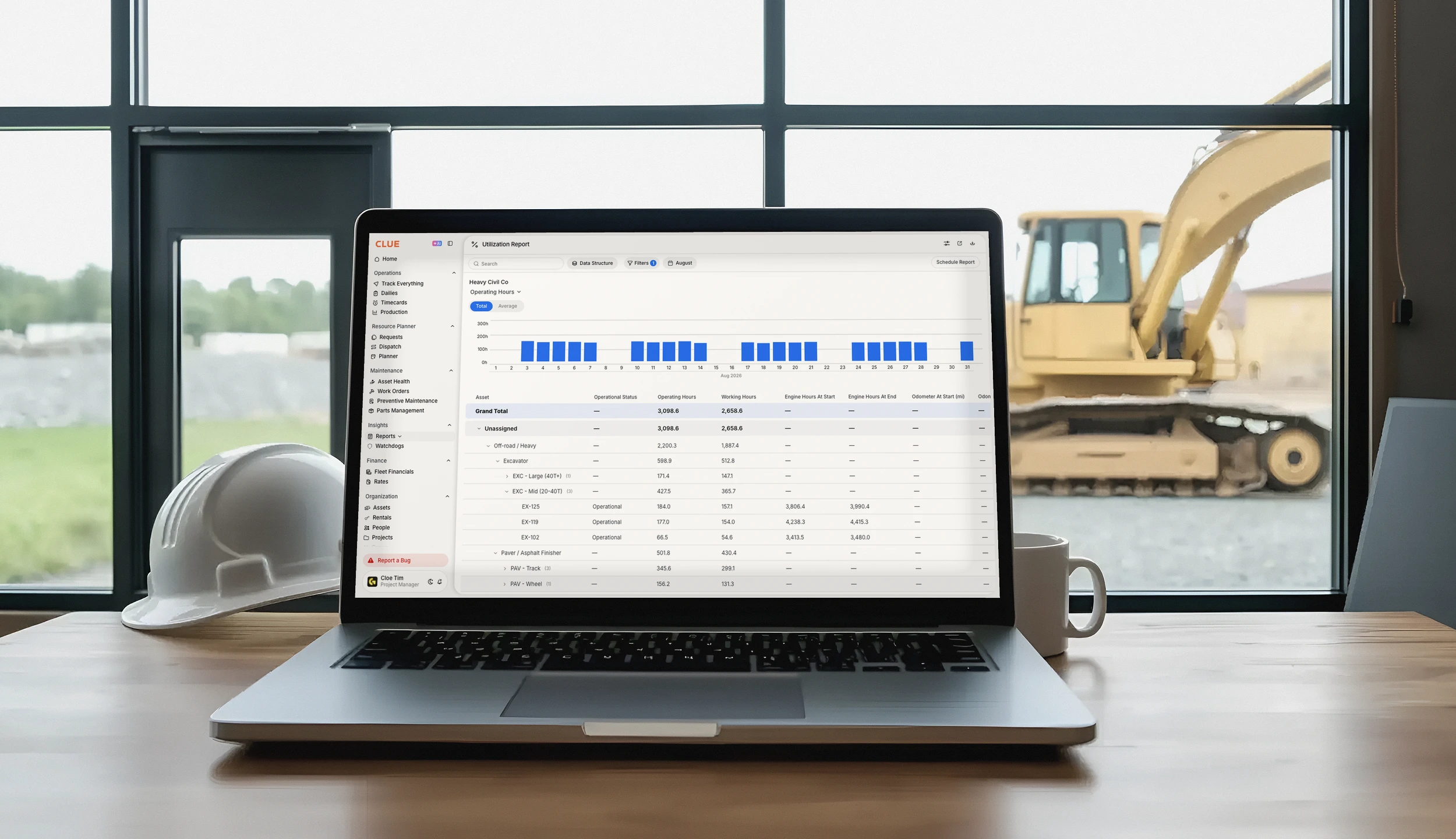
Check equipment utilization by asset class before adding another unit. Look at how often each unit works, how many hours it runs, and whether other units can cover the work. Equipment reports and analytics make that check quick. Capacity utilization can help describe how much of your available equipment capacity is in use.
| Your Data Shows | Lean Toward | Why |
|---|---|---|
| The same class sits under target while you rent it | Move owned units first | Your current fleet may have room |
| A class runs at or above target each month for a year | Owning | Steady hours can spread the cost |
| The need is one job under a few months | Renting | You pay for a short work window |
| Work is steady, but you replace units on a short cycle | FMV lease | Return or replace the unit at the end |
| Repair cost per hour is past its sweet spot | Replace and finance | A new unit may fit the work better |
| Backlog is uncertain | Rent with purchase option | You can test use before a purchase |
These frame the decision, not fixed rules. Compare units within the same class. A high average for the whole fleet can hide idle units in one category. Check project schedules too. A unit may be busy this month, then sit after a job ends.
Compare Offers on Total Cost per Hour
Start with the full offer cost. Include the cash you pay at the start, all later payments, fees, any buyout, and the value you expect to recover when you sell.
Total Cost of the Offer = Down Payment + All Payments + Fees + Buyout (if any) − Expected Resale Value
Cost per Operating Hour = Total Cost of the Offer ÷ Planned Operating Hours Over the Term
Use the same approach for each offer. For a lease or rental, account for costs at return and do not subtract resale value if you will not own the unit. Review cost per hour to see how this measure can support equipment analysis.
Operating and maintenance costs are the same no matter how you pay for the unit. First compare financing cost across offers. Then add operating costs to compare ownership with renting. See construction equipment economics for how owning and operating costs combine.
Planned hours should come from real utilization history, not a guess. Also check fees, including documentation fees, prepayment penalties, end-of-lease charges, and insurance requirements.
Example
A contractor needs one more mid-size excavator. The following inputs are illustrative. The unit is expected to work 1,200 hours each year for four years, based on last year’s hours for the same class.
Illustrative loan inputs: $30,000 down, $150,000 in later payments, $2,000 in fees, and $42,000 expected resale value. The total cost is $30,000 plus $150,000 plus $2,000, less $42,000. That equals $140,000.
Illustrative FMV lease inputs: $160,000 in payments and $2,000 in fees. The contractor returns the unit, so there is no buyout or resale value. Illustrative rental input: $5,000 per month during the full four year need.
| Offer | Total Cost Over Four Years | Cost Per Operating Hour |
|---|---|---|
| Equipment loan | $140,000 | $29.17 |
| FMV lease | $162,000 | $33.75 |
| Monthly rental | $240,000 | $50.00 |
The planned use is 4,800 hours. Divide each total cost by 4,800 to get the cost per operating hour. The loan costs less per hour under these illustrative inputs. Your result can change with a different down payment, resale value, lease payment, or rent schedule.
Now assume the contractor expects only 500 hours each year. Those hours fall into short work windows, so it rents for three months each year. The loan and lease totals stay the same for this example. Renting costs $60,000 across the active months.
| Offer | Total Cost Over Four Years | Cost Per Operating Hour |
|---|---|---|
| Equipment loan | $140,000 | $70.00 |
| FMV lease | $162,000 | $81.00 |
| Rental for active months | $60,000 | $30.00 |
At lower use, renting costs less per operating hour in this example. Rentals often include some maintenance, so add the owned unit’s maintenance cost before you make a final call. A change in expected hours, while the rate stays fixed, can flip the answer.
What Lenders Look at Before They Approve

- Time in Business and Credit History: Lenders may review how long your business has operated and its credit history. Many want a credit score near 650 and prefer about two years of operating history. Banks are usually stricter than specialized equipment lenders.
- Cash Flow and Debt Service Coverage: Lenders look at whether cash flow can support payments on existing and new debt. DSCR means cash available for debt payments divided by debt payments.
- Backlog and Contracts: Current work and signed contracts help show expected demand for the equipment.
- The Unit Itself: Age, hours, make, condition, and resale value can shape the lender’s view of the equipment. Keep the purchase details and inspection records together.
- Maintenance Records: A documented service history supports the unit’s value and helps a lender or appraiser assess its condition. Organized preventive maintenance records make that history easier to review.
- Existing Debt and Equipment Already Owned: Lenders may ask what you owe and what equipment is already in your fleet.
A contractor who can share hours, utilization, and service history for the current fleet has a stronger case to present. Keep the invoice, bill of sale, and title with the asset. Purchase paperwork can give your team a clear record of those documents.
Tax and Accounting Questions to Ask First
Buying or financing a unit may qualify for depreciation deductions such as Section 179 or bonus depreciation. For tax years beginning in 2026, the Section 179 expensing cap is $2,560,000, and the deduction starts phasing out once total qualifying purchases pass $4,090,000. The 2025 tax law also made 100% bonus depreciation permanent for qualified property acquired and placed in service after January 19, 2025.
Lease payments follow different tax rules from depreciation deductions. The treatment can depend on the agreement, asset, business use, and current rules. A financed purchase and an FMV lease can produce very different tax outcomes on the same machine.
Tax rules and limits can change. Ask your tax advisor to review the purchase, loan, or lease before you sign.
The IRS explains depreciation in Publication 946. For a plain guide to construction equipment depreciation, review how equipment value changes over time.
Common Heavy Equipment Financing Mistakes
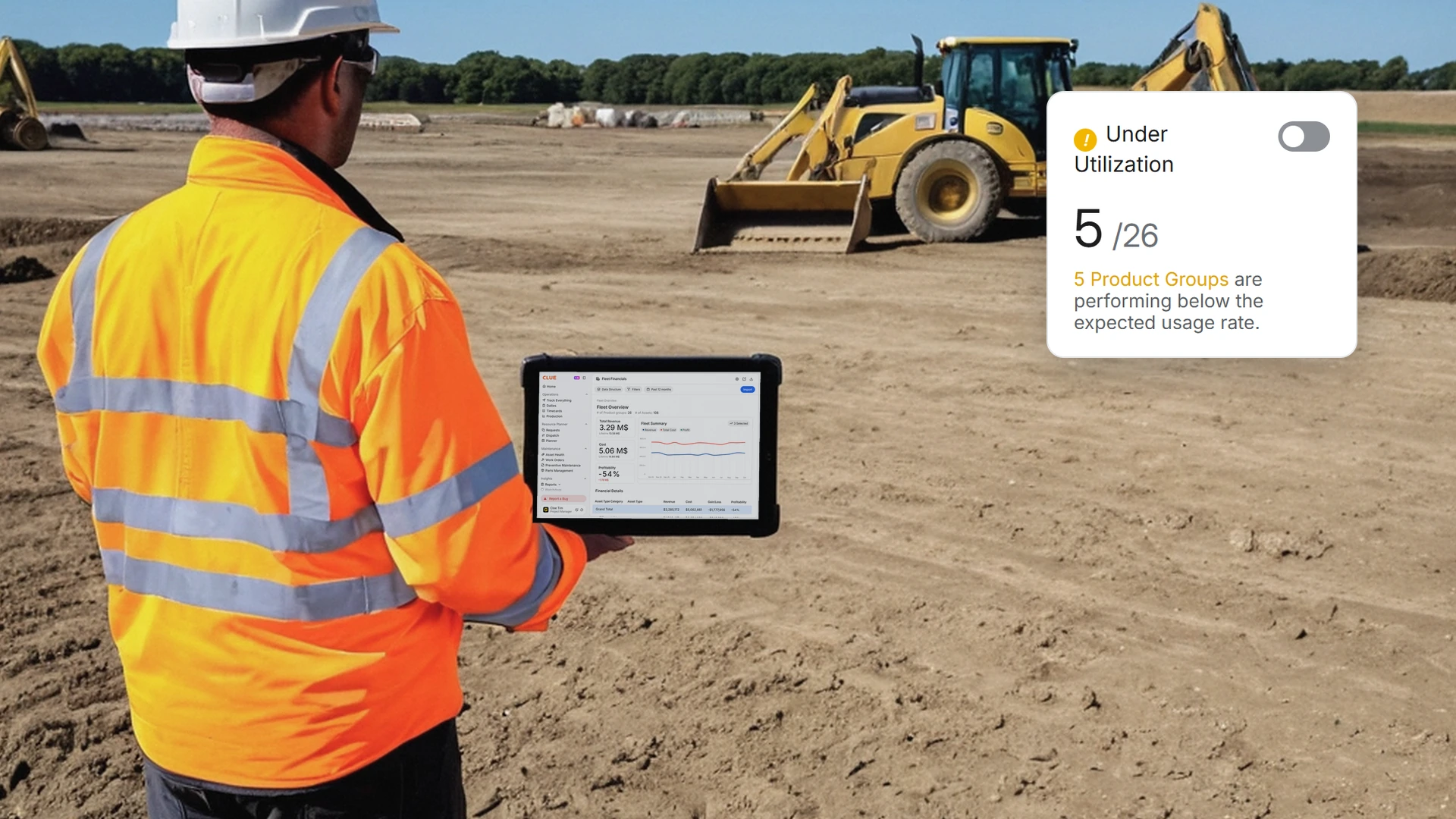
A financing agreement can look affordable upfront and still put pressure on project budgets once the machine enters service. Overestimated working hours, overlooked ownership costs, and payments that outlast the work can weaken the value of a purchase.
Before committing, review these common mistakes to make sure the financing fits your workload, equipment needs, and cash flow.
- Comparing Monthly Payments Only: A lower payment does not always mean a lower total cost. Add fees, buyout terms, and expected resale value.
- Financing a Class That Already Sits Under Target: Check whether an owned unit can cover the work first. Financing another unit adds fixed cost, and the costs of underutilized equipment keep running whether it works or not.
- Guessing Hours Instead of Using Utilization History: A guess can make the cost per hour look lower than it will be. Use records for the same class and similar work.
- Ignoring Resale Value and End-Of-Term Terms: Review how the unit may be sold, returned, or bought at the end. A weak resale estimate can change the comparison.
- Matching a Long Loan to a Short Job: The job can end before the payments do. Compare the planned work period with the full commitment.
- Skipping the Maintenance Records That Protect Resale Value: Service history helps support a unit’s condition and value. Keep it on the asset from the first day you own it.
How Clue Supports Equipment Financing Decisions
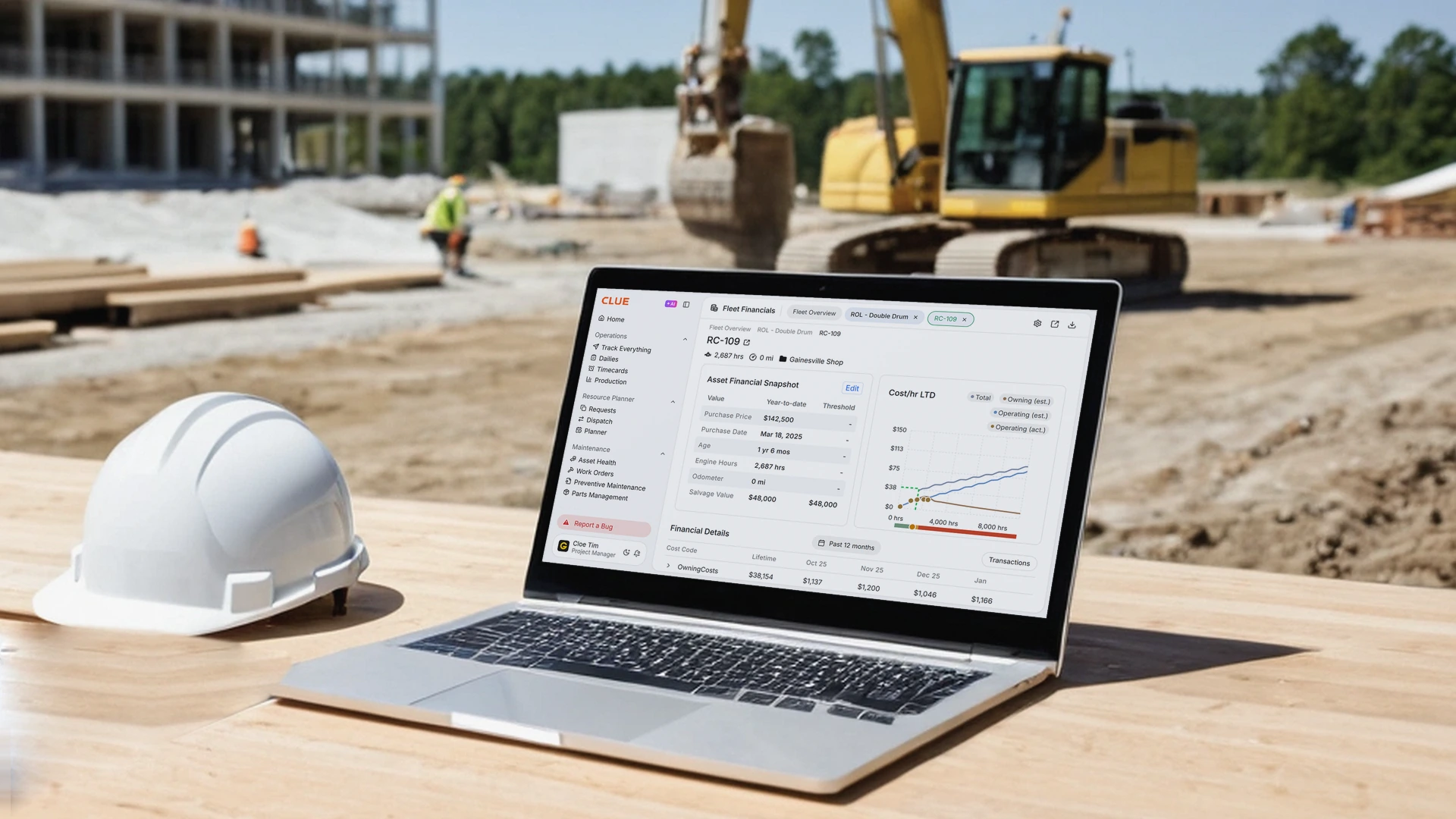
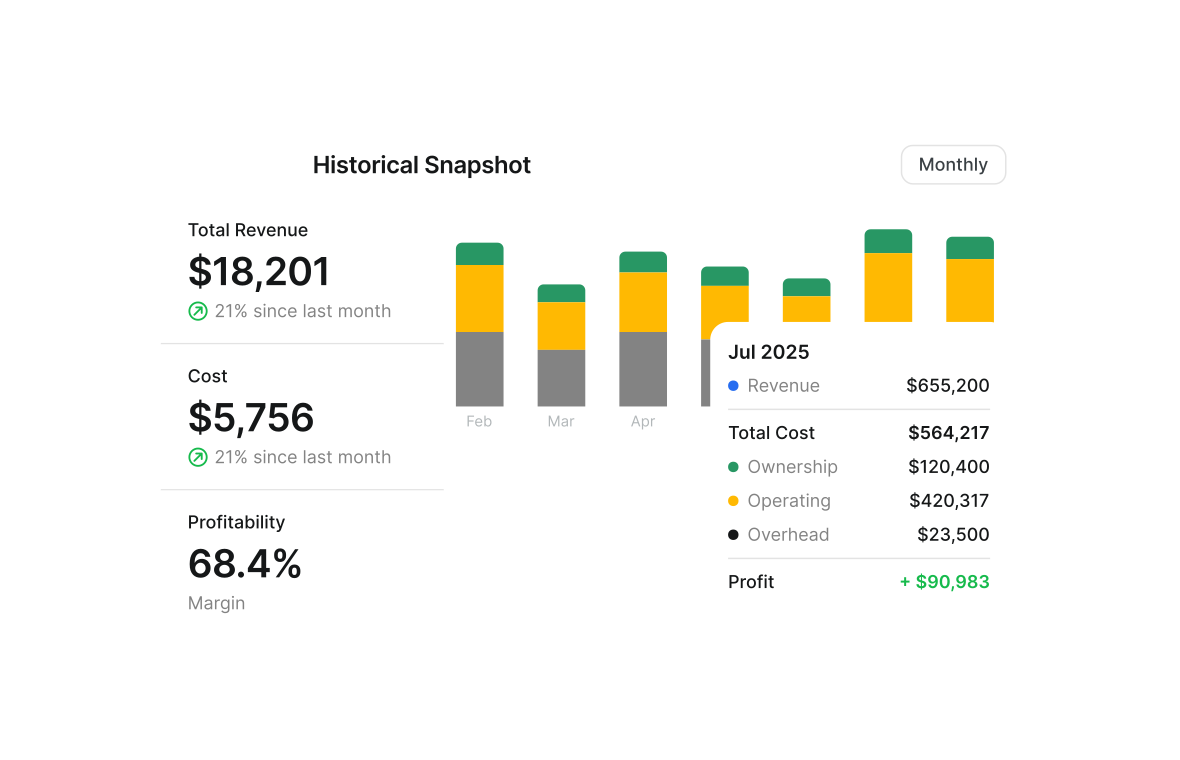
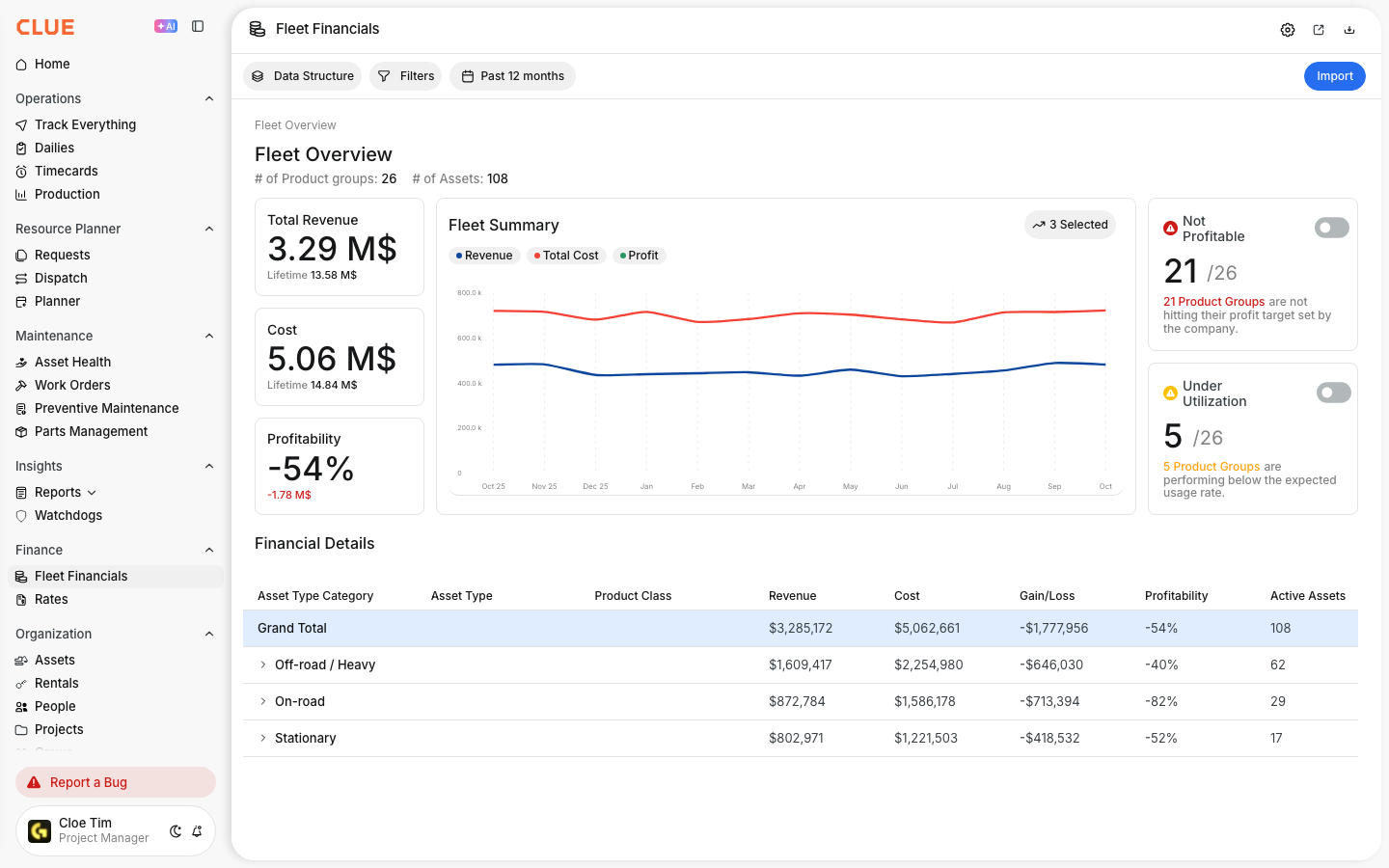
Clue Fleet Financials shows revenue, total cost, and profitability for the whole fleet. You can review results by division, product class, or single asset. Financial data is imported from your accounting system by CSV.
The view flags assets marked Not Profitable and underutilized equipment. You can filter by organization, project, asset type, crew, and ownership type. Each asset has a financial snapshot with purchase price, purchase date, age, engine hours, odometer, and salvage value.
A lifetime cost per hour chart separates owning costs from operating costs. Sweet spot analysis shows where repair costs begin to overtake the value of keeping a unit running. Replace and Stop Repair flags support replacement planning.
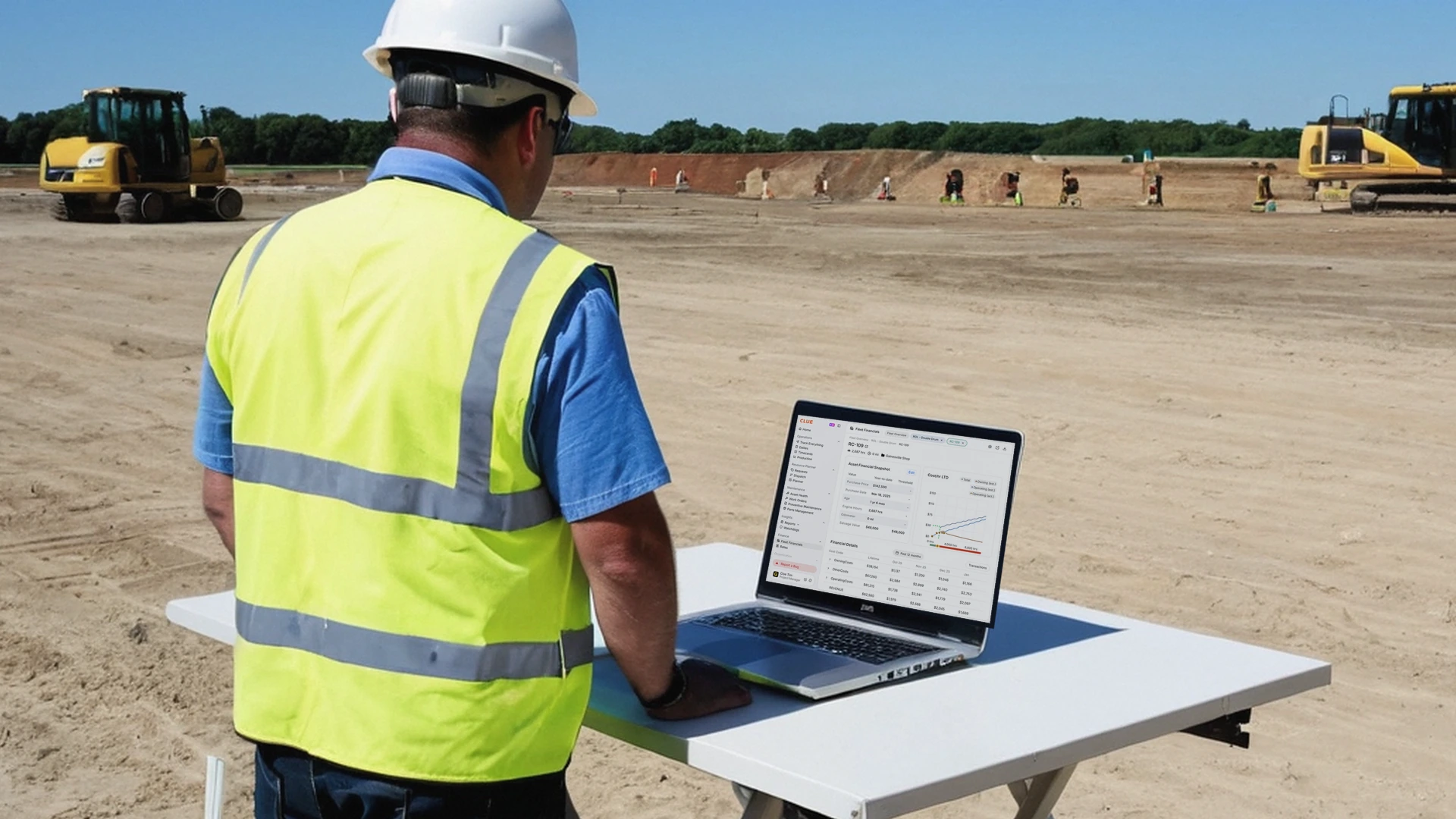
Cost per hour divides ownership, maintenance, and fuel costs by engine hours from telematics. Utilization reports cover units with and without telematics. Purchase paperwork, including an invoice, bill of sale, or title, is stored on the asset. It is visible only to roles allowed to see purchase cost. Results export to CSV or Excel for capital planning and CFO review.
Final Thoughts
The second excavator from the opening may be the right purchase. Its value depends on the work it will do and the full cost of keeping it.
This week, pull last year’s hours and cost per hour for the class you plan to add. Decide whether you need another unit before you ask for quotes. Then compare each offer using your expected hours, fees, and resale value.
If Clue is on your shortlist, book a demo and bring the quotes you are comparing.
Frequently Asked Questions
How Does Heavy Equipment Financing Work?
Heavy equipment financing lets you acquire a unit through a loan, lease, credit line, or rental agreement. The lender or lessor reviews your business and the equipment. Payments, ownership, resale risk, and end terms depend on the agreement. Compare the full cost with the hours you expect the unit to work.
What Are Typical Heavy Equipment Financing Rates in 2026?
In 2026, established contractors with strong credit typically see about 6% to 12% APR on heavy equipment loans. Average credit profiles often see 12% to 20%. New businesses or challenged credit can see 15% to 25%. Your rate depends on credit, time in business, down payment, and the unit's resale value.
How Long Can You Finance Heavy Equipment?
Most heavy equipment loans run 3 to 7 years. Some lenders offer up to 10 years for long-life machines. Match the term to the machine's expected working life and your replacement plan, not just to the lowest payment. A loan that outlasts the work creates payments with no revenue behind them.
What Credit Score Do You Need to Finance Heavy Equipment?
Many equipment lenders look for a credit score near 650. Banks usually want more, along with about two years in business and strong financials. Some specialized lenders accept lower scores if the business can show steady revenue, a larger down payment, or a personal guarantee.
Is It Better to Lease or Buy Heavy Equipment?
It depends on hours and length of need. Buying or using a finance lease may fit steady, long-term work. An FMV lease or rental may fit shorter use or a planned replacement cycle. Compare expected hours, total cost, resale value, and the terms for returning or buying the unit.
Can You Finance Used Heavy Equipment?
Yes. Lenders may finance used heavy equipment. They can review the unit's age, hours, condition, make, and resale value, along with your business finances. Down payments often run higher than for new units, around 15% to 25%. Keep inspection details, service records, and ownership paperwork available.
What Do You Need to Qualify for Heavy Equipment Financing?
Requirements vary by lender and financing route. Be ready to share business and credit history, cash flow, debt, backlog, and details about the equipment. A lender may also request financial statements, tax returns, purchase documents, or maintenance history.
What Is the Difference Between a Finance Lease and an FMV Lease?
A finance lease often ends with you keeping the unit for a nominal buyout. An FMV lease may let you return the unit or buy it at fair market value. Payments and ownership differ. Review the buyout, return rules, hour limits, wear clauses, and accounting treatment.
Can a New Contractor Get Heavy Equipment Financing?
Often, a new contractor can seek equipment financing. The lender may ask for a larger down payment, a personal guarantee, or more detail about the owner's credit and contracts. Dealer programs may also be available. Expect a higher rate until the business builds history.
How Do You Compare Equipment Financing Offers?
Compare total cost and cost per operating hour. Include down payment, all payments, fees, buyout, and expected resale value. Divide the total by planned operating hours based on utilization history. Review return charges and other terms, then add operating costs when comparing ownership with renting.

Transform Your Equipment Management