Most construction fleets do not have a dispatch problem or a maintenance problem. They have a reconciliation problem.
An excavator is listed as available for a project transfer. The shop has already pulled the same machine for a scheduled 1,000-hour service. Dispatch books the lowboy. The receiving superintendent expects the excavator Monday morning. Both systems can look correct while the operation is already wrong.
Nobody finds out until the move is being executed. Dispatch discovers the machine is unavailable, and the shop discovers that someone else was counting on it.
The industry data says this is the normal condition, not the exception. Teletrac Navman's 2026 equipment utilization research found that 74% of operators name data accessibility as the single largest barrier to improving utilization, and that assets sit unused roughly half the time as a result. The gap is not a technology gap: 87% of fleets have already invested in digital technology to monitor utilization without actually leveraging it, 75% still run manual logs either as the primary record or alongside the digital one, and fewer than a third, 28%, have a fully implemented digital tracking system.
In other words, most fleets already own the data that would have prevented the Monday morning phone call. It just lives in two places that disagree.
This guide is the procedure for closing that gap. Not the argument for closing it, the actual sequence: how to reconcile identity, what status list to publish, who authorizes each transition, which handoffs to wire, and what to do in the first 90 days.
Who This Guide Is For
This is written for equipment managers, fleet directors, and operations leaders at contractors running roughly 40 to 600 mixed assets across multiple active projects, with an internal shop and at least one telematics or OEM feed.
Below about 40 machines, most of this still applies but the roles collapse. One person is both the equipment manager and the integration owner, and that is fine. Above about 600, add a regional layer to Step 3 and expect the reconciliation in Step 1 to take a full quarter rather than three weeks.
Two things this guide deliberately does not cover. It is about machines, not crews. Operator certifications, licensing, and labor scheduling are a parallel gating layer that deserves its own procedure, and the two connect at exactly one point: a machine is not dispatchable if no qualified operator is assigned, so the crew system needs read access to the same asset record. And it is about the operating contract, not vendor selection. The software section near the end is a set of tests to run against whatever you already own, not a shortlist. If you are actively evaluating platforms, our roundups of best construction fleet management software and best construction equipment maintenance software cover that ground separately.
What "United" Actually Means, in Three Tests

Dispatch and maintenance are united when three statements are true. They are not united because both modules came from the same vendor.
- Identity. Every physical machine resolves to exactly one asset record, no matter which system you enter through.
- Status. Exactly one system is authoritative for operational availability, and every event that changes it does so under a written rule.
- Traceability. Every availability change carries a reason, an authorizer, and a timestamp you can find later.
Two modules under one login can fail all three. They can hold separate equipment states, refresh on different schedules, and overwrite each other's fields. The distinction that matters is not suite versus point solution. It is whether dispatch and maintenance read and write the same asset record, or two copies of it.
Why the gap exists, and why it costs more in 2026
Dispatch tooling was usually bought by operations for assignments and transport. Maintenance tooling was bought by the shop for inspections, PMs, and work orders. Each purchase was rational. The split only becomes expensive when the same machine carries a different identifier and a different status in each one, and when operations is measured on utilization while the shop is measured on uptime.
What changed is the cost of being wrong. Two pressures have raised it.
Holds last longer. The U.S. Bureau of Labor Statistics projects about 24,400 openings a year for diesel service technicians and mechanics from 2025 to 2035, most of them replacing people who retire or leave the trade, against total employment of roughly 316,000. Replacement demand at that scale, in an occupation growing only 4%, is why shop capacity is the binding constraint at most contractors now. A hold that cleared in two days five years ago can sit for a week. That makes the substitution decision in Step 5 the highest-leverage thing in this guide.
Events per machine went up. Wireless condition monitoring got cheap enough to install on assets that never had it. More sensors means more signals, and more signals with no triage rule means alert fatigue: maintenance teams receiving hundreds of notifications per shift stop weighting any single one. Practitioners report multi-sensor correlation cutting 500-plus daily alerts down to roughly 20 actionable ones. The volume arrives whether or not you have a rule for it.
Step 1: Reconcile Every Machine to One Asset Identity
Export the asset list from every system that touches equipment, then match them in a fixed order of reliability. This is the step everyone skips, and every later step depends on it.
Pull these exports first: operations or dispatch, maintenance or CMMS, each OEM portal, each GPS or telematics provider, ERP or accounting, and the rental system if rentals sit outside your ERP. Include every identifier column and the last-updated date on each record.
Then match in this order:
| Order | Identifier | Why It Sits Here |
|---|---|---|
| 1 | OEM serial number or PIN | The most stable identifier you have. The manufacturer controls it and it is stamped on the machine. Match here first. |
| 2 | Unit or fleet number | Your own numbering. Reliable within the company, but it gets reused when machines are sold and replaced, so check the acquisition date on any match. |
| 3 | VIN | For on-road units only. Off-road machines carry a PIN instead, so do not expect a VIN column to be populated fleet-wide. |
| 4 | Telematics device ID | Match on this last. Devices get swapped between machines, so a device ID that matched last year may point at a different asset now. |
Do not auto-merge anything that fails to match. Send it to a review queue with a named owner. A wrong merge is harder to unwind than a duplicate.
Watch specifically for the device-serial substitution
The AEMP 2.0 telematics standard, published as ISO/TS 15143-3, identifies equipment by make, model, and serial number, and Caterpillar's ISO 15143-3 developer guide documents those fields.
But Trackunit's AEMP ISO API reference states plainly that if the equipment's serial number is unavailable, the telematics device's serial number is inserted into the equipment serial number field instead.
That single substitution creates a second version of a machine you already own, with its own hours and its own fault history. Search your reconciled list for equipment serials that match a device serial, and treat every hit as a review item. This is a five-minute query that can account for a double-digit share of your duplicates.
If you run several providers side by side, the same discipline applies at the connector level. A platform that consolidates OEM telematics feeds into one asset record is doing this reconciliation for you, but it is worth confirming which identifier it keys on rather than assuming.
Rentals need a different identity rule
A rented machine has no permanent unit number in your fleet and will be gone in six weeks, which is exactly why people skip registering it, and exactly why it shows up as a duplicate on the next rental from the same vendor.
Register rentals in the same asset list under a distinct class, keyed on the vendor's serial number plus the rental agreement number. Two fields matter that owned iron does not need: the off-rent date and who owns maintenance under the contract. Most rental agreements put routine service on the vendor, but the split is contract-specific, and it decides whether a fault code creates your work order or a phone call to the rental desk. Write that answer into the record when the machine arrives, not when it fails.
Then close the door
Freeze ad-hoc asset creation. New machines get created in the authoritative system only, and every other system receives the record. Otherwise the duplicates come straight back.
Finally, write down which system owns which field. Meter readings usually come from telematics. Cost codes usually come from ERP. Project assignment comes from dispatch. Put it in one page and circulate it.
Attachments, trailers, generators, and older iron need the same discipline. They are where duplicates cluster, because no OEM feed is enforcing a serial number on them.
Step 2: Publish One Status List and a Transition Rule for Every Event
Pick six statuses, define them in one line each, and then write down which event moves a machine between them, who authorizes it, and who gets told. This document is the actual unification. Everything else is plumbing.
| Status | Definition |
|---|---|
| Available | In the pool, no commitment, no open safety defect |
| Committed | Assigned to a project or a transfer, not yet working |
| In Transit | Loaded, en route, or awaiting a haul slot. Not deployable and not producing |
| Working | On site and in production |
| Maintenance Hold | Reserved by the shop for planned or corrective work |
| Out of Service | Not permitted to operate, safety or compliance driven |
Most fleets start with five and drop in transit. Keep it. A machine on a lowboy is the single most common thing a dispatcher double-books, because in a five-status list it is still showing as committed, which looks a lot like schedulable. It is also the status where hauling capacity, permits, and escort requirements attach, so collapsing it hides your transport constraint entirely.
The transition matrix
This is the artifact most fleets never write, which is why status ownership defaults to whoever calls first.
| Event | Resulting Status | Who Authorizes | Who Is Notified |
|---|---|---|---|
| Inspection fails on a safety-critical item | Out of service | Automatic on defect rule, confirmed by shop foreman | Dispatcher, superintendent, equipment manager |
| Inspection fails on a non-critical item | Unchanged, issue logged | Shop foreman | Equipment manager |
| Qualified person finds a safety deficiency on a crane or lift | Out of service | Automatic, no override | Dispatcher, superintendent, safety lead |
| Critical fault code received | Maintenance hold | Shop foreman | Dispatcher, operator |
| Non-critical or repeat fault code | Unchanged, queued for triage | Shop foreman | No one until triage |
| PM comes due inside tolerance | Unchanged, service window requested | Maintenance planner | Dispatcher |
| PM passes tolerance | Maintenance hold | Equipment manager | Dispatcher, project manager |
| Machine committed to a project or transfer | Committed | Dispatcher | Shop foreman |
| Haul assigned and machine loaded | In transit | Transport coordinator | Dispatcher, receiving superintendent |
| Machine arrives and starts work | Working | Dispatcher or field | Shop foreman |
| Work order closed, non-critical repair | Available | Shop foreman | Dispatcher |
| Work order closed after an out-of-service defect | Available | Shop foreman plus equipment manager approval | Dispatcher, superintendent |
| Rental returns to vendor | Off-rent, removed from pool | Rental coordinator | Dispatcher, equipment manager, accounting |
| Telematics or integration feed goes stale | Unchanged, flagged as unverified | Integration owner | Dispatcher, shop foreman |
| Field device offline past threshold | Unchanged, flagged as unverified | Automatic | Dispatcher |
Adjust the tolerances and the roles to your operation. What you cannot do is leave a row blank, because a blank row is where the excavator gets double-booked.
Two rows are not yours to write
Regulation decides these, and the software should enforce them without an override path.
On-road units. 49 CFR 396.11 requires the driver to report defects likely to affect safe operation, covering service brakes and trailer brake connections, parking brake, steering, lighting devices and reflectors, tires, horn, wipers, mirrors, coupling devices, wheels and rims, and emergency equipment. It requires the carrier to repair the defect and certify on the report that it was repaired, or that repair was unnecessary, before the vehicle is operated again. Carriers must keep those reports for three months. When that defect is logged, availability is already decided. Dispatch is being informed, not consulted. The rule exempts a few operations, including carriers running only one commercial motor vehicle, so check your own applicability first, then build the row as a hard rule.
Cranes and lifting equipment. Under OSHA 29 CFR 1926.1412, when a qualified person determines that a deficiency is a safety hazard, the equipment must be taken out of service until the deficiency is corrected, unless the narrow temporary alternative measures in 1926.1416(d) or 1926.1435(e) apply. There is also a re-entry rule worth wiring in: equipment idle for three months or more requires a monthly-equivalent inspection before it goes back to work. A machine parked through a slow winter is not automatically available in the spring, no matter what your status field says.
Both rules are easier to hold to when the inspection record and the status field live in the same system. Clue's safety and compliance workflows exist for exactly this reason.
Step 3: Assign One Owner to Each Decision
Every decision below needs exactly one owner and a named audience. Shared ownership is how a machine ends up on a lowboy and on a lift at the same time.
| Decision | Owner | Must See It Immediately |
|---|---|---|
| Reporting a defect or fault | Operator, mechanic, or telematics feed | Shop foreman |
| Deciding a defect becomes a work order | Shop foreman | Equipment manager |
| Placing a machine on maintenance hold | Shop foreman | Dispatcher, superintendent |
| Committing a machine to a project or transfer | Dispatcher | Shop foreman, shop manager |
| Sequencing hauls and assigning trucks | Transport coordinator | Dispatcher, receiving superintendent |
| Approving a substitution or rental | Equipment manager | Dispatcher, project manager |
| Calling a rental off-rent | Rental coordinator | Equipment manager, accounting |
| Releasing a machine back to service | Shop foreman, with equipment manager approval on critical assets | Dispatcher |
| Owning integration exceptions | Named integration or IT owner | Dispatcher, shop foreman |
Circulate this with the transition matrix and get both operations and the shop to sign it. Sign-off is the point. An unsigned ownership table is a suggestion.
Step 4: Wire the Five Handoffs That Break Most Often

Automate the five manual handoffs where information gets re-keyed, in this order. Each one should carry the equipment identity, the evidence, and the decision through without anyone retyping it.
1. Inspection to work order. A failed item should create the defined maintenance action with the photos, notes, and defect detail attached. Clue's equipment inspections carry the reported issue, photos, and defect notes into the maintenance record so the shop does not re-enter what the field already captured.
2. PM trigger to work order. A due interval should create or queue work under the configured rules. Clue's preventive maintenance generates PM work orders from configured time or usage thresholds, and supported telematics integrations can supply engine hours, odometer readings, location, utilization, and fault data.
3. Fault code to triage, not straight to a work order. This is the one to get right in 2026. Condition-based monitoring produces far more events per machine than a manual inspection program ever did, and converting each one into a work order buries the shop in duplicates. Route faults through a severity and recurrence rule first. A single signal is usually noise, while several correlated signals on the same system usually are not. Clue's construction equipment maintenance software supports work orders created from inspection issues, routine maintenance alerts, and configured fault-code rules, with the repair tied back to the original issue.
4. Commitment to haul. A confirmed assignment should generate the transport requirement, meaning origin, destination, required trailer class, permit needs, and the delivery window, rather than a separate phone call to the truck yard. This is the handoff that makes in transit mean something. Skip it and your status list has a state nobody updates.
5. Work order closure to release. The repair record should show what was fixed, who completed it, when status changed, and which approval returned the machine to service. That trail is what supports warranty claims, compliance, and lifecycle decisions later.
On the operations side, construction dispatch software should read the same asset record the shop is working on, so requests, assignments, transfers, returns, and transport planning all reference current status rather than a separate availability list. Where the telematics feed is the trigger for any of this, it is worth understanding what telematics actually contributes to fleet management before you wire rules on top of it.
Step 5: Attach a Substitution Rule to Every Hold
A machine going into the shop does not remove the work from the schedule, so no hold should be placed without a substitution decision beside it. This is the step most fleets skip entirely, and in 2026 it is the one that costs the most, because holds are lasting longer than the schedules built around them assume.
Write the rule as three options with a decision owner and a lead time:
| Option | Cost | Owner | Lead Time | Precondition |
|---|---|---|---|---|
| Reassign an owned unit | Cheapest | Dispatcher | Same day | Dispatch can see the whole pool, including machines at other projects |
| Resequence the task | Free | Superintendent, not the dispatcher | 1 to 2 days | The task is not on the critical path |
| Rent a replacement | Highest, and worst at short notice | Equipment manager | Longest | Budget authority and a vendor with the class available |
Put the substitution trigger in the same workflow as the hold. If the equipment manager only learns about the hold when the crew is already standing around, the rental premium is already locked in, and the reassign and resequence options, the two cheap ones, have both already expired.
One refinement worth the effort: rank your fleet by substitutability. A 20-ton excavator with four siblings in the yard is a scheduling inconvenience. A single milling machine or a specific-capacity crane is a project stoppage. Machines with no internal substitute should get tighter PM tolerances and earlier hold notice than the rest of the fleet, because for those the only available option is the expensive one.

Step 6: Build the Exception Path Before You Need It
Decide now what happens when the connection breaks, because a workflow that silently shows stale status is more dangerous than one everybody knows is manual.
There are two different failures here, and most fleets only plan for the first.
Failure one: the integration breaks
Answer four questions in writing:
- What counts as stale? Set a threshold per feed. Eight hours on a telematics meter is different from eight hours on an ERP cost sync.
- Who gets the alert? One named person, not a distribution list.
- Which system holds authority while it is broken? Usually the shop, because a hold is safer than a false available.
- How does the record get reconciled afterward? Someone has to close the gap, not just clear the alert.
Failure two: the field has no signal
This one is not a bug and it will never be fixed. Quarries, tunnels, rural highway jobs, and basements have no coverage, and the operator standing next to the machine is the most reliable sensor you own.
Three rules cover it. Inspections and defect reports must be capturable offline and sync when the device reconnects, with the timestamp of capture preserved, not the timestamp of sync. Otherwise a Monday 6 a.m. defect appears in the record at 4 p.m. and nobody can reconstruct who knew what. Any status set from an offline device carries the same unverified flag as a stale integration feed until it syncs. And there is a documented voice fallback for the safety-critical rows only: a hold called in by phone is logged by the shop foreman within the hour, so the paper trail survives even when the app did not.
Then display the failure. A machine whose status cannot be verified should look different in the dispatch view from one that is confirmed available. Our breakdown of common dispatch integration issues and fixes covers the technical side of this in more detail.
Step 7: Set One Shared Metric and a Weekly Review
Give operations and the shop one number they both carry, and one standing meeting where conflicts get resolved before they reach the field.
If operations is measured only on utilization and maintenance only on uptime, a shared record just becomes a new place to have the same argument. Pick one shared metric such as equipment availability, PM compliance, or a consistently defined total equipment cost, and report it to both teams.
Then run a 30-minute weekly conflict review with a fixed agenda: machines with a due PM inside the next two weeks that also carry a project commitment; every hold currently open with no substitution decision attached; every rental inside 10 days of its off-rent date; and every asset still flagged unverified. That single meeting catches most of what would otherwise become a canceled move.
The First 90 Days
Sequence matters more than speed. Automating handoffs before identity and ownership are settled is the most common reason these projects stall.
| Weeks | Focus | Done When |
|---|---|---|
| 1 to 2 | Name the authoritative system and the data owner. Pull every asset export. | You have one spreadsheet with every identifier column from every system. |
| 3 to 5 | Reconcile identity. Run the device-serial query. Work the review queue. Freeze ad-hoc asset creation. | Every physical machine maps to one record, and unmatched items have a named owner. |
| 6 to 7 | Publish the status list, transition matrix, and ownership table. Get sign-off. | Operations and the shop have both signed. |
| 8 to 10 | Wire the five handoffs. Run in parallel with the existing process. | A failed inspection reaches the shop without a phone call. |
| 11 to 12 | Turn on the exception path, including the offline rules. Start the weekly conflict review. | A stale feed produces an alert to a named person. |
| 13 | Baseline the metrics below and review. | You have numbers to compare against next quarter. |
How to Measure Whether It Worked
Judge the work by whether coordination failures become rarer and easier to see, not by how many modules are connected. Baseline these four before week one:
- PM on-time completion. Are due services completed within your defined tolerance once maintenance can see equipment commitments?
- Conflicting assignments and canceled moves. Count transfers reversed because a machine was already down, on hold, or unavailable.
- Maintenance-driven rentals. Substitutions caused by stale status are the clearest signal the two teams are still working from different truths.
- Reconciliation time. Hours spent calling and cross-checking systems to confirm whether a machine is actually available.
Then capture your own downtime number
There is a fifth number worth capturing once, on two or three real events: the full cost of a single missed handoff. Add the standby labor for the waiting crew, the wasted haul, the short-notice rental premium, and any schedule impact.
Do this rather than borrowing a benchmark. Published figures for construction equipment downtime range from roughly $2,000 to $10,000 per machine per day depending on who is publishing and what they counted, a spread wide enough to be useless for a business case and easy for a skeptical CFO to dismiss. Your own two documented events are unarguable.
They are also the only way to see the real shape of the loss. Most fleets log only the repair. The standby labor, the wasted haul, and the rental premium land in different cost centers weeks apart and never get attributed to the coordination failure that caused them.
Special Cases: Rentals, Attachments, and Machines With No Device
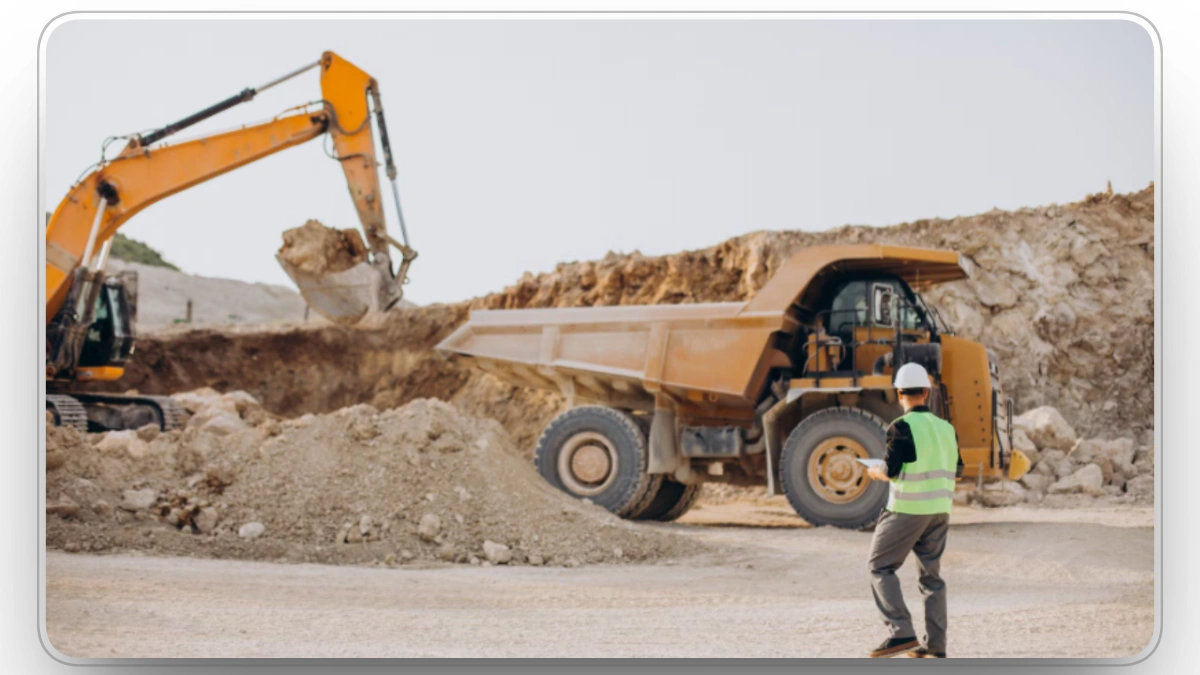
Three asset classes break the procedure above if you do not handle them explicitly. All three share one trait: no OEM telematics feed is enforcing an identity on them, so the discipline has to be manual.
Rentals. Register them, key them on vendor serial plus agreement number, and record two extra fields: off-rent date and contractual maintenance responsibility. A rented machine still occupies a slot in the dispatch pool and still needs a status, but a fault on it may be a phone call to the vendor rather than a work order in your shop. The off-rent date belongs on the weekly review agenda, because paying rent on an idle machine is the same failure as a canceled move, just quieter.
Attachments. Buckets, hammers, couplers, and grapples move independently of the carrier they were bought with, which means they get counted twice and lost regularly. Give them their own asset records with a parent-carrier link, and decide who reports their condition. In practice that is the operator, since the attachment is what actually contacts the work.
Machines with no telematics. Older iron, trailers, generators, small tools. These need manual meter entry on a fixed cadence and inspection-driven status instead of a feed. The important rule: an untracked machine's status is always unverified beyond a set age, and should display that way. The failure mode is not that you lack data. It is that a manually entered hour meter from six weeks ago looks exactly like a live one on screen.
What to Look For in Dispatch and Maintenance Software
Test the workflow, not the feature list. A platform can offer both dispatch and maintenance and still leave every handoff above undefined.
| Scenario | Primary Source | Required Logic | Effect on the Other Team | Buyer Test |
|---|---|---|---|---|
| Failed inspection | Inspection workflow | Create an issue, work order, or hold per defect rules | Availability changes only when policy requires it | Can the defect, notes, and photos stay attached without re-entry? |
| PM becomes due | Maintenance schedule plus approved meter source | Create or queue planned work per PM rules | Planner sees project commitments before scheduling | Can real meter data update PM timing? |
| Fault event | OEM or telematics source | Evaluate severity and recurrence before creating work | Critical conditions may change status, others stay in triage | Can it avoid turning every fault code into a duplicate work order? |
| Equipment assigned or transferred | Dispatch or operations | Expose the commitment to maintenance planning | Shop sees the assignment before scheduling a pull | Can a planner see it without calling dispatch? |
| Haul scheduled | Transport planning | Attach trailer class, permit needs, and delivery window to the move | Machine reads as in transit, not available | Does a booked haul actually remove the machine from the pool? |
| Rental on hire | Rental record | Carry off-rent date and maintenance responsibility | Shop knows whose work order it is | Are rentals first-class assets or a spreadsheet bolted on? |
| Work order closed | Maintenance | Confirm completion and required approval | Availability restored only under the release rule | Who owns final status, and what prevents premature release? |
| Sync or identity failure | Integration layer | Flag the exception, preserve the authoritative record | Stale status is never shown as current | Who is alerted, and which system stays authoritative? |
| Device offline in the field | Mobile app | Queue the capture, preserve the original timestamp | Field reality still reaches the shop | Does the record show when it was captured or when it synced? |
A strong answer specifies documented rules for identity, ownership, direction, timing, and failure handling. "Yes, we integrate" is not an answer. If you want to see how this looks in practice, the Clue feature set maps to these scenarios directly.
Where AI Fits in 2026

AI improves optimization inside each function. It does not resolve conflicting equipment identity or unclear status ownership, and in 2026 it raises the stakes on both.
Condition-based maintenance and AI-assisted dispatch both increase the number of events attached to each machine. More fault signals, more scheduling suggestions, more automated moves. Every one of those events hits the transition matrix in Step 2. If that matrix does not exist, the volume simply arrives faster and lands on the same two teams who already disagree.
The alert-fatigue problem is the clearest warning here. When a team receives hundreds of notifications per shift and most require no action, attention degrades until genuinely critical alerts get the same weight as noise. Fleets that fix this do it with correlation and triage rules, not more sensors. The rule in Step 4 is what converts a prediction into a decision. Without it, a better model just produces a longer queue.
The same logic applies on the dispatch side. A dispatch model cannot prevent a bad assignment if it cannot see maintenance status. A maintenance model cannot recommend a service window without project visibility. Get identity and ownership right first, and the automation compounds. Get them wrong, and it optimizes two workflows that continue to disagree, faster than a human would have.
The Operating Contract Between Dispatch and Maintenance
Uniting dispatch and maintenance stays on the to-do list year after year because the seam between them belongs to no single team. Operations owns equipment demand. The shop owns maintenance. The gap only becomes visible when a transfer fails, a PM slips, or a project learns that the machine it expected is not actually available.
Everything above reduces to three artifacts you can produce this quarter: a reconciled asset register, a signed status transition matrix, and a named owner for every decision. The software choices come after those exist, not before.
Clue is built for construction fleets that need dispatch, inspections, work orders, preventive maintenance, telematics, rentals, and project assignments to operate against the same asset record. The status rules, holds, approvals, and release logic stay yours to define, because they should reflect how your fleet actually runs.
The fleets that get this right in 2026 will not simply have better dispatch software or better maintenance software. They will have a clearer operating contract between the two.
Frequently Asked Questions
What is the first step to uniting construction dispatch and maintenance?
Reconcile every machine to one asset identity. Export the asset list from dispatch, maintenance, each OEM portal, each telematics provider, and ERP, then match on OEM serial or PIN first, unit number second, and telematics device ID last. Send unmatched records to a review queue rather than auto-merging them, and freeze ad-hoc asset creation once the list is clean.
How many equipment statuses should a construction fleet use?
Six is enough for most fleets: available, committed, in transit, working, maintenance hold, and out of service. More than that creates ambiguity about which statuses remove a machine from the available pool. Fewer usually means in transit got collapsed into committed, which is the most common source of double-booked hauls. What matters more than the count is that each status has a one-line definition and that every event moving a machine between statuses has a documented authorizer.
Who should own equipment availability status?
The shop foreman typically owns the hold and the release, the dispatcher owns the project commitment, and the equipment manager approves substitutions and the release of critical assets. The specific org chart matters less than the rule that each decision has exactly one owner, written down and signed by both operations and the shop.
What happens to the job when a machine goes on maintenance hold?
The work does not disappear, so every hold needs a substitution decision attached. The options are reassigning another owned unit, resequencing the task, or renting a replacement. Rentals need the longest lead time and carry the highest short-notice premium, so the substitution conversation should start when the hold is placed, not when the crew is already waiting.
Should every fault code create a work order?
No. Route fault codes through a severity and recurrence rule first, then decide. Condition-based monitoring generates far more events per machine than manual inspection programs did, and converting each one into a work order buries the shop in duplicates and repeat records. A single signal is usually noise; several correlated signals on the same system usually are not. Critical conditions can change status immediately, while non-critical and repeat codes should queue for triage.
Is an all-in-one suite enough to unite dispatch and maintenance?
Not by itself. One vendor can still maintain separate records or status fields across modules, refresh them on different schedules, and let each overwrite the other. What matters is whether dispatch and maintenance read and write the same asset record, whether availability has a named owner, and whether the platform surfaces sync failures instead of hiding them.
How do you handle rented equipment in a unified dispatch and maintenance workflow?
Register rentals as first-class assets keyed on the vendor's serial number plus the rental agreement number, and add two fields owned iron does not need: the off-rent date and who owns maintenance under the contract. That second field decides whether a fault code creates your work order or a call to the rental desk. Put upcoming off-rent dates on the weekly review agenda, since paying rent on an idle machine is the same coordination failure as a canceled move.
How do you handle attachments and machines with no telematics device?
Untracked assets need the same identity discipline, just with manual meter entry and inspection-driven status instead of a telematics feed. Attachments, trailers, generators, and older iron are where duplicate records cluster, because no OEM feed is enforcing a serial number on them. Register them in the same asset list under the same ownership rules, and display their status as unverified beyond a set age so a six-week-old manual meter reading does not look like a live one.
What happens when the job site has no cell signal?
Treat it as a planned condition, not an outage. Inspections and defect reports should capture offline and sync later with the original capture timestamp preserved, any status set offline should carry the same unverified flag as a stale integration feed, and there should be a documented voice fallback for safety-critical holds so the paper trail survives when the app could not.
Does uniting dispatch and maintenance mean replacing our telematics?
No. A construction fleet platform should connect to the supported telematics and OEM sources you already run. Where a connector supports the fields, engine hours, location, utilization, and fault data can feed maintenance workflows directly. It should also handle untracked assets, so the workflow is not limited to machines with a device installed.
How long does this take, and what does it cost to skip?
Plan a quarter: roughly five weeks on identity, two on publishing and signing the rules, three on wiring handoffs, and the rest on exception handling and baselining. The cost of skipping it is hard to see because it lands in pieces. Standby labor sits in one cost center, a wasted haul in another, a short-notice rental in a third, weeks apart. Cost out two real events end to end and you will have a more persuasive number than any published benchmark.

Transform Your Equipment Management


