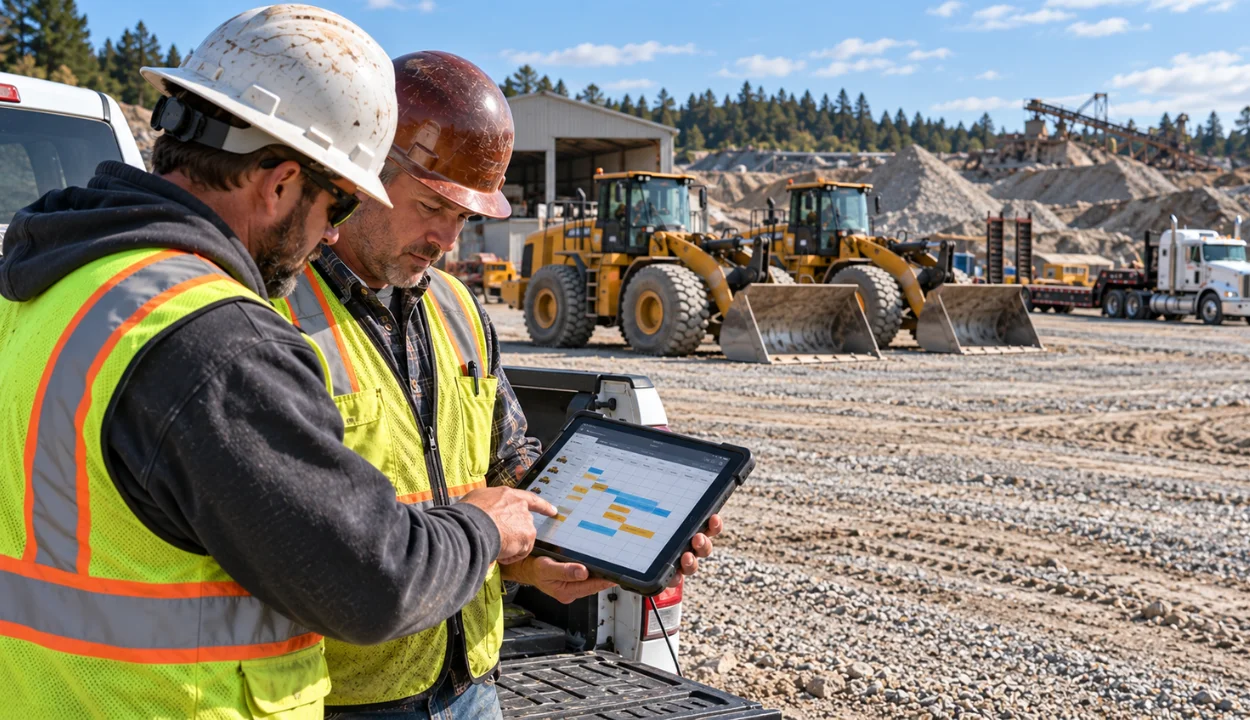
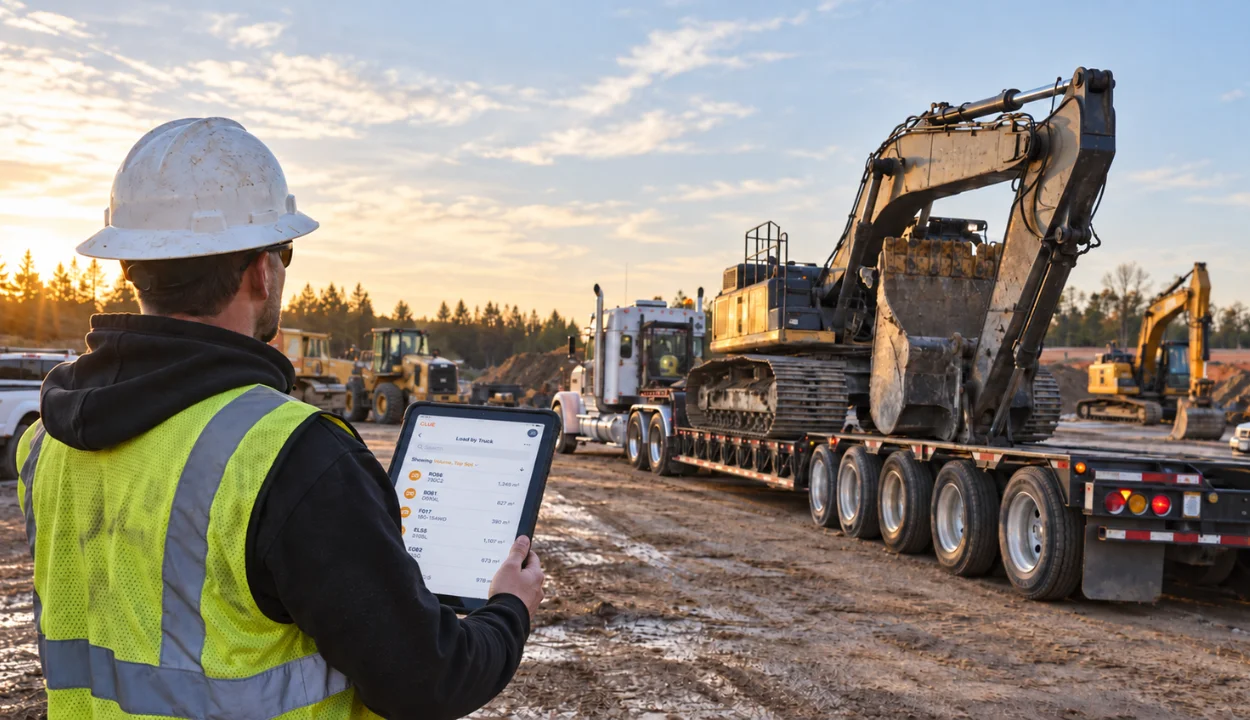
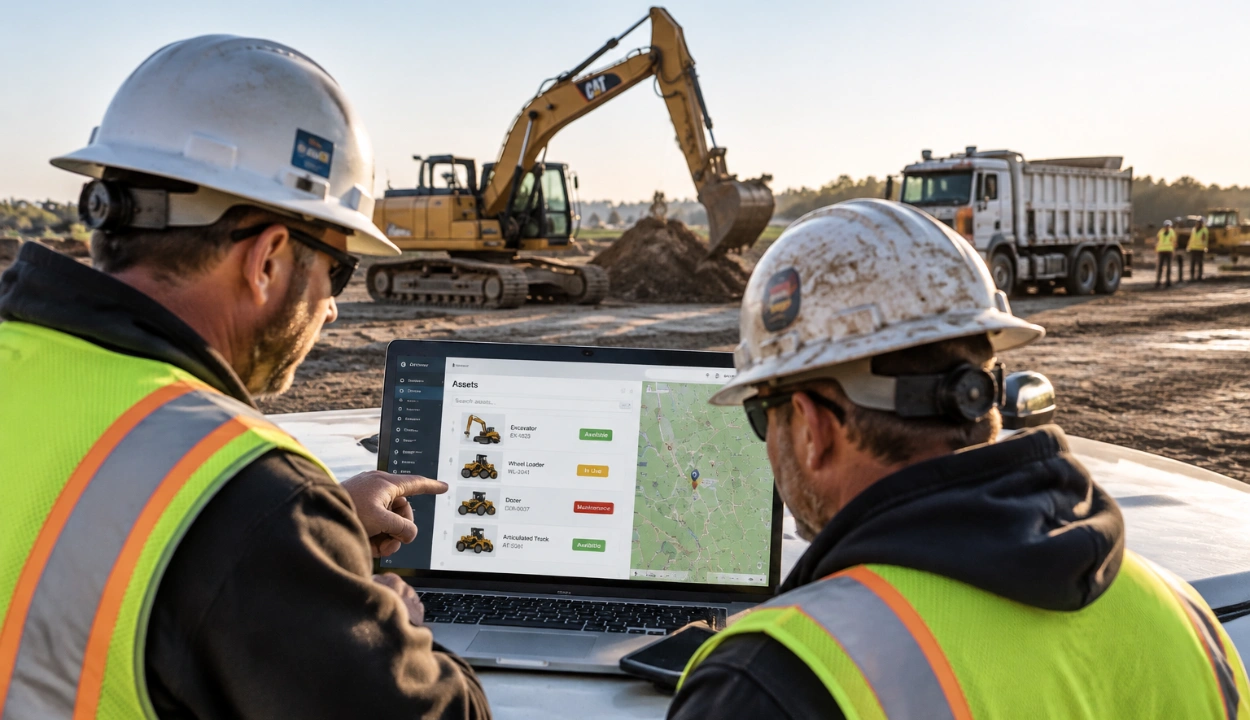
Efficient construction equipment management is critical to project success. From fleet procurement and scheduling to operational performance and downtime control, a Construction Equipment Manager plays a central role in ensuring assets are available, reliable, and ready when needed.
With costs involved in maintaining or replacing equipment being substantial, effective construction equipment management requires a mix of operational expertise, strategic decision-making, and innovative technology to optimize equipment use and minimize inefficiencies.
This guide provides an in-depth look at the role, key responsibilities, and best practices that make construction equipment managers highly effective. It also discusses how advanced software tools and technologies can elevate equipment management strategies.
Who Is a Construction Equipment Manager?
A Construction Equipment Manager oversees the entire lifecycle of construction assets, from procurement and operation through maintenance and eventual replacement. This managerial role ensures that construction equipment is properly maintained, operational, and efficiently used throughout its lifespan.
What are the key responsibilities of a construction equipment manager?

Construction equipment managers oversee heavy equipment to maximize uptime, safety compliance, and cost efficiency.
- Procurement and sourcing: Decide whether to buy, rent, or lease based on project duration, availability, and total cost of ownership. They also need to identify equipment that fits the project requirements, taking into consideration factors like capacity, technology, and lifecycle costs.
- Scheduling and allocation: Ensure the right equipment is on the right job at the right time, with minimal idle time and avoidable moves. The manager must coordinate equipment allocation across multiple projects, ensuring minimal downtime.
- Maintenance and Repairs: Regular maintenance and quick repairs are necessary to prevent unexpected failures that could halt construction. Managers plan maintenance schedules, ensuring equipment remains compliant with safety standards and operational efficiency.
- Cost and Budget Control: The manager must track equipment-related costs, including maintenance, fuel, and repairs, ensuring that the project stays within budget while maintaining productivity.
- Safety and Compliance: Ensuring all equipment meets regulatory requirements and safety standards is non-negotiable. The manager coordinates inspections and ensures that operators follow safety protocols.
The Importance of a Construction Equipment Manager
The role of a Construction Equipment Manager is critical to the success of any construction project.
Studies indicate that maintenance issues account for about 40% of total project cost overruns, primarily due to equipment breakdowns and poor planning. This emphasizes the importance of having a skilled manager who can proactively address maintenance needs, track usage, and schedule repairs.
By overseeing the condition and operation of heavy equipment, managers help ensure that projects stay on track, on time, and within budget.
10 Things Which Make a Construction Equipment Manager Highly Effective
Whether you're looking to improve equipment utilization, enhance safety, or streamline maintenance processes, these attributes are critical to achieving success in the field of equipment management.
1. Effective Preventive and Predictive Maintenance Implementation
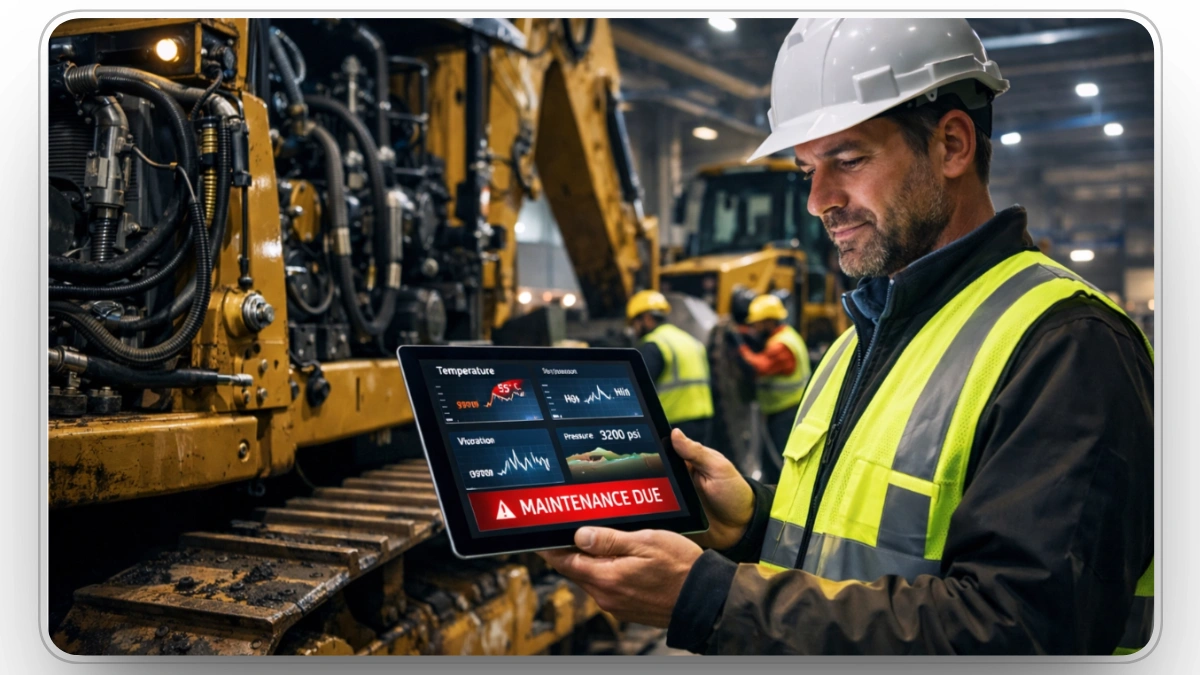
An effective fleet manager understands the critical importance of preventive and predictive maintenance. These practices go beyond reactive maintenance by proactively addressing wear and tear and using data to anticipate potential failures before they happen.
- Preventive Maintenance (PM): Scheduling routine maintenance based on recommended intervals and usage patterns to avoid breakdowns.
- Predictive Maintenance (PdM): Using telematics, IoT sensors, and analytics to monitor equipment conditions like temperature, vibration, and pressure, which helps predict when repairs are needed.
By adopting these strategies, managers reduce downtime, extend the lifespan of assets, and ensure operational readiness throughout the life cycle of equipment.
2. In-Depth Technical Understanding of Equipment
A highly effective fleet manager must possess a robust technical understanding of the assets they are responsible for. This involves knowledge of engine systems, hydraulics, diagnostics, and the overall functioning of the equipment.
- Mechanical Troubleshooting: Ability to identify and resolve issues quickly, reducing dependency on external service providers.
- Understanding Manufacturer Specifications: Knowledge of equipment specifications, maintenance schedules, and warranty terms ensures that equipment is maintained to the highest standards.
Technical expertise allows managers to make informed decisions about repairs, replacements, and the overall health of the equipment fleet.
3. Utilization of Equipment Management Software
Effective fleet managers use construction equipment management software to centralize the tracking and scheduling of equipment. These systems provide valuable insights into asset health, usage rates, maintenance schedules, and cost analysis.
- Centralized Data Management: Equipment data such as fuel consumption, usage hours, and service logs are stored in one platform, streamlining workflows and reducing manual tracking.
- Automation: Software can automate maintenance schedules, service alerts, and cost tracking, minimizing administrative workload and improving decision-making efficiency.
With these tools, managers can ensure equipment is being utilized effectively, track maintenance in real-time, and make data-driven decisions that optimize fleet performance.
4. Efficient Equipment Utilization and Allocation
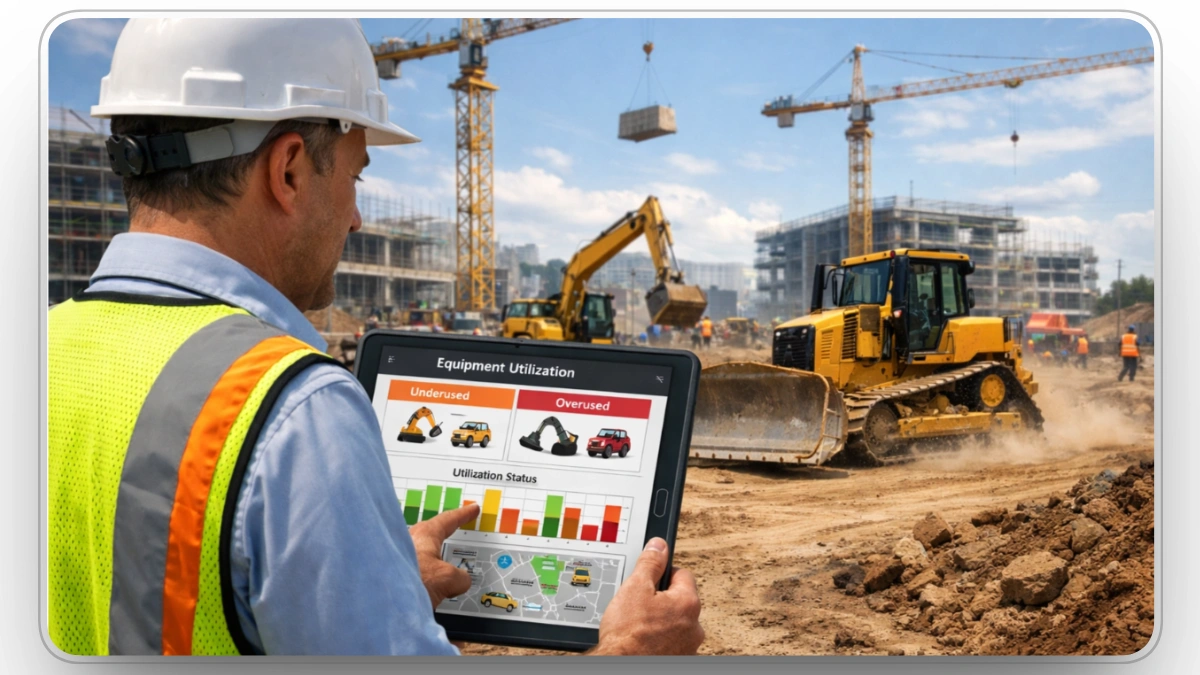
A key responsibility of the equipment manager is ensuring that every asset is used efficiently. Underutilized equipment creates unnecessary costs, while excessive use can accelerate wear and lead to premature breakdowns.
- Utilization Metrics: Software tools can track and report on how much each piece of equipment is used, helping managers identify underutilized equipment and reallocate them to other projects.
- Job Allocation: Effective job allocation ensures that the right equipment is dispatched to the right project, minimizing idle time and ensuring maximum efficiency.
This helps maximize ROI on each assets while minimizing downtime and maintenance costs.
5. Operator Training and Engagement
Proper training and engagement are essential for ensuring that equipment operators are equipped to use assets safely and efficiently. Effective managers implement continuous training programs to keep operators updated on best practices, maintenance routines, and safety protocols.
- Daily Inspections: Operators are trained to perform pre-operation inspections, reducing the likelihood of unnoticed faults or damage.
- Safety Practices: Regular training ensures that operators follow proper safety measures, reducing the risk of accidents and ensuring compliance with regulatory standards.
This proactive approach not only improves safety but also helps in preserving the condition of assets, leading to lower repair costs.
6. Safety and Compliance Management
A highly effective equipment maintenance manager always places safety and compliance as top priorities. They ensure that all equipment complies with local OSHA, ANSI, and other relevant safety regulations, and they manage regular safety inspections.
- Regulatory Compliance: Ensuring that equipment complies with industry standards and regulatory requirements to prevent fines and accidents.
- Safety Inspections: Regular, documented safety inspections of equipment to ensure it is operating safely and efficiently.
Effective safety and compliance management reduces the risk of costly accidents and legal liabilities, keeping the project on schedule and within budget.
7. Parts Inventory and Supply Chain Management
An effective construction fleet manager ensures that critical parts are readily available for repairs, avoiding costly delays. They maintain an inventory of commonly used parts and foster relationships with suppliers to ensure quick access to parts when needed.
- Parts Forecasting: Monitoring usage trends to predict when parts will need replacement and ordering them in advance.
- Inventory Management Systems: Implementing systems to track part usage, helping managers avoid stockouts and minimize downtime due to unavailable parts.
Well-organized parts inventory and supply chain management ensure that repairs can be completed quickly, minimizing downtime.
8. Data-Driven Decision Making
An effective equipment manager uses data analytics to drive decisions related to equipment purchasing, maintenance, and scheduling. By analyzing Key Performance Indicators (KPIs) like Mean Time Between Failures (MTBF), maintenance costs, and equipment availability, they can make informed choices that improve operational efficiency.
- Performance Metrics: Regularly tracking equipment performance metrics to determine when to repair, replace, or retire assets.
- Cost Tracking: Using data to analyze operational costs and improve budget management by identifying areas where savings can be made.
Data-driven decision-making leads to more effective resource allocation and helps in identifying trends that optimize equipment performance and costs.

9. Strong Communication and Cross-Functional Coordination
A highly effective equipment operations manager communicates effectively with different departments, such as project managers, procurement teams, operators, and maintenance crews. Clear communication ensures that everyone is aligned with the equipment’s availability, operational needs, and maintenance schedules.
- Cross-Department Collaboration: Working closely with project managers to understand the equipment requirements of each phase of the project.
- Vendor Relations: Maintaining good relationships with suppliers to ensure prompt deliveries of parts and equipment when necessary.
Efficient communication improves workflow coordination and ensures equipment is available when and where it’s needed.
10. Long-Term Asset Lifecycle Management
An effective construction equipment operations manager doesn’t just focus on day-to-day operations but also plans for the long-term. This involves asset lifecycle management, determining when equipment should be repaired, replaced, or retired based on performance data and cost projections.
- Asset Replacement Strategy: Analyzing the total cost of ownership and planning for equipment replacement before maintenance costs become prohibitive.
- Budget Forecasting: Long-term financial planning to ensure funds are available for purchasing new equipment or maintaining the fleet as needed.
Strategic asset lifecycle management ensures the equipment fleet remains reliable, reduces the need for urgent purchases, and avoids unexpected costs.
How Clue Helps Construction Equipment Managers for Success
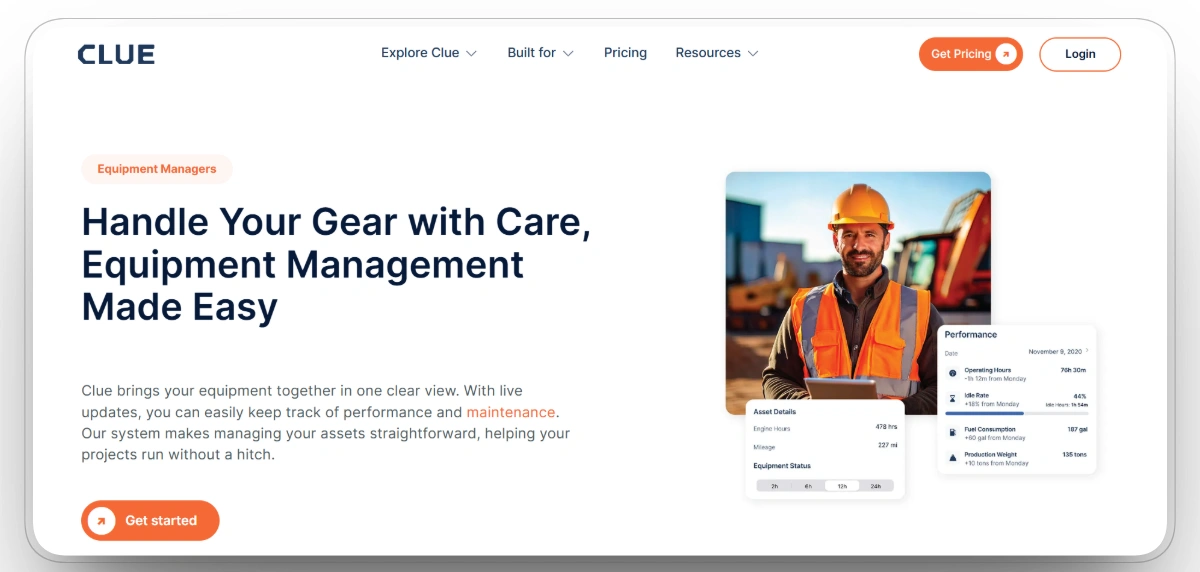
Clue helps equipment managers run a consistent operating system so utilization, maintenance, inspections, and jobsite allocation are managed through one workflow instead of spreadsheets, phone calls, and disconnected portals.
Rather than scattered spreadsheets, multiple telematics portals, and manual record‑keeping, Clue provides real‑time visibility, automated processes, and actionable analytics, all essential for equipment maintenance managers seeking operational control and clarity.
Centralized Fleet and Asset Visibility
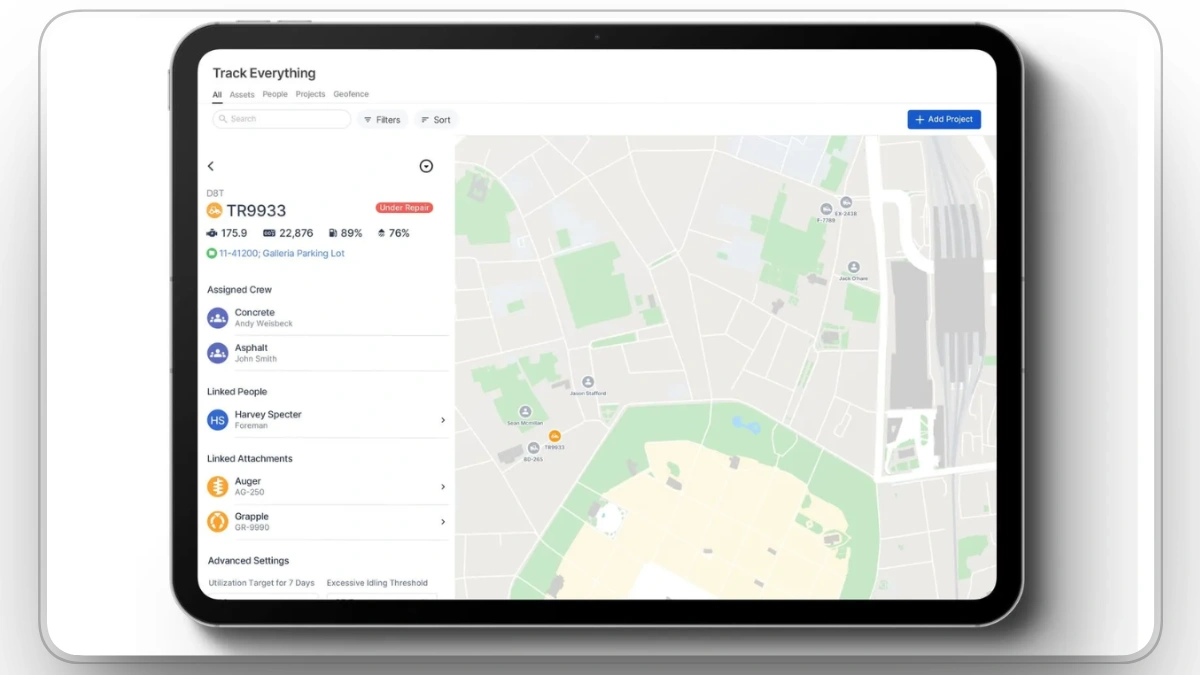
Clue unifies asset tracking, utilization data, maintenance status, and jobsite deployment into one cohesive dashboard, giving equipment operations managers a single pane of glass view of all equipment.
This level of visibility ensures that managers know where each equipment is, how it’s being used, and when it needs attention, information critical for maximizing uptime and avoiding idle costs.
AI‑Driven Analytics and Reporting
The platform integrates telematics, GPS data, maintenance schedules, and cost information, applying AI to produce meaningful insights.
Managers can see utilization patterns, downtime trends, and cost breakdowns, enabling informed decisions about scheduling, redeployment, and budget planning without manually crunching data.
Maintenance Workflow Integration
Clue automates preventive maintenance, work order creation, inspections, and repair history tracking.
Equipment managers no longer need to manually schedule services or track paper logs; instead, the system generates tasks based on usage data and fault codes, ensuring that equipment remains reliable and that service needs are addressed before breakdowns occur.
Real‑Time Utilization and Idle Monitoring
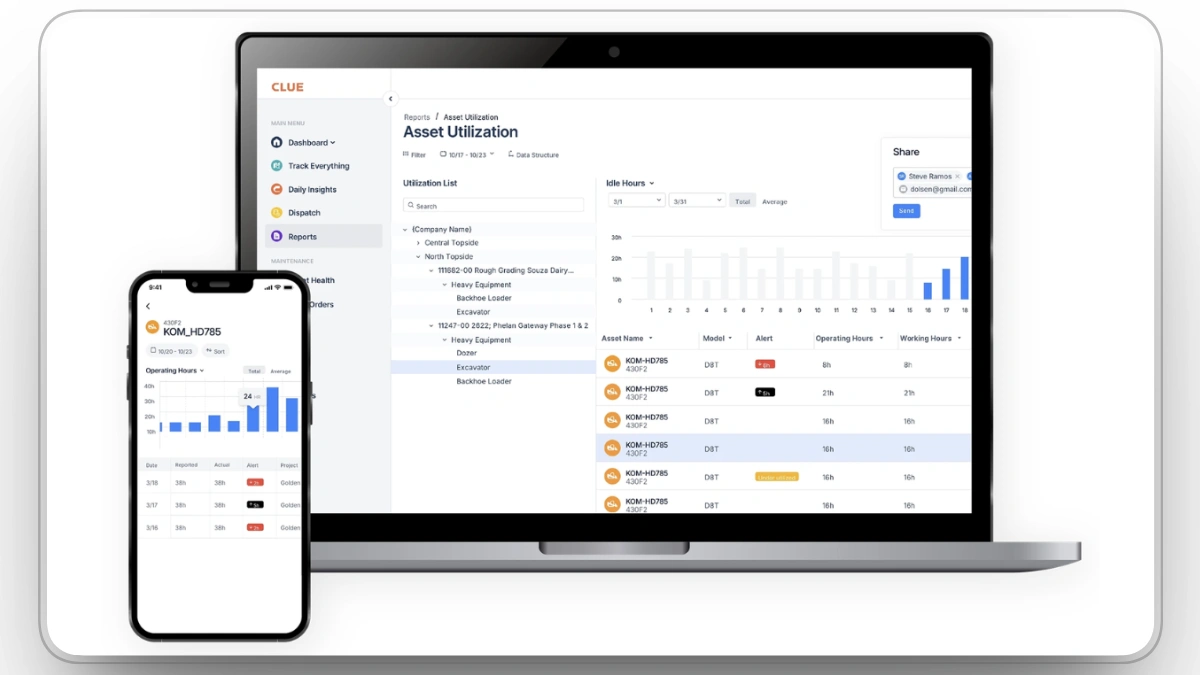
Visibility into real‑time usage helps identify under‑ or over‑utilized assets. Clue’s utilization insights allow equipment operations managers to reassign idle equipment or redeploy underutilized assets, reduce unnecessary rentals, and justify capital deployment strategically. This visibility directly supports cost control and project scheduling.
Field‑Ready Accessibility

Clue offers iOS and Android mobile applications that provide equipment status, maintenance alerts, and location data directly to field teams.
This reduces the friction between office planning and on‑site execution, ensuring updates are timely and accurate regardless of physical location.
Comprehensive Integration with Existing Systems
Clue supports more than 70 integrations with GPS, telematics, ERP, and CMMS systems, enabling equipment operations manager to leverage existing infrastructure and data flows while consolidating information into a unified system of record. This prevents data silos and facilitates a more cohesive operational picture across teams.
Key Challenges in Construction Equipment Management

Below are some of the key challenges that construction equipment managers face in their daily operations.
1. Equipment Underutilization
Ensuring assets are used to their full potential is one of the biggest challenges. Underutilized equipment means that the fixed costs of owning or leasing assets are not justified, leading to higher costs without sufficient returns on investment.
2. Rising Operational Costs
As projects become more complex, operational costs such as fuel, maintenance, and repairs can increase dramatically. Equipment managers are tasked with controlling these costs while maintaining efficiency and avoiding delays.
3. Safety and Compliance Risks
Construction equipment is often a significant cause of on-site accidents. Ensuring that all equipment meets safety regulations is essential to avoid penalties and ensure worker safety. Non-compliance can lead to legal liabilities and project delays.
4. Equipment Downtime
Unexpected equipment breakdowns or failures can significantly disrupt a construction project. Downtime results in delays, increased repair costs, and a negative impact on project schedules.
5. Managing Equipment Lifecycle
Effectively managing the lifecycle of equipment, from acquisition to replacement, is a challenge. Equipment operations managers must decide when it’s most cost-effective to repair, replace, or retire assets based on performance and cost of ownership.
6. Maintaining Spare Parts Inventory
Maintaining an adequate supply of spare parts for equipment repairs can be challenging. A lack of critical parts can cause significant delays, especially when parts have long lead times, impacting project timelines.
7. Fuel Management and Efficiency
Fuel consumption is a major ongoing cost in equipment management. Efficient fuel usage is vital to reduce overall expenses, and managing fuel consumption can be difficult without proper tracking.
8. Coordination Across Multiple Projects
Managing equipment across multiple construction sites requires careful coordination to ensure equipment is available when and where it is needed. Scheduling and resource allocation across multiple projects can lead to conflicts and delays if not managed properly.
Best Practices for Managing Construction Equipment
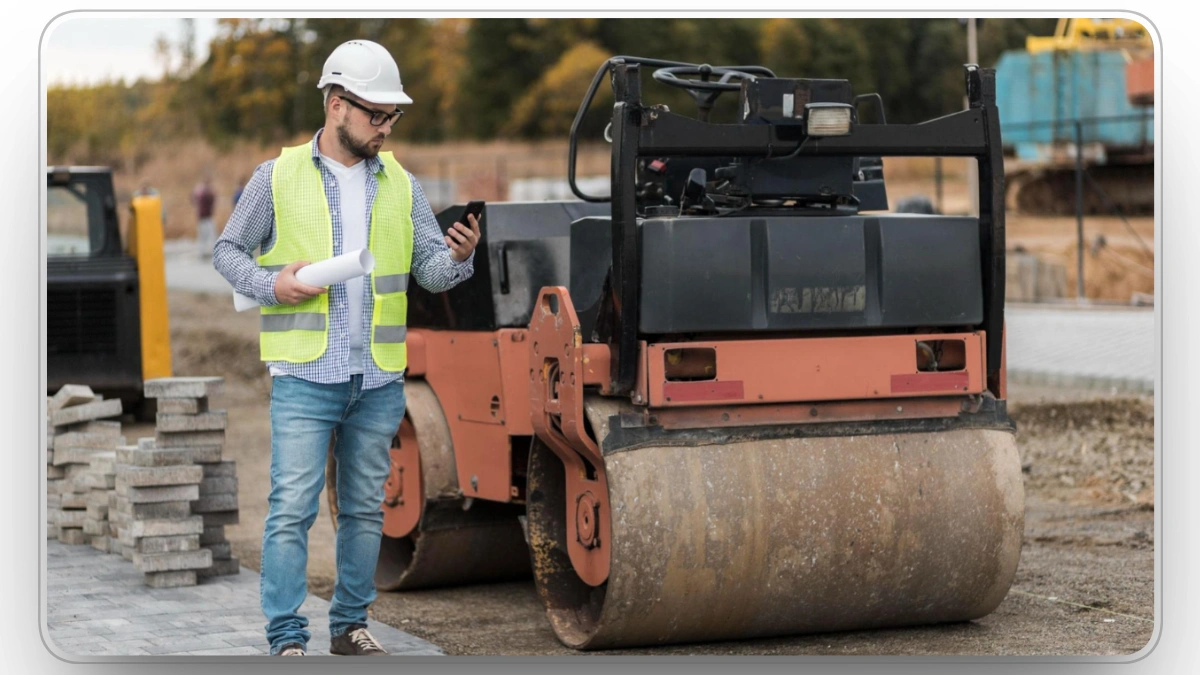
This section outlines the best practices that top-performing construction equipment managers follow to reduce downtime, optimize costs, and ensure smooth operations.
1. Leveraging Data-Driven Insights
Using equipment management software and telematics, managers can optimize equipment performance and reduce costs. Analyzing data allows for tracking the equipment lifecycle and proactively addressing issues like downtime and maintenance costs before they disrupt the project.
2. Streamlining Equipment Procurement and Leasing Decisions
Decide whether to lease or purchase equipment based on project duration and budget. Conduct a cost-benefit analysis to determine the most economical choice, and build long-term relationships with vendors to secure better pricing and service contracts.
3. Training and Development
Regularly train operators on equipment use and safety protocols to reduce accidents, extend asset life, and improve performance. Safety drills should be integrated into team meetings to maintain high standards of safety and compliance.
4. Maintaining a Strategic Parts Inventory
Ensure critical parts are always in stock to avoid delays. Monitor usage trends to forecast when parts will need replacement, allowing for proactive ordering and minimizing downtime.
5. Monitoring Equipment Utilization and Performance
Track the usage and performance of all equipment to avoid underuse or overuse. Adjust allocations as needed to ensure optimal utilization, reducing idle time and preventing unnecessary wear and tear.
Final Thoughts
The role of a Construction Equipment Manager is dynamic and multifaceted, requiring a blend of technical knowledge, operational insight, and a strategic approach to equipment management.
By adopting advanced equipment management software, implementing predictive maintenance, and leveraging emerging technologies such as AI and IoT, managers can maximize the efficiency, safety, and cost-effectiveness of construction equipment.
Clue is a powerful tool that equips equipment managers with real-time visibility, automated maintenance scheduling, and data-driven insights. With Clue, managers can optimize equipment utilization, reduce downtime, and make more informed decisions, ultimately driving better project outcomes and ensuring that every asset is working at its peak potential.
FAQs
1. How can construction equipment managers optimize fuel consumption?
Fuel consumption is a major cost for construction projects. Construction Equipment operations managers can optimize fuel use by implementing fuel tracking systems that analyze engine performance, identify inefficiencies like idling, and track fuel usage in real-time. Managers can then adjust usage patterns and scheduling to reduce fuel wastage.
2. What is the role of technology in extending the lifespan of construction equipment?
By integrating IoT sensors and predictive maintenance technologies, managers can continuously monitor equipment health, anticipate mechanical issues, and schedule maintenance before failures occur. This proactive approach significantly extends lifespan and reduces costly repairs.
3. How do equipment managers handle the challenges of seasonal demand fluctuations?
Seasonal fluctuations in demand for construction equipment require careful planning and scheduling. Managers can use asset management software to track peak usage periods, adjust the allocation of equipment based on project timelines, and reduce idle time during off-seasons by optimizing rental agreements and sharing across sites.
4. How does effective communication with operators improve equipment performance?
Effective communication with operators is essential for ensuring equipment is used efficiently and safely. Managers can schedule regular meetings and provide feedback on equipment operation, ensuring that operators follow best practices for maintaining asset health, adhering to safety protocols, and minimizing operational errors that could lead to breakdowns.
5. How can construction equipment managers reduce downtime through training?
Ongoing training for operators and maintenance staff is key to minimizing downtime. Managers can implement hands-on workshops to improve operator skills, teach preventive maintenance techniques, and ensure that personnel can quickly identify and address minor issues before they escalate into costly repairs.
6. What is the impact of over-maintaining construction equipment?
While preventive maintenance is critical, over-maintaining equipment can lead to unnecessary costs, such as the premature replacement of parts that still have useful life left. Managers need to balance the maintenance schedule based on equipment usage data and not adhere strictly to manufacturer intervals, which may not always reflect real-world operating conditions.
7. How do equipment managers ensure compliance with environmental regulations?
Construction equipment maintenance managers are responsible for ensuring that assets meet environmental standards, including emissions regulations. They can achieve this by maintaining eco-friendly equipment, utilizing telematics for real-time emission tracking, and ensuring that equipment is regularly serviced to meet local and national environmental compliance standards.
8. What role does fleet management software play in reducing equipment theft?
Fleet management software, combined with GPS tracking, helps deter equipment theft by providing real-time location monitoring and geofencing. Managers can quickly identify unauthorized movement and receive alerts if equipment is being tampered with, ensuring faster recovery and reducing losses due to theft.

Transform Your Equipment Management