Top 10 Sustainability Software for Construction Equipment in 2026


Hi, I’m Maham Ali. I write about construction equipment management, helping teams use fleet data and maintenance intelligence to improve uptime, control costs, and run smoother jobsites.
Sustainability for construction equipment isn’t a “nice to have” anymore, it’s a measurable operating advantage. Equipment fleets are one of the fastest places to cut emissions because the biggest drivers are also the biggest costs: fuel burn, idle time, and under-utilized machines.
In 2026, the best sustainability software for construction equipment focuses on action, not just reporting. That means connecting AEMP 2.0 / OEM telematics, fuel sources (cards + tanks), and maintenance signals then turning that data into idle enforcement, utilization optimization, right-sizing decisions, and clean CO₂ reporting your owners and ESG teams can actually reuse.
This guide ranks the top platforms built for (or commonly used in) equipment sustainability. We prioritized tools that help you reduce fuel waste, cut idle hours, simplify CO₂ reporting, and improve machine efficiency across mixed fleets.
How We Evaluated These Sustainability Tools
Sustainability in construction equipment starts with better visibility into fuel burn, idle time, utilization, emissions, and maintenance behavior. The right software helps contractors turn fleet data into measurable environmental and operational improvements.
We reviewed each platform based on product capabilities, public documentation, integrations, sustainability features, construction equipment relevance, and customer feedback. Clue is included, but all vendors were evaluated using the same framework for a fair, practical comparison.
Evaluation Criteria
These criteria prioritize software that does more than calculate emissions after the fact. The best platforms connect fuel, telematics, utilization, and maintenance data so contractors can reduce waste at the equipment level while producing reports that owners, executives, and ESG teams can trust.
Sources
- Vendor websites and sustainability feature documentation
- Public information on fuel tracking, idle monitoring, emissions reporting, and telematics integrations
- Customer reviews, ratings, and construction fleet case studies
- Construction sustainability, ESG, and equipment efficiency resources
- Software review platforms covering fleet, equipment, and sustainability tools
Editorial Review
The review focused on how effectively each platform helps contractors reduce fuel waste, control idle time, monitor emissions, improve utilization, and connect sustainability goals with everyday equipment decisions.
Quick‑scan Comparison Matrix
Top 10 Sustainability Software for Construction Equipment in 2026
1. Clue
Best for: Contractors seeking mixed-fleet sustainability and carbon reduction.
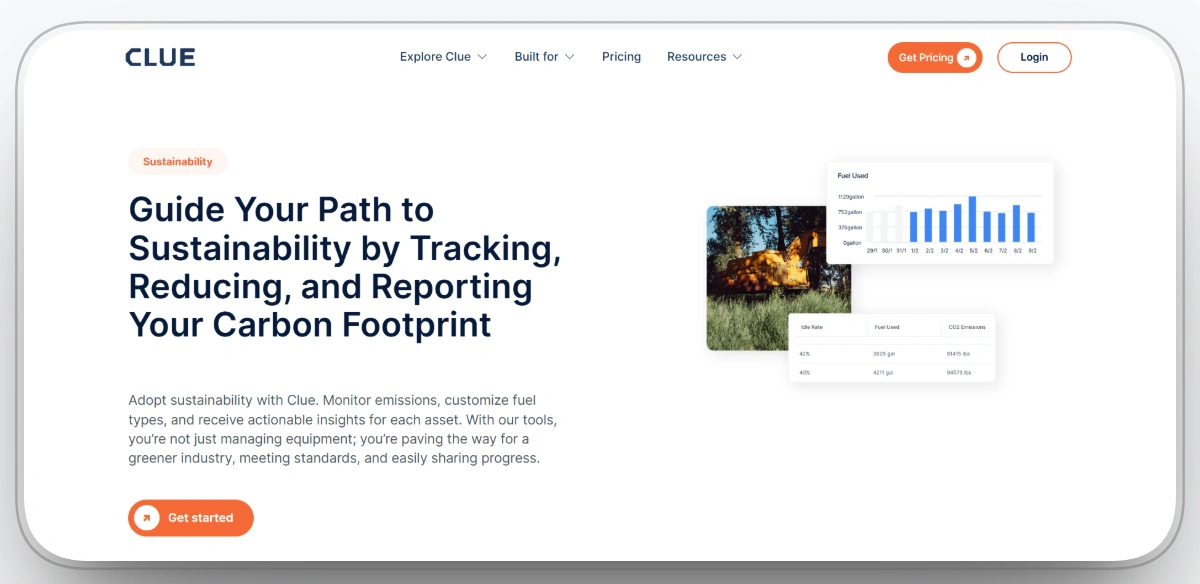
Clue is a construction-native sustainability software designed to help contractors optimize fuel use, reduce CO2 emissions, and improve the efficiency of construction equipment fleets. By integrating AEMP/OEM telematics, fuel cards, and usage-based preventive maintenance, Clue empowers teams to track and reduce fuel burn, idle time, and overall emissions across diverse fleets of construction machinery.
Clue enforces idle policies by site, asset, and shift, flagging after-hours or unauthorized runtime. It also converts fuel data into real-time CO2 emissions and generates exportable ESG reports (CSV/PDF), streamlining compliance and client transparency. With its intuitive utilization heatmaps and cycle-time analytics, Clue helps teams identify underused equipment, optimize machine usage, and reduce carbon impact and rental costs.
Beyond dashboards, Clue offers role-based views and mobile access, enabling superintendents and shop leads to act on high-impact savings directly from the field. AI-driven productivity insights identify idle clusters, excessive transportation runs, and underutilized assets, transforming emissions data into actionable steps. Clue’s seamless integration with construction equipment brands like Cat, Komatsu, Deere, Volvo, and fuel-source inputs creates a unified environmental performance record for the entire fleet.
Key Features of Clue
- Emission Insights: Clue provides real-time CO2 estimates per construction equipment, integrating data from telematics, fuel management, and engine hours to ensure transparency and traceability in emissions.
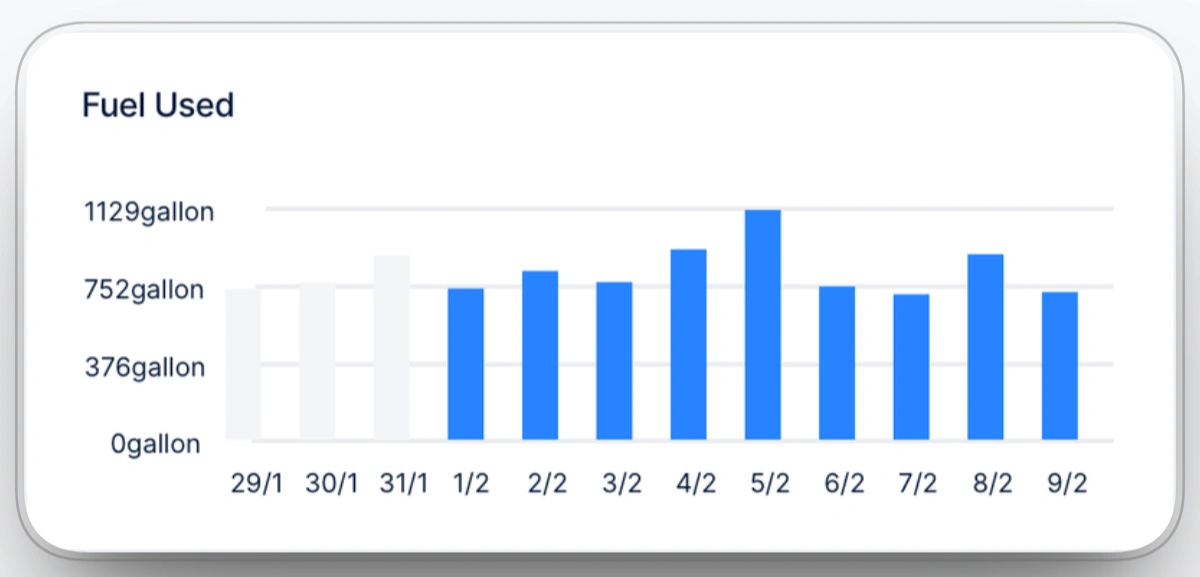
- Eco-Friendly Analytics: Clue converts engine hours, idle time, and usage data into actionable sustainability metrics, helping teams reduce fuel waste and improve equipment efficiency.
- Carbon Track Dashboard: The dashboard aggregates CO2 emissions by equipment and job site, providing a Carbon Intensity Metric (CIM) that helps benchmark performance and generate accurate reports for ESG teams or clients.
- Eco Operation Mapping: Interactive site maps show construction equipment that are not performing efficiently or are idling, helping teams adjust workflows to minimize fuel consumption and emissions.
- Green Compliance Reporting: Streamlines sustainability and environmental compliance reporting, supporting LEED, BREEAM, and other green certifications while providing ready-to-use ESG reports.
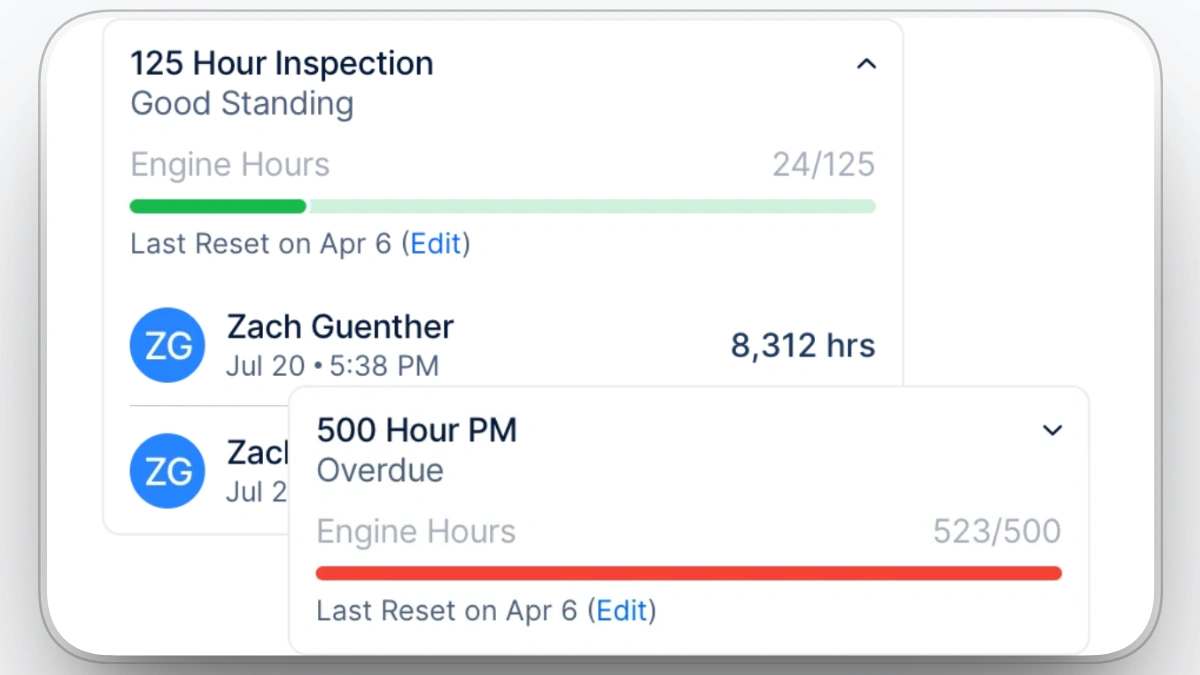
- Sustainable Usage Stats: Tracks equipment utilization and maintenance to ensure machines run efficiently, boosting longevity and minimizing carbon emissions.
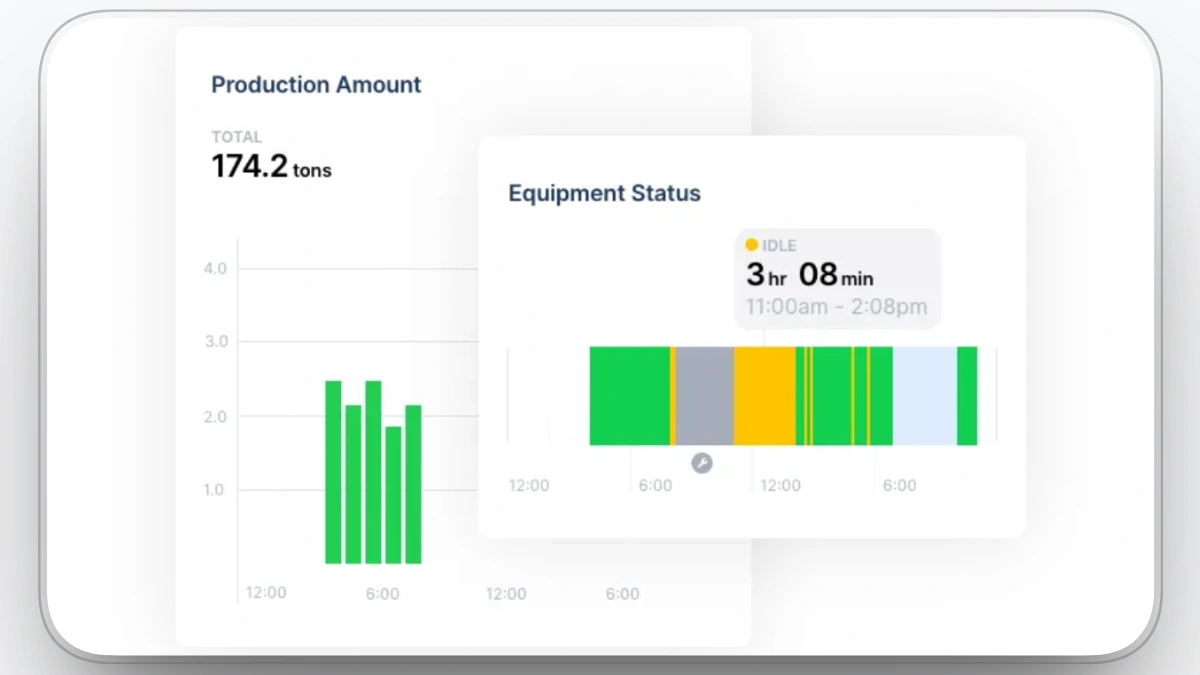
- Eco Audit Trails: All sustainability actions, such as idle reduction and preventive maintenance, are time-stamped and logged for auditing purposes, creating a defensible sustainability history.
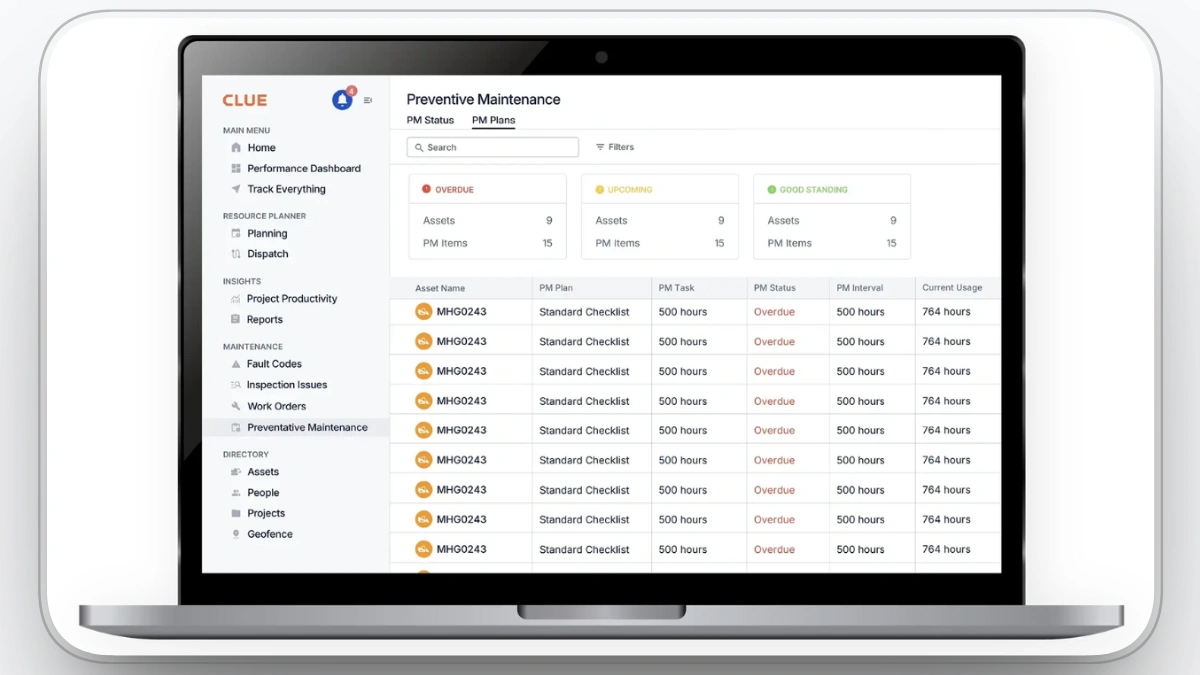
Clue Pros
- Pulls carbon and fuel data directly from AEMP/OEM feeds, eliminating reliance on manual fuel logs.
- Converts fuel consumption to CO2 intensity per machine hour, helping contractors benchmark the environmental cost of every construction equipment asset.
- Ties idle alerts to site, shift, and project budgets, ensuring sustainability actions align with cost-saving measures.
- Combines utilization and emissions in one dashboard, helping teams spot when underused assets are wasting fuel.
- Supports mixed fuel types and hybrid assets (diesel, biodiesel, EVs) for accurate emissions modeling in construction fleets.
Clue Cons
- Requires accurate fuel and telematics data for full precision in tracking and reporting.
Clue Rating
Capterra: 4.6/5
G2: 4.5/5
2. Workiva
Best for: Integrated ESG, carbon accounting, and sustainability reporting with unified data.
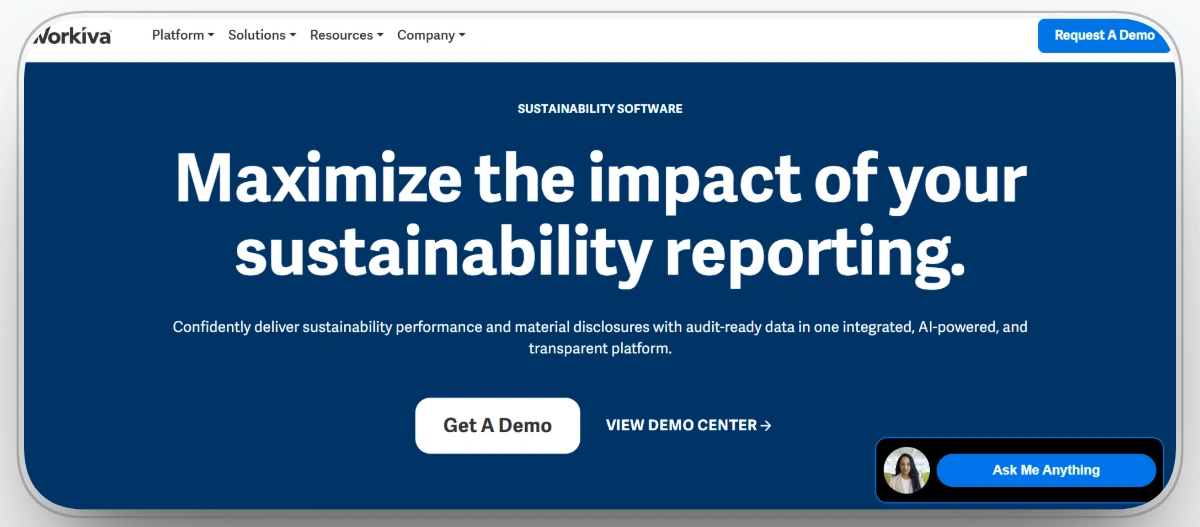
Workiva is an AI‑powered sustainability management platform that helps organizations centralize and streamline ESG and carbon reporting. It unifies financial and non‑financial data in one audit‑ready system, enabling teams to track emissions trends and report on sustainability performance with transparency and confidence. Workiva’s platform is designed to handle complex reporting frameworks like CSRD, ISSB, and other global standards, making it easier to ensure regulatory compliance and data integrity for sustainability initiatives.
For construction equipment sustainability, Workiva can aggregate emissions data including fuel usage and scope 1, 2, or framework‑aligned footprint metrics into consolidated reports that support decision‑making and regulatory compliance. By automating data collection and reporting workflows, Workiva reduces manual work and increases traceability for sustainability performance across assets.
Workiva Pros
- Centralizes ESG and financial data for reporting.
- Supports global sustainability standards.
- Automates sustainability reporting.
- Strong integration and collaboration tools.
Workiva Cons
- Not focused on equipment-specific data.
- Best for larger enterprises.
- High cost for smaller firms.
- Complex setup for smaller teams.
Workiva Rating
G2: 4.5/5
3. Procore

Best for: Project management with integrated sustainability features for resource optimization.
Procore is a comprehensive project management platform that includes integrated sustainability tools specifically designed to improve construction equipment efficiency. Procore allows contractors to track resource use, optimize materials, and manage waste in real time, all while keeping an eye on fuel consumption and emissions from construction equipment.
With a focus on sustainability, Procore provides teams with the ability to monitor the environmental impact of every aspect of a construction project, including equipment usage. It helps reduce unnecessary fuel consumption, idle time, and emissions by providing detailed analytics and actionable insights that improve overall efficiency. Procore also helps construction teams streamline project workflows, ensuring that sustainability goals are met while maintaining high productivity.
Procore Pros
- Comprehensive sustainability management tools.
- Tracks emissions, waste, and resource use.
- Supports green certifications (LEED, BREEAM).
- Real-time collaboration for teams.
Procore Cons
- Complex for small teams or projects.
- High subscription cost.
- Requires training for full use.
- Not focused on idle/emissions tracking.
Procore Rating
Capterra: 4.5/5
G2: 4.6/5
4. Autodesk Construction Cloud (Including BIM 360)
.webp)
Best for: Sustainable construction planning and resource optimization tied to materials and emissions.
Autodesk Construction Cloud helps project teams manage sustainability by optimizing materials, reducing waste, and tracking environmental metrics throughout the build process. The platform offers tools to generate sustainability reports on carbon footprint, material usage, energy consumption, and waste management, enabling better decisions that indirectly support equipment sustainability goals.
While ACC’s main strength is in project and materials optimization, its reporting capabilities can help teams understand how equipment usage, material choices, and project planning influence overall carbon emissions making it a useful complement in fleets where design decisions affect equipment deployment.
Autodesk Construction Cloud Pros
- Optimizes materials to reduce waste.
- Tracks energy use and emissions.
- Helps integrate sustainability in design.
- Generates actionable sustainability reports.
Autodesk Construction Cloud Cons
- Not focused on equipment telemetry.
- Requires BIM expertise.
- Limited for non-BIM projects.
- Can be complex for smaller teams.
Autodesk Construction Cloud Rating
Capterra: 4.3/5
G2: 4.4/5
5. Persefoni
Best for: Advanced carbon accounting and emissions analytics with audit‑ready reporting.
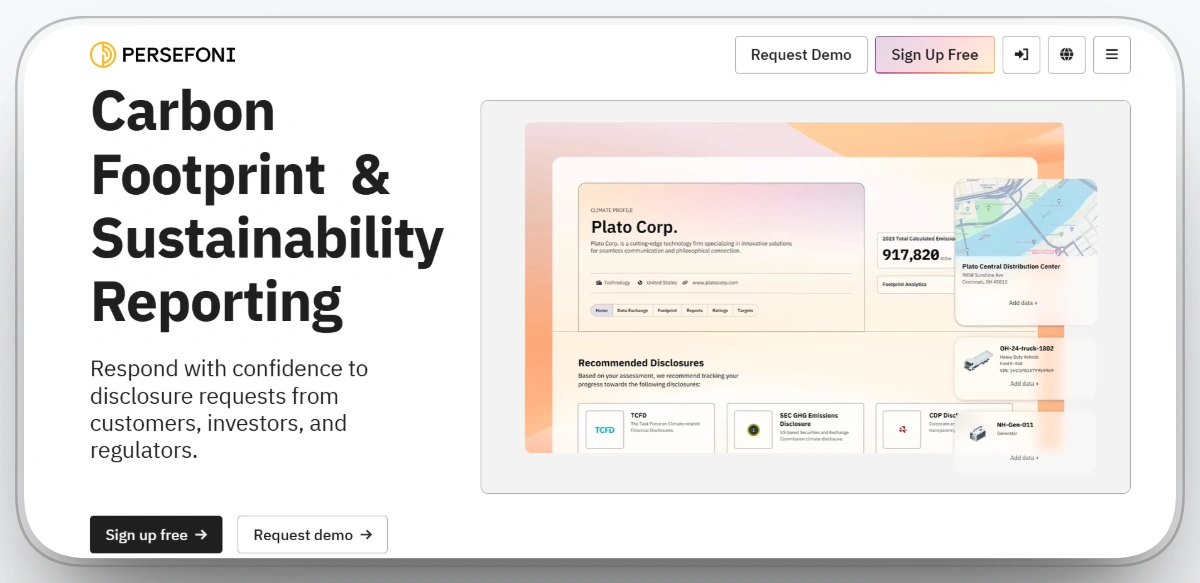
Persefoni is a comprehensive carbon management and accounting platform designed to help organizations measure, track, and report greenhouse gas emissions with high accuracy. It supports full coverage of scope 1, 2, and 3 emissions, offering detailed analytics and transparent carbon footprint dashboards to help construction teams see where emissions occur and how they can reduce them.
Persefoni’s platform includes advanced data controls, carbon footprint analytics, and integration capabilities that can bring equipment emissions data, fuel usage, and operational metrics into a centralized carbon ledger. This makes it easier for construction companies to quantify the environmental impact of their fleets and machinery and align sustainability goals with operational targets.
Persefoni Pros
- Specializes in carbon accounting.
- Covers Scope 1, 2, and 3 emissions.
- Provides clear carbon footprint analysis.
- Integrates well with fuel and telematics.
Persefoni Cons
- Focuses more on carbon than equipment data.
- Needs structured data for full use.
- High complexity for smaller companies.
- Requires expert knowledge for integration.
Persefoni Rating
Capterra: 4.9/5
G2: 4.5/5
6. Cority
Best for: ESG and sustainability performance tracking with carbon and emissions management.
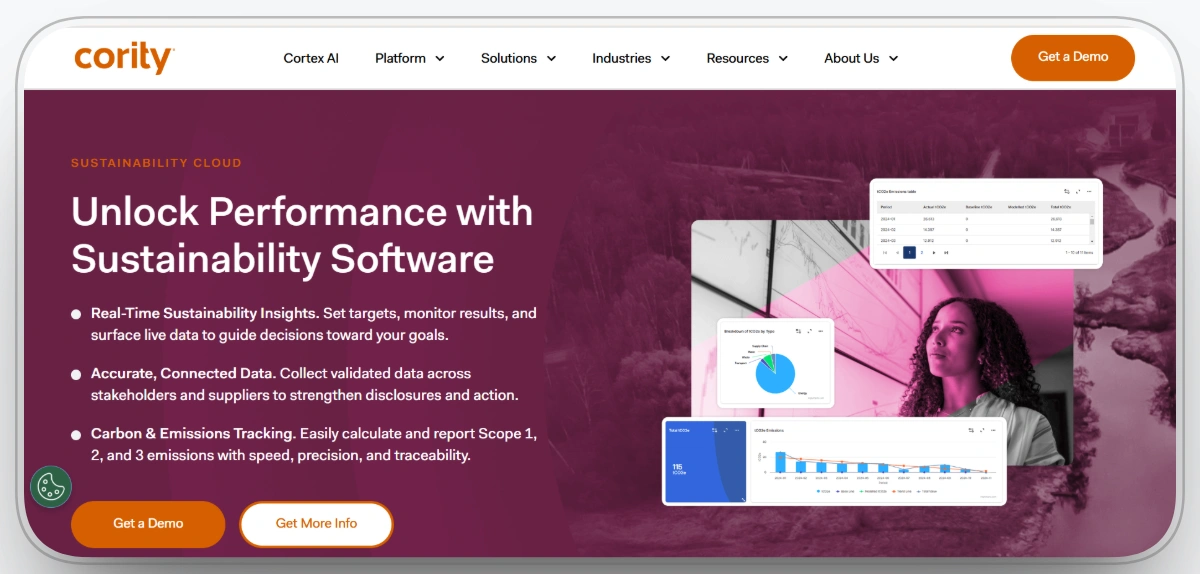
Cority is a sustainability and EHS (Environmental, Health, & Safety) software platform that helps organizations manage ESG data, emissions tracking, and sustainability reporting. Its Sustainability Cloud centralizes data collection, automates reporting, and offers tools for emissions calculations and performance tracking, helping teams measure results and make data‑driven decisions.
For construction fleets and equipment, Cority can capture emissions and resource data at scale, enabling site‑level performance metrics and compliance reporting aligned with frameworks such as CDP, GRI, and SASB. This makes it useful for teams that need both operational emissions visibility and structured sustainability reporting in one platform.
Cority Pros
- Strong ESG performance and tracking.
- Centralizes emissions and sustainability data.
- Supports major reporting frameworks.
- Automates emissions calculations.
Cority Cons
- Less focused on equipment-level data.
- Complex setup for smaller teams.
- More suited for large enterprises.
- High learning curve for full functionality.
Cority Rating
Capterra: 4.3/5
G2: 3.8/5
7. Emitwise
Best for: Carbon management and emissions reduction for construction projects.
Emitwise is a comprehensive carbon management platform that helps businesses track, measure, and reduce their carbon emissions across operations. For construction equipment and fleet management, Emitwise enables real-time emissions monitoring, providing teams with data on fuel consumption and equipment efficiency. Its carbon tracking capabilities help contractors understand and minimize the environmental impact of their machinery.
Emitwise integrates seamlessly with other systems, including telemetry and fuel management, to centralize emissions data from construction equipment. The platform provides actionable insights that allow teams to improve sustainability while meeting compliance and ESG targets.
Emitwise Pros
- Specializes in real-time emissions tracking.
- Integrates with existing systems.
- Provides actionable sustainability insights.
- Helps meet compliance and ESG goals.
Emitwise Cons
- Focuses mainly on emissions data.
- High cost for smaller companies.
- Less emphasis on fleet optimization.
- Requires additional integrations for full benefit.
Emitwise Rating
Capterra: N/A
G2: N/A
8. Sphera (SpheraCloud)
.webp)
Best for: Comprehensive ESG and carbon accounting for large-scale construction firms.
Sphera is a leading ESG management platform that provides in-depth carbon accounting tools for construction equipment and operations. It helps construction firms track carbon emissions, water usage, and other environmental metrics across large projects. The software supports data-driven decision-making, helping contractors improve sustainability performance by optimizing equipment usage and reducing carbon footprints.
Sphera’s cloud-based platform offers emissions tracking from equipment and other sources, generating insights that help teams optimize their construction equipment fleets for maximum sustainability.
Sphera (SpheraCloud) Pros
- In-depth carbon accounting tools.
- Supports large-scale sustainability reporting.
- Helps optimize equipment usage for sustainability.
- Powerful data analytics for environmental impact.
Sphera (SpheraCloud) Cons
- Best for large enterprises.
- Complex interface requires training.
- High cost for smaller operations.
- Less suitable for smaller teams.
Sphera (SpheraCloud) Rating
Capterra: 5/5
G2: 4/5
9. Trimble Connect

Best for: BIM integration and sustainability tracking for construction projects.
Trimble Connect is a collaborative construction management platform that enables teams to track sustainability metrics across all phases of construction. By integrating BIM data, it helps construction teams manage resource allocation and construction equipment utilization in a more sustainable way. Trimble Connect supports energy consumption monitoring, carbon emissions reduction, and route optimization to minimize idle time and deadhead miles for construction equipment.
The platform allows construction managers to make data-driven decisions based on sustainability targets and project timelines, improving operational efficiency while reducing the environmental footprint of the entire project.
Trimble Connect Pros
- Integrates BIM for resource optimization.
- Tracks sustainability metrics in real-time.
- Reduces fuel consumption and emissions.
- Supports route and equipment optimization.
Trimble Connect Cons
- Requires BIM expertise.
- High cost for smaller teams.
- Not ideal for non-BIM projects.
- Limited to BIM-integrated teams.
Trimble Connect Rating
Capterra: 3.9/5
G2: 4.4/5
10. Pulsora
Best for: Emissions data analytics and sustainability reporting for construction projects.
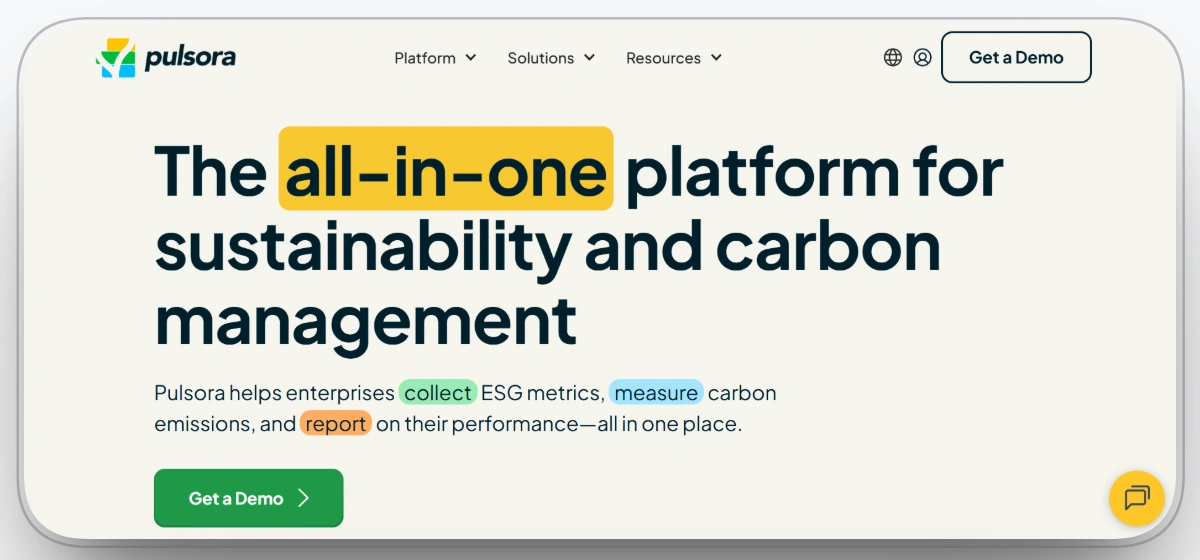
Pulsora is a sustainability analytics platform designed to help construction companies track, measure, and report on their carbon emissions and other environmental metrics. The platform provides real-time emissions data from construction equipment and machinery, allowing contractors to optimize fleet performance and reduce fuel consumption and CO2 emissions.
Pulsora’s real-time data analytics and emissions tracking make it easy for construction teams to stay compliant with sustainability regulations and improve the efficiency of their construction equipment. The software is particularly useful for companies that want to integrate sustainability directly into their operations and decision-making processes.
Pulsora Pros
- Provides real-time emissions tracking.
- Optimizes equipment usage for sustainability.
- Easy-to-use emissions reporting.
- Supports fleet management systems.
Pulsora Cons
- Focuses primarily on emissions data.
- Better for medium to large-scale firms.
- Limited features compared to others.
- Needs full integration for effectiveness.
Pulsora Rating
Capterra: N/A
G2: 4.5/5
Implementation Tips for Sustainable Equipment Operations
- Control Idle Time: Set site-specific idle thresholds and after-hours alerts to monitor idle behavior in construction equipment. Review weekly exceptions and coach operators to minimize unnecessary engine time, ensuring optimal fuel use and reducing emissions.
- Right-Size Your Fleet: Use utilization reports to identify under-used units. Regularly assess your fleet to park, swap, or return idle assets, helping to prevent duplicate rentals, optimize construction equipment usage, and reduce your carbon footprint.
- Optimize Maintenance for Efficiency: Tie preventive maintenance (PM) schedules to fuel efficiency. Enforce usage-based PM schedules and track post-service fuel KPIs to measure improvements, ensuring construction equipment remains in optimal condition and operates at peak efficiency.
- Centralize Fuel Data: Consolidate fuel information from fuel cards, tanks, and telematics into one centralized dashboard. Regularly review and reconcile data to spot and correct any fuel anomalies that may indicate waste, theft, or inefficiencies in equipment usage.
- Generate Sustainability Reports: Create a monthly sustainability pack with key data, including fuel consumption, idle percentages, CO2 emissions per construction equipment, and corrective actions taken. Share this report as a PDF/CSV to track progress and keep stakeholders informed.
Choose the Right Sustainability Stack (Quick Guide)
- Choose Clue for the best fuel/idle reduction and ESG exports, designed for construction equipment optimization.
- Choose Workiva for integrated ESG reporting and carbon accounting with seamless data integration for construction equipment sustainability.
- Choose Procore for an all-in-one project management platform with tools to track fuel consumption and emissions from construction equipment.
- Choose Autodesk Construction Cloud for energy modeling and environmental simulations to reduce CO2 emissions in construction equipment.
- Choose Persefoni for carbon accounting and emissions analytics, focusing on construction equipment sustainability.
- Choose Cority for ESG management, emissions tracking, and sustainability reporting for construction equipment.
- Choose Emitwise for real-time emissions tracking and carbon management for construction equipment sustainability.
- Choose Sphera for ESG management and carbon accounting across large-scale construction equipment projects.
- Choose Trimble Connect for BIM integration and real-time sustainability tracking in construction equipment.
- Choose Pulsora for real-time emissions tracking and sustainability reporting to optimize construction equipment performance.
Conclusion
Achieving environmental sustainability in construction equipment management starts with gaining complete visibility into fuel consumption, idle time, and CO2 emissions across your entire fleet. The next step is taking actionable measures, such as optimizing fleet size, reducing idle time, or ensuring equipment operates at peak efficiency, to drive continuous savings in fuel costs and lower carbon emissions.
The best sustainability software goes beyond just tracking and reporting. It empowers you to take action on the data daily. This could mean reallocating underused assets, optimizing routes, or using detailed CO2 emissions insights to reduce your overall environmental footprint.
For construction companies seeking an integrated, construction-specific solution that combines telematics, fuel tracking, and emissions management, Clue stands out as the most effective tool. It provides a unified platform to track and optimize sustainability efforts, making it the ideal starting point for transitioning to a lower-carbon fleet without the complexity of managing multiple integrations.
FAQs
1. What is sustainable fleet management and how does it reduce costs?
Sustainable fleet management reduces fuel use and emissions by tracking idle time and optimizing fleet operations. Software like Clue helps cut fuel burn and CO2 emissions by monitoring fuel consumption, enforcing idle policies, and improving equipment utilization, which lowers costs and extends equipment life.
2. How does telematics support construction equipment sustainability?
Telematics provides real-time data on fuel use, idle time, and engine performance. Software solutions like Clue integrate this data to identify inefficiencies, improve engine maintenance, and reduce emissions, ensuring more efficient operations and lowering environmental impact across the fleet.
3. What features should construction fleet software include for emissions tracking?
Fleet software should track fuel consumption, idle time, and CO2 emissions. Tools like Clue offer real-time CO2 tracking, customizable idle alerts, and seamless integration with OEM telematics to ensure accurate emissions data, helping construction companies meet sustainability goals.
Transform Your Equipment Management