Work Order Types Explained
Work order types help your team label the job correctly from the start. Choosing the right type makes it easier to prioritize work, track costs, and understand the mix of repair, preventive, and emergency work across your fleet.
Overview
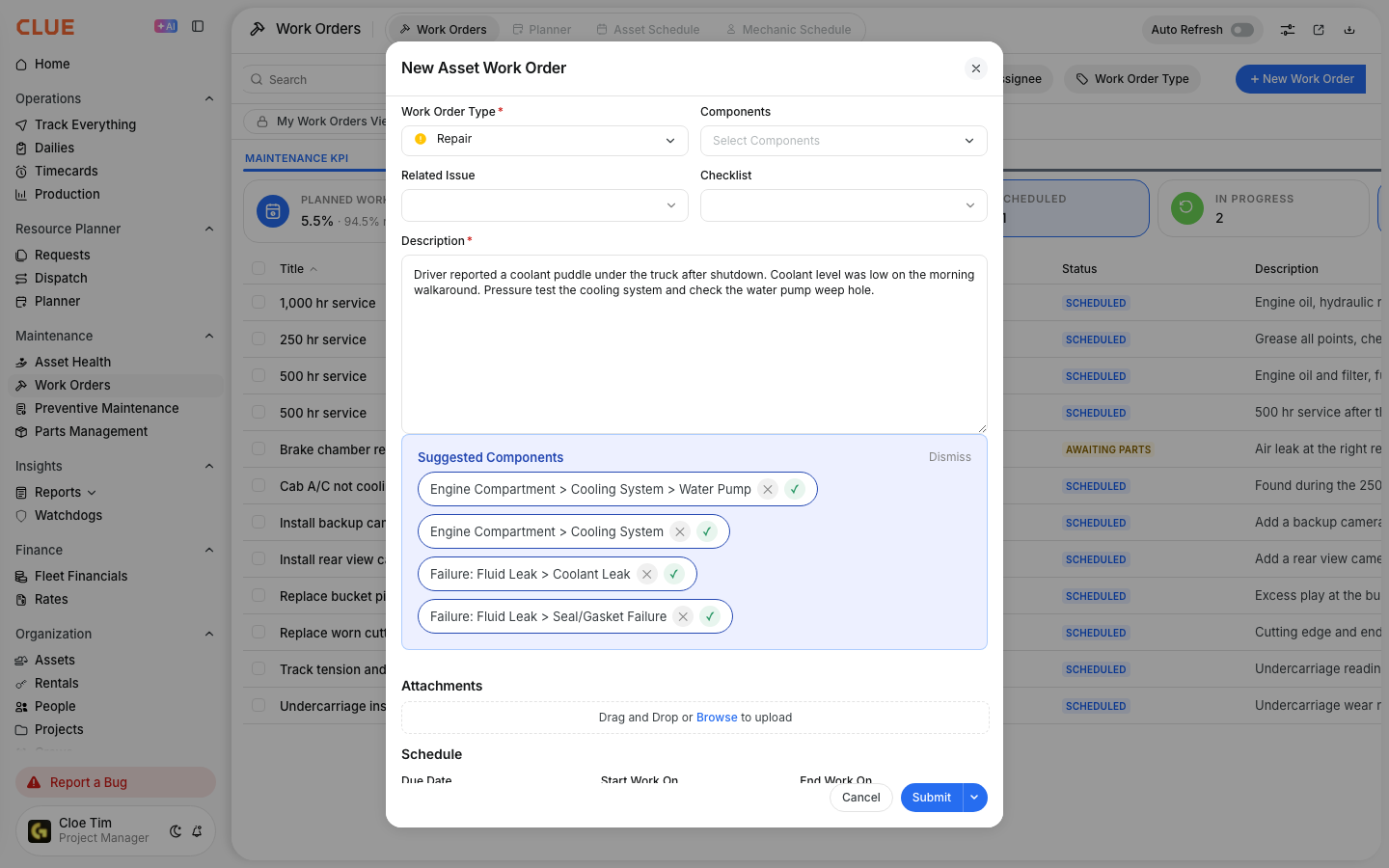
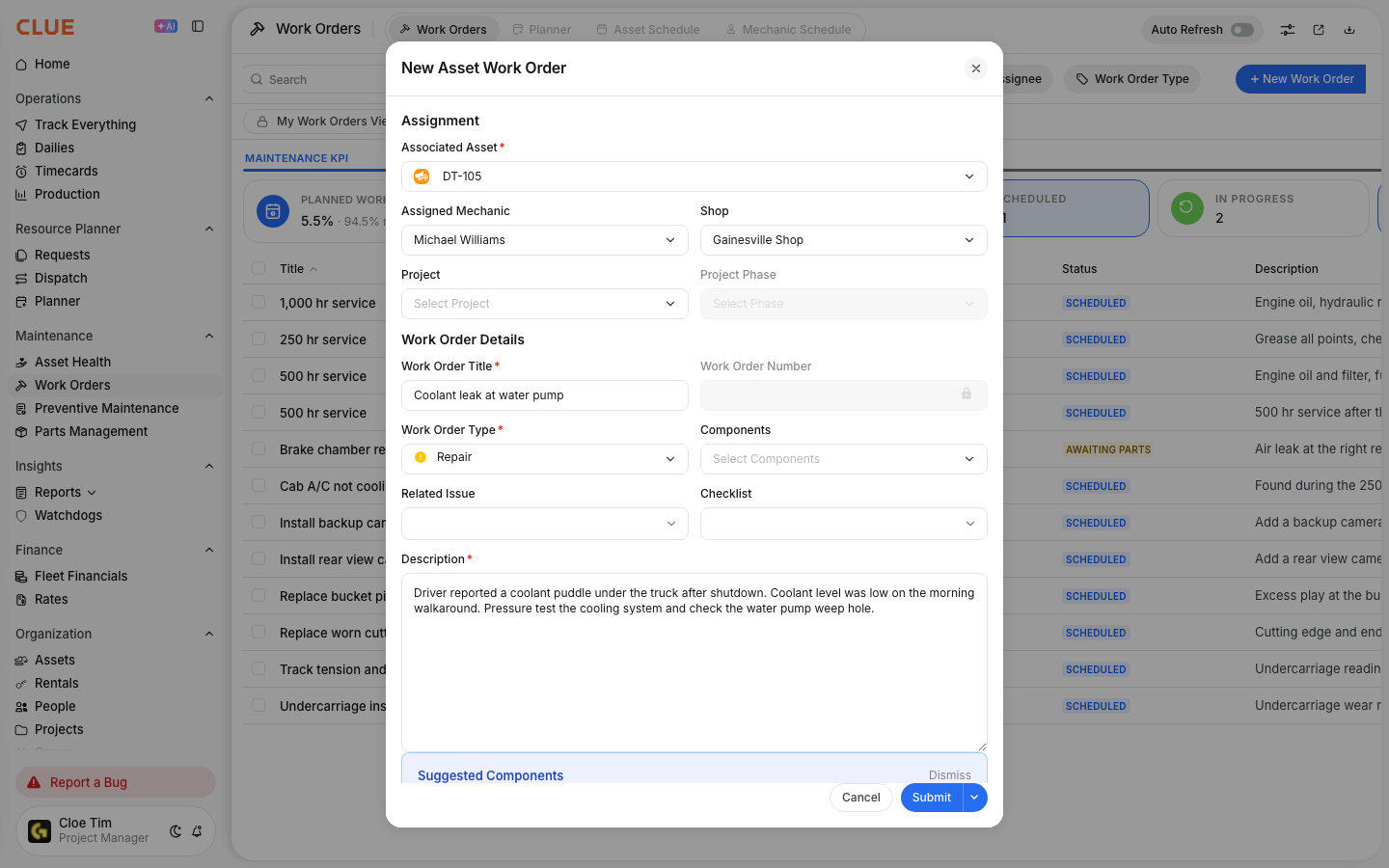
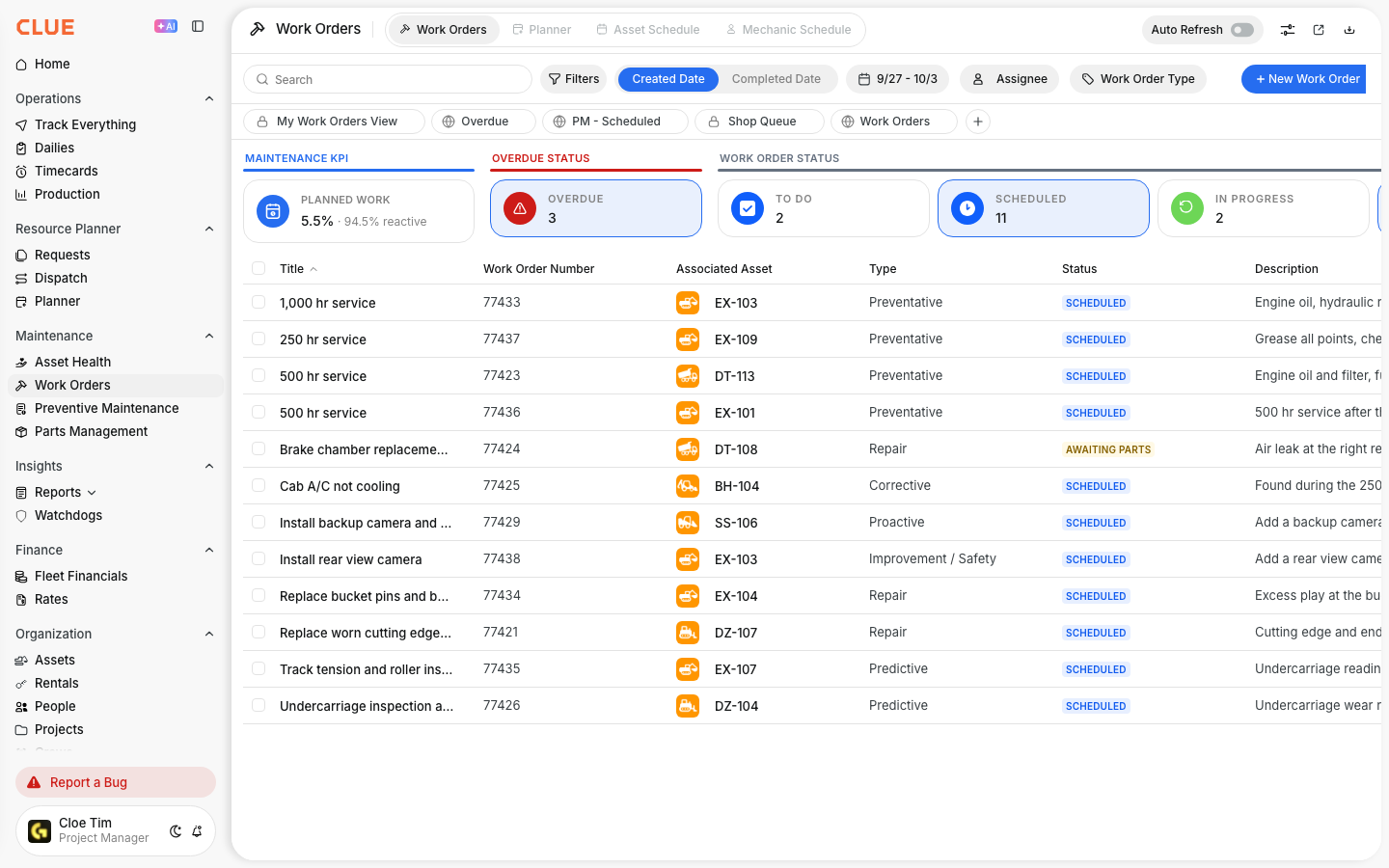
CLUE includes several work order types for different kinds of maintenance work. When you create a new work order, the type should match the reason for the job as closely as possible. This also fits naturally with Creating Your First Work Order and Updating a Work Order if the reader needs help with the full work order process.
Available Work Order Types
Each type is meant for a different kind of job. Use the examples below to choose the option that best matches what is happening in the field.
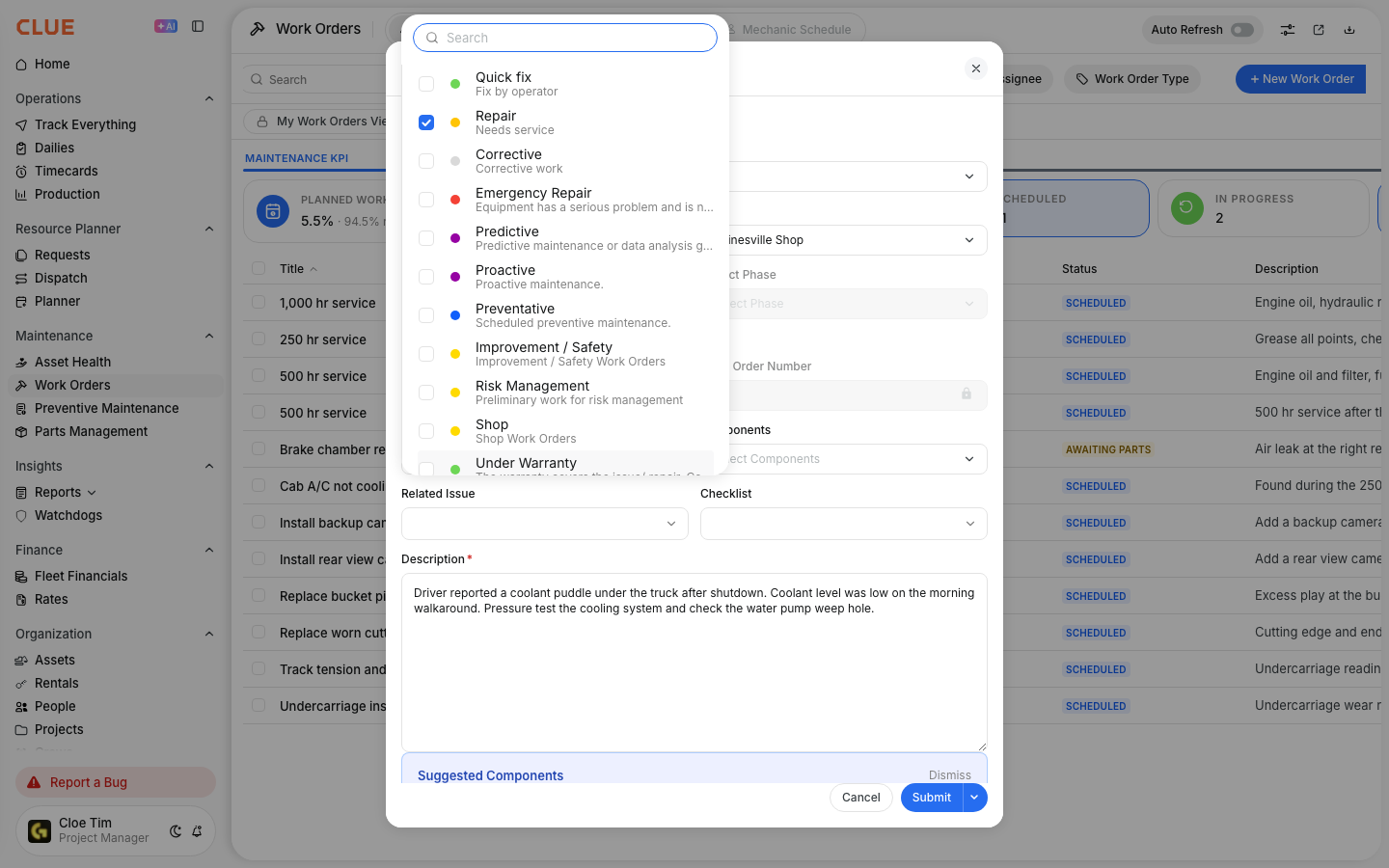
Quick Fix
Use this when the issue is small and the operator can handle it right away without sending a mechanic.
Examples include tightening a loose bolt, replacing a fuse, adding fluids, or making a small adjustment.
Repair
Use this when the equipment needs service, but it is still able to operate.
Examples include worn brake pads, a hydraulic leak, an A/C issue, or a damaged mirror.
Corrective
Use this when the job comes from a problem that was found during an inspection or by diagnostics.
Examples include fixing a fault code, correcting an inspection failure, or dealing with a defect that was discovered during review.
Emergency Repair
Use this when the equipment has a serious issue and cannot keep working.
Examples include engine failure, transmission failure, safety system failure, or major collision damage. This is the highest-priority type because the asset is down.
Predictive
Use this when data shows a problem may be coming before the machine actually fails.
Examples include unusual engine performance, vibration changes, or temperature trends that are moving out of range.
Proactive
Use this when you want to do the work early to prevent a bigger issue later.
Examples include early fluid changes, replacing a part before it reaches its wear limit, or seasonal preparation work.
Preventative
Use this for routine scheduled maintenance based on time or usage.
Examples include a 500-hour service, annual inspection, monthly lubrication, or tire rotation.
Improvement / Safety
Use this when the work is meant to improve safety or make the equipment easier to use, not to fix a failure.
Examples include installing backup cameras, adding guards, improving lighting, or making ergonomic changes.
Setup
Use this when the equipment is being prepared for use or reconfigured for a new job.
Examples include new equipment setup, changing attachments, or configuring the machine for a different site.
Tips for Choosing the Right Type
If you are not sure which type to use, start with the reason the work is being done. That usually gives you the clearest answer.
- If the equipment is down, use Emergency Repair
- If the issue was found during an inspection, use Corrective
- If it is part of a regular schedule, use Preventative
- If the operator can handle it right away, use Quick Fix
- If the work is based on data or early warning signs, use Predictive
- If none of those fit, Repair is usually the right default choice
Why Type Matters?
Using the right work order type keeps your maintenance records cleaner and more useful over time. It helps your team sort urgent work faster, compare reactive and preventive work, and spot patterns across assets and repairs. It also makes pages like Filtering and Finding Work Orders and Viewing Asset Work History more useful because the data is grouped more clearly from the start.

- prioritize urgent work more clearly
- track reactive versus preventive maintenance
- analyze reliability trends across the fleet
- report on maintenance categories for planning and budgeting
- identify assets that may need more proactive attention