Work Orders Explained: Tasks, Priorities and Costs
Every repair, service, and inspection job that passes through your shop needs a record. Without one, labor goes untracked, parts get lost in the cost, and there is no history to reference when the same problem comes back six months later. Creating and Managing Work Orders in CLUE gives every maintenance job a single record that holds the asset, the assigned mechanic, the parts used, the labor logged, and the total cost from the moment the job opens to the moment it closes.
One work order per job, from start to finish. Everything is searchable. Everything cost. Everything tied to the asset's history.
Who Is This For?
- Foremen create work orders, assign mechanics, set job priorities, and track progress across the shop queue. This connects to CLUE's Work Orders.
- Mechanics view their assigned jobs, log what was done on each task, and close work orders when the repair is complete.
- Equipment Managers use the work order record to review open jobs across the fleet, monitor repair costs per asset, and approve completed work.
How to Create a Work Order?
1. Open Work Orders
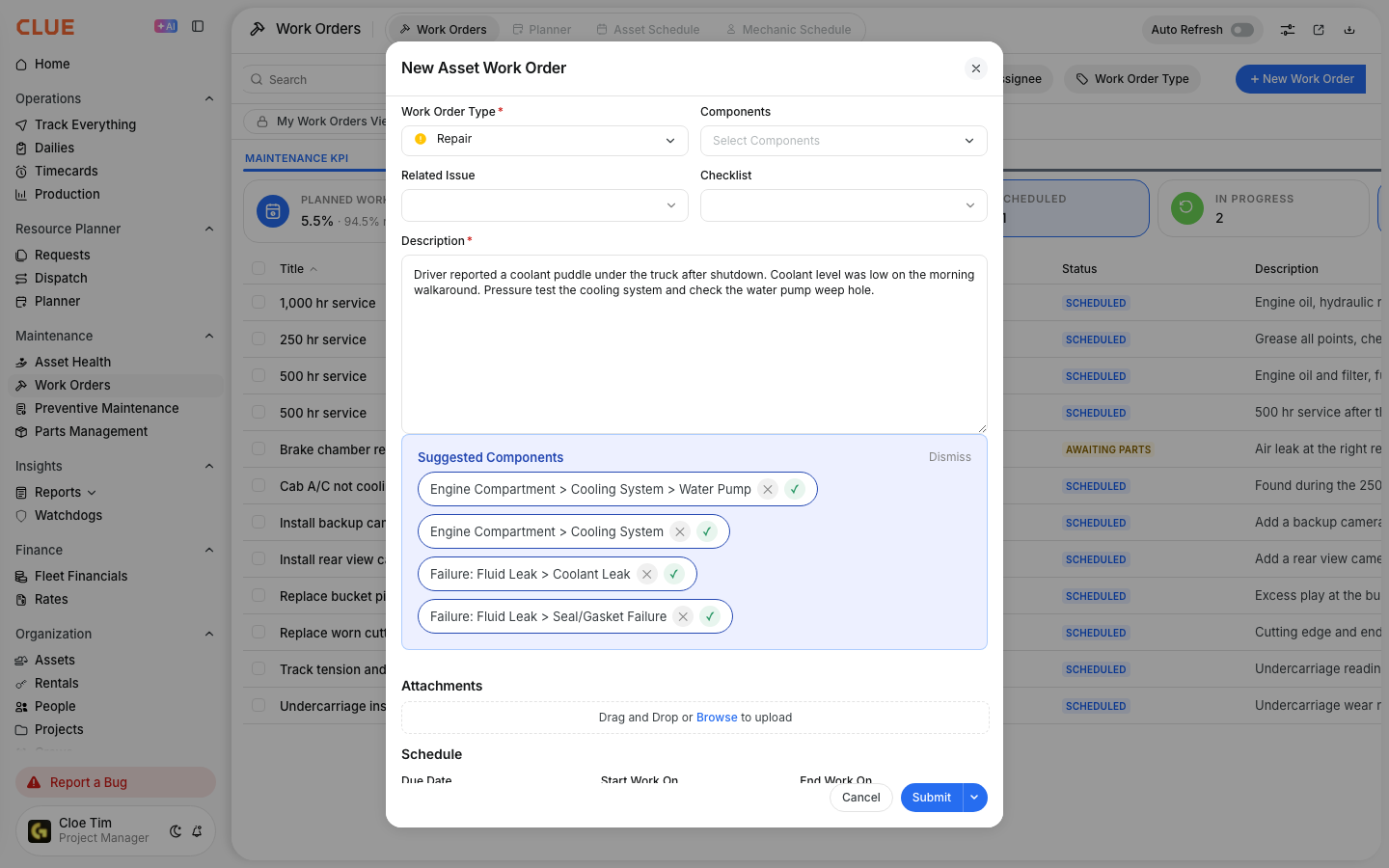
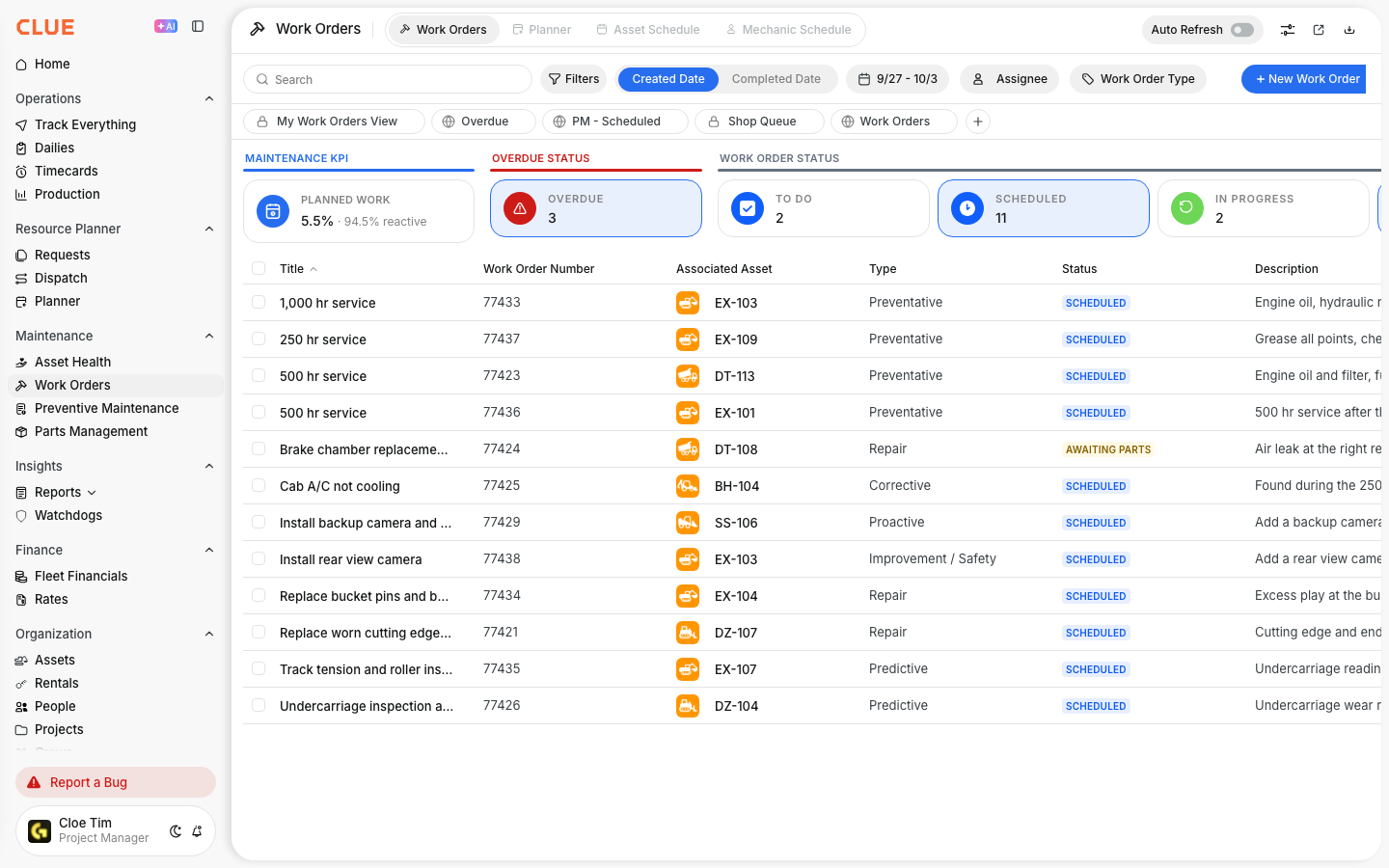
Go to Work Orders in the sidebar. Click + New Work Order to open a new record.
2. Fill in the Basics
Select the asset the work is being performed on. Set the work order type such as standard repair, PM, or inspection. Assign a mechanic and write a clear description of what needs to be done so the mechanic has full context before starting.
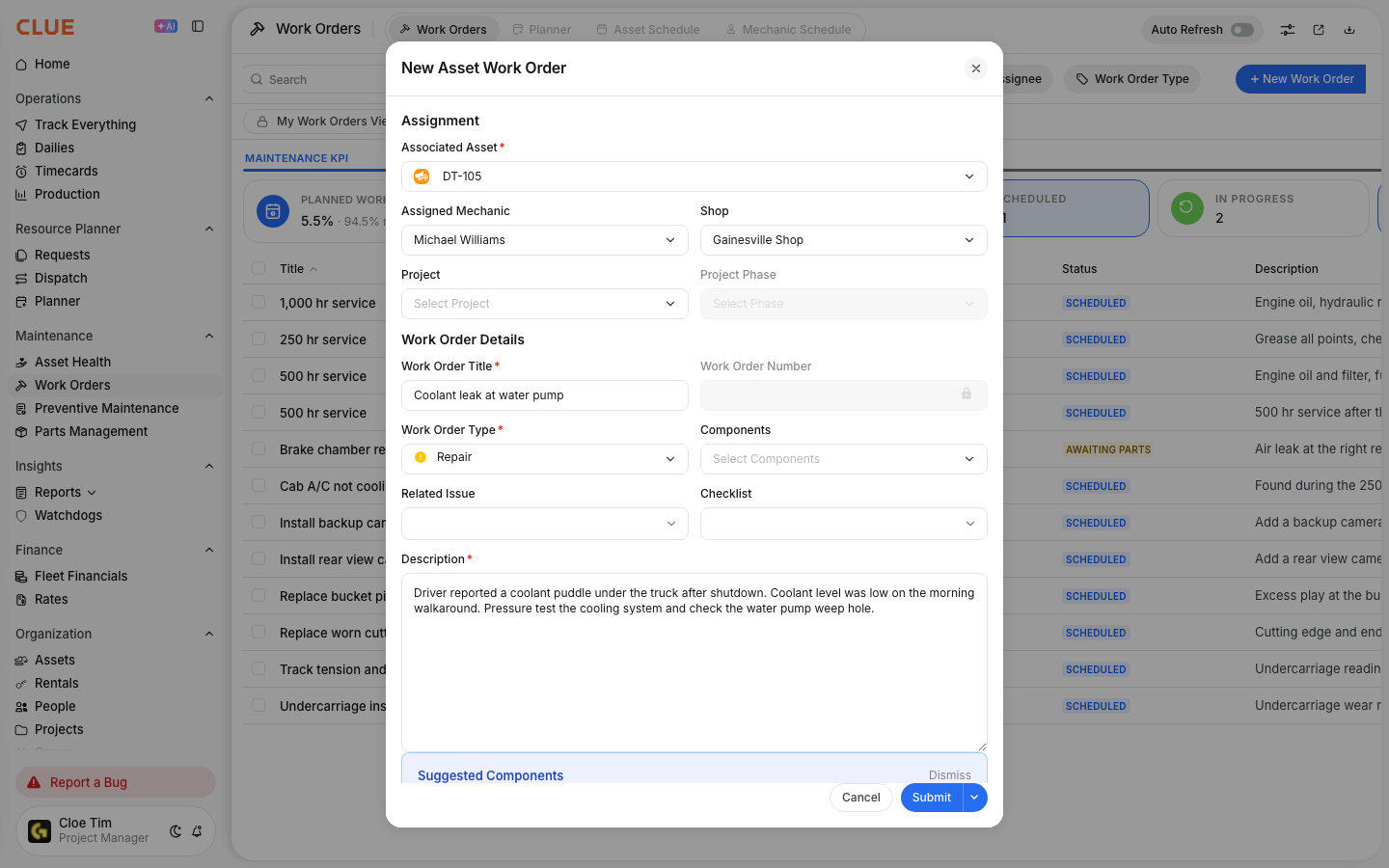
3. Set Priority and Dates
Set the priority level as High, Medium, or Low based on urgency. Set a due date. The due date appears on the mechanic's schedule and turns red when overdue, making it easy to spot jobs that need attention.
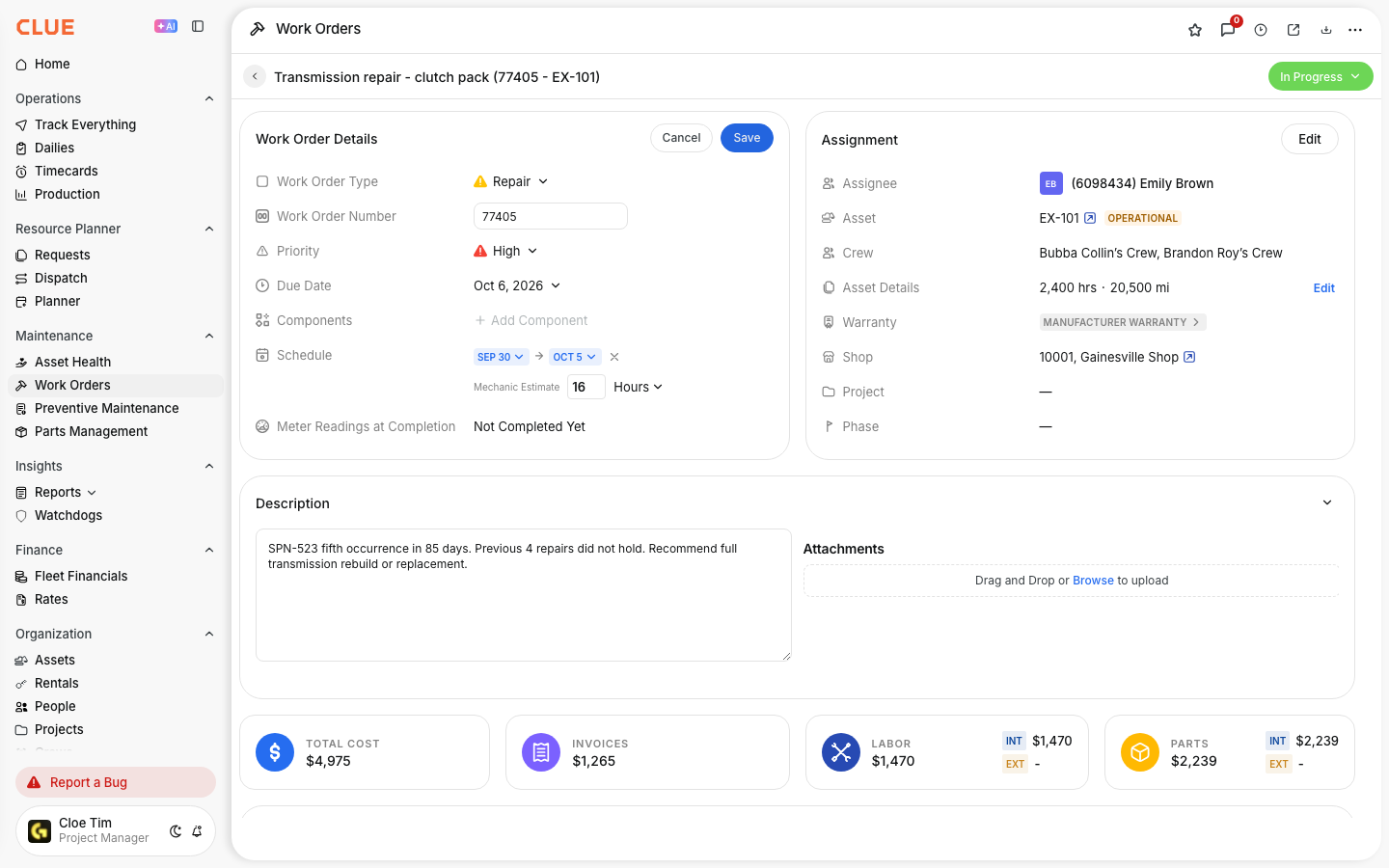
4. Add Tasks and Parts
Add tasks for each distinct activity within the job such as oil change, filter replacement, or belt inspection. Add parts individually or apply a pre-configured parts kit. Each task and part tracks its own completion status and cost separately.

Multiple Activities on One Work Order
A single work order can contain multiple tasks. An oil change, filter replacement, belt inspection, and fluid top-off can all live on the same work order. Every task is individually searchable across the system, so you can find a specific activity such as "belt inspection" regardless of which work order it belongs to.
Foreman Override
When a job needs to change after work has started, foremen can modify the work order at any stage. Parts that were not used can be removed. Hours can be adjusted. The assigned mechanic can be changed. If the asset is pulled from service entirely, the work order can be cancelled and hours and parts return to availability

Custom Statuses
Work orders move through standard statuses of Open, In Progress, On Hold, and Completed. Your admin can configure additional custom statuses that match your specific workflow, such as Waiting for Parts, Pending Approval, or Scheduled for Weekend. This gives your team more precise control over where each job stands in the queue.
Key Behaviors and Limitations
- Works on web and mobile. Work orders can be created, managed, and updated from both the web app and the mobile app.
- Tasks are individually searchable. Every task added to a work order is searchable across all work orders in the system. This makes it possible to pull up the history of any specific repair activity across the entire fleet.
- Vista sync is available when enabled. Work orders push to Vista automatically if the integration is configured for your organization.
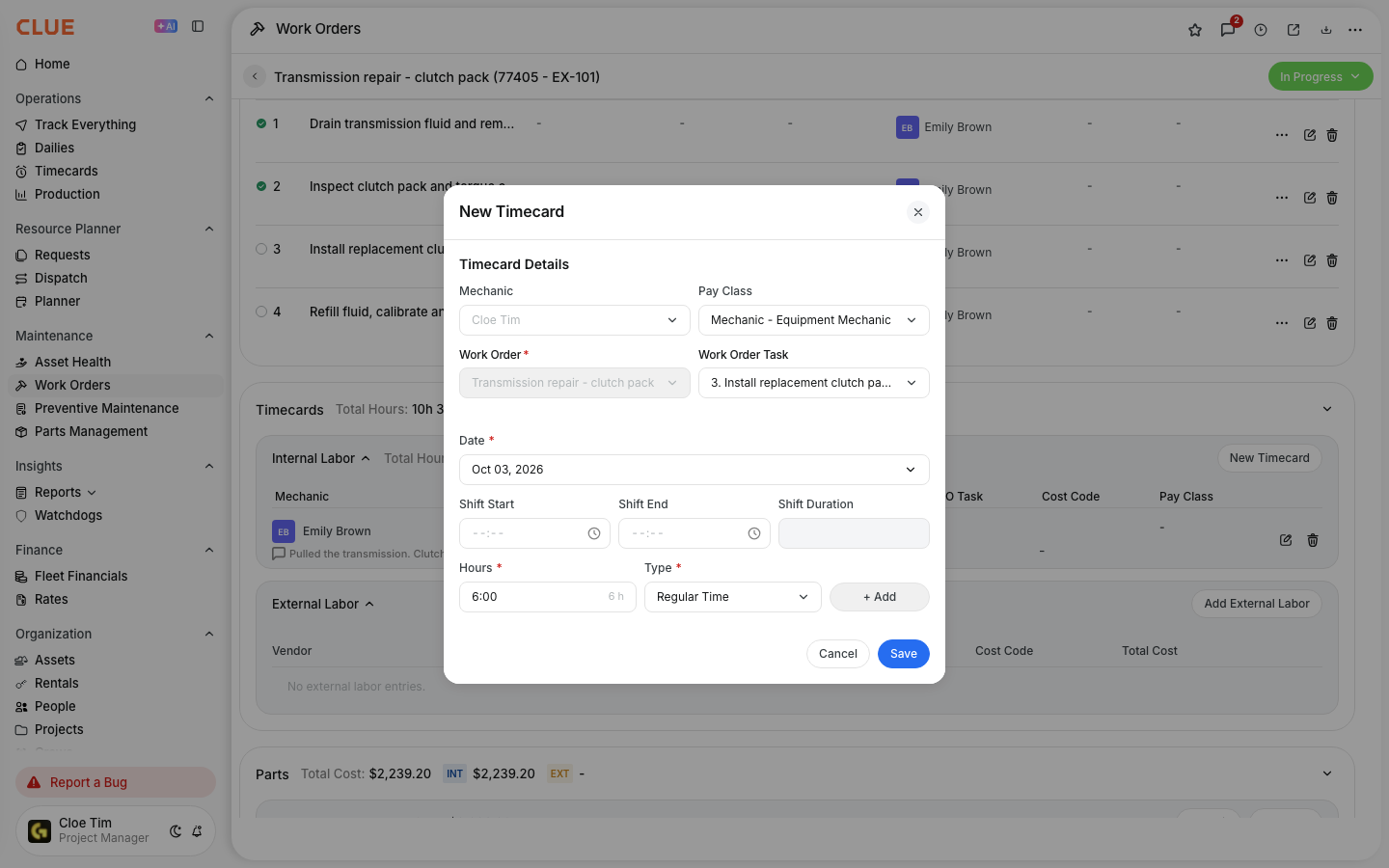
- Cost tracking rolls up automatically. Labor, parts, and sublet costs logged on the work order accumulate and display as a total on both the work order record and the asset's cost history.
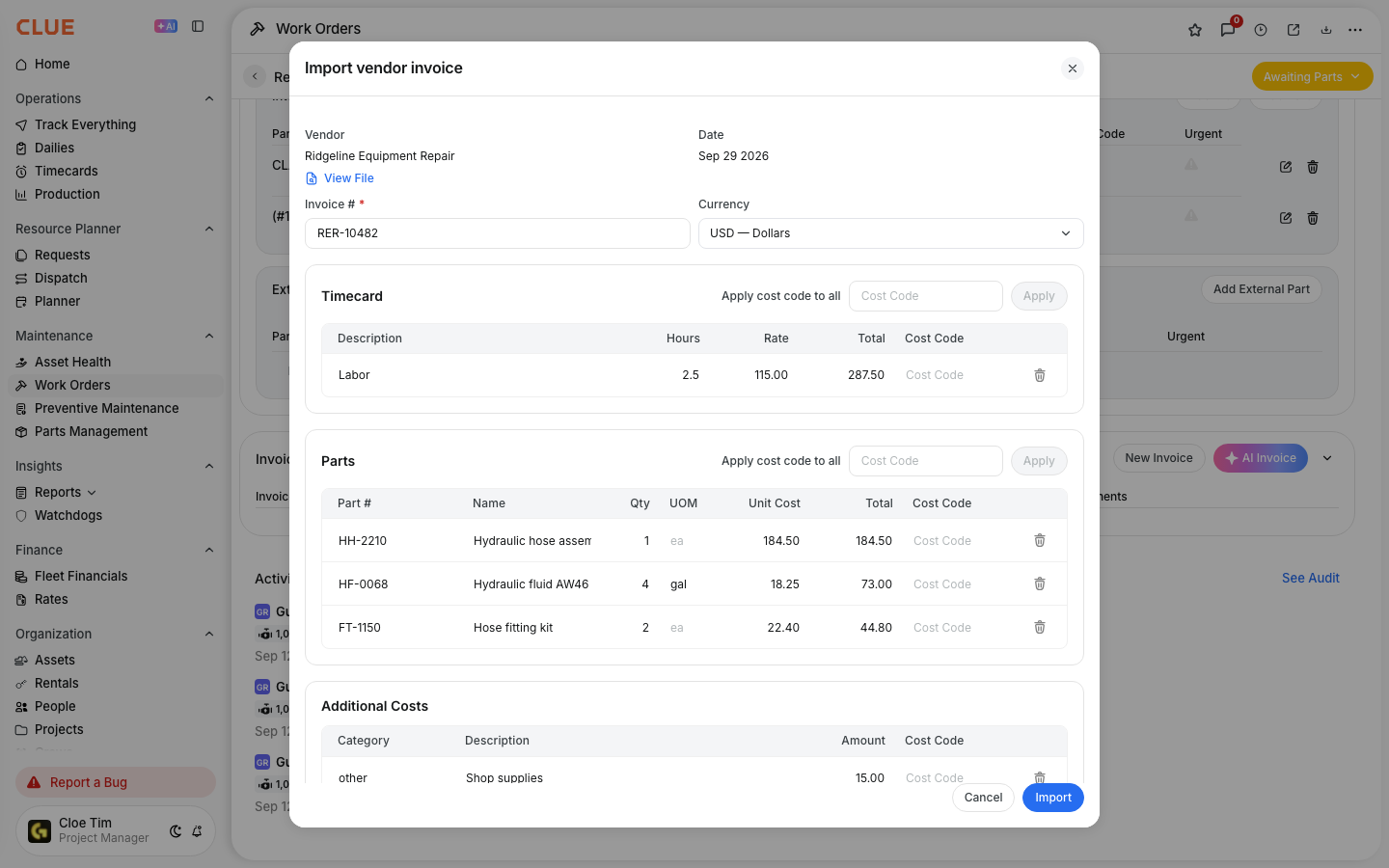
- Attachments are supported. Photos, documents, and invoices can be attached to any work order, providing visual documentation and supporting records for the repair.
Tips
- Use separate tasks for each distinct activity. Logging "changed oil" and "replaced air filter" as separate tasks gives you a searchable, itemized repair history rather than a single vague entry. This matters when tracking recurring issues.
- Always set a due date. A work order without a due date is a work order nobody tracks. The due date is what surfaces overdue jobs on the mechanic's schedule and in the foreman's queue.
- Add before and after photos on significant repairs. Visual documentation of the condition before and after a repair reduces disputes, supports warranty claims, and provides context for future technicians working on the same asset.
- Use work order types consistently. Distinguishing between PM, repair, and inspection work orders from the start keeps your reporting accurate. Mixed types make it harder to analyze where labor and cost are going across your maintenance program.