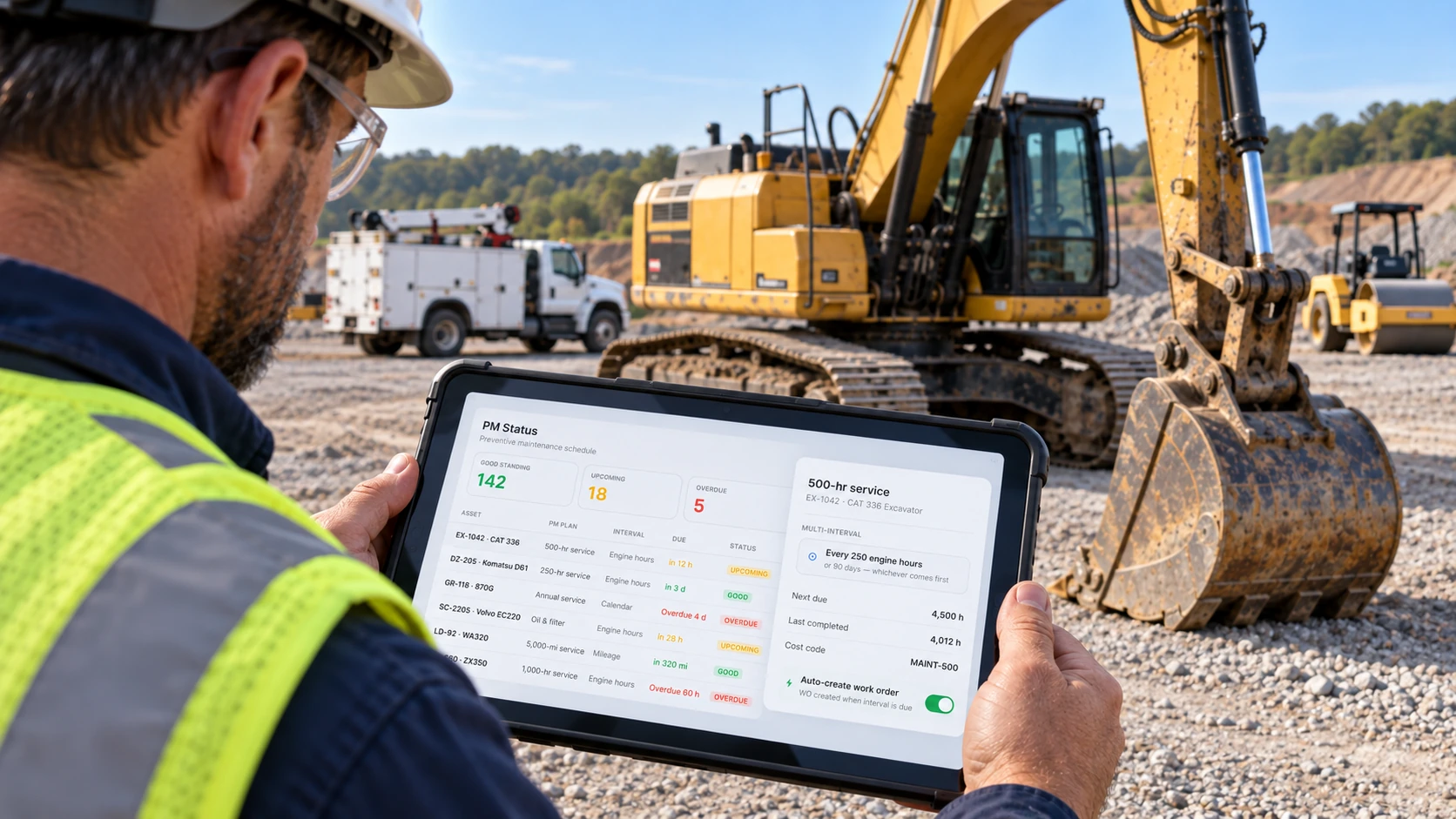
In construction, efficient equipment maintenance operations are essential for keeping projects on schedule and within budget. Wrench time measures the time technicians spend actively repairing, inspecting, or servicing equipment.
When maintenance teams spend more time completing hands-on work and less time waiting for parts, searching for information, traveling, or completing administrative tasks, equipment performance and shop productivity improve.
Optimizing wrench time helps reduce equipment downtime, prevent project delays, control labor costs, and make maintenance delivery more predictable.
This article discusses the importance of wrench time in construction, examining how it affects project outcomes and offering practical strategies for measuring and enhancing it.
What Is Wrench Time?

Wrench time refers to the amount of time maintenance technicians or construction workers spend actively using tools to perform tasks, such as repairing equipment or conducting inspections. This metric specifically tracks "tool-in-hand" time and excludes time spent waiting for parts, moving between jobs, or attending meetings.
Wrench Time in Construction
In construction, wrench time is crucial because the efficiency of maintenance work directly impacts equipment uptime, overall project costs, and timelines. A higher wrench time means less downtime for equipment and better resource management, which translates to improved productivity.
What Is a Good Wrench Time?
While we mentioned what constitutes good wrench time generally, breaking down benchmarks for different industries or teams would help readers understand what a "good" wrench time looks like in practice.
For example, average wrench time typically falls between 25% and 35%, but what is considered acceptable or good varies across industries. Discussing how to evaluate wrench time in the context of specific projects would make it more actionable.
Wrench Time vs. Other Activities

Wrench time measures the hands-on work technicians spend with tools, but it excludes several important activities that impact overall maintenance efficiency:
1. Waiting for Parts or Tools
Time spent waiting for necessary parts or tools is not counted as wrench time. Delays in acquiring materials can significantly reduce effective work time.
2. Travel Time Between Job Sites
Traveling between different locations or back to storage areas for parts or tools does not contribute to wrench time, even though it reduces the technician’s available working hours.
3. Meetings and Non-Maintenance Tasks
Meetings, safety briefings, and administrative tasks like scheduling and coordination are crucial but do not count as wrench time. These activities take time away from hands-on maintenance.
4. Paperwork and Documentation
Filling out work orders, updating maintenance logs, and completing compliance forms are essential but are not included in wrench time, despite their importance for record-keeping and regulatory purposes.
What Is the Formula for Calculating Wrench Time?
To calculate wrench time, we divide the time spent performing actual maintenance tasks by the total work time available. The formula is:
Wrench Time (%) = (Time spent on maintenance tasks / Total work time available) × 100
For example, if a technician works an 8-hour shift, with 1 hour spent in meetings, the available work time is 7 hours. If they spend 3 hours of that time working with tools, the wrench time is:
(3 hours / 7 hours) × 100 = 42.86% wrench time
This formula gives a clear indication of how efficiently workers are using their time on-site.
How to Measure Wrench Time?

There are several methods for measuring wrench time, each suited to different project needs. Here's a breakdown of the most common approaches:
1. Statistical Method
The statistical method involves observing a sample of workers over an extended period. This method is highly accurate and can offer a comprehensive understanding of wrench time across the team.
2. Day-in-Life-of (DILO)
In the DILO method, an observer shadows a technician throughout the day, documenting their wrench time activities. While insightful, DILO only provides a snapshot of one worker’s daily activities, which may not be fully representative.
3. Work Sampling
Work sampling involves periodic checks to see if technicians are performing tasks or idling. This method doesn’t account for tasks not visible during checks, such as fetching parts or taking breaks, but it offers a cost-effective way to estimate wrench time.
4. Self-Reporting
Technicians track their own wrench time. While this is simple to implement, self-reporting can be inaccurate due to potential biases or misunderstandings of what qualifies as wrench time.
Among these methods, the statistical method is the most reliable for obtaining an accurate wrench time measurement, especially when combined with a wrench time calculator integrated into CMMS (Computerized Maintenance Management System) software.
Internal vs. External Wrench Time
When tracking wrench time, it is important to differentiate between internal and external wrench time.
Internal Wrench Time
Internal wrench time measures the hands-on productivity of your core maintenance staff, reflecting how well-equipped and scheduled your in-house team is to handle daily tasks.
External Wrench Time
External wrench time is the time spent by third-party contractors who may perform specialized maintenance tasks or services not covered by the in-house team. This includes:
- Outsourced maintenance services
- Specialists hired for regulatory compliance or certifications
- External service providers with specific skills needed for a particular task
Tracking both types of wrench time can help you understand the full scope of maintenance performance, including any inefficiencies caused by outsourcing.
Benefits of Optimizing Wrench Time in Construction Maintenance

Measuring and optimizing wrench time is critical for construction projects because it impacts cost, timing, and overall project success. Here’s how optimizing wrench time brings significant benefits:
1. Improved Productivity
The more time spent actively working on equipment, the higher the productivity of your maintenance team. Maximizing wrench time means reducing unnecessary delays like waiting for parts or walking between work areas.
2. Cost Savings
Wrench time optimization directly leads to cost savings by minimizing downtime, reducing the need for additional technicians, and improving the efficiency of equipment repairs. When wrench time is maximized, more tasks are completed in less time, lowering the total labor costs.
3. Better Resource Management
By understanding wrench time patterns, project managers can make better decisions about allocating resources, ensuring that technicians are assigned to tasks that maximize their strengths and availability.
4. Reduced Equipment Downtime
Higher wrench time is directly linked to reduced equipment downtime. More time spent performing maintenance tasks leads to better equipment availability, reducing the need for expensive emergency repairs or unplanned downtime.
5. Enhanced Maintenance Planning
Tracking wrench time allows construction teams to plan and schedule maintenance tasks more effectively. It provides insights into which tasks consume the most time, helping identify opportunities for improvement.
How Wrench Time Affects Overall Project Delivery?
Wrench time is more than just a maintenance metric; it directly impacts broader project outcomes, including cost, timeline, and overall delivery.
1. Delays in Wrench Time Lead to Project Overruns
If maintenance tasks take longer than expected, it can cause delays in the overall project timeline. For example, if technicians consistently spend more time than anticipated on repairs, it can push back the project completion date and increase labor costs.
2. Correlation Between Wrench Time and Equipment Downtime
Wrench time plays a pivotal role in reducing equipment downtime. When wrench time is optimized, technicians can address maintenance issues faster, minimizing the amount of time equipment is out of operation. This is crucial in construction, where heavy machinery is often essential for project progress. Downtime leads to cost overruns, increased labor hours, and potentially higher rental fees for machinery.
3. Impact on Project KPIs
Wrench time can be linked to several project management KPIs:
- Cost per hour: Optimizing wrench time helps ensure tasks are completed efficiently, reducing the overall labor costs for maintenance.
- Project completion time: Less downtime means that projects can proceed without unnecessary delays.
- Resource allocation: By optimizing wrench time, teams can better allocate their workforce, ensuring tasks are assigned based on skill level and availability.
Wrench Time and Lean Construction

In the realm of lean construction, the goal is to reduce waste and improve efficiency at every stage of a project. Wrench time fits neatly into this framework by minimizing non-productive activities and optimizing how maintenance tasks are performed.
Waste Reduction
Lean construction is focused on eliminating waste, and wrench time plays a significant role in this. By increasing wrench time efficiency, you reduce the time technicians spend idling or performing unnecessary tasks, such as fetching tools or waiting for parts.
Value Stream Mapping
One of the key tools in lean construction is value stream mapping, which helps identify inefficiencies in workflows. By examining wrench time across the construction site, value stream mapping can pinpoint areas where time is wasted such as excessive travel time or poorly planned tasks and recommend improvements.
Faster Project Completion
Reducing non-productive activities by improving wrench time efficiency leads to faster project completions. This results in fewer delays, lower costs, and a more streamlined construction process.
Advanced Wrench Time Analytics
While basic wrench time measurement is valuable, there are more advanced analytics tools that can provide deeper insights and help optimize wrench time even further.
Predictive Analytics
By leveraging predictive analytics, you can forecast wrench time based on historical data. Predictive models can analyze past maintenance tasks, identify trends, and predict how much wrench time will be needed for future tasks. This allows for more accurate planning and resource allocation, reducing inefficiencies.
Machine Learning Models
Machine learning models can be used to analyze wrench time across multiple projects. These models can detect patterns and suggest optimizations for future maintenance tasks. For instance, the model might identify that certain types of equipment consistently require more wrench time due to frequent failures, suggesting a change in preventive maintenance practices or equipment upgrades.
Reasons Why Wrench Time Is Low and How to Fix It?

Low wrench time can be a significant challenge in construction maintenance, leading to delays, higher labor costs, and reduced productivity. Understanding the reasons behind low wrench time is crucial for addressing inefficiencies and optimizing operations. Below are some of the most common reasons for low wrench time, along with practical solutions to fix them:
1. Waiting on Spare Parts and Tools
One of the primary reasons for low wrench time is the lack of availability of necessary parts and tools. If technicians are waiting for parts to arrive or for tools to be retrieved, this time is wasted and does not contribute to productive work.
Why It Happens:
- Poor inventory management or incorrect stock levels lead to delays in parts procurement.
- Technicians are not aware of the exact tools or parts they’ll need for the task.
- Parts ordered are not delivered on time, or they are backordered.
How to fix it:
- Implement a Real-Time Inventory Management System: Use software or a CMMS (Computerized Maintenance Management System) to track parts and tool availability in real time. This will allow for better planning and faster access to critical items.
- Pre-stage Parts for Scheduled Tasks: For high-priority tasks or recurring maintenance, pre-stage the required parts and tools so technicians can begin work immediately without delays.
- Set up Low-Stock Alerts: Automate inventory reordering with low-stock alerts, ensuring that critical items are always available when needed.
By improving inventory management and parts availability, you can drastically reduce time spent waiting for components, increasing wrench time efficiency.
2. Inefficient Scheduling and Planning
Poor scheduling and planning can lead to technicians spending more time on non-productive activities than on maintenance tasks. When work orders are poorly prioritized, or there is a lack of proper preparation, wrench time suffers.
Why it happens:
- Maintenance tasks are scheduled without considering technician availability or the tools required.
- Jobs are often not prioritized based on urgency, leading to unnecessary delays.
- Technicians are sent to multiple work sites without considering the best route or scheduling efficiency.
How to fix it:
- Adopt Preventive Maintenance (PM) Scheduling: Use CMMS software like Clue to automate and schedule preventive maintenance tasks in advance. Clue allows you to schedule recurring tasks automatically, ensuring all maintenance work is proactive and on time.
- Plan Jobs with Technician Skills in Mind: Ensure technicians are assigned to tasks based on their expertise and the tools required. This avoids delays caused by technicians needing to consult with others or waiting for additional support.
- Group Jobs by Location: When planning work orders, group jobs that are close to one another. This reduces travel time and allows technicians to complete multiple tasks in one trip.
By implementing better planning and scheduling practices, wrench time can be maximized as technicians can focus on the work at hand, without unnecessary distractions.
3. Excessive Travel Time Between Job Sites
In large construction sites or when working across multiple locations, excessive travel time can significantly eat into wrench time. If technicians are spending too much time moving between different job sites or areas of the facility, it reduces the time they spend actively working on maintenance tasks.
Why it happens:
- Maintenance jobs are spread out over large areas or multiple locations, forcing technicians to travel long distances.
- Work orders are not grouped by proximity, causing unnecessary movement between job sites.
How to fix it:
- Map the Job Sites: Use digital tools to create facility maps that can help technicians find the fastest routes between jobs. This allows them to work more efficiently without wasting time traveling.
- Plan Maintenance Routes: When assigning tasks, plan them in such a way that technicians can complete multiple tasks in a single trip without needing to return to the same location repeatedly.
- Use Mobile Work Orders: Clue’s mobile CMMS app gives technicians quick access to their work orders, allowing them to move seamlessly from one task to the next without delays.
Minimizing travel time between job sites is a straightforward way to increase wrench time and keep maintenance work on track.
4. Lack of Communication and Coordination
Poor communication between maintenance teams, production staff, and other departments can result in delays and reduced wrench time. If technicians are unaware of the equipment's condition or worksite priorities, they may face unnecessary interruptions or confusion.
Why it happens
- Technicians are not informed about equipment status or necessary preparations before arriving at a work site.
- There is a breakdown in communication regarding task priorities, causing delays in addressing urgent maintenance needs.
How to fix it:
- Improve Communication Systems: Implement a digital communication platform that allows maintenance technicians to receive updates in real time. This ensures they know about equipment issues or schedule changes before arriving at the work site.
- Centralize Maintenance Information: Use CMMS systems to centralize all maintenance-related data. This ensures that all team members have access to the same up-to-date information, reducing misunderstandings and wasted time.
- Establish Clear Maintenance Priorities: Ensure that maintenance tasks are clearly prioritized, and technicians know which tasks are most urgent to prevent unnecessary delays or interruptions.
By improving communication and coordination, technicians can arrive prepared, reducing downtime and increasing wrench time.
5. Poor Work Order Management
When work orders are unclear, incomplete, or not properly scoped, technicians waste valuable time clarifying details or searching for information. This significantly reduces the time spent on actual maintenance activities.
Why it happens:
- Work orders lack detailed instructions or are poorly written, leaving technicians unsure of what exactly needs to be done.
- Incomplete work orders result in technicians needing to return to the storeroom for missing tools, parts, or equipment.
How to fix it:
- Standardize Work Orders: Create standardized work order templates that include all necessary information, such as parts required, step-by-step procedures, and expected outcomes. With Clue’s work order management system, you can create and automate standardized work orders that provide technicians with all the information they need right from the start, eliminating the need for clarification.
- Use Digital Work Orders: Adopt mobile CMMS systems, like Clue, that allow technicians to view detailed work orders on their devices. Clue’s real-time work order updates ensure technicians have access to the most current task details, photos, drawings, and videos, making instructions clearer and reducing downtime.
- Ensure Full Work Order Completion: With Clue, you can ensure that every work order is fully scoped and includes a complete list of required parts and tools. The platform also tracks inventory to ensure parts are always available when needed, reducing unnecessary trips to the storeroom.
Clear and well-managed work orders help technicians save time and stay focused on the job at hand.
6. Ineffective Maintenance Training
Technicians who are not adequately trained or cross-trained may take longer to complete tasks, particularly when troubleshooting complex issues. Lack of training can result in mistakes that require more time to fix, or they may need to seek assistance from other team members, which wastes time.
Why it happens:
- Technicians are not trained in new technologies or equipment, which increases time spent on troubleshooting or learning on the job.
- Staff is specialized in one area and cannot easily shift to other tasks, causing inefficiency in the workflow.
How to fix it:
- Implement Ongoing Training Programs: Offer regular training sessions that focus on the latest equipment, technologies, and techniques. Ensure that all technicians are up to date with maintenance best practices.
- Cross-Train Technicians: Cross-train technicians to handle a variety of tasks. This allows them to step in when needed, preventing bottlenecks or delays.
- Offer On-the-Job Support: Pair less experienced technicians with seasoned experts to help them learn quickly and avoid mistakes that slow down wrench time.
Training ensures technicians are prepared and capable of handling tasks efficiently, reducing unnecessary delays.
Tools and Software to Optimize Wrench Time

Optimizing wrench time is easier with the right tools. Here's a closer look at some software solutions that can help:
CMMS Platforms
A CMMS (Computerized Maintenance Management System) is one of the most effective tools for tracking wrench time. CMMS platforms allow you to:
- Track wrench time for each maintenance task
- Automatically generate work orders and assign technicians
- Monitor inventory to ensure the necessary parts are available
Wrench Time Calculators
Using a wrench time calculator integrated into your CMMS software can help automate the process of calculating wrench time and reporting the results. These calculators can provide real-time feedback, allowing teams to monitor wrench time performance and adjust schedules on the fly.
Real-Time Tracking and Reporting
Real-time tracking is essential for understanding wrench time as it happens. Many CMMS tools integrate mobile apps that technicians can use to track their time directly on-site, helping identify inefficiencies in the moment and make adjustments as needed.
How Clue Helps Improve Wrench Time in Construction Maintenance?

Clue is a comprehensive equipment and maintenance management platform that centralizes operational data and workflows. Its features reduce non-productive activity and help technicians spend more time completing hands-on maintenance tasks, directly improving wrench time.
Automated Preventive Maintenance and Scheduling
Clue automates preventive maintenance routines based on asset usage data and schedules tasks before failures occur. This reduces reactive breakdowns that can interrupt workflows and decrease wrench time.
Automatic creation of maintenance work orders ensures technicians always have clear tasks ready, eliminating delays caused by manual scheduling or oversight.
Because Clue generates maintenance schedules and alerts for upcoming tasks, technicians can arrive prepared with the right tools and parts, which minimizes the time idle or waiting between tasks.
Work Order Management and Real‑Time Updates
Work orders in Clue are centrally managed and updated in real time. Technicians can view task details, parts needed, service history, and status updates from mobile devices, eliminating paperwork, duplicate entries, and confusion about priorities; common causes of time wasted that reduce wrench time.
Real‑time updates also mean that unexpected machine issues can trigger immediate work order creation and dispatch to technicians, reducing downtime between fault detection and repair.
Centralized Asset and Fleet Data
Clue brings together location, utilization, telematics, and maintenance data in one platform. This single pane of glass view lets managers see where each piece of equipment is, its current status, run hours, and maintenance needs without switching between systems.
This unified visibility reduces time spent searching for information or reconciling multiple data sources.
For technicians, this means less time digging through spreadsheets or separate telematics portals and more time actively working on gear, raising wrench time.
Real‑Time Insights and Alerts
Real-time alerts from Clue notify teams immediately when equipment performance deviates from expectations or when inspections uncover issues. This enables technicians to prioritize maintenance tasks effectively, minimizing time lost to unexpected breakdowns or missed repair needs.
Mobile notifications ensure teams in the field are always up to date without having to return to the office for updates, preserving hands‑on time.
Dispatch and Resource Coordination
The dispatch features in Clue enhance coordination by assigning tasks to the appropriate crew members based on their location, availability, and the status of equipment. This reduces unnecessary travel, idle time, and task switching, common factors that contribute to low wrench time.
When technicians are dispatched efficiently with all necessary information and tools, they spend a higher proportion of their day engaged in value‑added maintenance work.
Inventory and Parts Visibility
Clue tracks parts inventory and integrates this with maintenance planning. By knowing what parts are on hand and when they need replenishment, teams avoid delays associated with waiting for parts, a frequent factor in low wrench time.
This ensures technicians are not idle while parts are tracked down or awaited, increasing the proportion of their day spent actively fixing equipment.
Mobile Access and Field Usability
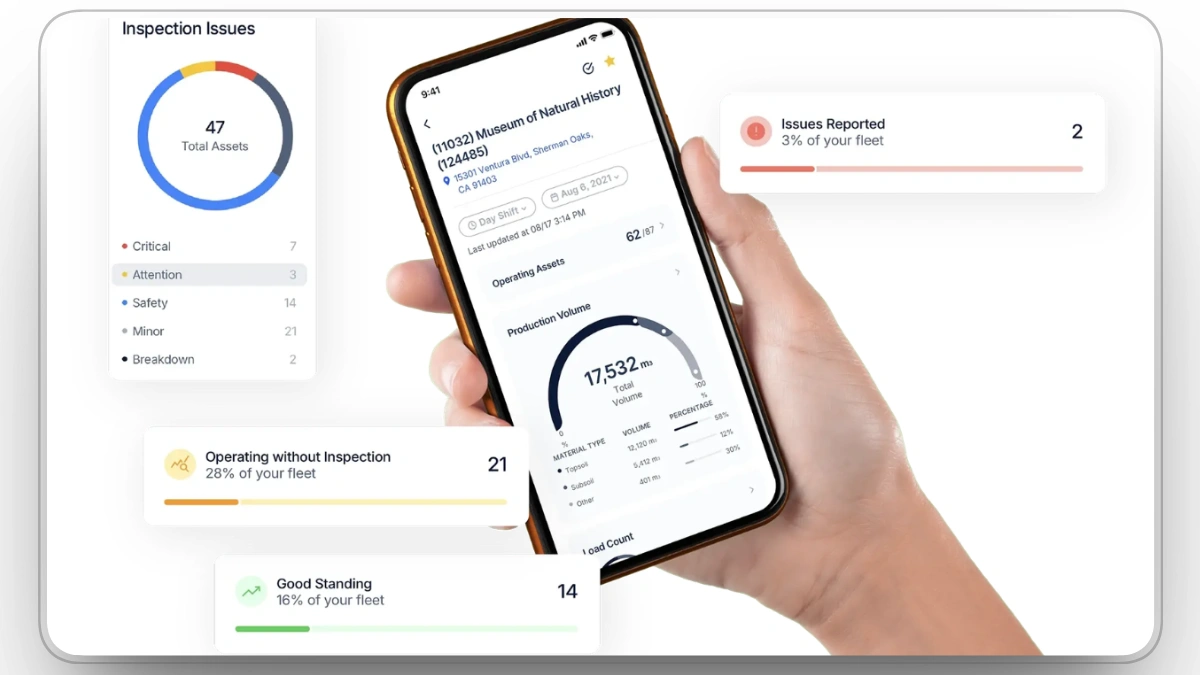
Technicians can access work orders, update task status, and record inspections directly from job sites using Clue’s mobile app. This eliminates time wasted on paper forms, office visits, or desktop systems, ensuring more hands-on time is spent in the field rather than on administrative tasks.
Maintenance History and Analytics
Clue provides detailed maintenance history and performance analytics. Teams can analyze patterns in downtime, equipment failures, or parts usage, allowing managers to identify bottlenecks and optimize maintenance processes that may be suppressing wrench time.
This data‑driven approach supports continuous improvement by highlighting recurring issues and enabling targeted operational changes.
Final Thoughts
Wrench time is an essential metric for understanding the efficiency of maintenance work in construction. By accurately tracking and optimizing wrench time, you can improve productivity, reduce downtime, lower costs, and keep your projects on schedule. Leveraging advanced tools like CMMS platforms and predictive analytics can further enhance your ability to optimize wrench time, ensuring the smooth running of maintenance tasks and the overall success of your construction projects.
Platforms like Clue offer real-time insights, seamless coordination, and mobile access to help you streamline wrench time management, making it easier to track, optimize, and improve your maintenance operations.
FAQs
1. How can I improve wrench time without increasing technician hours?
Improving wrench time doesn't require extra labor hours. Focus on reducing non-productive activities like excessive travel time or waiting for parts by optimizing logistics and inventory management. Streamline communication, and provide additional training to help technicians work more efficiently. By addressing these inefficiencies, wrench time can be increased without extending work hours.
2. What are the common mistakes companies make when measuring wrench time?
Common mistakes include misinterpreting wrench time as the only efficiency metric, overlooking downtime activities like waiting for parts, and overemphasizing wrench time without considering other factors like job complexity or quality. It is important to use wrench time in conjunction with other performance metrics like MTTR and MTBF for a full picture of maintenance efficiency.
3. How can I calculate wrench time if I don’t have a formal tracking system?
You can manually track wrench time by having technicians log their activities in time blocks (e.g., every 15 or 30 minutes). Record the time spent actively working, waiting for parts, or doing non-maintenance tasks. Add up the time spent on maintenance, then divide by total available work hours to calculate wrench time. However, using a CMMS or digital tool provides more accurate and efficient tracking.
4. How does wrench time affect my project’s overall cost and budget?
Wrench time directly impacts labor and operational costs. Low wrench time leads to more waiting, travel, and idle time, which raises labor costs and causes delays. This can result in emergency repairs and unplanned downtime, increasing expenses. Optimizing wrench time reduces these inefficiencies, helping projects stay within budget and on schedule.
5. How can I use wrench time data to improve preventive maintenance strategies?
Wrench time data highlights areas where preventive maintenance is inefficient. If certain tasks consistently take longer than expected, it may indicate inadequate preventive maintenance or inefficiencies in procedures. Analyzing wrench time helps improve scheduling, task execution, and training, ultimately reducing unplanned repairs and enhancing equipment reliability.
6. Can wrench time be used to benchmark against other companies in the industry?
Yes, wrench time can be benchmarked against industry standards. For example, average wrench time ranges from 25% to 35%, while top-performing teams aim for 50% or more. Regularly comparing your wrench time to industry benchmarks helps set realistic improvement goals and assess the impact of changes.
7. What role does technology play in improving wrench time tracking and analysis?
Technology like CMMS platforms and mobile apps streamlines wrench time tracking by providing real-time data capture, automating work orders, and improving scheduling. Predictive analytics tools can forecast wrench time requirements based on historical data, helping managers plan tasks more effectively and optimize maintenance operations.

Transform Your Equipment Management