What Is a WIP Report in Construction? A Complete Guide for Contractors


Hi, I’m Maham Ali. I write about construction equipment management, helping teams use fleet data and maintenance intelligence to improve uptime, control costs, and run smoother jobsites.
In heavy-equipment construction, accurate WIP (Work-in-Progress) reporting is crucial. A single misreported crane hour, excavator rental, or equipment maintenance can distort your financial picture, hiding thousands of dollars in untracked costs.
WIP isn’t just about tracking how much work is done; it’s about capturing every equipment-related cost in real time. When you're managing projects with heavy machinery, equipment costs can make up as much as 40% or more of the total project cost. Without proper tracking, you risk overestimating your budget or underbilling your client.
This guide will walk you through how to calculate WIP for equipment-heavy projects, how to track equipment expenses accurately, and best practices for managing costs effectively. Whether you own or rent your machinery, understanding and maintaining precise job progress reports is essential to staying on budget and ensuring project success.
What Is a WIP Report in Construction?
In simple terms, a WIP report (Work in Progress report) is a financial document that tracks the status of ongoing construction projects. It allows contractors, project managers, and accountants to determine how much work has been completed, how much money has been spent, and how much has been billed so far.
In construction, where projects often span months or years, an ongoing project report is essential to track the progression of costs and revenues before the project is completed. It essentially helps you answer these questions:
- How much of the project has been completed, in terms of both work and expenses?
- How does the amount billed to the client compare with the actual work done (and the cost of that work)?
- How much work remains to be done, and what costs are left to incur?
For contractors dealing with heavy equipment, this becomes even more critical. Heavy asset-related costs can fluctuate based on usage, maintenance, and mobilization, so understanding job progress is key to managing both the cost of labor and the cost of machinery in your project’s financial plan.
Key Components of a WIP Report

A typical WIP (Work-in-Progress) report tracks the progress and financial health of a construction project. For heavy equipment–intensive projects, it’s essential to account for both labor and equipment costs in the ongoing project calculation. Here are the key components that help monitor your project’s financial status:
1. Contract Value
This is the total agreed-upon price for the project, including change orders and variations. For projects with heavy equipment, this value should also capture additional equipment rental fees, mobilization costs, and any unforeseen equipment expenses that may arise during the project.
2. Costs Incurred to Date
This component includes all expenses incurred up to the reporting date, such as:
- Labor costs
- Material purchases
- Heavy equipment-related expenses like:
- Rental fees
- Fuel and operating costs
- Maintenance and repair costs for owned machinery
- Transport/mobilization costs
Accurately tracking equipment costs in this section is crucial for ensuring that your ongoing project reflects actual project expenses, which could otherwise be underestimated if equipment operating expenses aren’t properly accounted for.
3. Percentage of Completion
This metric reflects how much of the work has been completed relative to the total project scope. The percentage is typically calculated based on:
- Costs incurred or
- Milestones achieved.
For equipment-heavy projects, it's important to factor in the usage of equipment (e.g., hours of operation), as machinery is a major cost driver.
4. Earned Revenue to Date
Earned revenue represents how much revenue has been earned based on the project’s completed work. This figure is calculated using the percentage-of-completion method, meaning that as the percentage of work completed increases, the earned revenue does as well. This should be adjusted based on equipment usage and costs associated with it, ensuring a more accurate reflection of actual progress.
5. Amount Billed to Date
This is the total amount you’ve invoiced the client so far. Comparing this figure to earned revenue helps you determine if you’ve overbilled or underbilled relative to the actual work completed. Regularly updating this ensures you don’t fall behind on invoicing or risk delays in cash flow.
6. Over/Under Billing
This section tracks whether you have overbilled (invoiced more than the value of work completed) or underbilled (invoiced less than the work completed). It’s critical for managing cash flow, as underbilling could delay revenue recognition, while overbilling could strain client relationships.
7. Cost to Complete
This is the projected cost to finish the remaining work on the project. For equipment-heavy projects, costs to complete can fluctuate depending on:
- Remaining equipment usage
- How much time equipment will be in operation
- Unforeseen costs like maintenance or equipment downtime
Updating this regularly keeps your financial forecasts aligned with the project’s reality and reduces the risk of surprise cost overruns.
8. Projected Profit
By comparing earned revenue with the total projected cost, this section helps determine how much profit the project is expected to generate. Equipment costs can have a significant impact here, if machinery costs rise due to unforeseen maintenance, downtime, or additional rental costs, your profit margin may decrease. Accurate tracking of equipment-related costs is vital for maintaining profitability.
How to Calculate WIP in Construction

Calculating WIP (Work-in-Progress) accurately is critical to understanding your project's financial status, especially when heavy equipment is involved. Here's how to calculate ongoing projects using the percentage of completion method, and how to incorporate asset-related costs into your calculations.
1. Percentage of Completion Method
In construction, the percentage of completion method is the standard approach to calculating WIP. This method is based on the amount of work completed relative to the total project scope. You can calculate the percentage of completion using costs incurred or milestones reached.
Formula: To calculate the percentage of completion based on costs incurred, use the following formula:
Percentage of Completion = (Costs Incurred to Date / Total Estimated Costs) × 100
2. Earned Revenue Calculation
Once you've determined the percentage of completion, you can calculate how much revenue has been "earned" based on the work completed. This earned revenue is usually calculated by multiplying the contract value by the percentage of completion.
Formula: To calculate earned revenue, use this formula:
Earned Revenue = Contract Value × Percentage of Completion
3. Comparing Earned Revenue vs. Billed Amount
The difference between earned revenue and the amount billed indicates whether you have overbilled or underbilled the client. This is a crucial step for managing cash flow and ensuring your invoices match the value of work completed.
Formula: To calculate over/under billing, subtract the amount billed to date from the earned revenue.
Over/Under Billing = Earned Revenue - Amount Billed to Date
Why WIP Reports Are Crucial for Heavy Equipment in Construction

Effective WIP reporting is essential for managing both labor and equipment operating expenses on heavy equipment–intensive projects. It ensures that equipment-related expenses are captured accurately, providing a clear picture of project financials.
1. Accurately Tracking Equipment Costs
Heavy asset-related costs are a major part of the budget. Whether owned or rented, ongoing project reports track:
- Rental fees
- Fuel and operating costs
- Maintenance and repair expenses
2. Minimizing Equipment Downtime
Downtime is costly. WIP reports help track idle equipment time, identifying inefficiencies and helping to reallocate resources to avoid unnecessary costs. By reducing downtime, you ensure equipment is being used effectively, which ultimately helps stay on schedule and within budget.
3. Integrating Maintenance Management into WIP Reporting
Integrating asset management with WIP reports allows you to track maintenance schedules and repair costs, which helps in forecasting future expenses. Being proactive with equipment maintenance reduces the chances of unexpected downtime, making your cost-to-complete estimates more accurate.
4. Ensuring Accurate Cost-to-Complete Projections
WIP reports ensure that cost-to-complete estimates are updated regularly to reflect the most accurate data on equipment usage, maintenance, and downtime. This is crucial for staying within budget and adjusting projections for equipment operating expenses that may fluctuate during the course of the project.
Why WIP Reports Are Essential for Contractors
WIP reports are not just about tracking costs and progress; they play a critical role in providing financial insights that can directly impact a contractor's success. Here's why they are essential:
- Financial Clarity: Accurate work-in-progress tracking offers contractors a clear financial overview of their projects. By capturing all costs and revenues, this tracking helps avoid surprises and ensures contractors understand profit margins, allowing them to allocate resources more effectively.
- Cash Flow Management: Cash flow is critical in construction. Real-time project progress monitoring provides up-to-date insights into invoicing, payments, and expenditures. This allows contractors to forecast cash flow accurately and ensure sufficient funds to cover labor, materials, and other costs.
- Risk Mitigation and Profitability: Job progress reports help contractors identify potential discrepancies in invoicing, such as overbilling or underbilling, early on. This insight enables them to adjust forecasts and make necessary changes, safeguarding profitability and reducing financial risks.
- Accurate Financial Statements: Contractors rely on accurate financial documentation for both internal management and compliance. Project status reports ensure that all costs, revenues, and liabilities are captured correctly, resulting in more precise financial statements for audits, tax filings, and other regulatory requirements.
- Better Decision-Making: For contractors juggling multiple projects, construction progress tracking enables better decision-making. With access to real-time data on project timelines, equipment, and labor, contractors can make informed choices to keep projects on track, reduce costs, and improve overall project success.
Types of Software for WIP Reporting in Heavy Equipment Construction

Accurate WIP (Work-in-Progress) reporting in heavy equipment–intensive construction projects requires specialized software to track both project progress and asset-related costs.
Here are the main types of software used to streamline this process:
1. Project Management Software
Project management tools like Procore and Buildertrend track work completed, project milestones, and resource allocation in real time. These tools automatically update ongoing project reports by capturing labor and material costs as they occur.
They provide an overview of costs incurred, helping contractors keep projects on track while managing the financials. By automating project tracking, these tools make it easier to keep job progress reports up to date, ensuring costs and earned revenue are captured accurately.
2. Construction Accounting Software
QuickBooks for Construction and Foundation Software focus on job costing, financial tracking, and tax compliance. These tools manage earned revenue, cost to date, and over/under billing, ensuring that all financial data flows seamlessly into the WIP report.
They are particularly valuable for keeping track of project finances and preventing cash flow issues.
These platforms automatically capture cost data, making job progress calculations straightforward and accurate. They help contractors track equipment-related expenses, such as rental fees or maintenance, and incorporate them into the ongoing project report.
3. Fleet and Equipment Management Software
Platforms like Clue are tailored to track the usage, maintenance, and costs associated with heavy machinery. They provide real-time data on key metrics like fuel usage, rental fees, and repair costs. By integrating with job progress systems, this data ensures that equipment-related costs are accurately reflected.
Clue and similar tools integrate directly with construction accounting software, automatically updating ongoing project reports with equipment costs. This ensures that no costs, whether for fuel, repairs, or rental fees, are overlooked.
4. Enterprise Resource Planning (ERP) Software
ERPs like Oracle Construction and Engineering and SAP integrate multiple functions, from financial management and project tracking to equipment monitoring. These platforms provide a unified system where all project data, including equipment usage and costs, is consolidated for comprehensive WIP reporting.
ERPs offer a complete picture of a project’s financials and operations, enabling more detailed and accurate ongoing project reports. With equipment data feeding into financial systems, project managers can forecast cost-to-complete more accurately.
5. Job Costing Software
Job costing tools like Procore (with Job Costing) and Buildertrend track all direct project costs, labor, materials, and equipment. These platforms help you allocate costs to specific tasks, ensuring that equipment expenses are properly reflected in the job progress report.
These tools allow contractors to track direct equipment-related expenses (fuel, repair, and maintenance), ensuring that ongoing project reports include the true cost of using machinery. They integrate directly with accounting software, allowing for accurate earned revenue calculations.
How Clue’s Features Strengthen WIP Reporting
When you're managing a construction project with heavy machinery, excavators, cranes, dozers, the variability in equipment operating expenses, usage, maintenance, and downtime can make job progress accounting complex. Clue helps simplify that complexity by turning equipment management into a data‑driven, transparent process. Here’s how:
Key Features of Clue That Support WIP Accounting
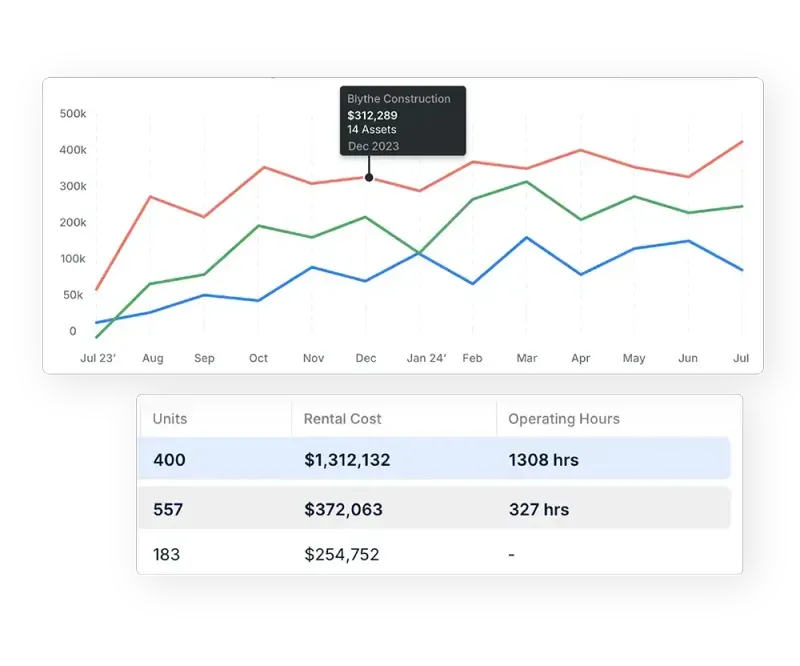
- Unified Equipment Data Dashboard: Clue consolidates equipment status, maintenance records, and rental costs into a single pane of glass, Instead of chasing spreadsheets and emails, your fleet data flows directly into your WIP reports, so equipment costs are always current and complete.
- Real-Time Utilization Tracking: Clue tracks equipment usage in real time, whether the machinery is active, idle, or under maintenance. This data is crucial for calculating accurate costs incurred and estimating equipment-hour costs in your WIP report.
- Maintenance Scheduling & Tracking: Clue helps you schedule preventive maintenance, log repairs, and track maintenance costs. By integrating maintenance data, Clue ensures that costs to date are up-to-date and reflects actual equipment performance in your job progress.
- Rental/Lease & Asset Tracking: If you lease or rent equipment, Clue tracks rental contracts, usage periods, and associated costs. It ensures that rental fees are accurately captured in your job progress report, preventing financial surprises.
- Integration with ERP and Accounting Systems: Clue integrates with your ERP and accounting systems, allowing equipment cost data to flow seamlessly into your financial and project reports without manual data entry. This reduces errors and saves time, ensuring your ongoing project reports are both accurate and efficient.
- Reporting & Analytics: Construction reporting and analytics software organizes utilization, cost-per-hour, maintenance history, idle time, and fleet-efficiency data. These insights help teams forecast future expenses, estimate cost to complete, and identify inefficiencies before they reduce project profitability.
Common WIP Reporting Mistakes in Equipment-Heavy Construction
1. Hidden Equipment Costs
Problem: Treating equipment as overhead and ignoring idle/downtime means big fuel, rental, and repair costs never hit the job, so profit fade shows up only at the end.
Solution: Code all equipment costs (owned and rented, active and idle) to specific jobs and cost codes so WIP shows the true cost of putting machines on site.
2. Incomplete Cost Data
Problem: Running WIP before all hours, fuel tickets, rental extensions, and repair invoices are in the system makes costs incurred and percent complete look artificially low.
Solution: Set a strict cutoff before each WIP run and use integrated tools so equipment usage and costs flow automatically into job cost.
3. Subjective Progress
Problem: “We’re about 70% done” based on gut feel leads to inaccurate percentage-of-completion, earned revenue, and over/under-billing.
Solution: Base progress on cost-to-cost and production data (equipment hours, quantities installed, milestones) instead of opinions.
4. Unpriced Change Orders
Problem: Crews burn equipment and labor on extra work, but when change orders aren’t reflected in contract value, WIP shows shrinking margins that are really unbilled scope.
Solution: Keep contract value updated for approved COs and track pending COs clearly so everyone sees both risk and upside.
5. Weak Billing Signals
Problem: Chronic underbilling drains cash flow, while aggressive overbilling can damage client trust but both get ignored as “just timing.”
Solution: Use the over/under-billing column as a health check: fix underbilling by tightening cost capture and invoicing, and manage overbilling intentionally to support cash without harming relationships.
6. Manual, Fragile Spreadsheets
Problem: WIP built in spreadsheets is prone to broken formulas, version chaos, and numbers that don’t tie back to the general ledger.
Solution: Rely on system-generated WIP reports tied to your accounting and project systems, and use spreadsheets only for scenario analysis.
7. No Trend Analysis
Problem: Treating WIP as a one-off monthly report hides recurring issues like consistent profit fade on equipment-heavy jobs or certain clients.
Solution: Review WIP trends over time by project type, PM, and equipment intensity, then adjust estimating, fleet planning, and billing based on those patterns.
Best Practices for WIP Reporting in Equipment-Heavy Construction Projects

To ensure that your WIP (Work-in-Progress) reports are accurate and reliable in equipment-heavy construction projects, following best practices is crucial.
- Update WIP Regularly: Heavy equipment usage can change rapidly, so it’s crucial to update your ongoing project report frequently (ideally monthly or at key project milestones). This ensures that all costs, including equipment rentals, fuel, and maintenance, are accurately reflected.
- Use Integrated Software: Incorporate project management and accounting software like Procore or Deltek that integrates both job progress reports and fleet management systems. This will help you track equipment utilization in real time and update your financial reports accordingly.
- Account for All Equipment Costs: Don’t just track rental fees or purchase costs. Include fuel, maintenance, insurance, and downtime. Equipment-related expenses can easily exceed initial estimates, so thorough tracking helps you avoid financial surprises.
- Monitor Profitability: WIP reports not only help track progress but also give insight into your profit margins. By consistently reviewing your earned revenue, costs incurred, and equipment expenses, you can quickly detect any potential profitability issues before they become too large to manage.
Challenges in WIP Reporting for Heavy Equipment in Construction
While WIP reports are essential for accurate project tracking, they come with unique challenges, especially when heavy equipment is involved. These challenges need to be addressed to ensure accurate cost tracking and effective financial management.
1. Dealing with Fluctuating Equipment Costs
Equipment operating expenses can vary significantly due to fuel price fluctuations, maintenance needs, and changing rental fees. These fluctuations make it difficult to predict project costs accurately, affecting your cost-to-complete estimates. WIP reports must reflect these variations to maintain financial accuracy.
2. Mitigating the Impact of Equipment Downtime
Idle equipment leads to unnecessary costs and delays. Accurately tracking downtime and underutilized assets is crucial to prevent financial loss. Efficiently managing equipment usage through WIP reporting reduces idle time, lowers costs, and ensures better overall project efficiency.
3. Challenges with Depreciation and Maintenance Tracking
For owned equipment, estimating depreciation and tracking maintenance can be complex. If these aren’t accounted for correctly, they can distort cost projections and affect the overall budget forecasting. Integrating proper depreciation and maintenance schedules into WIP reports is vital for accurate financial tracking.
4. Managing Billing Accuracy with Over/Under Billing
Improper tracking of equipment operating expenses often leads to overbilling or underbilling. This creates cash flow issues and financial discrepancies, especially when the equipment-related expenses aren’t properly integrated into the job progress reporting. Monitoring billing accuracy through WIP reports ensures your financials align with actual work completed.
5. Ensuring Seamless Data Integration
Multiple software systems (project management, accounting, and equipment management) can lead to fragmented or inaccurate WIP reports if data is not properly integrated. Ensuring seamless data synchronization between these systems is crucial for accurate financial tracking and reporting.
Conclusion
A WIP report is essential for managing construction projects, especially when heavy equipment is involved. Not only does it track labor and material costs, but it also ensures that all equipment-related costs are accurately represented, allowing contractors to better forecast costs, manage cash flow, and prevent project overruns.
For heavy-equipment contractors, the ability to track equipment costs, usage, downtime, and maintenance inside your WIP report keeps your financial projections accurate and up to date. By following the best practices outlined in this guide and connecting your field equipment data to your accounting system you’ll be better equipped to keep equipment-intensive projects on budget and on schedule.
If you’re managing construction projects with significant equipment spend, a well-structured WIP process isn’t just helpful, it's essential for long-term profitability.
Ready to see how Clue can improve WIP accuracy and equipment economics?
FAQs
1. What is the purpose of a WIP report in heavy equipment construction?
A WIP (Work-in-Progress) report tracks the status of ongoing construction projects, providing insights into work completed, costs incurred, and earned revenue. In equipment-heavy projects, it ensures that equipment costs (e.g., fuel, maintenance, rental fees) are accurately tracked, giving a clear picture of the project’s financial health.
2. How often should WIP reports be updated in heavy equipment projects?
WIP reports should be updated regularly, ideally monthly or at key project milestones. For equipment-heavy projects, real-time tracking of equipment usage, costs, and downtime ensures that your financial projections remain accurate and up to date.
3. How do equipment costs affect WIP reporting in construction?
In equipment-heavy construction, equipment operating expenses (rental fees, fuel, maintenance, etc.) can account for up to 40% or more of the project’s total budget. Ongoing project reports help track these costs, ensuring they are accurately reflected in project forecasts, earned revenue, and cost-to-complete estimates.
Transform Your Equipment Management