Construction Equipment Tire Inspection: A Complete Safety Guide


Hi, I’m Maham Ali. I write about construction equipment management, helping teams use fleet data and maintenance intelligence to improve uptime, control costs, and run smoother jobsites.
Tires are among the most important yet overlooked components in heavy equipment maintenance. Regular tire inspections help reduce downtime, control repair costs, improve jobsite safety, and extend tire life across excavators, bulldozers, haul trucks, and other heavy machinery.
In 2023 at least eight fatalities in the U.S. were linked specifically to off‑the‑road (OTR) tire servicing accidents, with safety professionals estimating 20+ near‑miss or nonfatal injuries for every fatality related to tire failures or servicing issues.
Construction tires are exposed to diverse job site challenges: rough terrain, high loads, and extreme temperatures, and long operational hours. Without regular inspections, tires can experience wear or damage that reduces their effectiveness and potentially leads to catastrophic failures.
This blog aims to provide a comprehensive guide on the essential aspects of heavy equipment tire inspection, offering a step-by-step checklist and expert tips to help operators and fleet managers manage their tires proactively.
Why Tire Inspections Are Crucial
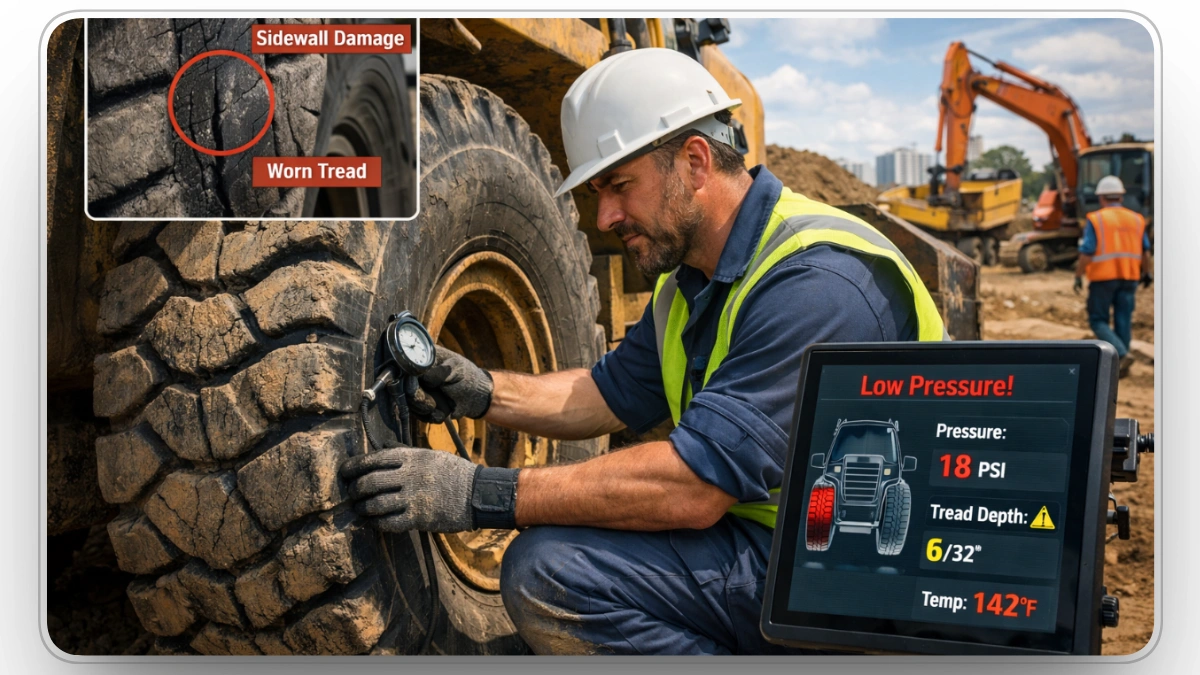
Tire inspections go beyond just safety; they are directly tied to operational efficiency, cost savings, and extended tire life. Neglecting tire health can result in unforeseen problems that jeopardize the equipment's ability to perform optimally, leading to downtime and financial strain.
1. Safety Concerns
The most obvious reason to inspect tires is safety. Improperly maintained tires can result in blowouts, loss of traction, and equipment instability, all of which pose significant risks to operator safety and site security.
Common Safety Issues from Neglected Tire Inspections:
- Blowouts: Often caused by under-inflation or sidewall damage. A sudden blowout could cause the vehicle to lose control.
- Loss of Traction: Under-inflated or worn tires provide poor traction, leading to reduced stability, especially in rough terrain.
- Hydroplaning or Skidding: Tires that are over-inflated or have inadequate tread depth reduce water displacement, increasing the risk of hydroplaning.
2. Tire Performance and Equipment Efficiency
Tires directly impact the traction, fuel efficiency, and overall performance of the construction equipment. Tires that are not properly maintained can lead to decreased fuel economy, higher operational costs, and reduced machine efficiency.
Impact on Fuel Efficiency:
- Under-inflation increases rolling resistance, causing engines to work harder, which results in more fuel consumption.
- Well-maintained tires improve efficiency, ensuring optimal traction and minimizing wear and tear on the machinery, which in turn leads to cost savings and fewer repairs.
3. Preventing Downtime and Costly Repairs
Neglecting tire inspections can result in unforeseen tire failure, often leading to expensive repairs and equipment downtime. Tires in poor condition are more prone to damage, requiring replacement sooner than their potential lifespan.
Tire failure can also lead to increased wear on vehicle parts, as imbalanced tires affect the suspension, axles, and overall structure of the vehicle. Additionally, Downtime can significantly disrupt construction project timelines, leading to delayed completions and unanticipated costs.
By implementing a routine inspection process, you can identify potential issues early and reduce the risk of equipment failure.
Tire Inspection Frequency
For tire inspections to be effective, they must occur at regular intervals based on equipment usage, operating conditions, and the specific requirements of the tires in question. Here is an overview of the inspection frequencies and their purposes:
1. Pre-Operation Inspections
These inspections occur before construction equipment is deployed to the job site. They are essential for checking tire pressure, visual damage, and basic tread condition. Pre-operation checks ensure that the equipment is safe and ready to operate before it is put to work.
Pre-Operation Check Includes
- Tire Pressure: Ensure it meets the manufacturer’s specifications.
- Visual Inspection: Check for cuts, cracks, or visible damage.
- Tread Check: Ensure the tread depth is sufficient and there is no uneven wear.
2. Weekly Inspections
Once the equipment has been operational for a few days, a detailed weekly inspection is necessary. This allows for more comprehensive checks on tire tread depth, wear patterns, and alignment. It is important to identify early signs of tire distress such as irregular wear or low pressure.
Weekly Inspection Focus
- Tread Depth Measurement: Use a depth gauge to check if the tread is still within acceptable limits.
- Wear Pattern Check: Look for signs of misalignment, under-inflation, or overloading.
- Tire Inflation: Double-check that the tire is within the correct pressure range.
3. Monthly Inspections
A comprehensive inspection should be conducted monthly or after every 100-150 operational hours, depending on usage. This inspection includes alignment checks, balance evaluations, and the internal condition of the tires. It is essential to review tire age, mileage, and service records to ensure tires are replaced on time.
Monthly Inspection Focus
- Alignment and Balance Check: Ensure proper alignment to avoid uneven wear.
- Internal Inspection: Look for bulges or signs of internal damage.
- Age and Mileage Review: Record tire age and usage to plan for timely replacements.
Key Areas to Inspect on Tires
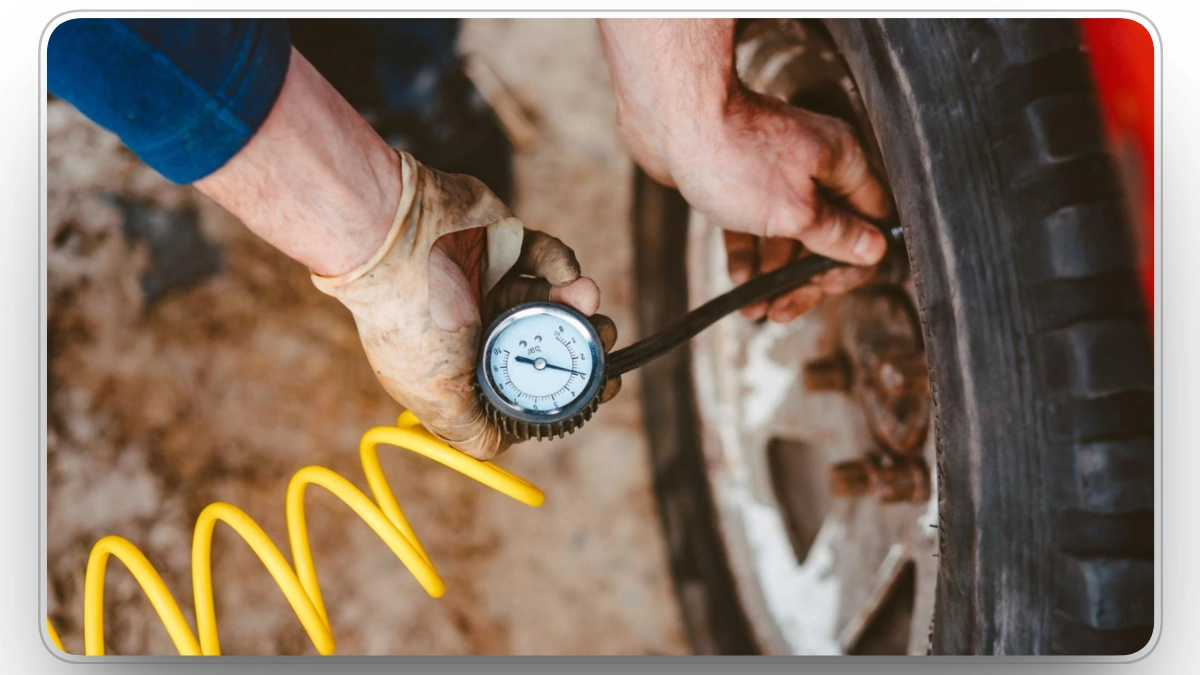
Construction tire inspections should cover various aspects that affect both job site safety and performance. Regular checks on these key areas can prevent unnecessary repairs, increase tire life, and ensure that equipment functions optimally throughout its life.
1. Tire Pressure
What to Check:
- Measure the tire pressure using a calibrated tire pressure gauge when the tire is cold.
- Compare the tire's current pressure with the recommended pressure in the tire manual or the manufacturer's specifications.
Tire pressure directly affects performance. Under-inflated tires can cause excessive wear on the edges, increase heat buildup, and reduce traction. On the other hand, over-inflated tires have a smaller contact patch, leading to faster wear in the center of the tread and increased vulnerability to impact damage.
2. Tread Depth and Wear Patterns
What to Check:
- Use a tread depth gauge to measure the depth of the tread. Ensure the tread has enough depth to provide adequate traction for your equipment.
- Look for uneven wear patterns: Are the tires wearing more on one side? Are they flat in the center? These could indicate alignment issues or improper inflation.
Tread depth affects traction and stability. Shallow tread reduces the tire's ability to grip the surface, increasing the risk of slipping or instability. Uneven wear often indicates mechanical issues that need addressing, such as alignment issues, suspension problems, or improper loading practices.
3. Sidewall Condition
What to Check:
- Inspect the sidewall for cracks, bulges, cuts, or abrasions.
- Check for foreign objects like nails, stones, or other debris lodged in the sidewall.
Sidewall damage compromises the tire's structural integrity. A bulging sidewall can indicate internal tire damage that may lead to tire failure. Sidewall damage is a clear sign that the tire is unsafe and should be replaced immediately.
4. Tread and Rubber Condition
What to Check:
- Inspect the rubber for cracking, dry rot, or brittleness.
- Examine tread blocks for tearing, chunking, or deformation.
Cracking and dry rot weaken the rubber, reducing the tire’s ability to perform under load. Tread damage reduces traction and can compromise vehicle control. It also shortens the lifespan of the tire, requiring premature replacement.
5. Foreign Objects and Debris
What to Check:
- Remove any debris such as rocks, sticks, or metal shards that are embedded in the tire.
- Inspect the tire for punctures caused by sharp objects.
Foreign objects can lead to slow leaks or punctures over time. They can penetrate the tire and cause internal damage, which can lead to sudden tire failure.
6. Valve Stems and Leaks
What to Check:
- Inspect the valve stem for cracks, damage, or air leaks.
- Test for leaks by spraying a mixture of soapy water on the valve stem. If bubbles appear, there is a leak.
A faulty valve stem causes slow deflation, reducing tire performance and increasing the likelihood of blowouts. It also affects tire pressure, leading to inconsistent wear and reduced efficiency.
7. Alignment and Balance
What to Check:
- Check for uneven wear along the edges or center of the tire tread.
- Evaluate vibration or instability, which could indicate issues with tire balancing.
Misalignment and imbalance can accelerate tire wear, reduce the efficiency of the equipment, and create uneven strain on the suspension. Timely correction of alignment and balance problems improves overall tire lifespan and reduces wear on other vehicle components.
Tire Inspection Tools and Equipment
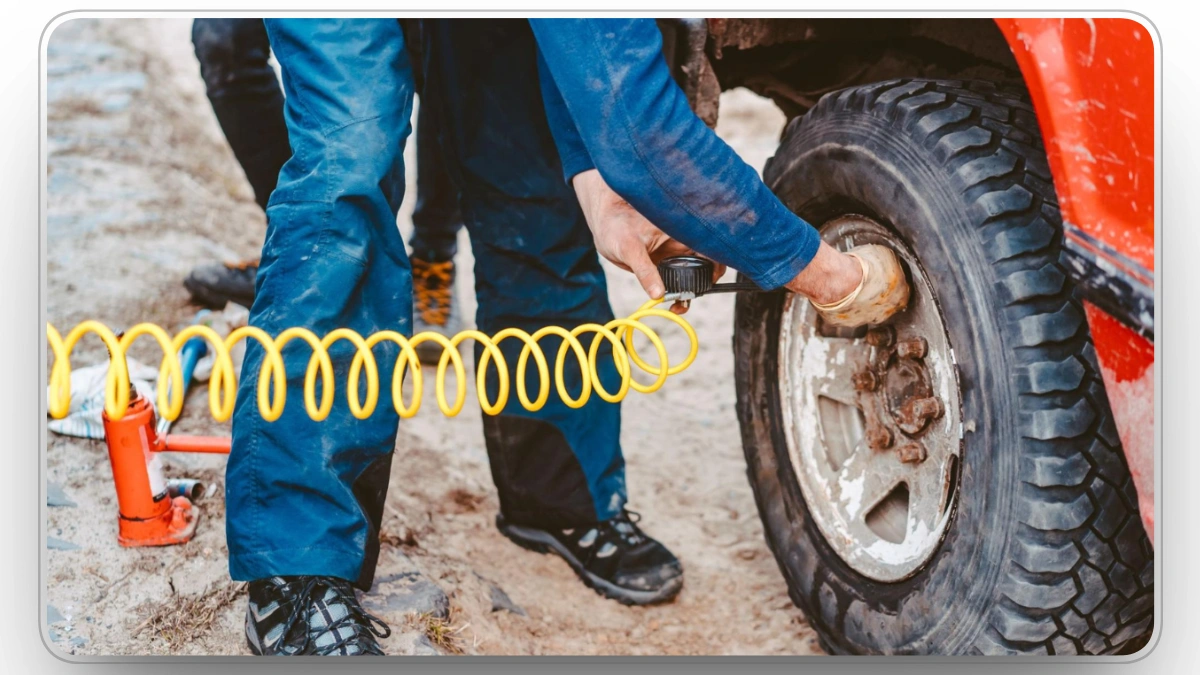
For any comprehensive tire inspection, having the right tools and equipment is crucial. These tools help ensure that tire health is properly assessed, and any potential issues are detected early.
Key Tools for Tire Inspections
1. Tire Pressure Gauges
A calibrated tire pressure gauge is essential for measuring the tire’s inflation. This helps prevent under-inflation and over-inflation, both of which can lead to premature tire wear or failure. Maintaining accurate tire pressure is one of the most important aspects of tire care.
2. Tread Depth Gauges
A tread depth gauge measures the depth of the tire tread to ensure that it remains within the recommended limits for optimal traction. Shallow tread reduces the tire’s grip on the road, leading to reduced safety and stability, especially in harsh or slippery conditions.
3. Sidewall Inspection Mirrors
For hard-to-see areas, such as the sidewall, a mirror with a flashlight can help spot cracks, bulges, or cuts that are not visible from a standing position. Sidewall damage is typically a result of overloading or external punctures and can lead to catastrophic tire failure.
4. Infrared Thermometer
Used to check the tire temperature during or after use, especially for equipment running under heavy loads. Excessive heat buildup can signal issues like under-inflation or excessive friction, both of which can lead to tire degradation and failures.
5. Digital Tire Monitoring Systems
Telematics systems and TPMS (Tire Pressure Monitoring Systems) that use sensors to provide real-time data on tire pressure, temperature, and condition. These systems provide constant real-time monitoring, allowing fleet managers to be proactive rather than reactive in tire management.
Signs of Tire Damage
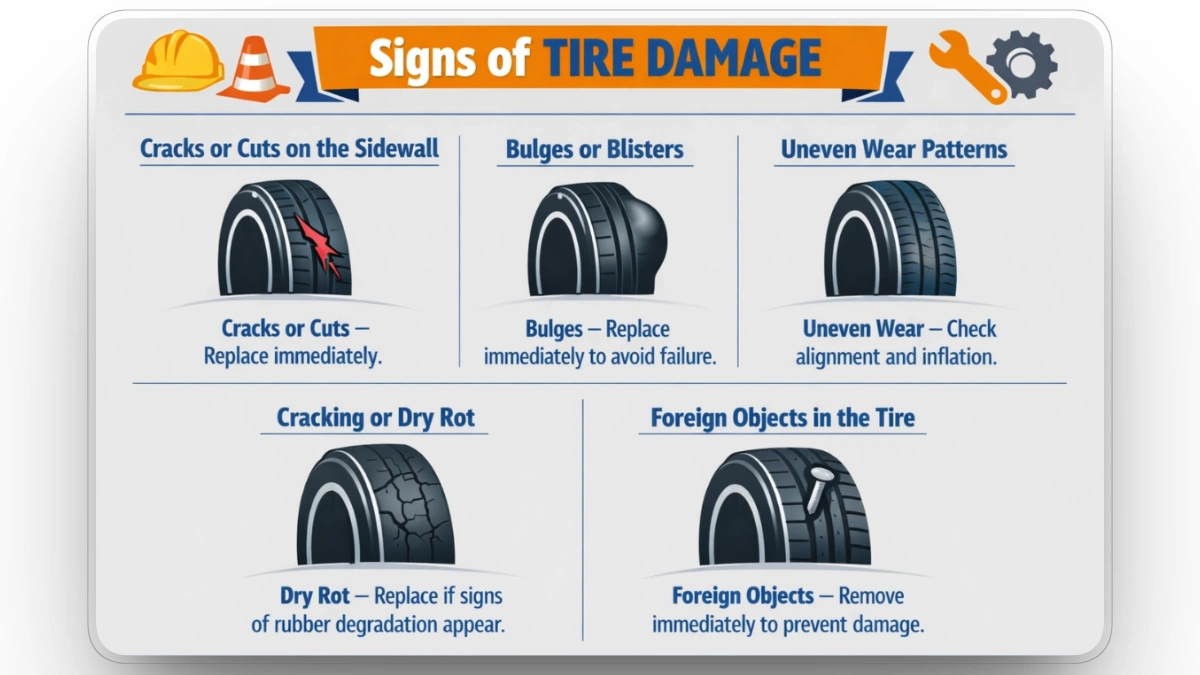
Understanding the indicators of potential tire damage is crucial for preventing safety hazards and equipment downtime. Here’s what to check:
- Cracks or Cuts on the Sidewall: These can be caused by sharp objects, external forces, or normal wear and tear. If a cut or crack is noticed, the tire should be replaced immediately to avoid structural failure.
- Bulges or Blisters: Caused by internal separation or impact damage. Bulges weaken the tire’s structure and increase the risk of sudden failure. Tires with sidewall bulges should not be repaired and must be replaced immediately to maintain operational safety.
- Uneven Wear Patterns: Misalignment, improper inflation, or overloading can cause uneven tread wear. Uneven wear often signals a problem with the alignment or suspension. A detailed inspection and possible correction of the vehicle’s alignment should follow.
- Cracking or Dry Rot: Prolonged exposure to UV light, extreme temperatures, or chemicals (e.g., fuel or oil) can cause rubber degradation. Dry rot significantly weakens the tire’s structure and reduces lifespan. Tires showing these signs should be replaced immediately.
- Foreign Objects in the Tire: Sharp objects like nails, rocks, or metal shards can embed themselves in the tread, leading to punctures and slow leaks. Remove foreign objects immediately to prevent further damage or deformation.
Legal and Regulatory Standards for Tire Inspections
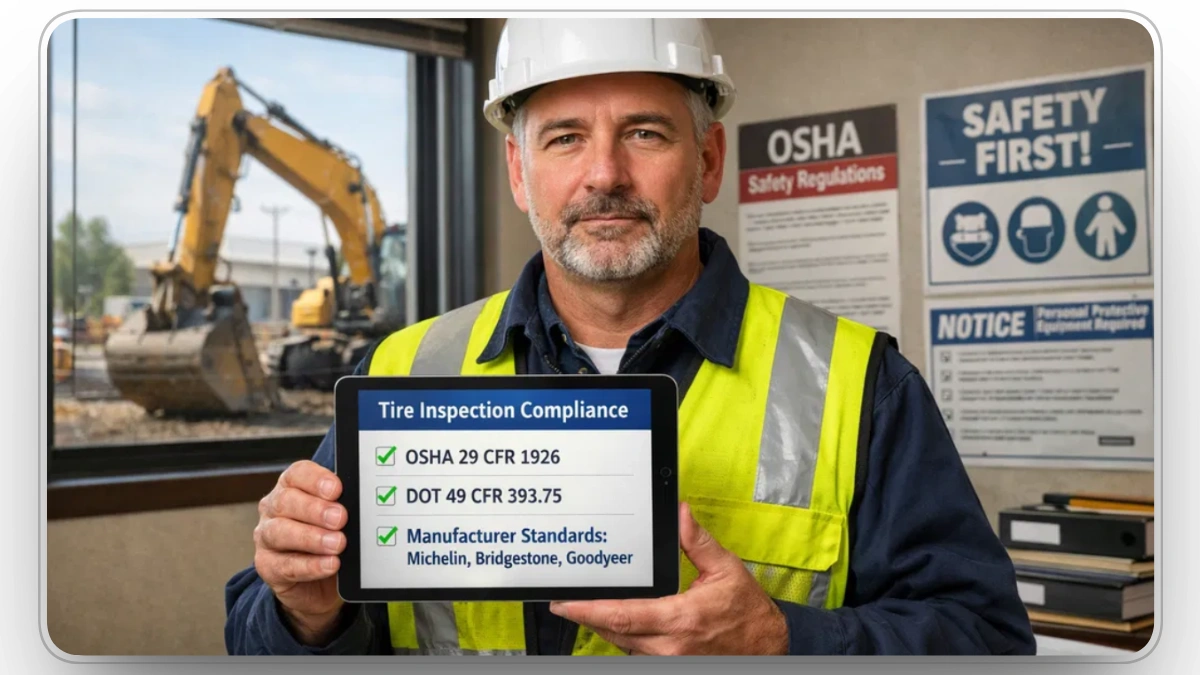
Construction equipment tire inspections are regulated by various safety and transportation standards set by organizations like OSHA (Occupational Safety and Health Administration) and the DOT (Department of Transportation). These regulations ensure that tire maintenance and safety procedures are followed to minimize risks, ensure operational efficiency, and maintain legal compliance.
Adhering to these standards is not just a safety measure but also a legal requirement. Failing to comply can lead to penalties, increased liabilities, and safety hazards on job sites. Proper tire inspection and maintenance ensure:
- Compliance with safety regulations to protect workers.
- Risk reduction in tire failure, which could cause accidents and operational downtime.
- Audit-ready documentation that prevents legal complications.
Key Regulations to Follow
1. OSHA Regulations
Under the General Duty Clause of OSHA, employers are required to provide safe working environments. This includes ensuring that equipment like tires is in safe operating condition.
Refer to OSHA’s 29 CFR 1926 for guidance on safety inspections and maintaining construction equipment in safe operating condition.
2. DOT Regulations
For heavy equipment that operates on public roads or highways, the Department of Transportation (DOT) sets specific regulations under 49 CFR 393.75. These guidelines focus on tire condition, tread depth, and sidewall integrity for vehicles on the road.
DOT regulations include tire specifications such as minimum tread depth (e.g., 2/32 inches for commercial vehicles) and pressure requirements. Additionally, tires on equipment used on public roads must adhere to DOT-approved standards for load-bearing and wear.
3. Manufacturer Standards
Tire manufacturers like Michelin, Bridgestone, and Goodyear also have their own guidelines, which align with OSHA and DOT regulations. These guidelines focus on aspects such as pressure ranges, load limits, and tire performance under specific environmental conditions. Always refer to manufacturer documentation for the correct maintenance procedures and tire replacement schedules.
Best Practices for Tire Maintenance
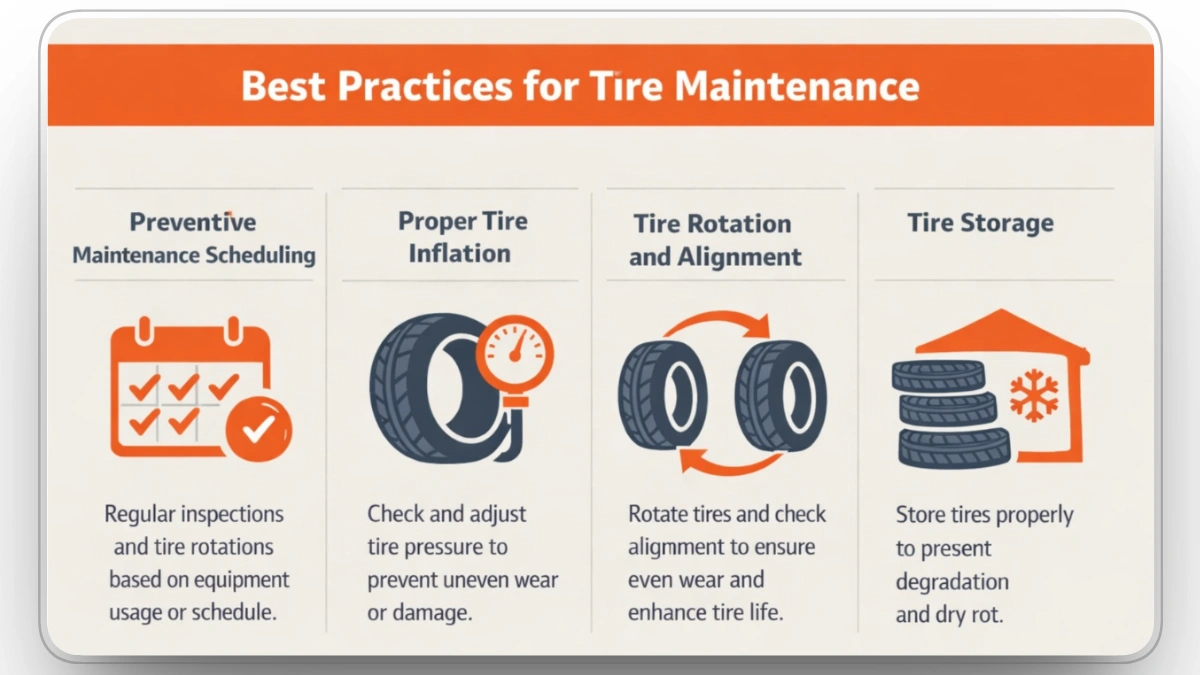
Effective tire maintenance is essential to maximizing the lifespan and performance of heavy equipment tires. Below are key practices to ensure optimal tire health and operational efficiency.
1. Preventive Maintenance Scheduling
- Schedule regular inspections and tire rotations based on equipment usage or a fixed schedule.
- Track tire age, mileage, and service records.
A proactive maintenance plan ensures tire longevity and optimal performance.
Regular rotations prevent uneven wear, enhancing tire lifespan and machine stability.
2. Proper Tire Inflation
Tire inflation is critical for ensuring optimal tire performance. Under-inflation causes tires to wear unevenly, while over-inflation leads to reduced contact with the ground and increased tire damage. Always use a calibrated gauge to check pressure, and adjust as needed.
3. Tire Rotation and Alignment
Rotating tires based on vehicle usage or mileage ensures even wear across all tires. Regular alignment checks prevent uneven wear caused by misalignment, which can shorten tire lifespan.
4. Tire Storage
Store tires properly by placing them in a cool, dry environment, away from direct sunlight. Tires should be stacked upright or mounted on rims. Improper storage can lead to degradation and dry rot, reducing tire performance.
Tire Lifespan and End of Life Considerations
Tires do not last forever, and knowing when to replace them is just as important as knowing how to maintain them. Here’s how to manage tire lifespan:
1. Tracking Tire Age
Tires degrade naturally over time, even if they are not used. Rubber compounds lose their elasticity, becoming brittle or cracked as the tire ages. Always note the date of manufacture and replacement schedule. Replace tires at or before the end of their expected lifespan, typically around 5-6 years.
2. Monitoring Tread Depth
As tread depth decreases, so does the tire’s ability to grip the surface. Tires that have less than 1/16th inch of tread should be replaced. Regularly check tread depth to ensure the tire remains within the manufacturer’s guidelines for safe operation.
3. Age vs. Wear
While a tire with low tread depth may still be new, age-related rubber degradation can make the tire unsafe. Replace tires showing signs of aging, such as cracks, dry rot, or sidewall damage, even if they appear to have sufficient tread.
Using Technology for Tire Inspections
Telematics, sensor-based systems, and automated software are now playing a pivotal role in tire health monitoring. These tools reduce manual checks, improve accuracy, and provide real-time data that helps managers make informed decisions, ultimately improving operational efficiency and cost-effectiveness.
1. Tire Pressure Monitoring Systems (TPMS)
A real-time system that provides continuous monitoring of tire pressure. TPMS sends instant alerts if tire pressure deviates from set limits, preventing under-inflation or over-inflation. It helps improve fuel efficiency and reduces tire wear, lowering maintenance costs over time.
2. Telematics and IoT for Tire Health Monitoring
Telematics integrates GPS and tire monitoring sensors, providing real-time insights into tire condition, wear rates, and usage. Real-time data helps fleet managers track tire health across multiple equipment units, optimizing replacement schedules and identifying issues early. It reduces manual inspections, providing automated tracking and maintenance scheduling.
3. Automated Inspection and Reporting
Use of digital inspection apps that automatically record tire conditions, generating reports and performance analysis for managers. Automation improves the accuracy of inspections, reduces human error, and allows for centralized data storage and trend analysis.
How Clue Can Help with Tire Inspections

Effective tire inspection and management are essential for maintaining safety, performance, and the longevity of heavy equipment. With Clue’s advanced features, equipment managers can streamline their tire inspection processes, ensure compliance with maintenance schedules, and enhance overall fleet management efficiency.
1. Digital Tire Inspections
Clue enables real-time digital inspections directly through mobile devices. Fleet operators and maintenance teams can easily record the condition of tires, including tire pressure, tread depth, sidewall integrity, and any visible damage such as cracks or punctures.
- Customizable Checklists: Operators can use tailored checklists specific to tire inspection requirements, ensuring all relevant parameters are checked.
- Photo Capture: With Clue’s mobile functionality, users can take photos during inspections and attach them directly to the inspection report for future reference.
2. Integration with Maintenance Workflows
Once a tire inspection is completed, Clue automatically integrates the findings with the maintenance and work order system. If issues are detected; such as low pressure, uneven wear, or sidewall damage, the system can immediately generate work orders for tire repairs, replacements, or further assessments.
- Work Order Creation: If tire issues are identified, Clue generates maintenance requests directly linked to the equipment.
- Automated Task Assignment: Based on the severity of the issue, Clue can automatically assign tasks to appropriate personnel, ensuring timely follow-through.
3. Mobile Access for Field Teams
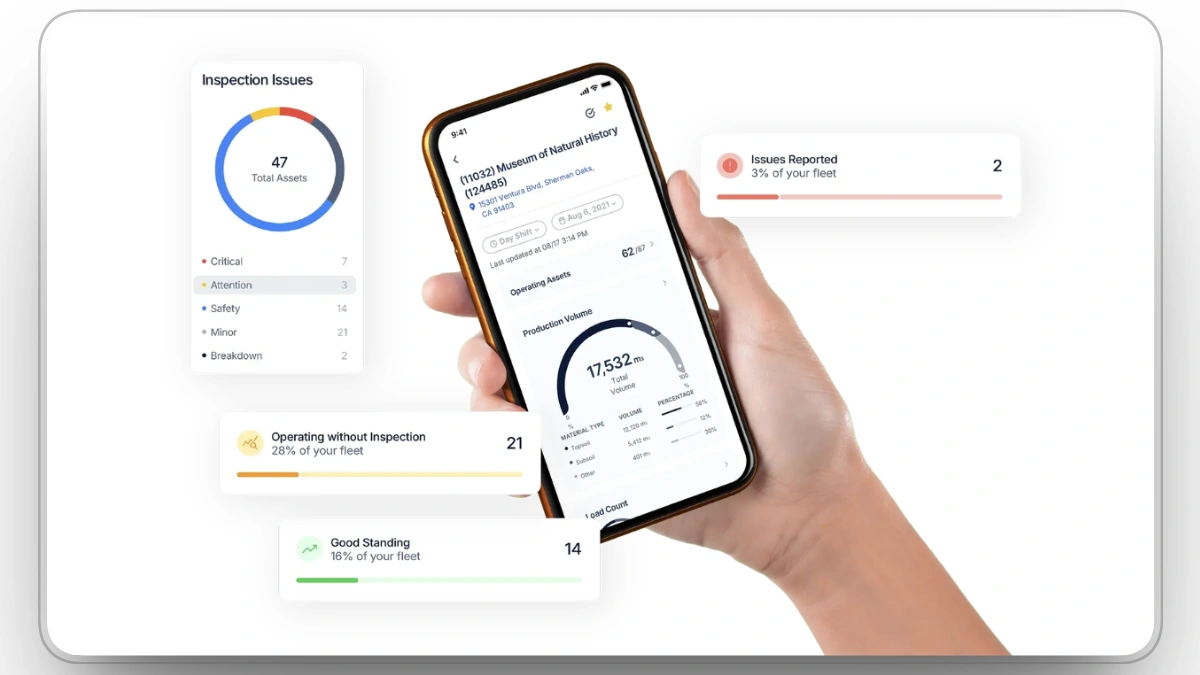
Clue’s mobile accessibility ensures that tire inspections can be conducted anywhere; whether in the field or on job sites. Fleet managers and operators can update tire inspection data in real time, making tire condition tracking more efficient and timely.
- On-Site Updates: Field workers can immediately log their tire inspections and report any problems, ensuring that management is always up-to-date.
- Offline Functionality: For remote locations or areas with poor connectivity, Clue allows inspectors to continue their tasks offline and synchronize data once an internet connection is available.
4. Reporting and Analytics
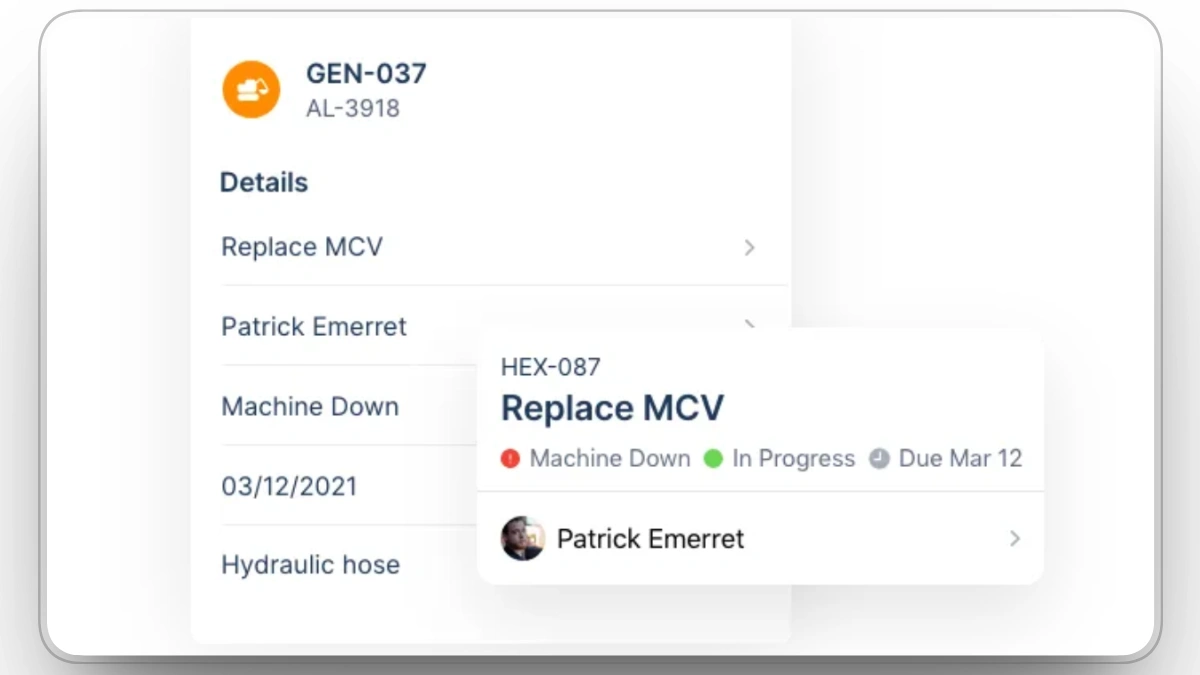
Clue’s reporting and analytics offer valuable insights into tire health across the fleet. Managers can track tire performance trends, identify common issues, and monitor tire condition history, which informs better decision-making for replacement schedules and preventive maintenance.
- Dashboards and Reports: Clue provides real-time dashboards with key metrics on tire condition, usage, and performance.
- Trend Analysis: The software analyzes tire-related data over time, helping managers recognize recurring issues and adjust maintenance schedules accordingly.
5. Compliance and Audit Readiness
Clue helps ensure that tire inspections are consistently conducted according to industry standards and safety regulations, including those set by OSHA and DOT. Inspection logs and records are stored digitally, making it easy to provide audit trails and demonstrate compliance during safety audits.
- Automated Record Keeping: Inspection records, maintenance logs, and work orders are automatically stored and accessible for regulatory audits.
- Customizable Compliance Checks: Operators can tailor inspection checklists to meet specific regulatory standards, ensuring compliance with local laws and manufacturer guidelines.
Common Tire Failures and How to Prevent Them
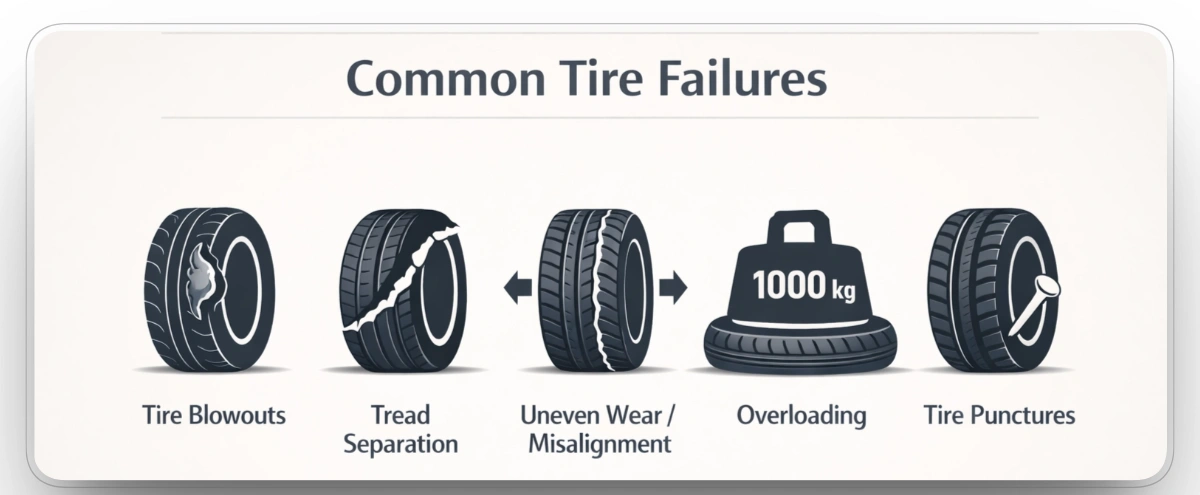
1. Tire Blowouts
Most commonly caused by under-inflation or over-inflation, which leads to excessive heat buildup and stress on the tire’s structure. Tires with sidewall damage are also highly prone to blowouts. Ensure regular pressure checks using a calibrated gauge and ensure that sidewall integrity is maintained. Install TPMS to monitor pressure in real-time, preventing excessive fluctuation.
2. Tread Separation
The tread can separate from the rest of the tire due to heat, age, or overloading. Regularly inspect tread depth and age. Ensure proper load management and use temperature monitoring to avoid overheating during long operations.
3. Uneven Wear or Misalignment
Caused by poor alignment, imbalanced tires, or suspension issues. Perform regular tire rotations and alignment checks to ensure even wear across the tires. Correct any suspension issues to prevent uneven wear.
4. Overloading
Excessive weight placed on tires, especially during construction projects or material transport, leads to structural fatigue and damage. Adhere to the manufacturer’s recommended load limits for each tire. Ensure proper weight distribution and avoid overloading.
5. Tire Punctures
Sharp objects like nails or rocks piercing the tire’s tread, causing slow leaks or rapid deflation. Perform a visual inspection regularly to check for debris or foreign objects embedded in the tread. Use puncture sealants or inspect tire integrity if punctures are detected.
Conclusion
Effective tire inspection is essential for maintaining safety, reducing costs, and improving performance across all heavy equipment operations. By following a structured inspection process, including daily, weekly, and monthly checks, and incorporating modern technology like TPMS and telemetry, you can ensure tires remain in optimal condition throughout the lifecycle of the equipment. Prioritizing tire health leads to fewer breakdowns, enhanced safety, and long-term cost savings for your fleet.
With Clue, fleet managers can streamline tire inspections, automate maintenance workflows, and leverage real-time data to enhance tire health monitoring. By using Clue, operators can conduct thorough tire inspections and track issues from anywhere, ensuring maximum uptime and improved fleet management efficiency.
FAQs
How do tire pressure monitoring systems (TPMS) contribute to tire safety and performance?
TPMS monitors tire pressure and alerts operators to deviations. Proper inflation ensures optimal traction, fuel efficiency, and tire life by preventing under-inflation issues like heat buildup and uneven wear.
What role does tire inspection play in meeting safety compliance standards?
Regular tire inspections ensure compliance with OSHA and DOT standards, checking tire pressure, tread depth, and sidewall integrity. Inspections prevent legal penalties and improve operator safety, with digital logs helping during audits.
How can predictive tire maintenance reduce long-term operational costs?
Telemetry and IoT monitoring help identify tire issues before failure, allowing for proactive maintenance. This reduces costly repairs, minimizes downtime, and extends tire lifespan, leading to long-term savings.
How does terrain impact tire health, and what adjustments should be made for different conditions?
Rough terrains cause more wear, while wet or muddy conditions require deeper treads for better grip. On hard surfaces, wear increases due to friction. Adjust tire types and pressure based on terrain to optimize performance and prevent premature wear.
What technological advancements are making tire inspections more efficient and accurate?
TPMS, telematics, and sensor-based systems enable real-time monitoring and automated inspections. These tools provide continuous data, improving tire management by spotting issues early and increasing efficiency.
How do tire wear patterns help identify alignment or suspension problems in equipment?
Uneven tire wear, like faster wear on one side, indicates misalignment or suspension issues. Identifying these patterns early helps correct problems, improving tire lifespan and equipment health.
Why is tire storage critical for long-term maintenance and performance?
Proper tire storage in a cool, dry place prevents degradation. Exposure to sunlight, moisture, or extreme temperatures can cause cracks and dry rot, shortening tire life and reducing performance.
Transform Your Equipment Management