Site-Specific Safety Plan (SSSP): What It Is and What to Include


Hi, I’m Maham Ali. I write about construction equipment management, helping teams use fleet data and maintenance intelligence to improve uptime, control costs, and run smoother jobsites.
Ensuring safety on a construction site is paramount, not only to protect workers but also to comply with regulations and minimize accidents. One of the most effective tools in managing safety on a project is a Site-Specific Safety Plan (SSSP). When well-crafted, this document provides a structured approach to managing health and safety hazards at a particular job site.
Federal fatality data shows construction accounted for about 1 in 5 U.S. workplace deaths (20.8%) in 2023 and falls remain the leading fatal event in the industry, despite representing a much smaller share of the workforce, making it one of the most hazardous sectors for workers.
This blog will dive into what a site-specific safety plan is, why it’s essential, and what it should include to ensure a safe and compliant work environment.
What is a Site-Specific Safety Plan (SSSP) and Why Is It Important?
%20and%20Why%20Is%20It%20Important.webp)
A site-specific safety plan (SSSP) is a tailored safety document that focuses on the specific hazards, risks, and procedures related to a particular construction project or job site. Unlike general safety plans used across multiple sites or projects, an SSSP is customized to address the unique conditions of a particular site, including physical geography, environmental factors, and the specific types of work being performed.
Why is it important?
The significance of an SSSP lies in its ability to:
- Preemptively identify and mitigate risks.
- Ensure compliance with OSHA regulations and other industry standards.
- Facilitate safer working conditions through detailed hazard management.
- Enhance communication by providing clear guidelines to all personnel on-site.
The value of these protocols is realized in both legal compliance and in minimizing financial and human costs related to accidents, delays, and lawsuits.
What Should Be Included in a Site-Specific Safety Plan?
A comprehensive job site safety protocol is much more than a generic document. It must address all the unique hazards of the site and provide clear strategies for mitigating them. Every project-tailored safety guide must contain detailed, actionable information.
Here’s an explicit breakdown of the critical components:
1. Project Details and Contact Information
- Project Name: Including the specific location, description of the work to be performed, and phase of construction.
- Contractor and Key Personnel: Include the project manager, safety officer, and lead foremen, along with their contact information.
- Emergency Contacts: List phone numbers for medical facilities, fire departments, police, and emergency response teams.
What to include: Organizational charts showing reporting lines for safety issues, detailed contact lists for on-site and emergency personnel, and clearly documented roles in safety operations.
2. Site Layout and Hazard Identification
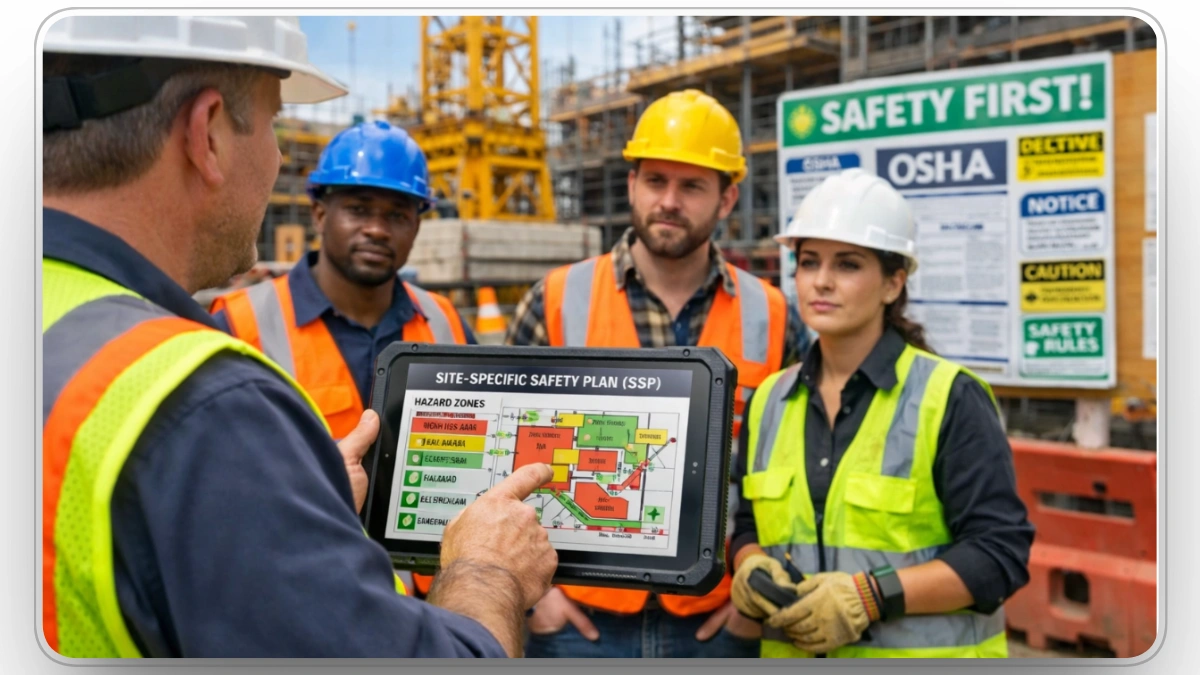
- Site Map/Diagram: A detailed, scaled map of the site showing work zones, hazardous areas, and emergency exits.
- Specific Hazard Identification: An inventory of risks such as working at heights, electrical hazards, proximity to public areas, or chemicals present on-site.
What to include: Identifying high-risk areas (e.g., open trenches, scaffolding setups) and ensuring that they’re clearly marked and documented in the plan. This includes hazard zones, exclusion zones, and access routes.
3. Risk Assessment and Control Measures
- Risk Identification: List all potential risks tied to the project’s activities (e.g., falls, equipment operation, weather-related issues, chemical exposure).
- Risk Control Hierarchy: Define control measures using the Hierarchy of Controls:
- Eliminate: Avoid the risk if possible (e.g., use prefabricated materials).
- Substitute: Replace with something safer (e.g., using water-based paints instead of solvents).
- Engineering Controls: Use machine guards, ventilation, or safety barriers.
- Administrative Controls: Implement safe work practices, rotating shifts to avoid fatigue.
- PPE: Specify the use of Personal Protective Equipment for specific tasks (e.g., helmets, fall arrest harnesses).
What to include: A risk assessment matrix to categorize risks (low, medium, high) and the assigned control measures for each. Use a simple risk matrix (severity × likelihood) and assign an owner + due date for every high-risk control.
4. Emergency Procedures and Response Plan
- Emergency Response Protocol: The specific steps to follow in case of an emergency, including evacuation routes, assembly points, and incident reporting procedures.
- First Aid and Medical Treatment: Clearly defined procedures for providing first aid and emergency medical treatment on-site.
- Communication Plans: Establish clear methods to notify emergency responders and workers (sirens, PA systems, etc.).
What to include: A detailed evacuation map, roles of emergency response teams, and procedures for medical response to common construction injuries (e.g., fractures, burns, heat stroke).
5. Training and Safety Procedures
- Required Safety Certifications: Clearly state what certifications are needed, such as OSHA 30-hour for supervisors, or confined space entry for specific tasks.
- Toolbox Talks: Outline how often safety briefings will take place and the topics that will be covered.
- Competent Person Designation: Ensure that a competent person (as defined by OSHA) is assigned to specific high-risk areas.
What to include: A list of training modules (e.g., scaffold safety, electrical hazard awareness, equipment safety) and a training log to track certifications, renewals, and competency tests.
6. Health and Safety Monitoring and Inspections
- Inspection Schedules: Regular safety inspections conducted by the site safety officer or external auditor.
- Health Monitoring: Regular medical check-ups for workers exposed to hazardous materials or extreme conditions (e.g., noise, chemicals).
- Safety Audits: Periodic safety audits and reviews of the safety plan's effectiveness.
What to include: Inspection frequency charts, checklists, and documentation protocols to ensure all findings are recorded and acted upon.

Does OSHA Require a Site-Specific Safety Plan?
OSHA does not mandate a site-specific safety plan for every project, but it requires specific conditions to be met where the risks warrant it. For high-risk tasks, such as trenching and excavation, fall protection, and crane safety, OSHA mandates tailored safety measures that must be included in a project-specific risk document.
OSHA regulations like 29 CFR 1926.652 (for excavation and trenching) or 1926.501 (for fall protection) emphasize the need for tailored safety plans to address project-specific conditions. Non-compliance with these regulations can lead to fines, work stoppages, and increased liability.
Site-Specific Safety Plan Examples
The best way to understand what a high-quality customized safety manual looks like is by reviewing examples from successful projects. For example:
- High-Rise Projects: A high-rise construction site might have a safety plan focused on vertical transportation safety, working at heights, and scaffolding.
- Utility Projects: A plan for utility installation could focus on trench safety, utility detection, and confined space entry protocols.
Example: Complex tunnel or utility work often requires site-tailored controls for confined space entry, air monitoring, emergency egress, equipment access/egress routes, and traffic control. The SSSP should include phase-based updates as the work shifts from excavation to installation to backfill to restoration.
Construction Site-Specific Safety Plan Checklist
To ensure that the tailored safety documentation is comprehensive, use a checklist to verify that all components are in place:
- Document Review: Ensure that the safety plan is up to date with the latest regulations.
- Hazard Mitigation: Ensure that all identified hazards are addressed with proper controls.
- Training: Confirm that all workers are properly trained, certified, and fully briefed on site-specific risks.
- Emergency Procedures: Verify that evacuation routes are clearly marked and understood by all personnel.
While a manual checklist is a vital starting point, managing these moving parts on a busy site requires a more dynamic approach. However, such a plan is only effective if it is consistently followed in the field. This is where digital tools can bridge the gap between paper protocols and real-time enforcement.
Most SSSPs fail in the same place: execution. The hazards are known as what breaks day-to-day control in the field: equipment inspections that get pencil-whipped, untrained operators using machines, missing spotters, expired certifications, and work happening outside defined exclusion zones. That’s where equipment + safety operations need to live in one workflow.
How Clue Supports the Implementation of a Site-Specific Safety Plan

A site-specific safety plan (SSSP) is only effective if it's consistently implemented and adhered to on the job site. This is where Clue, a digital safety and operations platform, can play a pivotal role in enhancing and streamlining the safety management process.
While an SSSP outlines the safety protocols and procedures, Clue ensures those protocols are actively monitored, enforced, and updated in real-time, making safety a living, breathing part of the daily construction activities.
1. Real-Time Incident Reporting and Hazard Tracking
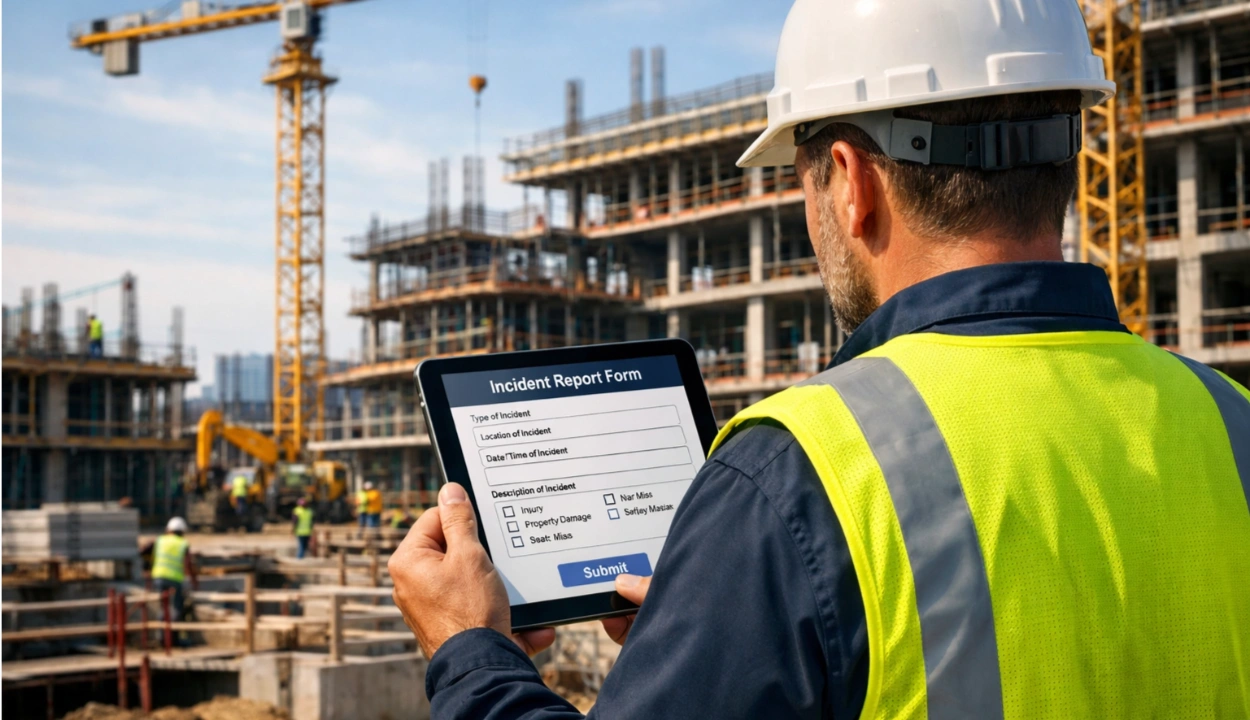
Get instantaneous reporting of hazards and incidents with Clue, allowing workers to log safety issues directly from their mobile devices. This immediate data capture ensures that risks are identified and addressed quickly, rather than waiting for delayed paperwork or post-job reviews. By keeping track of reported issues in real-time, Clue accelerates hazard mitigation and reduces the likelihood of serious accidents.
2. Centralized Safety Data and Compliance Management
Clue centralizes safety and compliance data in one easy-to-access safety management platform. This makes it easier for project managers and safety officers to track inspections, monitor worker certifications, maintain the site-specific safety plan, and access updated records during audits or inspections.
3. Streamlining Toolbox Talks and Safety Communication
Easy management of toolbox talks, a critical part of keeping workers informed about daily hazards. With pre-built templates and mobile accessibility, Clue makes it simple to schedule, conduct, and track safety meetings, ensuring consistent safety messaging. Regular briefings on-site help reinforce the safety culture and address site-specific concerns as they arise, ensuring workers are continually aligned with the safety objectives of the project.
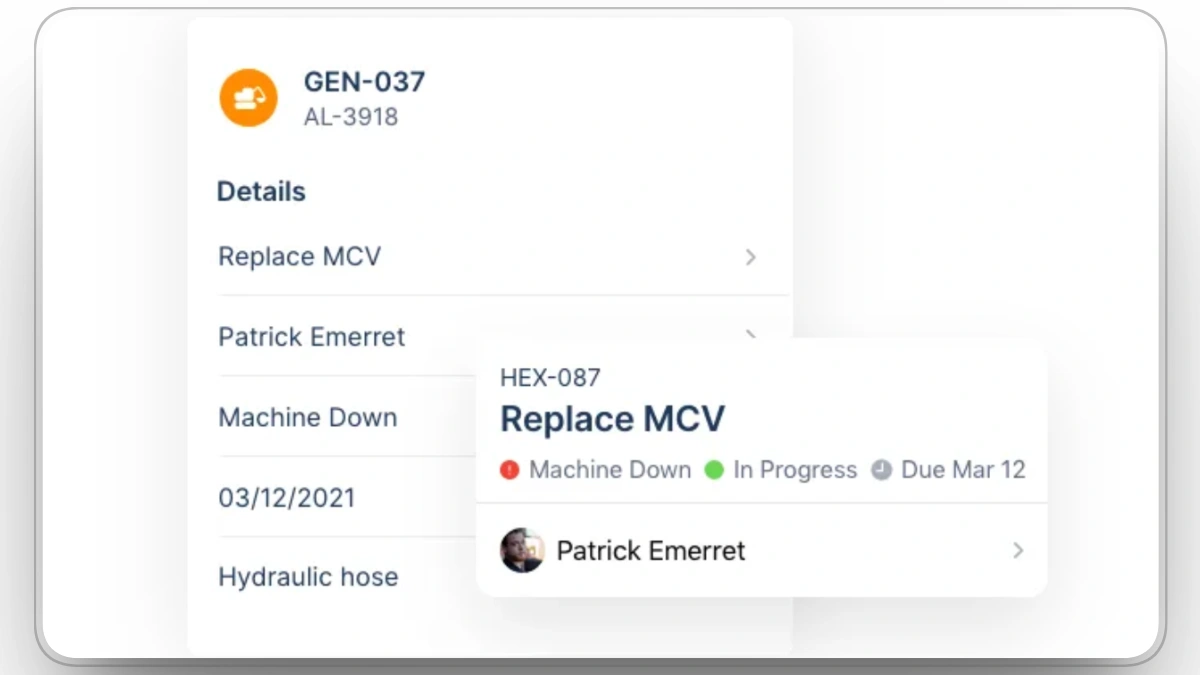
4. Inspection and Maintenance Tracking
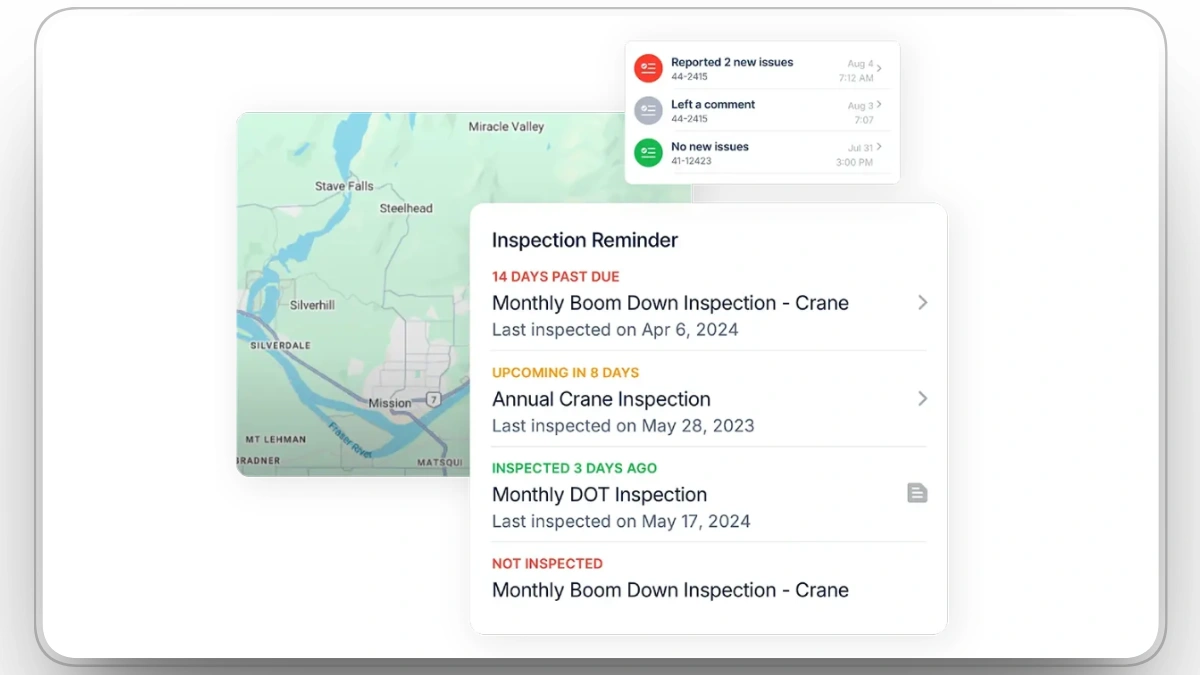
Beyond incident reports, Clue tracks routine inspections and equipment maintenance. For example, Clue helps safety officers monitor machinery inspections and verify that equipment is compliant with safety standards, thus reducing the risk of mechanical failures or unsafe operations. This functionality is essential for construction projects involving heavy machinery, cranes, or scaffolding, where equipment safety is paramount.
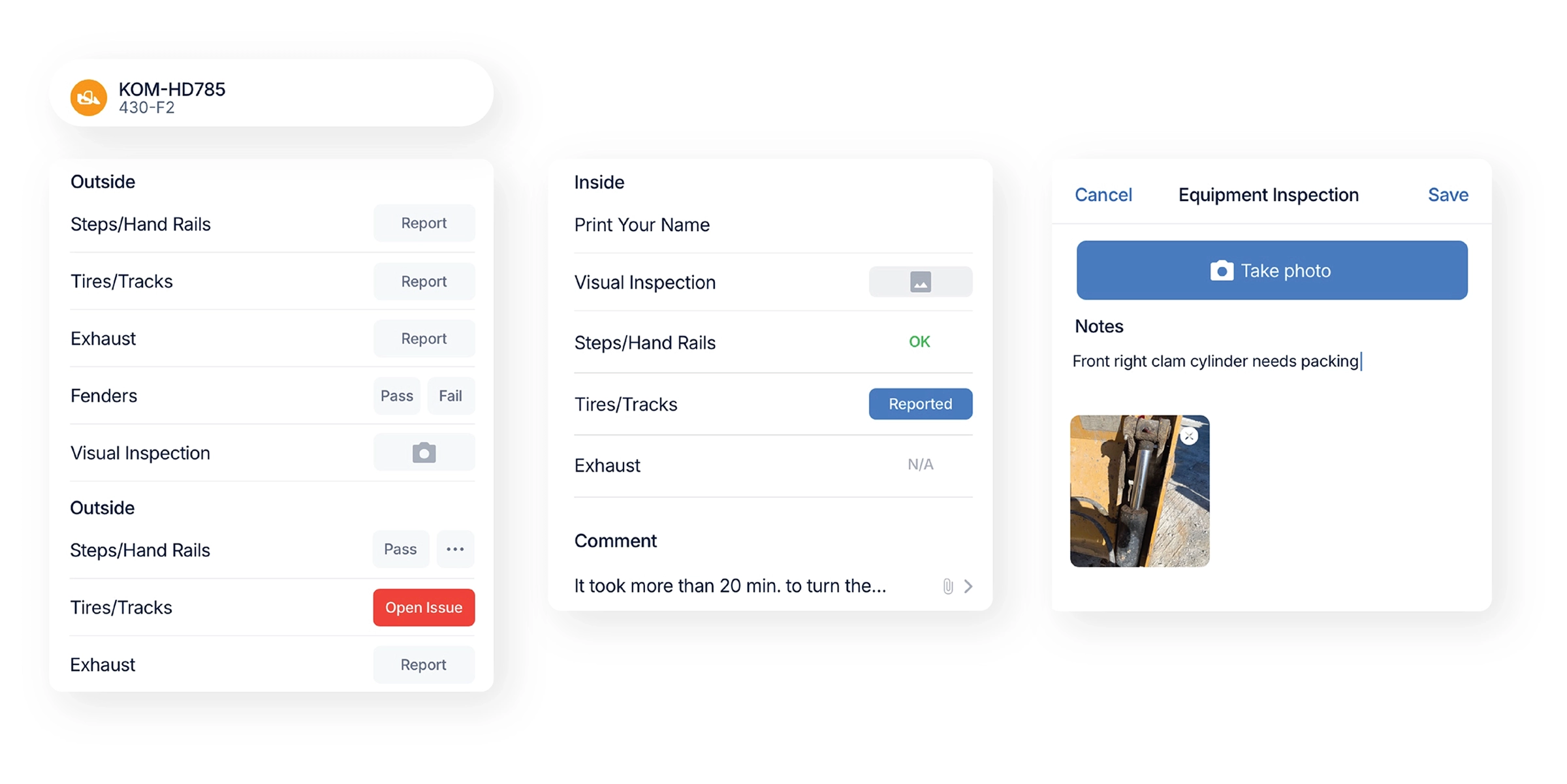
5. Proactive Hazard Mitigation through Data Integration
Clue’s ability to integrate with other project management and fleet management tools provides a holistic view of safety performance across the site. By bringing together data from various sources (e.g., GPS tracking, telematics, or equipment sensors), Clue allows teams to detect patterns in safety incidents or identify potential risks before they escalate. This data-driven approach facilitates proactive hazard mitigation, aligning with the core principles of a dedicated project safety program.
Benefits of a Site-Specific Safety Plan
Implementing an SSSP yields many benefits:
- Improved Compliance: Meets OSHA requirements and ensures that all regulatory standards are adhered to. A robust safety plan reduces the risk of violations and penalties, demonstrating commitment to legal requirements.
- Reduced Injuries: By identifying hazards and implementing control measures, the likelihood of accidents is minimized. A well-executed plan not only protects workers but also ensures that fewer lives are put at risk.
- Cost Savings: Fewer incidents lead to reduced insurance premiums and fewer worker compensation claims. Moreover, fewer accidents mean fewer delays and additional costs for incident investigations, legal fees, and potential fines.
- Enhanced Productivity: A safer work environment reduces downtime and improves overall project efficiency. With fewer safety-related work stoppages, workers can focus on their tasks, and projects are more likely to stay on schedule.
- Improved Reputation: Consistently implementing safety measures builds a reputation for safety-consciousness, which can attract more clients and subcontractors. Contractors with a solid safety record are seen as more reliable and professional.
- Worker Morale and Retention: A well-documented safety plan shows workers that their health and well-being are a priority, leading to higher job satisfaction, improved morale, and ultimately better retention. Workers are more likely to stay with a company that prioritizes their safety.
- Fewer Legal and Liability Risks: By adhering to safety regulations and demonstrating due diligence in hazard mitigation, an SSSP reduces the risk of legal actions and liability claims from workers or external parties. This can save a company from costly lawsuits and public relations damage.
- Better Emergency Preparedness: The plan improves a site's ability to respond quickly and effectively to emergencies. This targeted safety scheme ensures that all personnel are trained and equipped with clear procedures for handling accidents, reducing response time and improving outcomes.
Challenges in Implementing a Site-Specific Safety Plan
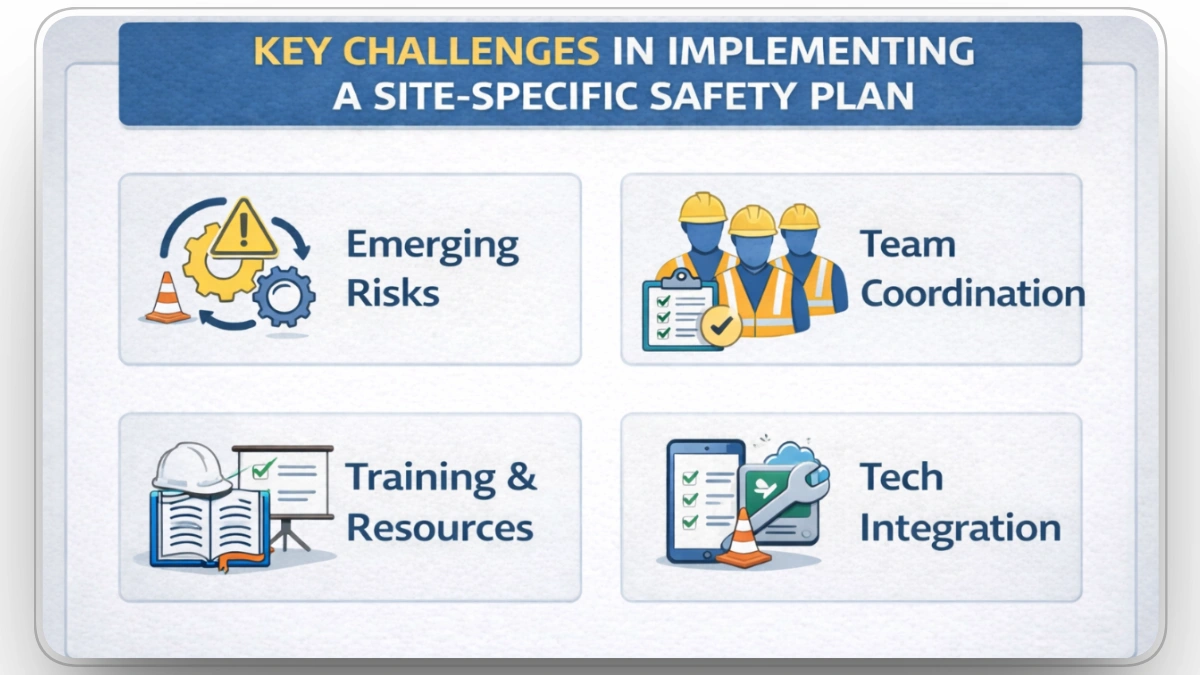
While creating a comprehensive site-specific safety plan is essential, implementing it effectively can come with its own set of challenges. Below are key challenges that often arise and strategies to overcome them.
1. Evolving Hazards and Worksite Changes
As construction projects progress, new hazards may emerge or existing ones may evolve. For instance, when excavation begins, workers may discover unmarked utilities, increasing the complexity of the risk. The safety plan must be a living document, regularly reviewed and updated based on current site conditions.
2. Ensuring Compliance Across Multiple Teams
Construction sites often involve multiple subcontractors, each with its own safety procedures. Ensuring all teams follow the centralized site safety guidelines can be difficult, especially when there's a lack of consistent communication. Overcome this by establishing a clear communication hierarchy and implementing daily safety briefings for all contractors.
3. Resource and Training Constraints
Implementing the SSSP requires sufficient time and resources, which may not always be available. Training workers, procuring proper PPE, and organizing drills can incur additional costs. To mitigate this, prioritize critical training and create a detailed cost-benefit analysis to justify the resources invested in safety.
4. Integrating Technology with Manual Procedures
While technology can streamline many aspects of safety (such as real-time hazard reporting), some construction sites may be hesitant to adopt these innovations. To bridge the gap, introduce pilot programs using mobile apps or wearable sensors for hazard detection, and show workers how these technologies improve their safety.
Final Thoughts
A site-specific safety plan is not just a regulatory requirement but a fundamental tool for ensuring the health and safety of everyone on a construction site. By identifying and mitigating risks, detailing emergency procedures, and embedding safety into daily operations, the SSSP creates a robust framework for achieving project success without compromising worker safety.
The challenges associated with developing and implementing the plan are real, but with proactive communication, continuous training, and a commitment to safety, these can be overcome. Whether you are working on a small project or a large-scale construction site, a well-developed individualized safety plan is critical for protecting workers, ensuring compliance, and delivering a successful, safe project.
FAQs
1. What is a site-specific safety plan?
It is a project-specific document that identifies job site hazards, assigns safety responsibilities, and defines controls, procedures, and emergency actions tailored to one location and scope of work.
2. Does OSHA require a site specific safety plan?
OSHA does not mandate one universal SSSP for every project, but many OSHA standards require written, site-tailored procedures or plans for specific high-risk activities, which effectively makes a site-specific plan necessary in practice on many jobs.
3. What should a site specific safety plan include?
It should include project details and key contacts, site layout and hazard locations, task-based hazard analysis, controls using the hierarchy of controls, PPE requirements, inspection schedules, training requirements, emergency response procedures, and documentation/recordkeeping.
4. What is the difference between an SSSP and a JHA/JSA?
An SSSP is the overall site safety framework for the project, while a JHA/JSA is a task-level analysis that breaks a single activity into steps, hazards, and controls; JHAs/JSAs feed into and support the SSSP.
5. How often should a construction site specific safety plan be updated?
Update it whenever scope, schedule, crews, equipment, site conditions, or hazards change, and also after incidents, near-misses, or regulatory findings; many projects also set a routine review cadence (for example weekly or phase-based).
6. Who is responsible for creating and approving the SSSP?
Typically the controlling contractor or employer develops it with input from supervisors, safety staff, and subcontractors; approval is usually handled by project leadership and the designated safety authority, with clear sign-offs and accountability.
7. What makes a construction site specific safety plan checklist actually useful?
A useful checklist verifies evidence, not just boxes, such as inspection logs, training records, permit forms, equipment certifications, and documented corrective actions, with dates and responsible owners attached.
8. Where can I find site specific safety plan templates and site specific safety plan examples?
Start with owner/GC requirements, industry association templates, and reputable construction safety platforms; then tailor the template using your site map, definable work activities, hazard register, and task-level JHAs so the final plan reflects real conditions rather than generic wording.
Transform Your Equipment Management