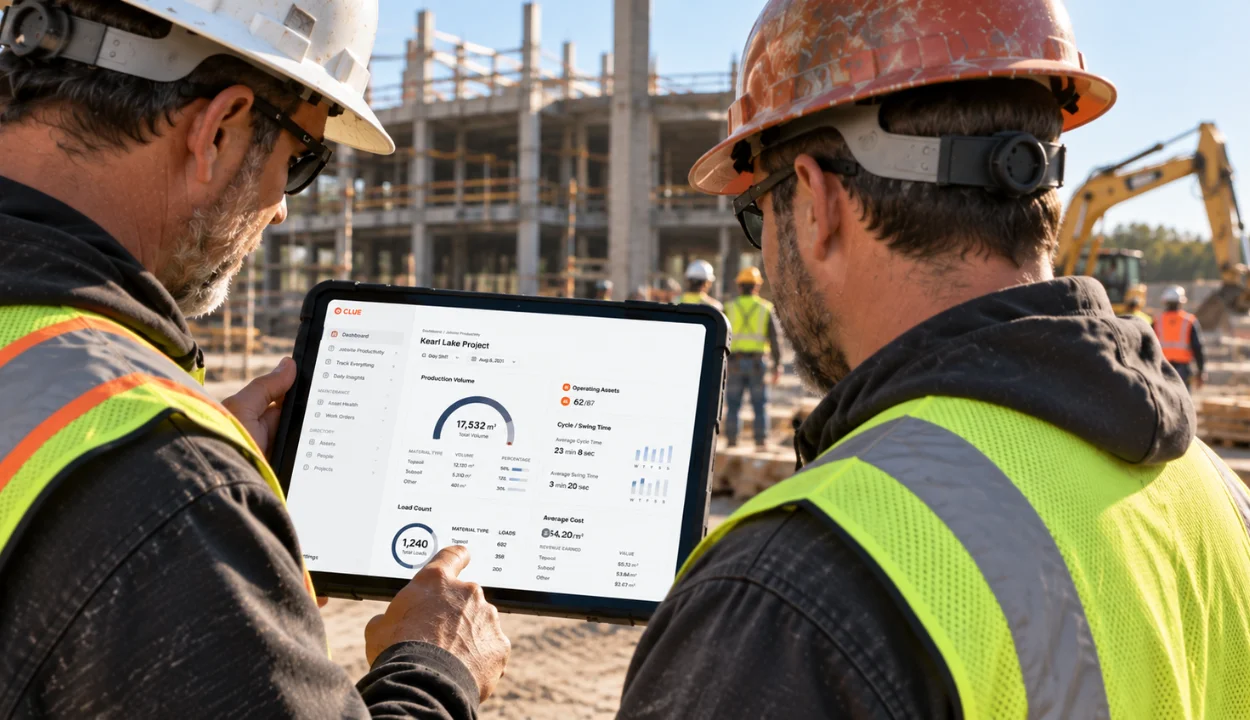
Fleet costs rarely rise overnight. They usually build up through idle assets, missed maintenance, fuel waste, delayed repairs, poor recordkeeping, and equipment that stays on rent longer than it should.
For a fleet manager, the real challenge is not only keeping vehicles and equipment moving. It is knowing which assets are working, which ones are sitting idle, which ones are costing too much, and where small problems are turning into bigger expenses.
The right fleet management strategy helps teams control costs before they get out of hand. In this guide, we’ll cover seven practical strategies to reduce fleet costs, improve uptime, manage maintenance, track utilization, and make better decisions across daily fleet operations.
For construction teams, construction fleet management software can make this easier by connecting equipment tracking, maintenance, inspections, work orders, fuel data, dispatch, and reporting in one place. Instead of relying on spreadsheets or scattered updates, the fleet department can see what is available, what needs service, and what is costing the most.
What Is a Fleet Management Strategy?

A fleet management strategy is a clear plan for managing vehicles, equipment, operators, maintenance, fuel, safety, compliance, costs, and asset replacement.
It helps the fleet department make better decisions instead of reacting to problems after they happen.
For construction fleets, the strategy should also cover heavy equipment, mixed assets, rental equipment, attachments, jobsite dispatch, service trucks, inspections, mechanic workflows, and field-to-office communication.
A strong fleet management strategy plan usually answers five questions:
- What assets do we own, rent, operate, and maintain?
- How much does each asset cost to run?
- Which assets are being used and which are sitting idle?
- What maintenance work is planned, overdue, or urgent?
- When should we repair, replace, rent, or redeploy equipment?
In simple words, effective fleet management means using data, processes, and people to keep the fleet safe, productive, compliant, and cost-efficient.
Why Is Fleet Cost Control More Important in 2026?

Fleet cost control matters more in 2026 because operating costs, maintenance pressure, and asset complexity are all increasing. It's been reported that for fleet managers, rising cost is the biggest concern, while 30.8% still rely on spreadsheets for tracking fleet data.
That creates a serious gap. Costs are rising, but many teams are still managing assets with outdated tools, manual records, or disconnected systems.
For fleets that include construction equipment, the cost risk is even higher because one unavailable machine can delay crews, increase rental costs, and disrupt the schedule. A better fleet management process helps teams:
- Reduce unnecessary repairs and emergency breakdowns
- Lower fuel waste and idle time
- Improve asset utilization
- Avoid unnecessary rentals
- Track maintenance before it becomes downtime
- Improve safety and compliance
- Make better repair-versus-replace decisions
The goal is not just powerful fleet management on paper. The goal is daily cost control that helps the fleet manager, operators, mechanics, dispatchers, and office teams work from the same facts.
Best Fleet Management Strategies to Reduce Costs
The best fleet management ideas are practical. They help teams reduce downtime, improve visibility, control fuel, standardize maintenance, and make better asset decisions.
1. Centralize Fleet Data Before Making Decisions
You cannot reduce fleet costs if your data is scattered across spreadsheets, text messages, paper inspection forms, invoices, and mechanic notes.
Start by centralizing the basics:
- Asset name, type, make, model, year, and serial number
- Ownership, lease, or rental status
- Location and assignment
- Meter readings, mileage, or engine hours
- Inspection records
- Maintenance history
- Work orders
- Fuel records
- Parts usage
- Warranty information
- Operator or driver assignment
This is one of the basic fleet management principles: every cost decision should start with accurate asset data.
| Data to Centralize | Why it Matters |
|---|---|
| Asset location | Helps dispatchers find and assign equipment faster |
| Maintenance history | Shows recurring repair problems |
| Utilization | Identifies idle or underused assets |
| Fuel records | Helps detect waste, theft, or inefficient use |
| Work orders | Shows repair backlog and mechanic workload |
| Ownership/rental status | Helps reduce unnecessary rentals |
For fleet administration, centralized records also make reporting, audits, compliance, and replacement planning easier.
2. Track Utilization to Reduce Idle Assets
Idle assets are one of the easiest fleet costs to miss. A truck, loader, excavator, trailer, or generator may look “available,” but if it sits unused while the company rents another asset, the fleet is losing money twice.
Utilization tracking helps teams see:
- Which assets are working
- Which assets are sitting idle
- Which jobsites are over-equipped
- Which rentals should be returned
- Which owned assets can be redeployed
- Which asset classes are overbought or underused
| Problem | Fleet Management Strategy | Cost Impact |
|---|---|---|
| Equipment sits idle on one jobsite | Track utilization by location | Redeploy assets faster |
| Teams rent assets already owned | Compare rental requests with available fleet | Reduce rental spend |
| Managers lack usage data | Track hours, mileage, and activity | Improve buy/rent decisions |
| Assets are assigned but not used | Review utilization by project | Reduce hidden waste |
For construction fleets, utilization is one of the most important KPIs because it connects fleet operations management directly to project cost.
3. Move From Reactive Repairs to Preventive Maintenance
Reactive maintenance is expensive because it usually happens after something has already failed. By that point, the fleet may be dealing with downtime, emergency repairs, idle crews, delayed work, and higher parts costs.
Fleetio’s 2026 report found that 53.7% of maintenance is scheduled, while 40.1% is unscheduled. That shows many fleets still have a large amount of reactive work to control.
Strong fleet maintenance should include:
- Preventive maintenance schedules
- Daily or pre-use inspections
- Service reminders
- Work order tracking
- Fault code monitoring
- Parts planning
- Repair history
- Downtime tracking
- Mechanic workload visibility
Here are practical fleet maintenance tips:
- Schedule maintenance by mileage, hours, time, or usage
- Track missed PMs and overdue inspections
- Separate urgent repairs from planned work
- Review repeat failures by asset
- Use mobile inspections to report issues faster
- Track downtime by reason, not just by date
- Build custom fleet maintenance schedules for different asset types
For example, a pickup truck, excavator, generator, and service truck should not follow the exact same maintenance plan. Custom fleet maintenance helps teams service each asset based on how it is actually used.
4. Control Fuel, Idle Time, and Operating Costs
Fuel is one of the most visible fleet costs, but it is not the only one. Repairs, parts, labor, tires, insurance, rentals, depreciation, and downtime also affect total cost.
ATRI’s 2025 operating cost report found that the average cost of operating a truck in 2024 was $2.260 per mile, while non-fuel marginal costs rose 3.6% to the highest level ATRI has recorded.
That means fleet cost control cannot focus on fuel alone. Fleet managers should track the full operating picture.
| Cost Area | What to Track |
|---|---|
| Fuel | Gallons, cost, fuel burn, anomalies, idling |
| Maintenance | PM cost, repair cost, labor, parts |
| Downtime | Lost hours, cause of downtime, repeat failures |
| Rentals | Rental duration, utilization, off-rent delays |
| Ownership | Depreciation, insurance, financing, resale value |
| Labor | Mechanic time, operator time, admin time |
| Tires and Wear Parts | Replacement frequency and cost trends |
Fuel control also supports fleet decarbonization. Before making large changes like EV adoption or alternative fuels, many fleets can reduce emissions and fuel cost by cutting idle time, improving routing, maintaining equipment properly, and using the right asset for the job.
5. Build Safety and Compliance Into Daily Work
Fleet safety best practices should not live in a binder that only gets opened after an incident. Safety has to be part of daily fleet operations.
A strong safety and compliance program includes:
- Daily vehicle or equipment inspections
- DVIRs where required
- Operator and driver training
- License and certification tracking
- Incident reporting
- Defect tracking
- Inspection completion rates
- Maintenance compliance
- Safety alerts and follow-ups
| Safety Area | What to Manage |
|---|---|
| Inspections | Confirm assets are checked before use |
| Defects | Track issues until they are repaired |
| Operators/drivers | Monitor training, certifications, and accountability |
| Incidents | Record what happened and what was corrected |
| Compliance | Keep required records organized and accessible |
Safety also affects cost. Poor inspections can lead to breakdowns. Untrained operators can damage equipment. Missing records can create compliance risk. A safer fleet is usually a more efficient fleet.
6. Plan Replacement Using Total Cost of Ownership
Replacing fleet assets by age alone is risky. Some older assets may still be reliable and low-cost. Some newer assets may be underused, expensive to maintain, or wrong for the work.
A better replacement strategy uses total cost of ownership, including:
- Purchase price
- Financing or lease cost
- Fuel cost
- Maintenance cost
- Repair cost
- Downtime
- Utilization
- Rental alternatives
- Resale value
- Safety and compliance risk
Industry data from ATRI's 2025 Operational Costs of Trucking report shows fleets are actively shortening their replacement cycles the average truck replacement cycle decreased to 7.3 years in 2024 (down from 7.5 in 2023), while truck and trailer payments hit a record $0.39 per mile (up 8.3%). Construction Equipment also reported that the equipment fleet replacement rate was 11% in 2024 and projected at 10.9% for 2025, which is historically high and signals renewed focus on replacement planning.
| Replacement Signal | What it May Mean |
|---|---|
| Rising repair cost | Asset may be passing its economical life |
| Low utilization | Asset may be sold, reassigned, or removed |
| Frequent downtime | Reliability is hurting operations |
| High fuel use | Newer or different equipment may lower cost |
| Poor parts availability | Repairs may take too long |
| Strong resale value | Replacement timing may be favorable |
7. Use Fleet Software to Connect Field, Shop, and Office Teams
Fleet software should not only show dots on a map. For cost control, it should connect the people who manage the fleet every day: operators, drivers, mechanics, dispatchers, project teams, fleet administration, and leadership.
Fleet management software can help teams manage:
- Asset tracking
- Preventive maintenance
- Work orders
- Inspections
- Fuel data
- Utilization
- Dispatch
- Parts
- Documents
- Reports
- Telematics integrations
- Cost trends
Verizon Connect’s 2025 Fleet Technology Trends Report found that fleets using GPS fleet tracking reported average savings of 16% in fuel costs, 16% in maintenance costs, and 13% in insurance premiums.
For global teams, this type of platform may also be called a flottenmanagement system, which is the German term for fleet management system. Whatever term a business uses, the goal is the same: better visibility, lower cost, and faster decisions.
What Fleet KPIs Should Managers Track?
Fleet KPIs show whether the fleet management strategy is working. Without KPIs, teams may stay busy but still miss the real causes of cost, downtime, and poor performance.
| KPI | What it tells you |
|---|---|
| Utilization rate | Whether assets are working or sitting idle |
| Asset availability | Whether equipment is ready when needed |
| Downtime hours | Time lost to breakdowns or repairs |
| PM compliance | Whether preventive maintenance is completed on time |
| Cost per mile / cost per hour | True operating cost by asset |
| Fuel cost per asset | Which assets consume the most fuel |
| Idle time | Wasted fuel and lost productivity |
| Rental utilization | Whether rented assets are actually used |
| Inspection completion rate | Safety and compliance discipline |
| Work order cycle time | How quickly repairs are completed |
| Repair cost trend | Whether assets are becoming more expensive |
| Replacement score | Whether repair or replacement makes more sense |
The best fleet manager does not track every number just because it exists. They track the numbers that help reduce cost, improve uptime, and guide better decisions.
When Should Fleet Assets Be Replaced?
Fleet assets should be replaced when the total cost of keeping them is higher than the value they provide. Age matters, but it should not be the only factor.
Use replacement planning when:
- Repair costs keep rising
- Downtime becomes frequent
- Parts are hard to find
- Utilization is too low
- Fuel use is too high
- Safety risk increases
- Newer equipment would lower operating cost
- Resale value is still strong
| Factor | Question to Ask |
|---|---|
| Repair cost | Is this asset costing more each year? |
| Downtime | Is it delaying work or crews? |
| Utilization | Is it used enough to justify ownership? |
| Fuel | Is it less efficient than newer options? |
| Safety | Does it create operator or compliance risk? |
| Rental alternative | Would renting be cheaper for occasional use? |
Asset replacement should be part of the fleet management strategy plan, not a last-minute decision when equipment fails.
How These Strategies Apply to Construction Fleets

1. Construction Fleet Complexity
Construction fleets include a mix of heavy equipment, trucks, trailers, service vehicles, and smaller tools. These assets move across multiple jobsites, yards, and vendors, creating unique cost and utilization challenges. Unlike standard fleets, inefficiencies can ripple across projects, impacting labor, scheduling, and rental costs.
2. Utilization Tracking for Mixed Assets
Idle assets are a hidden cost in construction. Excavators may sit unused on one site while crews rent similar machines elsewhere. Tracking utilization by project, asset class, and location ensures every asset is actively contributing to project efficiency and reduces duplicate rental spending.
3. Custom Preventive Maintenance
Preventive maintenance schedules must reflect real usage. While service trucks follow mileage intervals, excavators, loaders, and generators require hour-based and condition-based maintenance. Environmental factors like dust, mud, and weather, combined with operator behavior, dictate PM schedules for optimal uptime.
4. Data-Driven Replacement Planning
Replacement decisions rely on total cost of ownership rather than asset age alone. High-utilization equipment with frequent downtime may need early replacement, whereas underused assets can remain in service longer. Tracking repair costs, utilization, safety risk, and resale value allows smarter asset management.
5. Centralized Data and Team Coordination
Construction fleet efficiency improves when field, shop, and office teams operate from the same data. Centralizing asset location, utilization, maintenance history, inspections, and rental status empowers faster decision-making and reduces downtime caused by miscommunication.
6. Cost Control Through Fleet Software
Fleet management software integrates tracking, PM, inspections, fuel, work orders, and reporting. It helps identify underused or costly assets, optimize dispatch, monitor rental dependencies, and manage maintenance schedules, giving teams the ability to act on real-time fleet performance data.
KPIs for Construction Fleets
Key performance indicators guide daily fleet management decisions:
- Utilization rate by asset and project
- Downtime hours per asset
- Preventive maintenance compliance
- Fuel consumption and idle time
- Rental utilization efficiency
- Repair and replacement cost trends
Monitoring these KPIs ensures strategies translate into measurable cost savings and improved productivity across construction operations.
How Can Fleet Management Software Improve Cost Control?
Fleet management software improves cost control by giving teams one place to manage assets, maintenance, inspections, fuel, work orders, utilization, and reporting. It reduces the gap between what is happening in the field and what managers see in the office.
It can help teams:
- Reduce manual data entry
- Catch overdue maintenance faster
- Track idle and underused assets
- Improve inspection completion
- Reduce unnecessary rentals
- Monitor fuel anomalies
- Compare repair costs by asset
- Build replacement plans
- Share data across teams
Fleet software also supports dedicated fleet management strategies for different asset types. A company can manage pickups, trailers, excavators, generators, and service trucks with different maintenance schedules, utilization targets, and replacement rules.
For fleet managers, the important thing is simple: the system should make daily decisions easier, not more complicated.
What Common Fleet Management Mistakes Increase Costs?
Fleet costs often rise because of small mistakes repeated across many assets.
| Mistake | Why it Increases Cost |
|---|---|
| Relying only on spreadsheets | Data becomes outdated and hard to trust |
| Ignoring idle assets | Equipment costs money even when unused |
| Waiting for breakdowns | Emergency repairs cost more than planned work |
| Tracking fuel without utilization | Fuel data lacks operating context |
| Replacing by age only | Good assets may be sold too early; bad assets may stay too long |
| Not tracking downtime reasons | Teams cannot fix repeat problems |
| Letting rentals stay too long | Rental costs continue after the job need ends |
| Separating field, shop, and office data | Teams make decisions from different information |
| Skipping inspections | Defects become breakdowns or safety risks |
| Not reviewing KPIs | Cost problems stay hidden |
Avoiding these mistakes is one of the fastest ways to improve fleet operations management without buying more assets.
How Can Clue’s Construction Fleet Management Software Help Reduce Fleet Costs?
Clue helps teams manage fleet operations from one place so they can reduce downtime, improve utilization, and control costs with better visibility.
With Clue, teams can manage:
- Equipment and asset tracking
- Preventive maintenance
- Work orders
- Inspections
- Utilization reports
- Fuel visibility
- Dispatch
- Mobile field updates
- Service history
- Telematics integrations
- Reporting and analytics
For construction fleets, this matters because assets move between jobsites, yards, shops, and vendors. Clue helps the fleet department see what is available, what needs service, what is being used, and what is costing the most.
Instead of reacting after a breakdown or rental cost appears, teams can make faster decisions with cleaner data.
Final Thoughts
Fleet management is not just about keeping vehicles and equipment on the road. It is about controlling the costs that hide inside maintenance, fuel, idle time, rentals, downtime, safety, and poor visibility.
The most effective fleet management strategy starts with accurate data, clear processes, and consistent follow-through. When the fleet department can see what is happening across assets, jobsites, maintenance, fuel, and utilization, it becomes easier to make decisions that reduce cost.
For teams managing complex construction fleets, Clue helps connect the field, shop, and office with better visibility into equipment availability, maintenance, utilization, work orders, and dispatch. That means fewer surprises, better decisions, and a fleet that works harder without costing more.
Related: our guide to the best construction fleet management software compares the leading platforms for 2026.
FAQs
What are the key fleet management strategies?
The key strategies include centralizing fleet data, tracking utilization, improving preventive maintenance, controlling fuel and idle time, improving safety, planning replacement with total cost of ownership, and using fleet software.
What are the basic fleet management principles?
The basic fleet management principles are visibility, preventive maintenance, safety, cost control, utilization tracking, compliance, data accuracy, and continuous improvement.
What is fleet operations management?
Fleet operations management is the day-to-day process of managing assets, drivers, operators, maintenance, dispatch, fuel, inspections, records, and performance across a fleet.
How can fleet managers reduce costs?
Fleet managers can reduce costs by tracking idle assets, completing preventive maintenance on time, reducing fuel waste, avoiding unnecessary rentals, improving safety, and replacing assets based on total cost of ownership.
What KPIs should a fleet manager track?
A fleet manager should track utilization rate, downtime, PM compliance, cost per mile or hour, fuel cost, idle time, inspection completion, work order cycle time, rental utilization, and repair cost trends.
What is the difference between preventive and predictive maintenance?
Preventive maintenance is scheduled based on time, mileage, or usage. Predictive maintenance uses data, sensors, fault codes, or trends to predict when an asset may fail.
What is custom fleet maintenance?
Custom fleet maintenance means creating different maintenance schedules for different asset types. For example, a pickup truck, loader, crane, and generator may each need different service intervals.
What is fleet administration?
Fleet administration includes recordkeeping, compliance documents, asset files, invoices, inspections, fuel records, driver/operator records, work orders, and reporting.
What is a flottenmanagement system?
A flottenmanagement system is the German term for a fleet management system. It refers to software used to manage vehicles, equipment, maintenance, tracking, costs, and fleet operations.

Transform Your Equipment Management