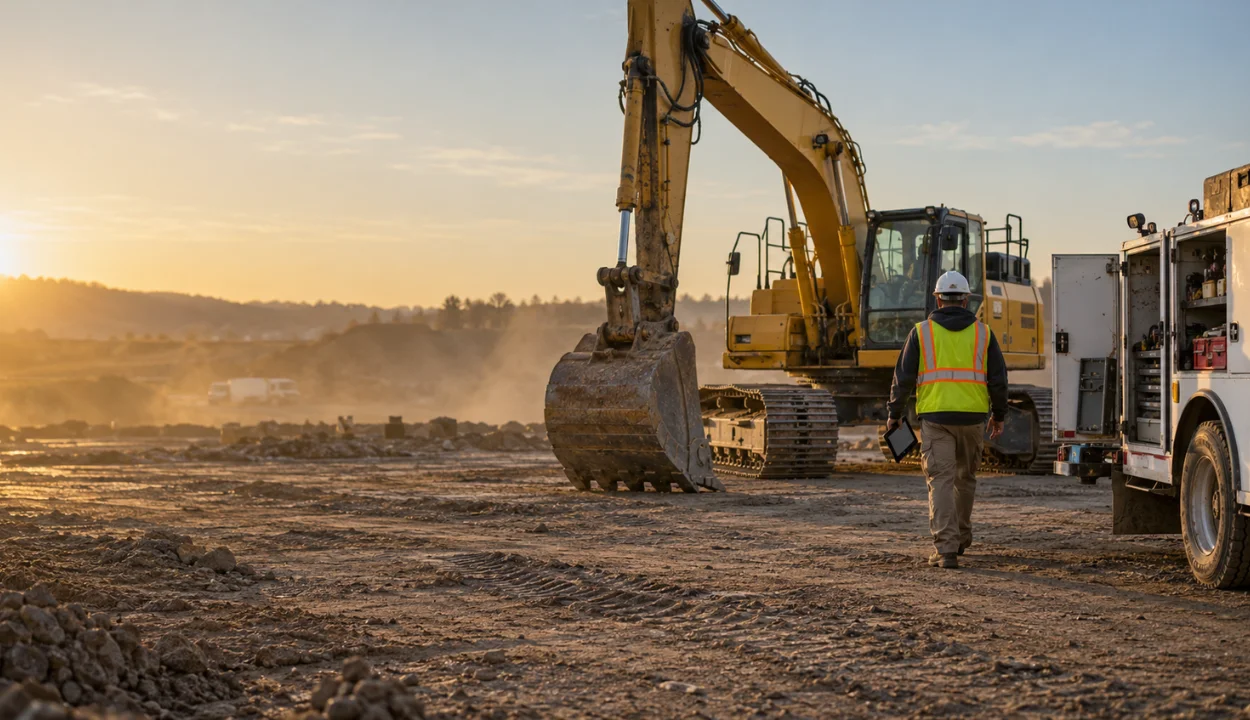
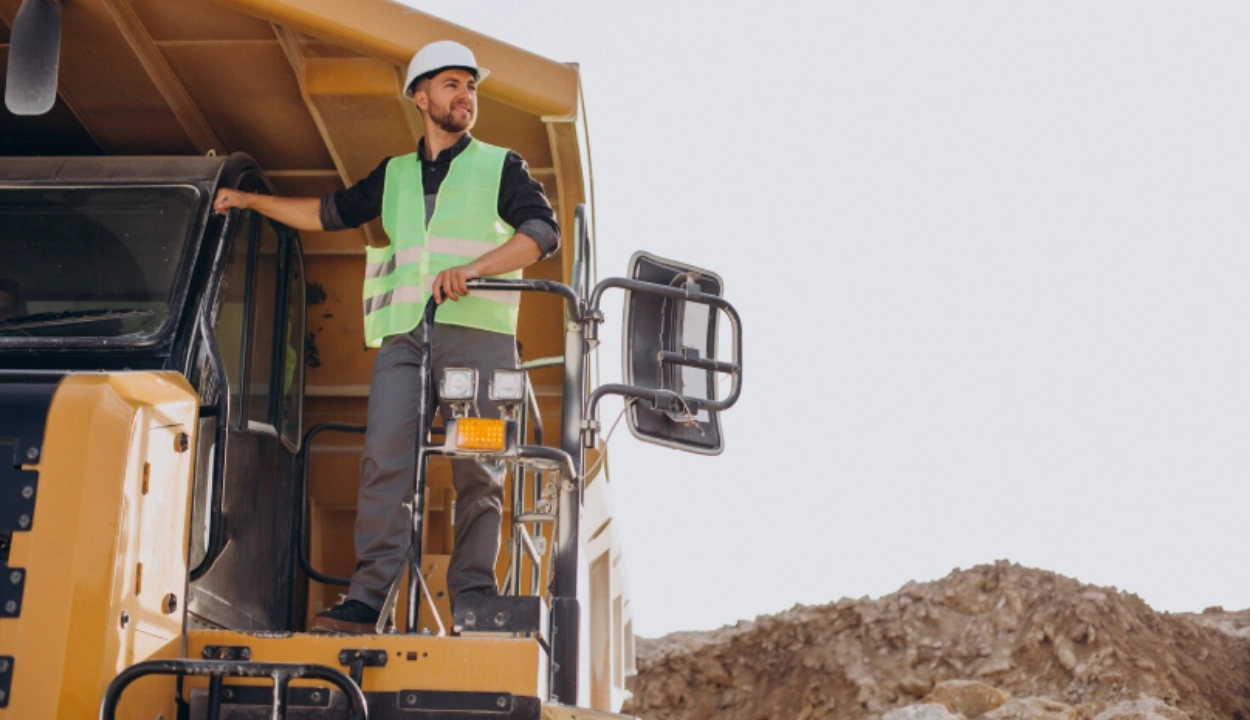
Heavy construction equipment repairs can range widely in cost, from only a few hundred dollars to tens of thousands. In the United States, minor fixes (e.g. replacing hoses, belts, small parts) typically run $500–$5,000, whereas major overhauls (engine rebuilds, transmission replacements, etc.) often cost $5,000–$30,000 or more.
These expenses, while high, are still usually far less than the price of buying a new machine. Below, we break down repair costs by equipment type and repair category, and discuss factors that influence these costs, including differences for new vs. used machinery and fleet vs. independent operations.
Heavy equipment repair costs can vary significantly, ranging from a few hundred dollars for minor fixes to tens of thousands for major overhauls. Contractors often wonder: "How much should heavy equipment repair cost?" Construction equipment maintenance software helps contractors track repair history, forecast maintenance expenses, plan service work, and reduce unexpected financial surprises. In this guide, we'll break down the factors that influence repair costs and help you plan your maintenance budget effectively.
Factors Affecting Heavy Equipment Repair Costs

Several key factors drive how much a heavy equipment repair will cost:
Equipment Type & Size:
Larger machines, such as cranes, tend to be more expensive to repair due to their complex systems and larger components. Specialized machinery, like forestry equipment, also has higher repair costs due to expensive parts.
Age & Condition:
Older equipment requires more frequent repairs and may have limited or costly replacement parts. Newer machines, often under warranty, typically have fewer issues and benefit from manufacturer support.
Type of Repair:
Simple repairs, like replacing belts, are affordable, but major system overhauls such as engine or hydraulic pump replacements can be very expensive.
For instance, repairing a hydraulic system leak might be a few hundred dollars, but a hydraulic pump replacement could be in the thousands. An engine rebuild can easily run five figures. (Average estimates: engine overhauls ~$5,000–$20,000; hydraulic repairs ~$2,000–$5,000; transmission fixes ~$3,000–$8,000; electrical repairs ~$1,000–$4,000.
Labor Rates and Location:
Labor makes up a big part of repair bills. Hourly rates for heavy equipment mechanics vary by region and provider – roughly $75–$150+ per hour in the US. Dealers or highly specialized technicians may charge premium rates.
On-site repairs (field service calls) typically cost 20–30% more than in-shop work due to travel and setup time. If repairs are needed urgently (e.g. overtime, weekend emergency), “rush” jobs can add about 25–50% on top of standard labor rates. (For example, one Reddit user noted their heavy equipment shop labor rate at $110/hour versus mobile field rate $125/hour.)
Parts and Materials:
Parts are often the single biggest cost component. Large heavy-duty parts – engines, final drives, hydraulic pumps, undercarriage assemblies – can cost thousands by themselves. Specialized or imported parts can drive costs even higher.
Common wear parts (pins, bushings, hoses) are less expensive individually but can add up. Diagnostic tools/fees (typically $150–$500 per session for complex machinery) may also be billed. Example: A replacement hydraulic pump for an excavator might cost $1,200–$3,500 just for the part (before labor).
Maintenance History:
This is an often overlooked factor, equipment that has been well-maintained (regular oil changes, inspections, component rebuilds) will experience fewer catastrophic failures.
Neglect or abuse leads to more frequent and severe repairs. Two similar machines of the same age can have very different costs depending on how they were operated and cared for. Companies that invest in operator training and preventative maintenance report 25–40% lower repair costs (by preventing misuse and catching problems early).
Fleet vs. independent owner considerations:
Large construction fleets sometimes perform maintenance in-house or have service contracts, which can lower the marginal cost of repairs. They may buy parts in bulk and have mechanics on payroll, improving turnaround time and cost control.
Independent owner-operators, on the other hand, typically rely on third-party shops or dealers and pay the full market rates for labor and parts. This means an independent owner might face a higher cash outlay for the same repair than a big company that can leverage volume discounts or warranties.
Typical Repair Cost Guidelines and Budgeting

Despite the variability, the industry uses some rules of thumb to budget for heavy equipment repairs:
Annual Maintenance/Repair Budget: A common guideline is to budget around 10–15% of the machine’s purchase price per year for maintenance and repairs. In practice, that means a $100,000 excavator might incur ~$15,000 in upkeep costs per year.This includes routine servicing as well as fixing breakdowns. (New machines in early years might be lower; very old machines can be higher.)
“50% Rule” – Repair vs. Replace: If repair costs exceed 50% of the equipment’s current value, replacing the machine is often a more economical choice than repairing it. For example, a 10-year-old bulldozer worth $80,000 needing $45,000 of repairs is a strong candidate for replacement.
Many contractors use this 50/50 rule (sometimes 60/40) as a decision threshold. Manufacturers and dealers echo this guidance – when cumulative repair costs approach roughly half the cost of a new machine, it’s time to evaluate buying new instead of sinking more into the old unit.
Preventive vs. Emergency Costs: Preventative maintenance (scheduled oil & filter changes, inspections, part rebuilds) is much cheaper in the long run than reactive fixes. Studies show that reactive “run-to-failure” repairs cost 3–4 times more than a proactive maintenance program.
Insurance and Warranty: Heavy equipment often comes with initial warranties (typically covering major components for a few years or certain hours). Extended warranty or service contracts can fix your costs (sometimes fleets opt for full maintenance leases or dealer service plans).
Cost per Hour Metrics: Contractors often break down ownership and operating costs into an hourly rate for bidding purposes. A portion of this rate accounts for maintenance and repair. For example, analysis on a mid-size dozer (~$200k new) suggests pure repair/maintenance costs around $25–$30 per operating hour over its life (which aligns with that ~15% annual rule).
Repair Cost Breakdown by Equipment Type
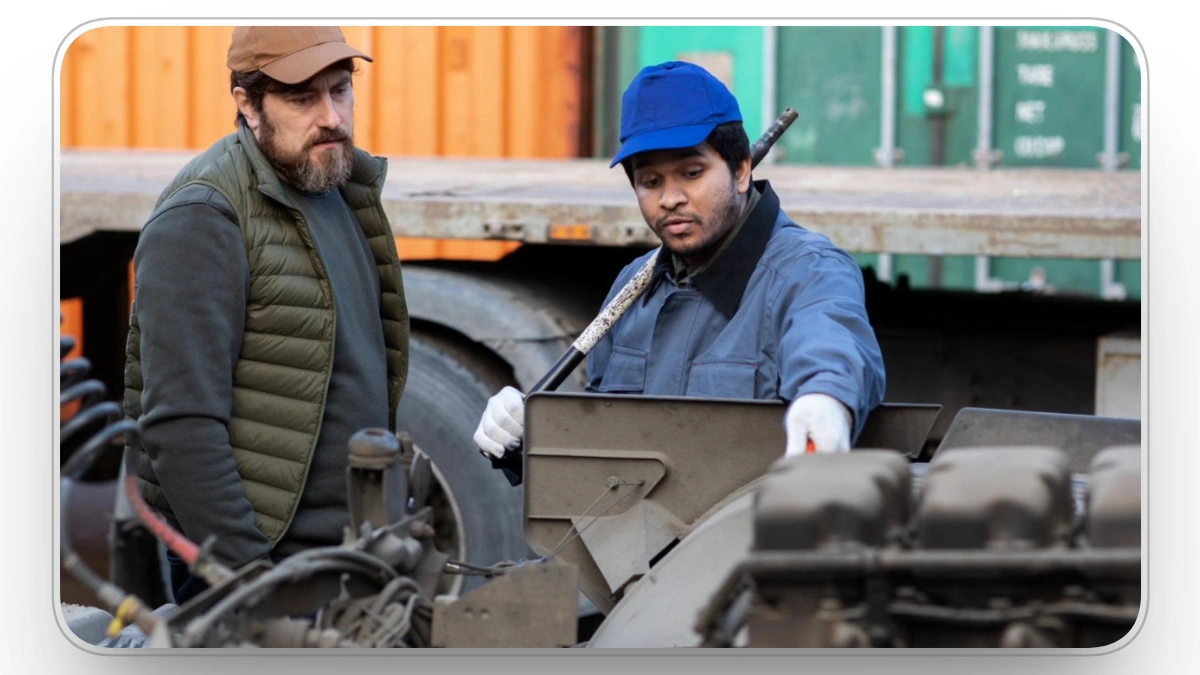
Repair costs vary not only by severity but also by equipment type. Heavy machinery differs in design and typical failure points. Below we outline common repairs and their approximate cost ranges for various heavy equipment categories:
1. Excavators
Excavators (tracked or wheeled) are complex machines with powerful hydraulics. Typical repair costs include:
- Hydraulic system repairs: $800–$2,500
- Engine overhaul: $8,000–$20,000
- Undercarriage repairs (tracks & rollers): $5,000–$15,000
- Electrical system fixes: $500–$3,000
- Bucket or attachment replacement: $1,500–$5,000
Hydraulic issues are among the most common (e.g. leaking cylinders or blown hoses). A simple blown hose might cost only $200–$400 to replace, whereas a failed hydraulic pump (a more serious issue) can run around $2,000–$3,500 including labor.
Undercarriage wear is another major ongoing expense for tracked excavators, replacing track chains, sprockets, and rollers can easily cost five figures over time. Engine problems, while rarer, are very expensive when they occur (often towards the later life of the machine).
2. Bulldozers
Bulldozers endure constant heavy push loads and abrasive conditions, leading to high wear on undercarriage and drivetrains. Common bulldozer repair costs:
- Track replacement (chains, pads, sprockets): $4,000–$12,000
- Transmission repairs: $5,000–$20,000
- Blade and blade-cylinder repairs: $2,000–$8,000
- Engine repairs: $2,500–$15,000
- Hydraulic system fixes: $1,000–$5,000
Maintaining the undercarriage is critical on dozers. A full undercarriage rebuild (e.g. new tracks, rollers, idlers) for a medium-size dozer runs roughly $8,000–$15,000, which by itself can represent about 50% of the machine’s lifetime maintenance costs.
In other words, half of all the money spent on a dozer over its life may go into the undercarriage alone. Track wear is a constant expense – operators often measure it in cost per hour of use.
3. Wheel Loaders & Backhoe Loaders
Wheel Loaders (front-end loaders) and Backhoe Loaders combine lifting and digging functions. They have large hydraulic systems and, for wheel loaders, heavy drivetrains and axles; for backhoes, lots of jointed parts. Typical cost ranges:
- Wheel Loader (estimates): Major components on large wheel loaders cost in the same ballpark as dozers or excavators of similar horsepower. While we don’t have a specific sourced list for loaders, one can infer ranges: engine rebuilds ~$10,000+, transmissions $5,000–$15,000, hydraulic pumps $2,000–$6,000, and so on, depending on size.
Backhoe Loader: Common repair costs for backhoes:
- Loader arm (front boom) repairs: $1,200–$3,500
- Stabilizer cylinder repairs: $800–$2,000
- Hydraulic system: $1,000–$4,000
- Drivetrain (axle/transaxle) issues: $2,500–$7,500
Backhoe loaders, being smaller, generally have lower absolute repair costs than full-size excavators or dozers, but repairs can still be in the thousands. They have many pivot points (boom, stick, loader arms) that wear over time.
Hydraulic pump or valve failures can temporarily disable both the backhoe and loader functions and cost a few thousand to fix. Backhoes used on roads also have brake and transmission wear similar to tractors, these drivetrain repairs (e.g. shuttle shift transmission fixes) fall in the mid-thousands range as noted.
4. Cranes
Cranes (mobile cranes, boom trucks) have unique wear points: long booms, winch cables, outriggers, and often complex hydraulic and electronic controls. Typical crane repair costs:
- Hydraulic cylinder repairs (e.g. boom lift cylinders): $1,500–$5,000
- Cable/wire rope replacement: $2,000–$10,000
- Outrigger repairs: $1,000–$4,000
- Control system/electronics issues: $1,500–$7,500
Crane repairs emphasize safety-critical components. Boom maintenance is crucial – a bent or cracked boom section can be extremely expensive (often requiring specialized welding or replacement of sections, potentially tens of thousands of dollars).
The engine in a large crane is also a major cost item; for example, an engine failure on a large. Thankfully, such extreme repairs are rare. More common are hydraulic leaks in cylinders or outrigger jack issues, which fall in the low thousands.
Replacing crane hoist cables periodically is necessary for safety, a full set of high-strength cable on a big crane can easily run several thousand dollars. Modern cranes also have computerized control systems and sensors; troubleshooting those can rack up labor hours (and modules costing a few thousand to replace if faulty).
5. Motor Graders
Motor graders have long frames with blade systems and finely tuned controls for grading. They experience wear in blade circle drives, hydraulic cylinders, and transmissions. While our connected sources didn’t list grader-specific costs, industry experience suggests:
- Blade circle drive or moldboard repairs: on the order of a few thousand dollars (if a circle drive gear or slide rail needs replacement, think $2,000–$5,000).
- Hydraulic leaks or cylinder replacements (for blade lift/tilt): likely $1,000–$4,000 range similar to other hydraulic machinery.
- Transmission or differential repairs: $5,000+ (graders often have power shift transmissions and tandem drive axles that can be costly to rebuild, possibly in the $10k range for major work).
- Tire replacements: a grader has 6 large tires; replacing all can be significant (each tire could be $1,000+, so several thousand for a full set).
Graders require precise control, so any blade control hydraulic malfunction can sideline the machine. Keeping linkage and hydraulic systems in tune is key. Gearbox and tandem drive issues are less frequent but very expensive when they occur due to the labor involved in teardown.
6. Asphalt Pavers
Asphalt pavers have many specialized components (screed, conveyors, augers, heating elements). Common paver repair costs:
- Screed repairs: $2,000–$8,000
- Conveyor system (feed belts/chains): $1,500–$4,500
- Hydraulic system: $1,200–$5,000
- Heating element replacement: $800–$3,000
The screed (the leveling plate at the back of the paver) is both critical and expensive, if it fails or warps, paving stops completely. Major screed overhauls can cost in the upper end ($5k–$8k). Conveyor belts or slat chains that feed asphalt can break and typically cost a few thousand to replace.
Electrical heating elements that keep asphalt hot are also a constant maintenance item (several hundred each). Pavers live in a high-heat, sticky material environment, so daily cleaning and maintenance are needed to avoid bigger repairs.
7. Heavy-Duty Trucks (Dump Trucks & Other Support Equipment)
Construction sites often use heavy trucks (e.g. dump trucks, water trucks, cement mixers) which, while on-road vehicles, are considered part of the heavy equipment fleet. Their repair costs resemble those of other Class 8 trucks. For example:
- Dump Truck – hydraulic lift system repair: $1,200–$4,500
- Dump Truck – body/tailgate repairs: $2,000–$7,000
- Dump Truck – suspension overhaul: $1,500–$5,000
- Dump Truck – brake system (air brakes) rebuild: $1,000–$3,000
- Flatbed/Service Truck – deck or bed repairs: $2,000–$8,000
- Flatbed – auxiliary hydraulics (if any): $800–$3,000
- Flatbed – suspension repairs: $1,200–$4,000
Specialized trucks (like concrete mixer trucks, tanker trucks, logging trucks) have their own cost profiles e.g. replacing a mixer drum can cost tens of thousands, tanker barrel repairs $3k–$15k, loader cranes on logging trucks $2.5k–$8k, refrigeration unit on a refrigerated truck $2k–$7k, etc.
Those numbers underscore that when a truck has extra systems, the repair costs go beyond just engine and wheels.
New vs. Used Equipment Repair Differences
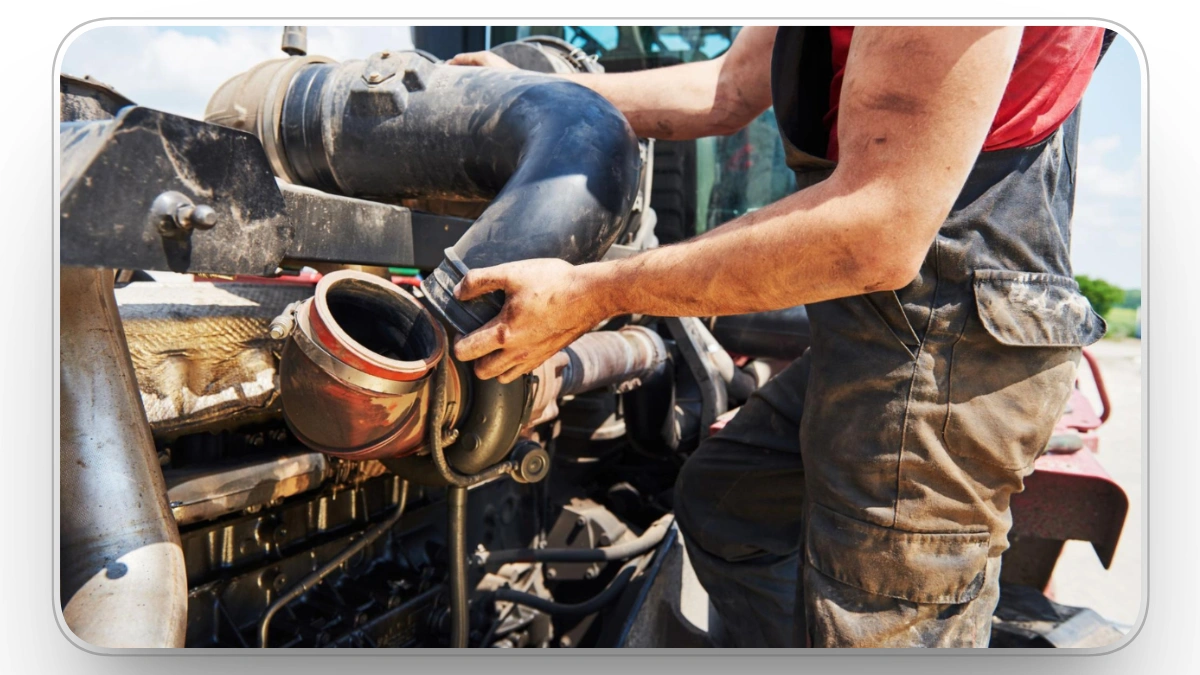
As mentioned, newer equipment generally has lower repair frequency and cost in the initial years:
- Warranty Coverage: New heavy equipment often comes with a warranty (e.g. 1-3 years full machine, longer for powertrain) that covers many repair costs. During the warranty period, manufacturers will fix defects at no cost to the owner. This effectively caps repair expenses to maintenance only.
- Lower Initial Wear: In the first few thousand hours, a new machine should not need major repairs (beyond defective parts). Maintenance costs (fluids, filters) will be the primary expenses. Manufacturers sometimes include complimentary maintenance for a certain period as well.
- Modern Technology: Newer machines have modern diagnostics (making troubleshooting faster) and often improved designs that reduce certain failure modes. They are also more fuel-efficient, putting less strain on components in some cases. However, advanced electronics can mean if something does break, it might require specialized (expensive) electronic parts or software to fix.
By contrast, used/older equipment (out of warranty) starts to accumulate more repair needs:
- Once past their prime, machines will experience components wearing out, hydraulic pumps losing pressure, seals aging and leaking, engines burning oil, etc. The chance of an unexpected failure rises sharply with age. Companies running older fleets often report increasing maintenance budgets each year as machines age.
- Higher Repair Frequency: An older machine might need multiple significant repairs per year. For example, a 10-year-old excavator could in one year require an undercarriage rebuild and an injection pump replacement, whereas a 2-year-old one would likely need none of those.
- Parts Availability Issues: Older models may have discontinued parts. Owners might have to source from secondary markets or wait longer for parts to ship. This can drive up costs (e.g. having to fabricate a part, or pay a premium for NOS – new old stock). In some cases, generic after market parts can be used to save money, but quality may vary.
In practice, maintenance costs are lower on new machines versus older machines, and new equipment comes with the benefit of warranties and manufacturer support.
As machines age, maintenance costs climb, and reliability drops, at some point, it’s “pay me now or pay me later,” which is why many large fleets renew equipment on a schedule to avoid the steep part of the cost curve.
A good strategy if running used machines is to be vigilant on maintenance and to plan major component rebuilds (many manufacturers offer certified rebuild programs to reset a used machine’s life with new components at a fraction of new cost). This can extend the useful life while avoiding constant small repairs.
Managing and Reducing Repair Costs
Heavy equipment repairs are undeniably expensive, but there are ways to manage and mitigate these costs:
- Regular Preventative Maintenance: This is the top way to control costs. Following the manufacturer’s maintenance schedule for service intervals (engine oil, hydraulic fluid, filters, etc.) and performing daily inspections can catch issues early. Simple habits like greasing pins, keeping cooling systems clean, and replacing worn parts proactively will prevent catastrophic failures.
- Operator Training and Proper Use: Training operators to use equipment correctly (avoiding abusive techniques, warming up machines, not overloading beyond capacity) prevents undue wear. As noted earlier, companies investing in operator training see repair costs drop by 25–40%.
- Quality Parts and Fluids: Using high-quality replacement parts, fluids, and lubricants can sometimes cost more upfront but last longer. Cheap or counterfeit parts might fail early.
Similarly, clean fuel and proper oil (and keeping filters clean) can prolong engine and hydraulic component life. Contaminated fluids are a common cause of premature wear.
- Maintenance Records & Data: Keeping detailed records of maintenance and repairs for each unit helps predict future needs. If you know, for instance, that a certain loader usually needs a transmission rebuild at ~8,000 hours, you can budget and plan for it. Data from fleet management software can also optimize maintenance schedules (avoiding both under- and over-servicing).
- In-House vs. Outsourcing Decisions: If you have a larger fleet, analyze the cost-benefit of an in-house mechanic team. In-house maintenance has higher fixed costs (hiring techs, buying tools) but can pay off with faster turnaround and possibly lower per-job costs (since you’re not paying third-party labor rates and markup).
- Shopping Around & Contracts: For independent owners, it’s wise to get multiple quotes on expensive repairs. Rates can vary. Some dealers or independent heavy equipment shops offer preventative maintenance contracts or discount programs for regular customers.
- Know When to Stop Repairing: Lastly, be willing to cut losses on an “money pit” machine. If you’ve rebuilt several major components and it keeps breaking, or if downtime is crippling your projects, then even if repairs are technically possible, replacement might be the smarter financial choice.
How Clue Reduces Repair Costs Through Predictive Fleet Intelligence
Heavy equipment downtime and repair costs continue to rise, making every hour of unplanned failure more expensive than the last.
Clue addresses this head-on by leveraging real-time fleet data to cut costs, prevent breakdowns, and improve decision-making across both small and large operations.
1. Predictive Maintenance Alerts
Clue monitors equipment conditions and flags anomalies early, before they trigger failure. Using OEM telematics, it generates predictive alerts based on usage trends, pressure, temperature, and performance thresholds. This allows operators to fix minor issues before they cause component failure, reducing emergency repairs and extending machine lifespan. Clue helps operators identify developing problems early, prevent costly breakdowns, and extend equipment life.
2. Real-Time Fault Monitoring
The platform continuously captures fault codes and system warnings. When an engine or hydraulic fault is detected, Clue sends real-time alerts with severity levels, allowing maintenance teams to prioritize and respond immediately. This avoids delays, prevents cascading failures, and keeps critical equipment running.
3. Utilization-Based Service Planning
Instead of fixed-interval servicing, Clue schedules maintenance based on real engine hours, mileage, and usage intensity. Machines used heavily get serviced sooner; underutilized assets aren’t over-maintained. This reduces both under- and over-servicing, optimizing uptime and resource allocation.
4. Cost per Hour and Lifecycle Cost Visibility
Clue tracks operating costs per machine, including fuel, parts, labor, and downtime and calculates actual cost per hour and total cost of ownership through equipment economics. This visibility enables smarter decisions about repair vs. replacement, avoids pouring money into high-cost units, and highlights cost trends fleet-wide.
Conclusion
Heavy equipment repair costs are a significant aspect of owning or operating machinery in construction (and related industries). In 2025, typical repairs range from a few thousand dollars for routine fixes up to tens of thousands for major failures.
Costs depend on the type of machine (e.g. excavator vs. crane), the specific component that failed (hydraulic, engine, structural, etc.), the machine’s age/condition, and labor/parts pricing in your area. Newer machines with warranties and good maintenance have far fewer repair expenses, while older machines can become very costly to keep running.
Always factor in not just the repair bill, but also the downtime cost. A delayed project or idle crew can sometimes cost more than the repair itself if a machine is down for long.
By staying on top of preventive maintenance, training operators, and planning for major repairs or replacements, contractors can minimize unplanned costs and equipment downtime.
FAQs
How much should heavy equipment repair cost?
Repair costs can range from a few hundred dollars for minor fixes like belts to over $10,000 for major failures like engine rebuilds. Always request detailed estimates upfront.
What factors affect heavy equipment repair costs?
Repair costs depend on the equipment type, age, and condition. Larger, older machines cost more to repair, especially for complex parts. Labor rates and parts also influence the cost.
How can I reduce heavy equipment maintenance costs?
Implementing preventive maintenance, training operators, and using quality parts help reduce costs. Regular servicing minimizes the risk of costly, unexpected failures.
How do I budget for heavy equipment maintenance?
Typically, contractors allocate 10-15% of the machine’s purchase price annually for repairs. Past records and CMMS software help forecast costs for accurate budgeting.

Transform Your Equipment Management