Construction Fleet Insurance: What It Is and What It Covers for Heavy Construction Equipment


Hi, I’m Maham Ali. I write about construction equipment management, helping teams use fleet data and maintenance intelligence to improve uptime, control costs, and run smoother jobsites.
Managing heavy construction equipment is about more than just securing valuable assets, it’s about safeguarding your entire operation. A stolen skid steer can throw off a week’s worth of work; a damaged excavator can derail critical timelines; a single highway accident involving a dump truck can spark legal battles that last long after the project’s done.
With construction equipment theft costing the U.S. economy around $1 billion annually and an average loss of $30,000 per incident, plus only 21% of stolen equipment being recovered, insurance is no longer optional, it’s essential.
That’s where construction fleet insurance comes in. It’s not just a single policy, but a strategic combination of coverage options, from contractors’ equipment insurance to commercial auto, designed to work together and keep your business running smoothly no matter the risk.
What “Construction Fleet Insurance” Actually Means In Practice
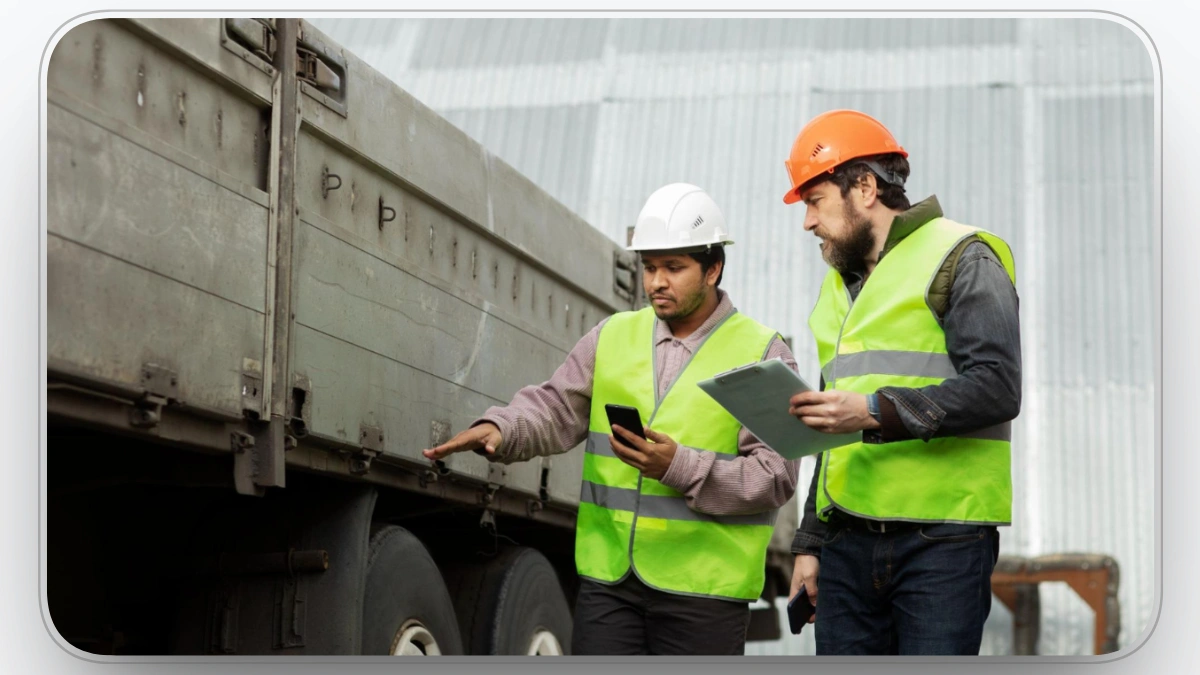
For heavy contractors, the “fleet” typically refers to two distinct types of coverage, each operating in different environments:
1. The Jobsite Fleet: Heavy Equipment and Mobile Property
This is generally covered by contractors’ equipment insurance, often written on an inland marine form. This policy protects equipment like excavators, bulldozers, and cranes that are exposed to harsh field conditions. It covers property that moves between job sites, sits outdoors, and is used in the field, ensuring you're covered when equipment is actively used on the job.
2. The Road Fleet: Trailers, and Licensed Vehicles
This is covered by commercial auto insurance, typically written as a fleet policy if you have multiple vehicles. It includes accident liability on public roads and physical damage to your trucks, trailers, and other road-registered vehicles, ensuring that your transportation network stays protected during transit.
Why This Split Matters
The same piece of equipment, like an excavator, can be exposed to a range of risks across both environments. At night, it might be vulnerable to theft at the jobsite. While in transit, it could suffer damage on a lowboy trailer. During the workday, it could be involved in a collision at the jobsite.
Without a well-structured insurance program, these different risks can lead to coverage gaps, exposing you to unexpected costs exactly when you need protection most, whether that’s during transport, on the job, or while the equipment is staged on-site.
If you don’t tailor your insurance program to cover both jobsite and road fleets, you could face serious disruptions at the worst possible time, delaying projects, increasing rental costs, or even impacting your entire operation.
Why Heavy Equipment Fleets Require “Schedule-First” Thinking

Heavy machinery is expensive, but the hidden risk is accumulation, the value concentrated in one place at one time.
A practical way to set limits is to answer two questions:
- What is the highest-value single unit you own or routinely rent?
- What is the maximum combined value you might stage at one yard or large project overnight?
If your limits only reflect “average equipment on a site,” you may be underinsured on the exact days you are most operationally exposed.
Choose Limits in 3 Steps
- Max single unit value: insure your highest replacement-cost unit (owned or regularly rented).
- Max accumulation: insure the most total value you might stage overnight at one yard/site (include attachments + specialty rentals).
- Downtime strategy: pick deductibles + consider rental reimbursement, then run the “lowboy test” (what happens when equipment is damaged on a trailer).
The “Downtime Math” That Makes Coverage Decisions Easier

Most decision-makers don’t feel the cost of a claim until they feel the cost of downtime. One of the simplest ways to quantify downtime is to look at replacement rental rates, because that is frequently your fastest operational fix.
Examples of published U.S. rental price points:
- A 25,000–29,000 lb excavator can run around $520/day (example pricing), while a 40,000–44,000 lb excavator can run around $623/day.
- A 70–79 hp crawler dozer can run around $438/day, with larger small/mid units quoted higher.
- A small rough-terrain or boom truck crane might be $300–$600/day, while large all-terrain or crawler cranes can exceed $2,000/day depending on configuration.
Even without adding transport, fuel, mobilization, or operator costs, a two-week substitute rental can quickly land in the mid four figures to five figures. That is why valuation choices (replacement cost vs. actual cash value) and rental reimbursement options matter so much for heavy fleets.
What Construction Fleet Insurance Typically Covers
Construction fleet insurance covers several critical aspects of your heavy machinery and vehicles. The main types of coverage include contractors’ equipment, commercial auto, and liability.
Let’s break down how each one works:
1. Contractors' Equipment Coverage (Inland Marine) for Heavy Machinery
This is the backbone of your coverage for high-value machinery like excavators, bulldozers, graders, loaders, and telehandlers especially when they’re moving between job sites. Contractors’ equipment coverage (often written on an inland marine form) protects your assets from a range of risks:
- Theft, including from job sites or, depending on your policy, storage yards.
- Vandalism
- Fire and smoke damage
- Weather-related damage (wind, hail, storm impacts)
- Accidental physical damage during operations
- Transit exposures while equipment is being hauled (this coverage is vital during transport, and policy wording and scheduling are critical)
The key here is speed. When equipment is stolen, the real issue isn’t just replacing it it’s how quickly you can restore capacity to your operation. Quick recovery is essential for keeping your project timelines intact.
2. Coverage for Rented, Borrowed, or Leased Equipment
Heavy contractors often rent specialized units like cranes or large excavators to meet project needs. Coverage for rented, borrowed, or leased equipment can vary. Some policies automatically cover rented gear up to a certain limit, while others require an endorsement or periodic reporting. Make sure you know exactly how your coverage applies to rented equipment to avoid costly surprises.
3. Attachments and Detachable Tools
Attachments, like augers, grapples, buckets, and blades can be high-value items that are often overlooked. These tools are typically fast to steal and can drive up claims costs. Your insurance policy should clearly state whether attachments are covered under the main equipment value, whether they’re subject to sublimits, or if they need to be scheduled separately for full protection.
4. Commercial Auto Coverage for Construction Vehicles
This coverage is designed for your trucks, trailers, and other road-registered vehicles, including pickups, dump trucks, and service trucks. It includes:
- Liability for injuries and third-party property damage resulting from accidents
- Collision and comprehensive coverage for damage to your vehicles
- Uninsured/underinsured motorist coverage, which is critical when you’re involved in accidents with drivers who lack sufficient coverage (coverage requirements vary by state)
- Optional hired/non-owned auto coverage for rented vehicles or employee-owned vehicles used for company purposes
This coverage ensures that your trucks and other vehicles are protected while on the road or at the job site.
5. Liability Around Equipment Operations
Here’s a crucial point many contractors overlook: equipment coverage pays for the machinery itself, not for the damage it causes to other people or property. If a loader strikes a neighboring building or a crane incident damages property nearby, that’s typically handled under general liability (or specialized liability policies, depending on the scenario), not under your contractor’s equipment insurance.
This is educational, not legal/insurance advice. Coverage varies by state and carrier. Confirm with a licensed broker.
What Is Usually Not Covered (And Where Contractors Get Surprised)
.webp)
This section is where you prevent “we thought that was included.”
1. Wear, Tear, Corrosion, And Gradual Deterioration
Insurance is built for sudden and accidental events, not maintenance cycles. Mechanical wear and aging are generally excluded.
2. Mechanical Breakdown
Internal breakdown and electrical failures are commonly excluded from standard equipment forms unless you add equipment breakdown coverage or an endorsement. If you run high-utilization fleets with tight maintenance windows, it is worth reviewing.
3. Unscheduled Or Undervalued Machines
If the excavator is not properly scheduled, or the stated value is outdated relative to replacement cost, you can end up with an avoidable shortfall during a total loss.
4. Theft Conditions and Site Requirements
Theft coverage frequently includes conditions: reasonable security, key control practices, or specific storage standards. Since only about one-fifth of stolen equipment is recovered on average, theft terms should be reviewed with the same seriousness as liability limits.
Compliance and “Minimums” That Affect The Road Fleet
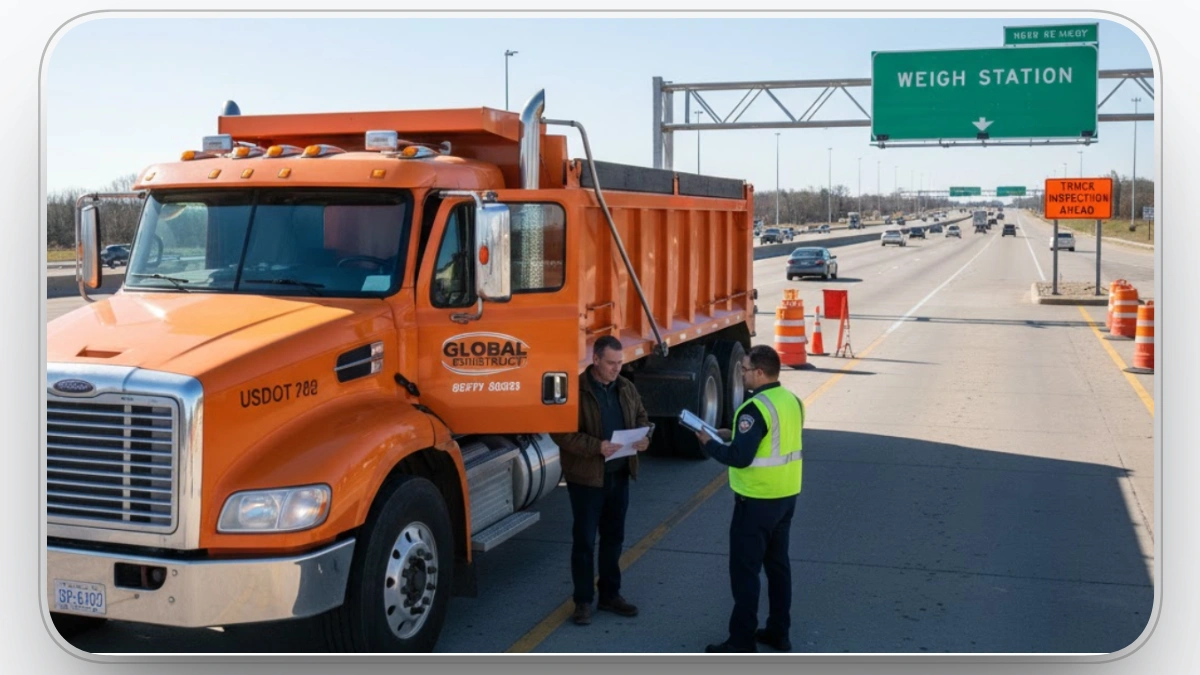
If you operate as a for-hire motor carrier in interstate commerce, federal minimum financial responsibility requirements can apply. For example, federal rules reference a $750,000 public liability minimum for certain for-hire carriers transporting nonhazardous property in interstate/foreign commerce (with specific applicability details and exceptions).
Many construction firms are not for-hire carriers, and state rules also matter. The point is not to turn this into a regulatory lecture; it is to avoid discovering after a crash that a contractual requirement, state minimum, or FMCSA filing requirement was missed.
Risk Management That Can Reduce Premiums
If you want better pricing and fewer operational disruptions, focus on controls that directly reduce high-frequency losses:
Theft Prevention
Practical measures insurers respect:
- GPS tracking on high-mobility units
- Yard security (lighting, fencing, controlled entry)
- Key control and immobilizers
- Standard “end-of-shift” lockout procedures
Transport Discipline
Standardize:
- tie-down checklists,
- chain grade requirements,
- attachment securing,
- photo documentation at load/unload.
Operator Training
Incidents involving cranes, heavy excavation near utilities, and slope operations tend to be severe. Documented training and refreshers can materially improve underwriting outcomes and reduce losses.
Claims Fast-Track Checklist
- Unit details: scheduled value, make/model/year, serial/VIN, photos, proof of ownership
- Incident proof: exact location, timeline (last seen/first noticed), photos/video, witness contacts
- Theft: police report #, key-control notes, GPS/geofence movement log (if available)
- Damage/accident: repair estimate/diagnosis, operator statement, jobsite or road report (if applicable)
- Transit (on trailer): dispatch/BOL, load/unload photos, tie-down checklist, hauler info/COI
- Condition history: latest inspection + recent PM/work order records
- Downtime costs: rental quotes/invoices, mobilization/transport, extra expense receipts
How Tech Can Support Construction Fleet Insurance Strategy
After you’ve defined coverage and limits, the next lever is operational: how quickly can you prove what happened, demonstrate reasonable controls, and get back to work?
That is where Clue can support a heavy-equipment insurance program, by tightening documentation, improving asset visibility, and reducing the “administrative drag” that slows claims and complicates renewals.
1. Single-Pane Fleet Operations View
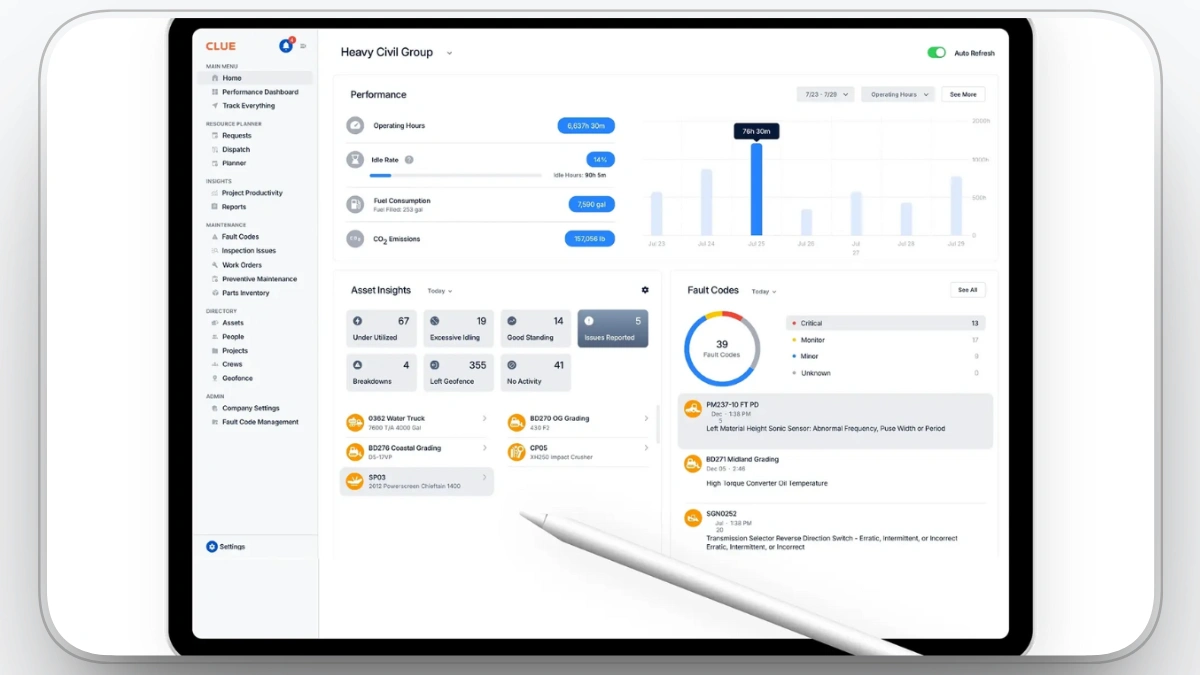
Clue positions its platform as a unified view of equipment operations, maintenance, work orders, costs, inspections, utilization, and more, so you are not stitching together spreadsheets and disconnected systems at renewal or claim time.
How that helps insurance:
- Cleaner renewals: faster, more accurate equipment schedules and supporting documentation
- Fewer “missing details” delays: less back-and-forth with brokers/underwriters on asset lists, locations, and records
2) Asset Geofencing With Real-Time Alerts
Clue’s construction asset geofencing is designed to trigger alerts when location updates show movement across a defined boundary, helping you catch unauthorized activity sooner rather than discovering it hours later.
Insurance value:
- Stronger claim documentation: a clearer movement timeline supports the “when/where” questions adjusters will ask
3) Inspections Management
%20Inspections%20Management.webp)
Clue’s inspections feature is built to manage equipment checks and safety documentation in one place. It also has an update for offline access, allowing users to view completed inspection reports stored locally on the device for the past 24 hours, plus an inspection log for proof before syncing.
Insurance value:
- Loss control credibility: consistent inspection records are meaningful in underwriting discussions
- Claim defensibility: when condition becomes an issue, you can show what was inspected and when, even on remote jobsites
4) Preventive Maintenance Automation (Reducing Breakdown-Driven Incidents And Downtime)
%20Preventive%20Maintenance%20Automation%20(Reducing%20Breakdown-Driven%20Incidents%20And%20Downtime).webp)
Clue’s preventive maintenance feature is designed to configure PM plans “from one to a thousand” assets, with tailored services/checklists and automatic work orders tied to scheduling.
Insurance value:
- Fewer preventable losses: maintenance discipline reduces the incidents that lead to expensive physical damage claims
- Improved post-loss narrative: if an event triggers scrutiny, you can demonstrate a structured upkeep program
5) Equipment Economics
%20Equipment%20Economics.webp)
Clue’s equipment economics feature is positioned to track equipment costs, analyze profitability, and streamline financial reporting.
Insurance value:
- Deductible strategy: align retained risk with actual cost volatility across key units
- Rent vs. own decisions: connect insurance spend and downtime patterns to the true cost of running each machine
- Fleet sizing discipline: identify underutilized or high-cost assets that inflate insured values without delivering return
6) iOS And Android Apps
%20iOS%20And%20Android%20Apps.webp)
Clue mobile app supports updating records, assigning tasks, tracking assets, and keeping crews aligned from the job site.
Insurance value:
- Faster incident reporting: field teams can capture details closer to the event
- More complete documentation: fewer “we’ll update it later” gaps that become painful during a claim
Top U.S. Insurance Providers for Heavy Equipment
Once you understand what heavy equipment insurance is (a coordinated program that blends contractors’ equipment coverage with commercial auto and related construction lines), the next logical question is: who actually writes this for heavy iron in the U.S.?
A practical note up front: availability depends on your state, trade class, fleet size, and loss history, so think of the list below as common markets that routinely participate in contractors’ equipment / inland marine and construction programs, not a ranking.
These insurers publicly describe contractors’ equipment / inland marine solutions designed for mobile machinery, tools, and jobsite property:
- Travelers (contractors’ equipment / inland marine; includes coverage concepts for owned and newly acquired/rented/leased/borrowed items for a period of time).
- The Hartford (contractors’ equipment insurance; includes terms around equipment in your care and certain rented/borrowed scenarios).
- Zurich North America (contractors’ equipment program for mobile construction machinery, equipment, and tools).
- Chubb (contractors’ equipment insurance for significant fleets; offers optional features such as rental expense and leased/rented equipment options, depending on underwriting).
- Liberty Mutual (contractor’s equipment solutions positioned around repair/replacement and delay/stoppage impacts).
- Great American (contractors’ equipment coverage within property & inland marine, positioned as flexible for theft/accident/vandalism/fire and similar causes).
- AIG (inland marine positioned as movable business property protection, including for construction companies).
- CNA (inland marine offerings that include “mobile property” and construction-related appetite areas).
- Nationwide (inland marine describing coverage for machinery/equipment; owned, rented, leased, or borrowed, and related expenses such as rental costs and cleanup extensions).
- Berkley (multiple Berkley companies participate in inland marine; examples include contractors’ equipment solutions for owned/leased/rented/borrowed equipment, including in transit).
What To Ask Any Insurer (Or Your Broker) Before You Bind
Use these questions to compare markets without getting lost in marketing language:
- Maximum capacity per unit and per site: “What’s the largest single scheduled value you’ll write, and how do you handle jobsite accumulation?”
- Valuation approach: “Do we have replacement cost, agreed value, or actual cash value options for newer iron, and what triggers depreciation?”
- Transit clarity (the lowboy test): “When an excavator is on a trailer and there’s a rollover, which policy responds and what deductible applies?”
- Rented/borrowed equipment: “Is this automatic, by endorsement, or by reporting? What are the sublimits, and are crane rentals handled differently?”
- Attachments and specialty implements: “Are breakers/buckets/forks included, sublimited, or required to be listed separately?”
- Theft terms and security requirements: “Do you require GPS/immobilizers? Any key-control conditions? Any higher theft deductibles?”
- Claims handling for equipment downtime: “Do you offer rental expense / substitute equipment options? What documentation do you require to move quickly?”
A Practical Buying Checklist For Heavy Construction Equipment Programs
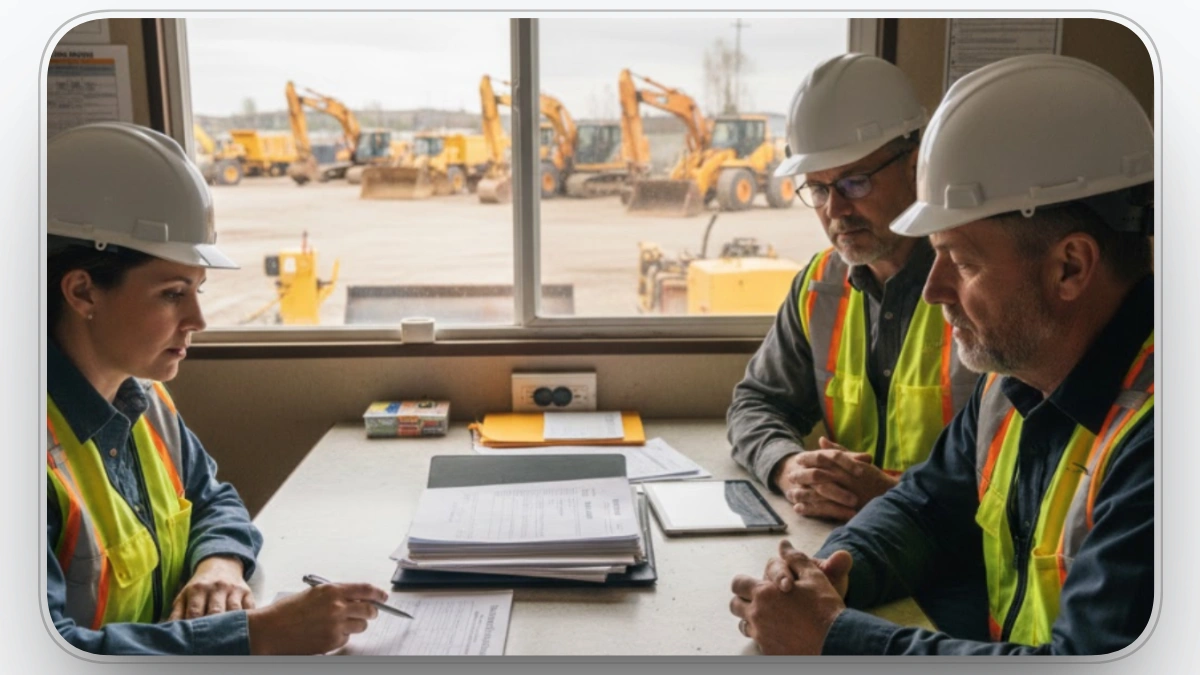
If you want a clean renewal (and cleaner claims), validate these items:
- Do we know the maximum value staged at one site? (limits match accumulation)
- Are we insuring on replacement cost where it matters most? (especially newer high-value units)
- Are rented/leased machines covered, and is the limit realistic for crane and specialty rentals?
- Are attachments addressed explicitly (scheduled or included) so we avoid sublimity surprises?
- Do we have a clear answer for “equipment on a trailer” claims? (which policy responds, with what deductible)
- Do our road fleet limits align with contracts and any applicable federal/state requirements?
- Do we have a documented theft plan, given the low recovery rate?
Closing
For heavy contractors, construction equipment insurance is less about “checking a box” and more about protecting the capacity that keeps projects profitable. Excavators, dozers, loaders, and cranes are not just high-value assets they are scheduled drivers. When one goes down from theft, fire, transport damage, or an operational incident, the real cost is often measured in delayed milestones, rental replacements, and disrupted crew productivity.
The most effective insurance programs reflect how heavy equipment actually operates: machines moving between yards and jobsites, attachments changing hands, assets staged at multiple locations, and trucks hauling high-dollar loads.
Just as important, insurance performs better when your operation can produce clean evidence quickly. That is where Clue adds practical value. By centralizing fleet records and workflows, such as asset visibility, geofencing, inspections, preventive maintenance, and equipment economics, Clue can help you tighten controls, reduce avoidable losses, and support faster, more defensible claim and renewal conversations.
FAQs
Does contractors’ equipment insurance cover rented, leased, or borrowed heavy equipment?
Often yes, but it is commonly subject to specific terms such as time-limited automatic coverage, sublimits, or endorsements that treat non-owned equipment differently than owned units. Some insurers describe automatic coverage for newly acquired or non-owned equipment for a period after acquisition, and ISO-form summaries describe coverage for equipment in your care, custody, or control, which can include borrowed or rented items depending on the policy you purchase.
Will contractors’ equipment insurance pay for mechanical breakdown or normal wear and tear?
Typically no. Contractors’ equipment policies are generally designed to cover sudden, external causes of loss such as theft, fire, vandalism, or accidental damage, and commonly exclude wear and tear and internal mechanical breakdown unless you add separate equipment breakdown coverage or an endorsement that specifically changes the exclusion.
When heavy equipment is being hauled, is it covered by commercial auto or by contractors’ equipment coverage?
It depends on what is damaged and how your policies define covered property and transit. Commercial auto may provide limited coverage for trailers while attached, but that does not automatically mean the trailer itself or the equipment being hauled is fully covered under the auto policy.
Transform Your Equipment Management