What is Fleet Leasing? Pros, Cons, and How It Works


Fleet decisions directly shape how a business operates. They affect capital allocation, cost stability, uptime, regulatory compliance, and the ability to scale efficiently. In construction, fleet strategy is harder than in most industries because assets don't live in one operating environment.
A single contractor may run road trucks, pickups, trailers, compact equipment, heavy iron, and rented/leased units across multiple jobsites. Utilization swings by phase (earthwork vs. finish), jobs move geographically, and idle time is often hidden until month-end. That makes acquisition decisions less about "price" and more about availability, uptime, and job-cost accuracy.
In North America, more than 55% of corporate vehicle fleets are leased rather than owned, reflecting how widely leasing is used as an operating model.
Fleet leasing is widely adopted but often misunderstood. This guide explains how it works, its value, and its limitations, helping decision-makers evaluate it based on facts.
What Fleet Leasing Means
In construction, leasing applies to on-road vehicles and off-road equipment, and lease value is determined by how the asset is actually used, not just time on a contract. For trucks, that's typically mileage. For heavy equipment, it's often engine hours, duty cycles, idle time, and operating conditions (dust, vibration, terrain, and operator behavior).
A good lease structure accounts for these jobsite factors up front, because they directly affect maintenance exposure, return condition, and end-of-term cost.
Unlike consumer leases, fleet arrangements are structured for:
- High utilization
- Commercial wear
- Multiple vehicles
- Operational continuity
Fleet leasing is not simply about lowering upfront cost. It is about shifting ownership responsibility, smoothing expenses, and reducing operational friction.
Leasing vs Ownership: Two Operating Models

Businesses typically choose between two primary models for putting vehicles into operation: ownership or leasing. Each model carries different financial, operational, and risk implications.
Ownership
Vehicles are purchased outright or financed over time. The business assumes full responsibility for the asset throughout its lifecycle. This includes depreciation, resale value at end of use, ongoing maintenance, repairs, and compliance.
Owned vehicles appear on the balance sheet as assets, and their value declines over time. Ownership offers maximum control but requires higher upfront capital and exposes the business to long-term asset risk.
Leasing
A fleet leasing provider supplies the vehicles under a structured lease agreement, either fixed or flexible, for a defined period. Ownership remains with the leasing provider, while the business pays for use of the vehicle.
Depending on the lease structure, residual value risk and certain operational responsibilities may be partially or fully transferred. The business spreads costs into predictable payments and are often treated as operating expenses, improving cash flow visibility and reducing capital lock-in.
There is no universally better model. The right approach depends on how intensively vehicles are used, how much capital a business is willing to allocate, and how much risk variability it is prepared to manage over the vehicle lifecycle.
Fleet Leasing in Construction
Construction fleets are different because utilization is project-driven, not route-driven. Assets may sit idle for weeks between phases, then run at full load for a short window. The biggest leasing mistakes happen when contracts assume "average" use instead of phase-based reality.
What's different in construction leasing:
- Utilization is measured in hours (equipment) as much as miles (vehicles).
- Jobsites create harsher wear patterns (undercarriage wear, hydraulic exposure, impacts, dust).
- Attachments and upfitting matter (toolboxes, racks, PTO systems, specialized beds, hydraulic kits).
- Mobility across projects changes true cost (haul distance, idle time, theft risk, and redeployment delays).
This is why contractors benefit from lease strategies built around actual utilization and job-cost visibility, not just monthly payments.
Why Fleet Leasing Matters Today

Modern fleets operate under tighter margins and greater complexity. Maintenance costs rise as vehicles age, compliance requirements increase administrative load, driver shortages magnify downtime risk, fuel prices remain unpredictable, and vehicle technology cycles shorten asset lifespans. Together, these factors make long-term fleet ownership harder to manage with certainty.
Fleet financing responds to these pressures in specific ways:
- Reducing capital lock-in by shifting large upfront vehicle purchases into predictable operating payments, freeing cash for labor, equipment, and growth initiatives.
- Improving cost predictability by bundling depreciation, maintenance, and service costs into defined payment structures that are easier to forecast.
- Simplifying administration by transferring registration, compliance tracking, maintenance coordination, and reporting responsibilities to a dedicated fleet partner.
- Enabling faster fleet adjustments by allowing vehicles to be replaced, resized, or reconfigured at the end of lease terms without managing asset disposal.
This does not eliminate operational risk, but it redistributes and stabilizes it, which is why leasing has become a practical option for fleets operating in uncertain conditions.
How Fleet Leasing Works
A fleet financing arrangement follows a structured lifecycle designed to reduce uncertainty, standardize operations, and limit administrative overhead. While details vary by provider, most leasing engagements move through five core stages.
1. Needs Assessment
The process begins by defining how vehicles will be used in real operations. This includes vehicle class, duty cycle, expected mileage and/or equipment hours, jobsite conditions (dust, vibration, terrain), expected idle percentage, project phase intensity, transport requirements (hauling and mobilizations), operator variability, and whether the unit will be shared across multiple projects or locked to one site.
2. Lease Structure Design
Based on those requirements, lease terms are configured. This includes selecting lease type, term length, mileage thresholds, maintenance coverage, and how financial and operational risk will be allocated between the business and the leasing provider.
3. Vehicle Sourcing And Deployment
Vehicles are sourced, titled, registered, and delivered into service. This stage removes procurement and onboarding complexity from internal teams and ensures vehicles are ready for immediate operational use.
4. Operational Phase
During the lease term, vehicles remain in active service while maintenance, inspections, reporting, and compliance are managed according to the agreement. Costs and responsibilities are handled through predefined processes rather than ad-hoc decisions.
5. End-of-term Resolution
At lease completion, vehicles are returned, purchased, or replaced. The outcome depends on the lease structure and condition of the assets, allowing fleets to refresh, resize, or exit vehicles without managing resale independently.
This lifecycle replaces fragmented, vehicle-by-vehicle decisions with a repeatable framework that supports consistency, cost control, and operational clarity across the fleet.
Types of Fleet Leasing Options
Fleet financing is not one-size-fits-all. Different lease structures distribute cost, risk, and flexibility in different ways. Choosing the right model depends on how vehicles are used, how predictable that usage is, and where the business wants financial exposure to sit.
Open-End Leasing
An open-end lease links the total cost of the vehicle to how it actually performs over its lifecycle rather than locking in a predefined residual value. Monthly payments are calculated using projected depreciation, but the final cost is determined when the vehicle is sold at the end of the lease term.
At lease completion, the leasing provider sells the vehicle on the open market. If the resale value is higher than expected, the business benefits from the upside. If it is lower, the business absorbs the shortfall. This structure shifts residual value risk to the operator but offers greater flexibility during the lease.
Open-end leasing is commonly used by fleets with:
- High or unpredictable mileage
- Long routes or changing duty cycles
- Confidence in vehicle condition management
Because there are no strict mileage caps, this model suits operations where utilization cannot be tightly forecast.
Closed-End Leasing
A closed-end lease establishes the vehicle's residual value at the start of the agreement. Monthly payments are fixed, providing cost certainty throughout the lease term. At the end of the lease, the vehicle is returned to the leasing provider, and resale risk remains with them rather than the business.
This structure limits financial exposure, but it also introduces tighter controls. Mileage allowances and wear standards are clearly defined, and exceeding those limits can result in additional charges. The tradeoff for predictability is reduced flexibility.
Closed-end leasing works best for fleets with:
- Stable, predictable mileage
- Controlled operating environments
- Strong budgeting and forecasting discipline
It is often preferred by organizations prioritizing cost certainty over operational flexibility.
Mileage-Based Leasing
Mileage-based leasing prices vehicle usage directly against distance traveled rather than relying on fixed assumptions. Costs scale with actual mileage, making this structure responsive to fluctuating operational demand.
This model requires accurate mileage tracking and reporting, as usage directly impacts expense. When managed properly, it aligns cost with activity more closely than traditional fixed structures.
Mileage-based leasing is useful for:
- Variable-route operations
- Seasonal or demand-driven fleets
- Businesses seeking tighter alignment between usage and cost
It provides flexibility, but only when paired with reliable data and monitoring practices.
Key Differences Between Open-End vs Closed-End
Lease Lengths and Terms
Fleet lease terms typically range from 24 to 60 months, with the most common agreements falling between three and four years. Term length directly affects cost structure, maintenance responsibility, and operational flexibility.
Shorter leases offer greater flexibility, allowing fleets to replace vehicles more frequently and reduce exposure to aging assets, but they come with higher monthly payments. Longer leases lower monthly costs, yet increase maintenance risk and downtime as vehicles age.
The optimal lease term aligns with the vehicle's expected service life, mileage intensity, and maintenance profile, ensuring costs remain predictable without sacrificing operational reliability.
Benefits of Fleet Leasing

When aligned correctly, leasing can simplify complex fleet environments while improving financial and operational predictability. The following benefits highlight where leasing creates the most impact.
1. Reduced Capital Commitment
Fleet leasing reduces the need for large upfront vehicle purchases. Instead of tying capital to depreciating assets, businesses can direct cash toward expansion, hiring, equipment, or technology. This approach improves financial flexibility and supports growth without increasing balance-sheet pressure.
2. Predictable Expense Structure
Lease payments are fixed or clearly defined, which stabilizes operating costs. This makes budgeting more reliable, forecasting more accurate, and cost allocation across projects or departments easier to manage.
3. Potential Tax Efficiency
Depending on jurisdiction and lease structure, payments may be treated as operating expenses rather than depreciated assets. This can simplify tax handling and reduce administrative complexity, though treatment varies and requires professional guidance.
4. Access to Modern Vehicles
Leasing allows fleets to refresh vehicles more frequently. Regular replacement cycles help avoid outdated technology, poor fuel efficiency, and aging safety features, supporting reliability and compliance.
5. Maintenance and Repairs Included
Many lease agreements bundle scheduled maintenance and repairs. This reduces unplanned downtime, limits surprise costs, and shifts maintenance from reactive problem-solving to managed execution.
6. Roadside Assistance and Emergency Support
Leasing programs often include roadside services such as towing and breakdown response, minimizing disruption when vehicles fail unexpectedly.
7. Lower Administrative Overhead
Leasing providers typically manage registration, compliance tracking, maintenance coordination, and reporting. This reduces internal workload and lowers the risk of administrative errors.
8. Professional Fleet Expertise
Leasing partners bring experience in vehicle selection, lifecycle planning, and cost benchmarking. This insight helps businesses optimize fleet decisions without building large internal teams.
9. Improved Company Image
Operating newer, well-maintained vehicles supports a consistent brand presence, improves driver satisfaction, and can contribute to safer operations.
Drawbacks and Limitations

While fleet leasing offers meaningful advantages, it is not universally suitable. Certain operational patterns, usage profiles, and strategic priorities can limit its effectiveness. Understanding these constraints is critical to avoiding cost overruns and misalignment between lease structure and real-world use.
1. Mileage Constraints
Many lease agreements, particularly closed-end structures, include defined mileage thresholds. When vehicles exceed these limits, additional charges may apply. For fleets with unpredictable routes or fluctuating workloads, inaccurate mileage forecasting can increase total lease cost and reduce the expected financial benefit.
2. End-of-Term Exposure
At lease completion, vehicles are assessed against predefined wear-and-tear standards. Excessive wear, damage, or poor condition can result in fees. While these standards are typically documented upfront, fleets must maintain consistent vehicle condition management to avoid unexpected end-of-term costs.
3. Customization and Upfitting Limitations
Leased vehicles may restrict permanent modifications or specialized upfitting. This can be a limitation for fleets requiring custom builds, heavy modifications, or equipment that alters the vehicle's residual value. In such cases, ownership may provide greater control and flexibility.
4. Long-Term Cost Trade-Offs
Over extended time horizons, leasing can be more expensive than ownership, particularly for low-mileage vehicles or assets retained well beyond typical replacement cycles. Businesses that operate vehicles lightly and for long durations may realize lower total cost through ownership rather than repeated lease renewals.
When Leasing Is Not Ideal
Fleet leasing may be less effective for:
- Operations using highly specialized or custom-built equipment
- Fleets with consistently low utilization
- Organizations with strong in-house maintenance capabilities and established resale processes
In these scenarios, ownership can provide better cost control and operational alignment. Leasing may involve steep excess mileage penalties because most contracts include mileage limits. Exceeding those caps can cost fleets thousands of dollars per vehicle in unexpected fees.
Leasing vs Owning a Fleet
Leasing and ownership are not simply financing choices; they shape how fleets are managed over time. Understanding the practical differences between these models helps businesses align fleet strategy with real usage patterns, capital priorities, and long-term operating goals.
1. Choosing the Right Operating Model
Fleet leasing and fleet ownership represent two distinct operating philosophies.
- Ownership emphasizes long-term control and asset retention. The business owns the vehicles, manages their full lifecycle, and captures any residual value at disposal. This model requires higher upfront capital and exposes the business to depreciation, maintenance, and resale risk.
- Leasing prioritizes flexibility and risk transfer. Vehicles are used under a defined agreement, with some financial and operational risk shifted to the leasing provider. Costs are spread over time, and fleet size can be adjusted more easily.
There is no universally better option. The right model depends on how vehicles are used, how predictable that usage is, and how much risk the business is willing to manage internally.
2. Organizations That Benefit Most from Leasing
Leasing is generally better suited for fleets that value adaptability, cost stability, and administrative simplicity.
- Growing businesses that need to scale fleets without tying up capital
- High-mileage operations where vehicles are replaced frequently
- Multi-site or geographically distributed fleets requiring standardized management
- Organizations seeking predictable operating costs and simplified budgeting
3. Organizations Better Served by Ownership
Ownership tends to work best when control and long-term asset utilization outweigh flexibility.
- Fleets using highly specialized or custom-built vehicles
- Operations with consistently low vehicle utilization
- Businesses with long replacement cycles and extended asset lifespans
- Organizations with strong in-house maintenance and established resale processes
4. Decision Framework
Selecting between leasing and owning should be based on operational facts rather than habit or preference. Key questions include:
- Usage predictability: Are mileage and duty cycles consistent or variable?
- Capital availability: Is capital better deployed elsewhere in the business?
- Risk tolerance: Who should absorb depreciation, maintenance, and resale risk?
- Operational complexity: How much administrative effort can the organization support?
The optimal fleet strategy aligns financial structure with real-world operating conditions, not theoretical cost comparisons.
Key Factors Before Leasing

A successful fleet lease starts with understanding how vehicles will actually be used. Most cost overruns and contract issues stem from gaps between operational reality and lease assumptions.
Fleet Requirements
Vehicle selection should reflect real operating conditions, not averages or best-case scenarios. Fleets need to account for vehicle types, current fleet size, expected growth, job demands such as payload and towing, and the operating environment. Mileage expectations are especially critical, as inaccurate estimates often drive excess charges.
Lease Structure Alignment
The lease model should match how predictable fleet usage is. Fleets with variable routes or uneven utilization require more flexibility, while predictable operations benefit from fixed structures. Choosing where residual value and maintenance risk sit is a strategic decision, not a pricing one.
Contract Terms
Headline pricing rarely reflects total cost. Key contract terms, mileage thresholds, wear standards, early termination conditions, and included services determine actual exposure over the lease term and should be reviewed carefully.
Partner Selection
A leasing partner's experience, transparency, and support capability matter as much as cost. Strong reporting, clear communication, and industry familiarity reduce administrative burden and improve long-term outcomes.
Role of Fleet Management Partners
Fleet leasing works best when supported by a capable fleet management partner. Beyond vehicle supply, partners help align fleet structure with operating needs, manage risk, and improve long-term cost control.
Strategic Support
Partners assist with lifecycle planning, cost analysis, and replacement timing. This reduces reactive decisions and keeps fleet strategy aligned with actual usage.
Financing Flexibility
Modern leasing supports mixed fleets, seasonal scaling, and phased transitions. This allows fleets to adjust size and composition without restructuring ownership.
Technology and Reporting
Advanced partners provide dashboards and analytics that improve visibility into utilization, cost, and asset performance without added internal complexity.
Role of Clue in Fleet Leasing and Fleet Management
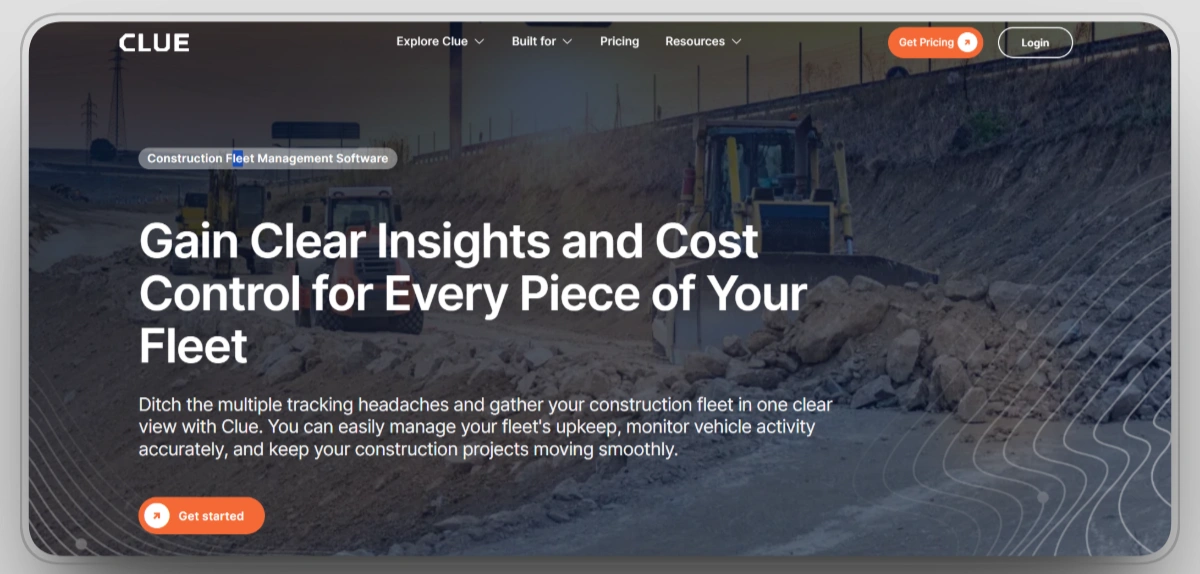
Clue is construction fleet management software that consolidates data from multiple systems into a unified operational view called a Single Pane of Glass.
At its core, Clue helps organizations manage fleets more effectively by centralizing telemetry, GPS, maintenance, dispatch, inspections, and ERP data into one dashboard.
1. Unified Operational Visibility
Clue aggregates data from more than 70 telematics, GPS, and backend systems, including major OEM providers, into a single interface. This means fleet managers can monitor all assets, whether owned, rented, or leased, without switching between multiple systems.
This unified visibility directly supports fleet leasing decisions by giving real-time insight into:
- Vehicle utilization
- Location and deployment
- Idle time and productivity
- Cost drivers such as excessive idling and underutilization
Because data from leased assets appears alongside owned assets, decision-makers can evaluate lease value and operational efficiency more accurately.
2. Real-Time Tracking and Fleet Insight
Clue's platform provides minute-by-minute status on equipment activity including utilization, idling, and location, essential for understanding how leased vehicles perform in daily operations. This level of visibility supports leasing decisions by revealing whether leased assets are truly cost-effective compared to owned alternatives.
Having this insight helps fleets:
- Avoid unnecessary rentals or purchases
- Identify under-utilized assets that can be returned or resized
- Adjust fleet composition based on actual operational data
3. Maintenance and Lifecycle Management
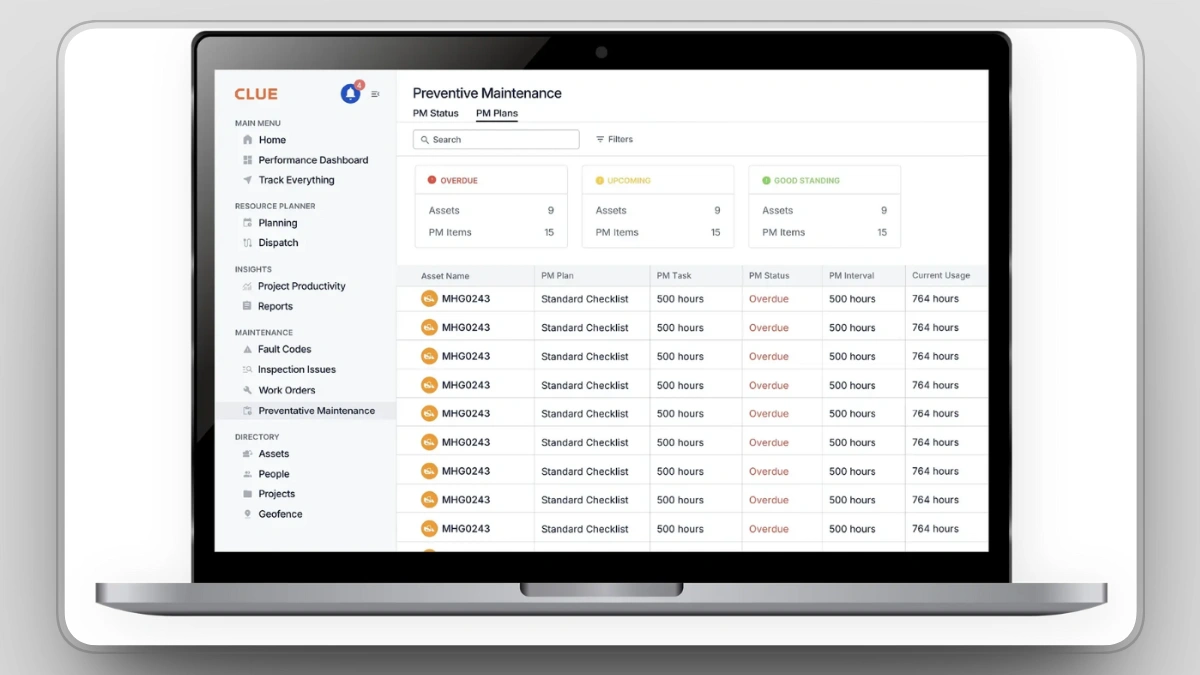
Clue centralizes maintenance-related data from telematics and inspection systems, enabling proactive service scheduling and work order creation. This reduces downtime, improves uptime on leased units, and helps compare leased versus owned maintenance costs, a key factor in lease decision frameworks.
Clue's automated maintenance tracking and alerting enable:
- Preventive maintenance planning
- Faster response to fault codes and failures
- Lower risk of end-of-lease penalties due to poor maintenance
4. Integration with Back-Office Systems
Clue integrates deeply with ERP and fleet backend systems such as Viewpoint Vista and Spectrum, bringing financial and operational data together. This is valuable for comparing lease operating costs to ownership costs, especially when considering how to allocate expenses and forecast budgets across projects.
5. Analytics That Support Leasing Decisions
Clue's analytics help fleet leaders identify cost drivers such as:
- Idle time
- Underutilization
- Excessive rentals
- Fault code trends
By translating real-time operational data into actionable insights, Clue supports decisions on whether to retain, return, replace, or lease assets, aligning decisions with actual usage and cost patterns.
6. Mobile and Remote Accessibility
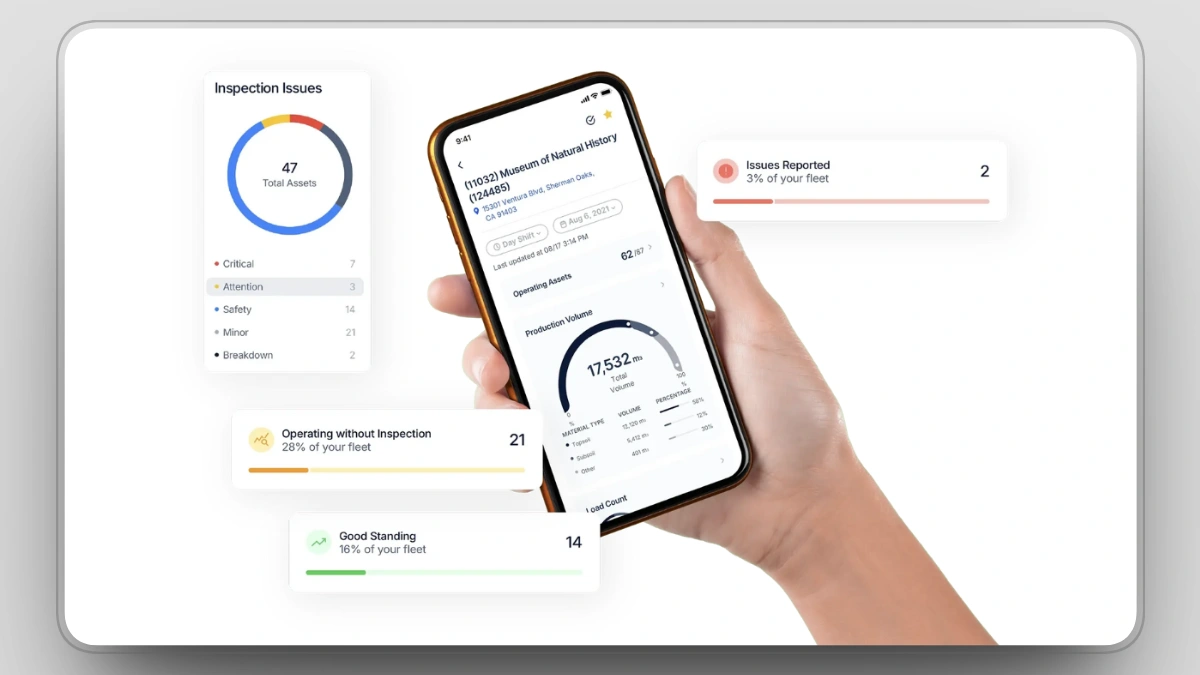
Clue's mobile capabilities keep managers informed regardless of location, ensuring fleet decisions including leasing actions are made with up-to-date information. This reduces lag in decision cycles and improves responsiveness
Tips and Best Practices for Fleet Leasing
Fleet leasing performs best when lease assumptions match real operating behavior and are actively managed throughout the term.
- Align lease terms with actual usage: Base mileage, term length, and lease structure on historical data, not projections. Review mileage regularly to prevent excess-use charges and cost drift.
- Manage vehicle condition continuously: End-of-lease charges are driven by condition, not age. Document conditions, follow maintenance schedules, and address damage early to avoid return penalties.
- Specify vehicles to function: Over-specifying increases cost without improving performance. Configure vehicles strictly to job requirements to control lease expense and wear exposure.
- Balance utilization across the fleet: Uneven usage accelerates wear and creates penalties. Rotate vehicles to distribute mileage and extend service life.
- Maintain complete records: Accurate maintenance and repair documentation supports warranty coverage and simplifies lease closeout.
- Avoid common mistakes: Most leasing issues stem from underestimated mileage, ignored wear standards, or choosing providers based on price instead of support quality.
Making the Right Decision

Before choosing fleet leasing, confirm the following:
- Usage clarity: You have a reliable understanding of mileage, duty cycles, and operating conditions, or a plan to manage variability within the lease structure.
- Cost predictability needs: Stable, forecastable monthly costs are more valuable than maximizing long-term asset ownership.
- Risk appetite: You prefer to limit exposure to depreciation, resale uncertainty, and maintenance variability rather than manage those risks internally.
- Capital priorities: Capital is better deployed toward growth, labor, equipment, or technology instead of being tied up in depreciating vehicles.
- Growth and flexibility requirements: Fleet size or composition is expected to change due to expansion, seasonality, or operational shifts.
- Operational support needs: Reducing administrative burden, maintenance coordination, and compliance management is a priority.
If most of these conditions apply, fleet leasing is likely a strong fit.
Final Thoughts
There is no single fleet strategy that works for every business. The right approach depends on how vehicles are used, how predictable that usage is, and how much risk an organization is prepared to manage. Leasing and ownership are tools, not outcomes, and their value is determined by operational reality rather than convention.
What matters most is visibility. When fleet decisions are based on accurate, real-world data instead of assumptions, businesses can align leasing, ownership, and replacement strategies more effectively. Platforms like Clue support this by bringing operational and cost data into one place, helping teams evaluate fleet strategy based on how assets actually perform.
The strongest fleet strategies are built around how a business operates today and how it needs to operate tomorrow, not how fleets were managed in the past.
Frequently Asked Questions
How Does Fleet Leasing Affect Day-to-Day Operations?
Fleet leasing changes how vehicles are managed rather than how they are used. Maintenance scheduling, compliance tracking, and vehicle replacement follow predefined processes, reducing ad-hoc decisions during daily operations.
Can Fleets Mix Leasing and Ownership?
Yes. Many fleets operate hybrid models where high-utilization or standardized vehicles are leased, while specialized or low-use assets are owned. The mix depends on operational fit, not policy.
How Does Leasing Impact Vehicle Downtime?
Leasing can reduce downtime when maintenance and roadside support are included, but downtime still depends on how well vehicles are assigned, rotated, and maintained during the lease term.
What Happens If a Vehicle Is No Longer Needed?
Options vary by contract. Some leases allow early returns or substitutions with penalties, while others require full-term commitment. Flexibility should be evaluated before leasing, not after requirements change.
How Are Leased Vehicles Tracked Across Multiple Locations?
Leased vehicles are typically tracked through telematics or fleet platforms, allowing centralized oversight even when assets operate across multiple sites or regions.
Does Leasing Simplify Compliance and Reporting?
Leasing often reduces administrative effort around registration, inspections, and documentation, but compliance responsibility still rests with the operator. Clear reporting processes remain essential.
How Do Fleets Measure Whether Leasing Is Actually Working?
Performance is measured through utilization, cost per mile or hour, downtime, and return-condition outcomes. Without visibility into these metrics, leasing benefits are difficult to validate.
When Should a Fleet Reevaluate Its Leasing Strategy?
Leasing strategy should be reassessed when usage patterns shift, fleet size changes materially, routes expand, or maintenance costs begin trending outside expected ranges.
Transform Your Equipment Management