What Is Lean Construction? Principles, Tools & Benefits


Hi, I’m Maham Ali. I write about construction equipment management, helping teams use fleet data and maintenance intelligence to improve uptime, control costs, and run smoother jobsites.
Up to 30% of all work done on a construction site is rework, meaning work that had to be done a second time because it was not done correctly the first time. These numbers represent the normal cost of running a project the way most of the industry always has, with sequential scheduling, siloed trades, and problems discovered in the field instead of caught in planning.
Lean construction is the approach that changes this from the ground up. It applies the same production thinking that transformed manufacturing at Toyota to the construction industry, helping project teams eliminate waste, create reliable workflow, and deliver real value to owners on every project.
This guide breaks down everything you need to understand lean construction. You will find the five core principles, the eight types of waste lean targets, the most important tools like the Last Planner System and pull planning, and the research data behind the results.
What Is Lean Construction?

Lean construction is a project delivery approach that maximizes value for owners, trades, and end users while systematically eliminating waste from every phase of a construction project. That includes design, procurement, scheduling, field execution, and handover.
The Lean Construction Institute (LCI), the founding body of the movement, defines it as "a project delivery process using lean methods to maximize stakeholder value while minimizing waste."
What that means in practice on a real jobsite:
- Every subcontractor, supplier, designer, and owner works as part of one collaborative team
- Work only starts when the conditions to do it reliably are in place
- Problems are surfaced before they stop work, not after
- Every activity is evaluated by whether it creates value for the project owner and end user
- Continuous improvement happens at every level, from foreman to executive
Lean construction meaning at its core is straightforward. Do more of what creates value. Remove everything that does not.
The lean construction definition matters because it sets the direction for everything else. It is not a scheduling tool. It is not a software category. It is a complete production system for building projects that changes how teams plan, communicate, measure performance, and treat each other.
Where Lean Construction Comes From
Understanding lean construction history explains why the approach works and why it was designed specifically for construction rather than borrowed wholesale from another industry.
Origins in the Toyota Production System
Lean thinking originated at Toyota in post-war Japan. Engineers Taiichi Ohno and Shigeo Shingo developed what became known as the Toyota Production System (TPS). Their goal was to build cars using dramatically fewer resources than mass-production competitors while maintaining higher quality.
The term "lean" was introduced to a broader audience in the 1990 book The Machine That Changed the World by Womack, Jones, and Roos. The book described Toyota's system as "lean" because it used less of everything: less labor, less inventory, less time, less space.
How Lean Moved Into Construction
In 1992, Finnish researcher Lauri Koskela published a landmark paper titled Application of the New Production Philosophy to Construction. That paper was the first serious academic effort to apply TPS thinking directly to building projects. It launched the academic and practical field that became lean construction.
In 1997, Glenn Ballard and Gregory Howell co-founded the Lean Construction Institute in the United States. Their work, especially the development of the Last Planner System, gave the industry its first practical lean construction methodology designed for the realities of construction projects.
Why Construction Needed Its Own Lean Approach
Manufacturing produces the same product thousands of times in a controlled environment. Construction builds a unique product exactly once, on a unique site, with a unique team. That difference matters enormously.
Lean construction is not Toyota's system pasted onto a jobsite. Researchers like Ballard and Koskela spent years adapting lean concepts to fit these realities:
- Design and construction frequently overlap in time
- Every site is a temporary, one-time production facility
- Dozens of subcontractors must coordinate in real time
- Weather, permit delays, and supply chain variability create conditions no factory faces
Lean Construction vs Traditional Construction
The core difference is this. Traditional project management in construction treats each trade as an independent task to be completed. Lean project management in construction treats every task as part of a connected production flow that must be optimized as a whole.
The 6 Core Lean Construction Principles
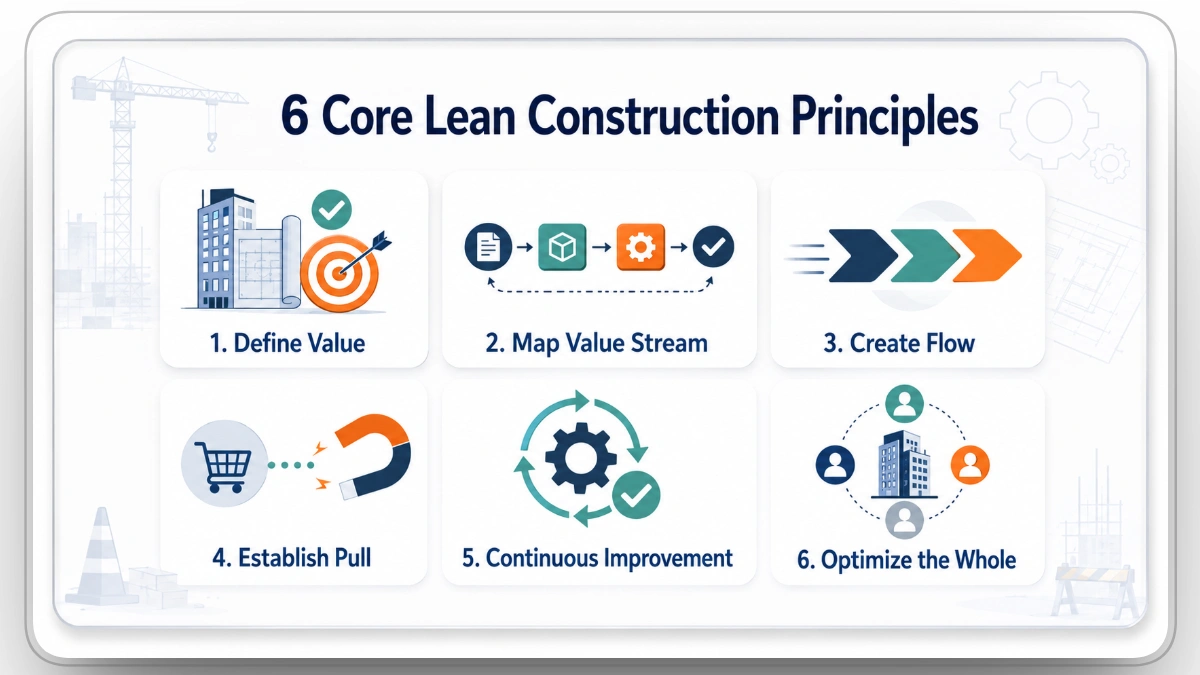
These 6 lean tenets form the foundation of every lean construction practice. They are drawn from lean manufacturing thinking and adapted by the Lean Construction Institute for the specific realities of building projects.
Principle 1: Define and Deliver Value
Value in lean construction is defined by the customer, the owner and end user, not the contractor. Every activity on a project should contribute to delivering what the owner actually needs: a functional, safe, on-budget building completed on time.
Before a shovel goes in the ground, lean teams use Target Value Design to define what the project must deliver and at what cost. Design decisions are made with budget reality built in from day one, not identified after the fact.
What value means in lean construction:
- The physical building meeting functional requirements
- Schedule predictability and minimal disruption to the owner
- Occupant wellbeing and long-term maintainability
- A positive process experience for the owner and all trades
Principle 2: Map and Improve the Value Stream
A value stream is every activity from first design sketch to final certificate of occupancy required to deliver the project. Lean construction teams map this stream to identify which activities add value and which are waste.
Value stream mapping in construction reveals bottlenecks where work piles up waiting for the next step. It also exposes handoff failures where information, materials, or decisions get passed incompletely from one team to another, creating rework downstream.
Principle 3: Create Flow
Flow is the continuous, uninterrupted movement of work through the production system. When flow breaks down because materials did not arrive, a design question went unanswered, or a subcontractor finished early but the next trade was not ready, the project wastes time, money, and crew energy.
Lean construction scheduling methods like the Last Planner System, Takt planning, and pull planning all exist to create reliable flow. The goal is that teams always have what they need to do the next task and work moves through the site without interruption.
Principle 4: Establish Pull
Pull means work is only triggered when the downstream team is ready to receive it. The opposite, push, means work is done on a preset schedule regardless of whether the next trade can absorb it.
In practice, pull planning in lean construction looks like this. The team works backward from the project end date asking what each trade needs to do their work, rather than when a task was scheduled to start. The Last Planner System implements pull through weekly work planning and make-ready meetings.
Principle 5: Pursue Perfection Through Continuous Improvement
Lean construction is never finished. The fifth tenet, Kaizen or continuous improvement, means teams regularly reflect on what went wrong, what caused it, and how to prevent it next time. This happens through:
- Daily huddles, which are 15-minute field crew meetings to surface constraints before they stop work
- Retrospectives after major milestones
- Root cause analysis when something goes wrong using the Five Whys technique
- Lessons learned documentation shared across projects
The LCI Respect for People principle is woven throughout all five tenets. Lean construction only works when every worker from superintendent to laborer feels safe raising a problem without blame.
Principle 6: Optimize the Whole
Lean construction teams manage the project as a single production system, not a collection of independent contracts. Optimizing one trade's performance at the expense of another creates local efficiency but system-wide waste.
This principle directly challenges the siloed thinking common in traditional design-bid-build delivery, where each party architect, general contractor, subcontractor optimizes their own scope, budget, and schedule regardless of downstream effects.
Optimizing the whole in practice means:
- Design decisions are evaluated for constructability impact, not just aesthetic or engineering merit
- Scheduling decisions account for how each trade affects the trades before and after it
- Procurement decisions consider total project flow, not just unit cost
- Success is measured at the project level, not the contract level
The Last Planner System and Integrated Project Delivery are both structured around this principle. When foremen plan together in pull planning sessions and when owners, architects, and contractors share risk in an IPD contract, they are operationalizing "optimize the whole" at the planning and contractual level.
The 8 Wastes in Lean Construction
Lean construction borrowed the concept of waste, called muda in Japanese, from the Toyota Production System. The original TPS identified 7 wastes. Lean construction research identified an 8th specific to projects. Together these represent the hidden costs buried in every traditionally run project.
Understanding these 8 wastes is why lean construction often requires rethinking procurement timelines, material staging, and jobsite layout, not just the schedule.
Lean Construction Tools and Techniques
Lean construction tools are the practical methods teams use to apply lean principles on real projects. These are the most widely used tools in lean construction today.
Last Planner System (LPS)
The most important lean construction planning tool, covered in full detail in its own section below. LPS transforms scheduling from a top-down Gantt chart into a collaborative, field-driven commitment system.
Pull Planning
A collaborative scheduling technique where the entire project team plans backward from the end goal. Each trade identifies what it needs in order to do its work. Pull planning sessions reveal constraints that a planner working alone would never see.
Takt Planning
A lean construction scheduling method borrowed from manufacturing. Takt is the German word for beat or pulse. In construction, Takt planning divides a building into equal production zones and schedules each trade to move through zones at the same pace, preventing one trade from overtaking another and creating bottlenecks.
5S Lean Construction
A jobsite organization system based on five steps: Sort, Set in Order, Shine, Standardize, Sustain. In construction, 5S creates workspaces where tools and materials are always where workers expect them, reducing motion waste, improving safety, and cutting time lost searching.
A3 Problem Solving
A structured root-cause analysis method named after the A3 paper size used in Japanese factories. Teams define a problem, analyze its causes, and propose countermeasures on a single page. This forces clear thinking rather than gut-reaction fixes.
Daily Huddles and Crew Meetings
Brief 15-minute meetings at the start of each shift where the foreman and crew identify what work is planned, what constraints might stop it, and who owns resolving those constraints.
Integrated Project Delivery (IPD)
A contract structure that aligns incentives across owner, designer, and contractor into one shared-risk, shared-reward agreement. IPD removes the adversarial dynamics that create waste in traditional project delivery.
Target Value Design (TVD)
A lean design technique where the budget is fixed as a constraint that drives design decisions from the start, rather than a budget revealed after design is complete. TVD requires early trade contractor involvement.
Visual Management
Making project status, constraints, and performance metrics visible to everyone through dashboards, sticky-note planning boards, color-coded schedules, and on-site displays. Visual management means no one has to ask what we are doing today or where we are vs plan.
The Last Planner System Overview

The Last Planner System is the cornerstone lean construction planning methodology, developed by Glenn Ballard and Greg Howell of the Lean Construction Institute.
The name comes from a key insight. The last planner, meaning the foreman, superintendent, or trade contractor actually directing work on the ground, knows far more about what work is actually achievable than a project manager producing Gantt charts in an office. LPS places those last planners at the center of scheduling.
How the Last Planner System Works
LPS operates through five interconnected planning levels:
Level 1: Master Schedule (Should)
The overall project milestone schedule. Sets major milestones and the end date. This is the north star.
Level 2: Phase Schedule via Pull Planning (Can)
Working backward from each milestone, the entire trade team identifies the sequence of work needed and the handoffs between trades. Developed collaboratively in a pull planning session, not dictated by a project manager.
Level 3: 6-Week Lookahead (Could)
Every six weeks the team reviews upcoming work and identifies constraints, meaning anything that could prevent a task from being ready to execute. Constraints are assigned to owners with due dates.
Level 4: Weekly Work Plan (Will)
Each week, trade foremen commit to specific tasks they are confident they can complete, not tasks they hope to complete. This commitment culture is the heart of LPS.
Level 5: Percent Plan Complete (PPC)
Every week the team measures how many committed tasks were actually completed. Industry averages for traditional projects hover around 50 to 60% PPC. High-performing lean projects reach 80 to 90%. The gap reveals systematic constraints and planning failures.
Why the Last Planner System Works
LPS works because it replaces assumption-based scheduling with commitment-based scheduling. When a trade foreman commits to completing a task by Friday, they have already verified that:
- The materials are on site
- The predecessor work is done
- The crew is available
- The workspace is ready
That verification process, called "making work ready," is where most lean projects find and eliminate the hidden constraints that kill traditional schedules.
Last Planner System Implementation Tips
- Start with a two-day pull planning session for the next major phase before work begins
- Track PPC weekly. The number does not lie about whether lean is working
- Hold Five Whys analysis when PPC drops below target, not blame sessions
- Involve trade foremen, not just GC superintendents, in weekly planning
- Pair LPS with daily huddles for real-time constraint tracking in the field
5S Lean Construction
5S lean construction is a jobsite organization system that applies the 5S methodology, originally from Toyota manufacturing, to construction worksites. It is one of the simplest lean tools to implement and produces visible, immediate results.
5S in practice on a jobsite might start with the tool crib. Every tool has a shadow board. Every missing tool is instantly visible. Workers stop losing 20 minutes per shift searching for the right equipment. That is pure motion waste eliminated at no cost.
5S also extends naturally to equipment management. Knowing exactly where every machine is staged, its current status, and what work order it is assigned to is 5S applied to the equipment fleet.
Pull Planning and Lean Construction Scheduling

Pull planning is the lean construction scheduling technique that replaces top-down Gantt chart scheduling with a bottom-up, trade-driven planning process. It is the practical expression of Lean Principle 4 which is Establish Pull.
How a Pull Planning Session Works
Pull planning sessions are collaborative meetings, typically one to two days, where the entire project team plans a phase of work together. The process follows these steps:
- Start from the phase milestone, for example "substantial completion of Level 3 MEP rough-in by October 15"
- Work backward from that milestone, asking what must be done the week before, and the week before that
- Each trade posts sticky notes on a planning board representing their work packages
- Trades negotiate handoffs directly with each other
- Constraints are identified, tagged, and assigned to an owner with a due date
- The resulting sequence becomes the basis for the 6-Week Lookahead and Weekly Work Plans
Pull Planning vs Push Scheduling
Traditional construction scheduling is pushed. A project manager sets dates, assigns tasks, and pushes them down to trades. If a trade runs late, the next trade waits or starts before conditions are ready, which creates rework.
Pull planning flips this. Work is only released to a trade when upstream work is actually complete and the workspace, materials, and crew are confirmed ready. This creates reliable flow instead of reactive firefighting.
Lean Construction Scheduling Methods Compared
Lean Project Delivery and Integrated Project Delivery
Lean project delivery is the broader system for delivering a construction project using lean methods from design through construction and handover. It is not one tool but a complete approach that touches contracts, planning, design, procurement, and field execution.
Integrated Project Delivery or IPD is the contract structure most aligned with lean project delivery. IPD binds the owner, architect or engineer, and general contractor into a single multi-party agreement where:
- All parties share risk and reward
- Profit is tied to project outcomes, not individual task completion
- Early contractor and trade involvement in design is built in contractually
- Major decisions require consensus from all key parties
Why IPD and Lean Construction Go Together
Traditional design-bid-build contracts create adversarial dynamics. The architect protects their design, the contractor protects their margin, and the owner pays for the conflict. IPD removes that by making everyone's success dependent on the project's success.
The result is that trades share constructability knowledge during design which reduces rework, procurement happens earlier which reduces schedule risk, and disputes are resolved collaboratively which reduces legal costs.
Other Lean-Compatible Delivery Methods
- Design-Build: Single point of responsibility. Faster than design-bid-build. Easier to implement lean because there are fewer contract boundaries.
- Construction Manager at Risk or CMAR: The GC is involved in the design phase, creating more opportunity for early trade input.
- Progressive Design-Build: Scope developed collaboratively before price is locked. Aligns with Target Value Design principles.
Benefits of Lean Construction With Research Data
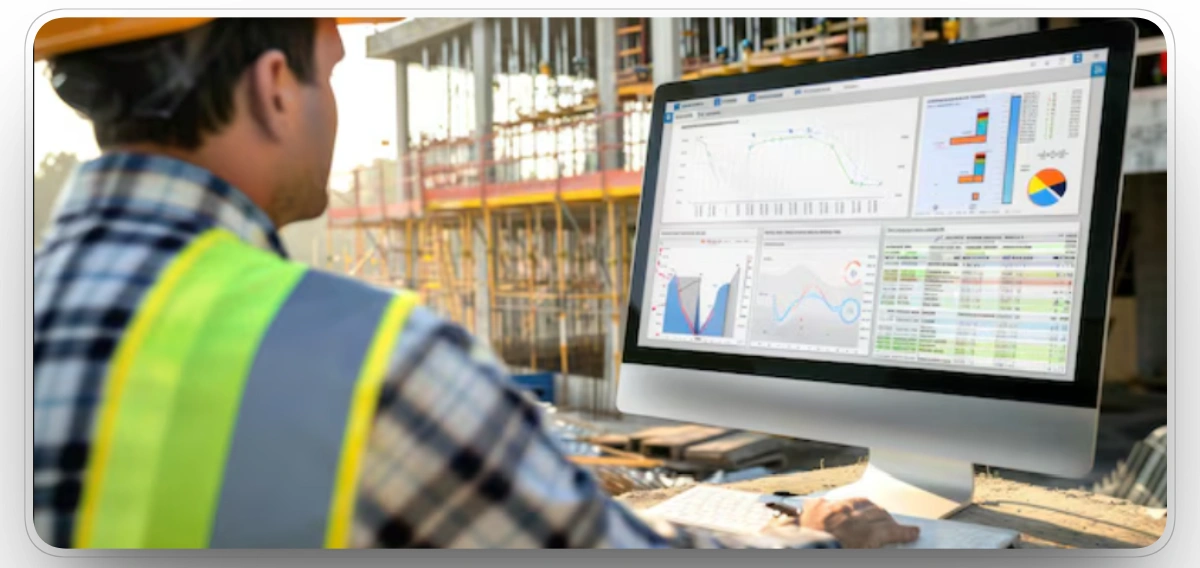
The business case for lean construction is well documented across multiple independent research studies. Here is what the data shows.
1. Schedule Performance
The Dodge Data and Analytics study sponsored by the Lean Construction Institute found that high lean intensity projects are three times more likely to complete ahead of schedule and two times more likely to complete under budget compared to low lean intensity projects.
In the 2022 LCI and Dodge Construction Network joint study of general contractors, 80% reported that their lean projects either stayed on schedule or finished ahead of the original completion date.
A 2025 report from Dodge Construction Network and LCI, Building High-Performance Projects and Teams, confirmed these results across data spanning 2013 to 2024. It found that lean methods lead to fewer delays, fewer overruns, stronger team collaboration, and improved safety. For context, the same report noted that 61% of owners experience schedule delays on typical non-lean projects and 49% experience budget overruns.
2. Cost Performance
In the 2022 LCI and Dodge study, 73% of general contractors reported that their lean projects experienced final construction costs lower than the original contract budget.
Research published by 4BT estimates lean construction offers 30 to 40% cost savings potential when properly implemented, noting that 50% or more of activity on a typical project is non-value-adding.
Rework is one of the largest sources of recoverable cost. According to the Construction Industry Institute, rework direct costs average 5% of total construction costs. Studies across project types show rework accounting for 4 to 10% of total project cost on traditionally managed projects.
Lean construction directly attacks these figures through early trade involvement, collaborative planning, and waste elimination.
3. Safety Performance
In the 2022 LCI and Dodge study, 66% of lean general contractors reported their projects were safer than comparable traditionally managed projects.
Lean jobsites are cleaner, more organized, and more predictable. 5S alone reduces slip, trip, and fall hazards. Daily huddles surface safety constraints before incidents occur rather than after.
Summary of Lean Construction Benefits With Data
Lean Construction KPIs and How to Measure Success
Lean construction monitoring requires metrics that go beyond schedule and budget. The following KPIs are the most widely used by lean construction practitioners.
1. Percent Plan Complete (PPC)
The percentage of committed weekly tasks actually completed. This is the primary health indicator for any LPS implementation. The target is 80% or higher. Anything below 60% requires immediate root cause analysis.
2. Constraint Log
Tracks the number of constraints identified, how many were cleared on time, and which categories of constraints (design, materials, equipment, subcontractor coordination) recur most frequently. Recurring constraint categories reveal systemic problems.
3. Make-Ready Percent
Of the tasks scheduled to start next week, what percentage are fully made ready (all constraints cleared) by the end of the previous week? High make-ready percent predicts high PPC.
4. Rework Rate
Total rework hours or cost as a percentage of total labor hours or cost. Track by trade. A declining rework rate is one of the clearest signals that lean practices are taking hold on a project.
5. Mean Time to Resolve RFIs
Unanswered RFIs are a leading source of field stoppages. Tracking RFI resolution time identifies design-team bottlenecks before they stop work in the field.
6. Equipment Utilization Rate
For equipment-heavy contractors, underutilized or idle equipment is pure waste. Tracking utilization by asset category identifies where lean equipment management practices can recover cost.
7. First Run Study Results
On repetitive tasks like setting panels, hanging drywall, or installing fixtures, document the time and steps of the first attempt. Then use kaizen to reduce time on subsequent runs. The improvement curve is one of the purest measures of lean learning in action.
Common Challenges and How to Overcome Them

Lean construction results are proven. Implementation is hard. These are the most common obstacles and how experienced practitioners address them.
1. Culture Change
The problem is that lean construction requires genuine trust and collaboration. Contractors with decades of adversarial experience in traditional design-bid-build cannot switch to collaborative planning overnight. Foremen who have been told to just get it done resist being asked to surface problems in a meeting.
The solution starts with leadership. If the project executive and owner do not visibly champion lean behaviors by attending pull planning sessions, participating in retrospectives, and celebrating honesty about problems, lean will fail at the field level. LCI offers courses and certifications for teams at all levels.
2. Siloed Subcontractor Relationships
The problem is that subcontractors hired on lump-sum contracts have no contractual reason to share information that might help the next trade. Traditional procurement creates exactly the adversarial incentives that lean tries to remove.
The solution is to move toward relational contracting, early trade involvement, and IPD-style collaborative agreements where feasible. At minimum, be explicit at project kickoff about behavioral expectations for pull planning participation.
3. Upfront Investment in Training and Planning
The problem is that pull planning sessions, LPS training, and daily huddle systems require time and money before the first footing is poured. Under competitive bid pressure, owners and contractors resist front-loading effort.
The solution is to frame the investment in terms of cost avoidance. One well-facilitated pull planning session that identifies and clears 20 constraints before work starts avoids weeks of field delays. The ROI on lean construction planning investment is documented in the LCI research..
4. Inconsistent Application
The problem is that lean is implemented on one project, praised, and then abandoned on the next because the team says there is not enough time. Or it is implemented partially, with daily huddles but no PPC tracking, or pull planning but no constraint management.
The solution is to treat lean as a system. Implementing one component without the others underdelivers results and creates cynicism. Lean program management requires organizational commitment to consistent application across projects, with leadership accountability.
5. Technology Integration
The problem is that many lean construction tools, including pull planning boards, PPC spreadsheets, and constraint logs, exist in analog form on whiteboards or paper. As projects grow larger and teams become more distributed, analog systems break down.
The solution is digital lean construction platforms that integrate scheduling, constraint tracking, PPC measurement, and daily reporting into a single system. The key is choosing tools that support lean workflows rather than forcing lean teams to adapt to tools designed for traditional scheduling.
Digital Lean Construction and the Role of Technology
Digital lean construction uses software to scale lean practices across large, complex projects and distributed teams.
Lean Planning and Scheduling Software
Tools that digitize the Last Planner System, pull planning, and PPC tracking replace physical sticky-note boards with collaborative digital planning environments accessible to all trades in real time. Examples include Touchplan and Smartsheet.
BIM and 3D Coordination
Building Information Modeling supports lean construction by making design intent visible to all parties before work begins. BIM clash detection reduces RFIs, coordination conflicts, and the rework they cause. On MEP-intensive projects, BIM clash detection is one of the highest-ROI lean tools available.
Construction Management Platforms
Platforms that integrate document management, RFI tracking, submittals, and punch lists reduce the information waste that creates field stoppages. When integrated with lean scheduling, they provide real-time visibility into constraint status across the project team.
The Role of Procurement Software in Lean Construction Practices
Lean construction's just-in-time delivery philosophy requires precise procurement timing. Procurement software that tracks material delivery windows, supplier lead times, and on-site inventory prevents the overproduction and waiting waste that plague traditionally managed supply chains.
The role of procurement software in lean construction practices is especially significant on large projects where dozens of trade contractors are ordering materials simultaneously. Poor procurement coordination creates the exact inventory and waiting wastes that lean construction aims to eliminate.
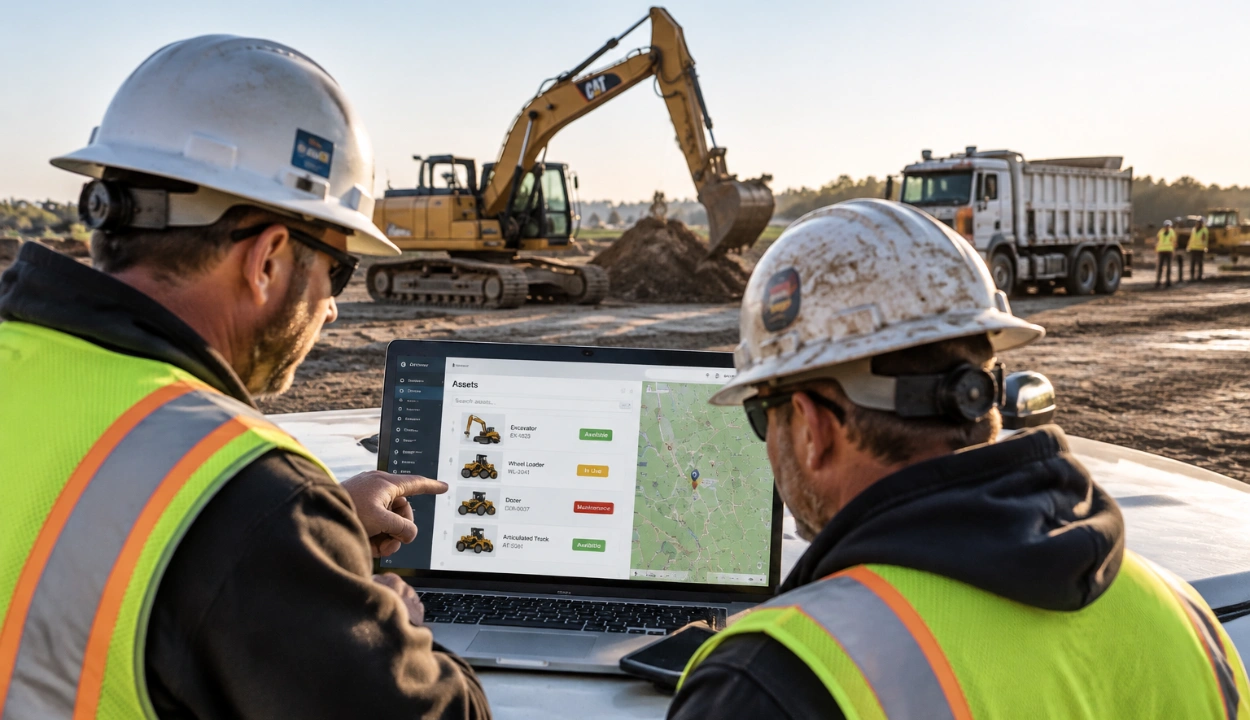
Equipment Management Software
Equipment-heavy contractors face a specific lean challenge. Heavy equipment is expensive, depreciates whether it works or not, and is a major source of waiting waste when it breaks down unexpectedly or is not where it needs to be.
Lean construction equipment management means:
- Real-time utilization tracking to answer whether each machine is working, idle, or in maintenance
- Preventive maintenance scheduling to prevent unplanned downtime
- GPS-based location visibility so dispatch decisions are based on data, not radio calls
- Work order management to track repair time and maintenance cost per asset
This is exactly where a platform like Clue creates direct lean value. Equipment idling in a corner because no one knows where it is? That is pure lean waste. Equipment downtime that was predictable but not predicted? That is a defect in your maintenance process.
Equipment Management as a Lean Construction Priority
Equipment management is one of the most underappreciated dimensions of lean construction, particularly for general contractors and heavy civil firms.
Applied directly to construction equipment, the 8 wastes look like this:
- Waiting waste: An excavator sits idle because no one knew it needed a hydraulic repair until it failed in the field
- Transportation waste: A machine travels 40 miles between projects because the dispatcher did not know a closer unit was available
- Defects: Preventable breakdowns that halt a critical-path activity
- Non-utilized talent: Equipment managers making dispatch decisions without real utilization data
- Inventory waste: Over-purchasing rentals because owned fleet visibility is poor
Lean construction addresses all of these through the same discipline it applies to labor and materials: make the current state visible, identify the waste, and systematically eliminate it.
Reliable production flow requires reliable equipment availability. The Last Planner System can identify that a specific machine must be available on Wednesday but if that machine is unexpectedly down for unscheduled maintenance, the week's plan collapses regardless of how well everything else was planned.
Construction equipment management software supports lean construction by providing real-time utilization tracking, preventive maintenance scheduling, GPS-based asset location, and work order management eliminating the waiting, transportation, and defect waste that unpredictable equipment creates.
Lean Construction Certification
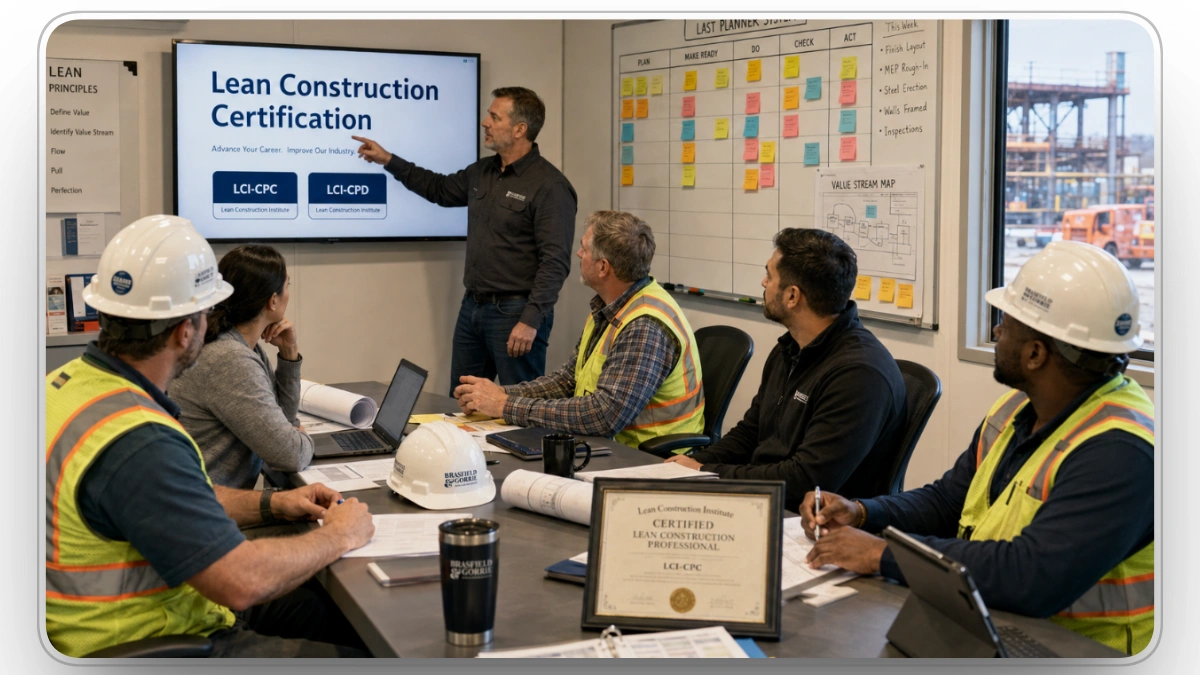
For construction professionals who want to formalize their lean knowledge, the Lean Construction Institute offers two primary certifications.
LCI-CPC: Lean Construction Certification for Practitioners
The LCI-CPC (Lean Construction Certified Practitioner in Construction) is designed for project managers, superintendents, foremen, and trade contractors who implement lean on construction projects. It tests knowledge of LPS, pull planning, the 5 principles, the 8 wastes, and practical implementation experience.
Requirements include passing the LCI-CPC exam and demonstrating applied lean experience on real projects.
LCI-CPD: Lean Construction Certification for Design
The LCI-CPD (Lean Construction Certified Practitioner in Design) is designed for architects, engineers, and design managers who implement lean in the design phase. It covers Target Value Design, lean design practices, and collaborative delivery methods.
Both certifications require ongoing education to maintain, reflecting the lean principle that learning never stops.
Other Lean Certifications and Programs Relevant to Construction
- LCI Congress workshops: Intensive training offered at the annual LCI Congress
- AGC Lean Construction Education Program: A 10-module curriculum developed by the Associated General Contractors of America.
- University programs: Several programs now offer lean construction coursework including Arizona State University and the University of California Berkeley
The growing demand for lean construction certification reflects a shift in the industry. Lean is increasingly a baseline expectation, not an advanced specialty. Owners who have experienced lean projects increasingly require evidence of lean capability in their RFQ and RFP processes.
How Clue Supports Lean Construction for Equipment-Heavy Teams
Clue is an equipment management platform built for contractors who run lean. Features include preventive maintenance scheduling, real-time fleet utilization tracking, equipment dispatch management, and asset location visibility directly addressing the waiting, transportation, and defect wastes lean construction targets.
FAQs
What does lean stand for in lean construction?
Lean is not an acronym. In construction, it means using fewer resources, reducing waste, and creating more value across every project phase.
What is the difference between lean construction and traditional construction?
Traditional construction pushes work forward by schedule. Lean construction pulls work based on readiness, collaboration, and confirmed project conditions.
What is lean construction methodology?
Lean construction methodology is the system of tools, planning methods, team behaviors, and metrics used to reduce waste and improve project flow.
What is the Last Planner System?
The Last Planner System is a collaborative planning method where foremen and field teams help create reliable weekly work plans and track completion.
What are lean tenets in construction?
Lean tenets in construction focus on value, flow, reduced uncertainty, continuous improvement, respect for people, and managing the project as one system.
What is 5S in lean construction?
5S is a jobsite organization method: Sort, Set in Order, Shine, Standardize, and Sustain. It helps reduce wasted motion and improve safety.
How is lean construction different from lean manufacturing?
Lean manufacturing improves repeatable factory production. Lean construction adapts those ideas for unique projects, changing sites, teams, and field conditions.
What is lean project management in construction?
Lean project management uses collaborative planning, constraint removal, PPC tracking, and pull planning to make construction workflows more reliable.
Why is it called lean construction?
It is called lean because the approach uses fewer resources, less time, less waste, and less effort while delivering more value.
What is the difference between lean and agile construction?
Lean construction focuses on waste reduction and reliable workflow. Agile construction focuses more on flexible, iterative planning and adapting to change.
Transform Your Equipment Management