What Is Shop Floor Control in Construction Projects? A Complete Guide


Hi, I’m Maham Ali. I write about construction equipment management, helping teams use fleet data and maintenance intelligence to improve uptime, control costs, and run smoother jobsites.
Construction operations generate large volumes of real-time activity, including equipment movement, material deliveries, task progress, labor coordination, and safety monitoring. Without structured control mechanisms, these operational signals remain fragmented, making it difficult for project teams to detect delays, inefficiencies, or productivity losses before they escalate.
For construction companies managing complex projects, effective shop floor coordination directly affects productivity, cost control, and schedule adherence. Research from McKinsey & Company has shown that global construction productivity has grown by only about 1% annually over the past two decades, far below productivity growth in manufacturing. Limited operational visibility is one of several factors that can make field execution harder to manage.
This guide explains how shop floor control works in construction, the core components that support it, and how digital technologies help project teams monitor equipment, workflows, and resources more effectively.
Shop Floor Control Meaning in Construction Operations

In construction, shop floor control refers to the systems and processes used to monitor, coordinate, and improve work at the operational level of a project. Instead of focusing on high-level planning alone, it focuses on execution, where tasks are performed, equipment is deployed, and resources are consumed.
Operational oversight at this level often includes monitoring:
- Equipment usage and utilization rates
- Crew productivity and task progress
- Material movement and inventory availability
- Inspection and safety compliance
- Equipment condition and maintenance signals
Unlike traditional project management systems that focus primarily on milestones, budgets, or contracts, shop floor control focuses on live operational signals that show whether project execution is staying aligned with the plan.
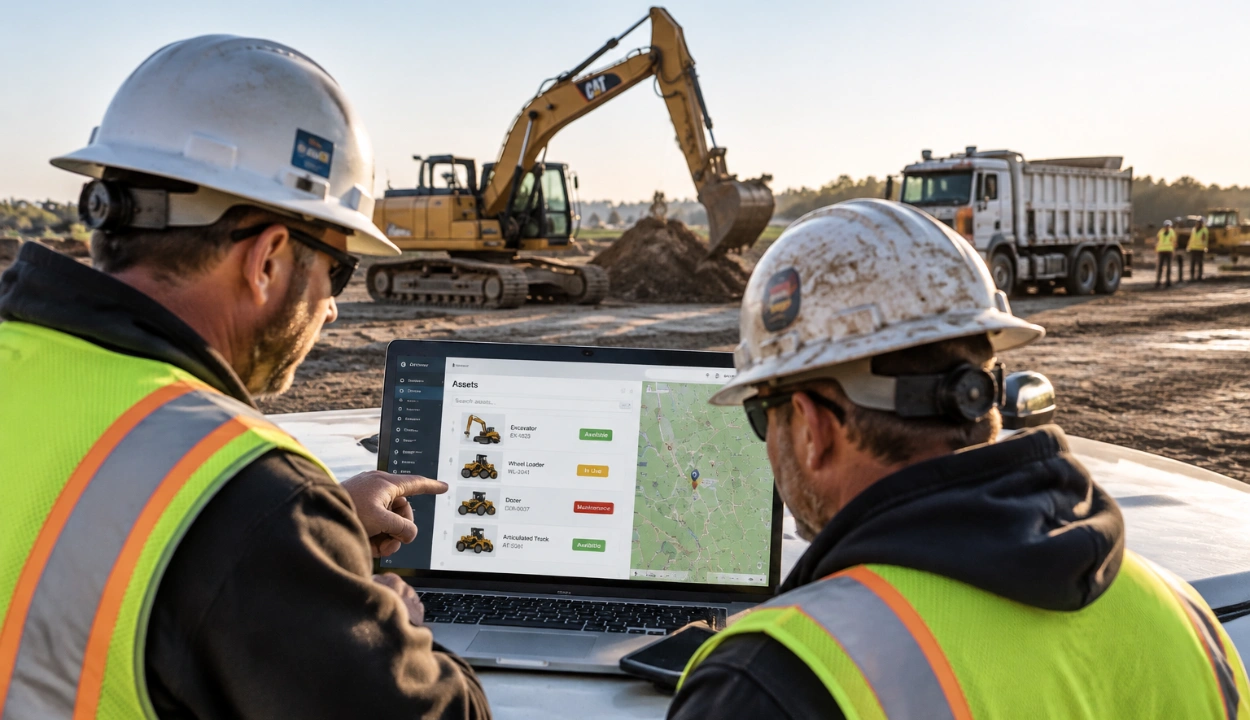
Clue helps construction teams support shop floor control by centralizing operational data across equipment, maintenance, and job site activity. Through a single dashboard, supervisors can track equipment location, utilization, and performance in real time.
The platform also provides automated maintenance alerts and equipment diagnostics, allowing teams to address issues before they disrupt field operations. By integrating telematics, GPS, and other operational systems, Clue gives managers a clearer view of field activity, improving coordination and decision-making across construction projects.

Key Metrics Used in Shop Floor Control for Construction
Operational monitoring depends on measurable indicators that show how efficiently field activities are being executed. Without clear metrics, construction supervisors cannot accurately identify productivity gaps, workflow inefficiencies, or equipment underutilization.
Several key performance indicators are commonly used to evaluate execution in the field.
Equipment Utilization Rate
This metric measures the percentage of time equipment is performing productive work compared with total available operating hours. Low utilization often points to scheduling conflicts, poor task allocation, or excessive idle time.
Labor Productivity Rate
Labor productivity measures the amount of work completed per labor hour. Construction managers use this metric to evaluate crew efficiency and identify delays caused by material shortages, workflow disruptions, or coordination issues.
Cycle Time for Operational Tasks
Cycle time represents the time required to complete repetitive construction activities such as excavation cycles, hauling routes, or concrete placement operations. Tracking cycle time helps supervisors identify slowdowns and adjust workflows when needed.
Equipment Downtime Rate
Downtime measures the period when equipment remains unavailable because of maintenance issues, mechanical failures, or scheduling inefficiencies. Monitoring downtime helps reduce productivity losses caused by idle machinery.
Material Availability Rate
Material shortages frequently disrupt job site workflows. This metric tracks whether materials are delivered when they are needed for scheduled tasks.
Monitoring these indicators helps construction managers evaluate operational efficiency more clearly and make adjustments when performance starts to drift.
Importance of Shop Floor Control in Construction Projects

The importance of shop floor control in construction becomes clear when examining the operational risks found across modern job sites. Large projects often involve hundreds of moving parts, including subcontractors, equipment fleets, material shipments, inspections, and tightly sequenced tasks.
Without structured oversight, disruptions in one area can quickly affect the wider project schedule.
Effective shop floor monitoring helps address these risks by enabling construction managers to:
1. Improve Operational Visibility
Construction operations produce constant data from telematics devices, project management systems, inspections, and workforce reporting tools. Shop floor monitoring helps bring these signals together so supervisors can see what is happening on the ground.
Managers can track:
- Real-time equipment utilization
- Task completion rates
- Labor deployment efficiency
- Operational bottlenecks
This level of visibility allows teams to take corrective action before minor issues grow into costly delays.
2. Reduce Equipment Idle Time
Heavy equipment is one of the largest cost centers in construction operations. Idle machinery increases project costs without adding productive output.
Operational monitoring helps identify underused assets and reassign them to active tasks where they can support progress.
3. Enhance Workforce Productivity
Construction productivity depends heavily on coordination across crews, equipment, and materials. When teams reach the job site without the right materials, instructions, or equipment readiness, productivity suffers.
Research from Boston Consulting Group has shown that construction workers can spend a significant share of their time waiting because materials, equipment, or earlier tasks are not ready. Shop floor control helps reduce that lost time by improving coordination across field operations.
4. Strengthen Safety Monitoring
Construction remains one of the highest-risk industries for field operations. Shop floor systems can support safety oversight by tracking:
- Safety inspection completion
- Equipment condition signals
- Hazard alerts from field reports
These capabilities help reduce the risk of unsafe operating conditions.
5. Improve Decision-Making Speed
Operational disruptions often require immediate action. Delayed responses to equipment failures, task delays, or safety issues can increase project risk.
Shop floor monitoring systems provide timely operational alerts, enabling supervisors to make faster, data-informed decisions with less dependence on delayed reporting or manual follow-up.
Construction Sectors That Rely on Shop Floor Control

Shop floor control is particularly valuable in construction sectors where large equipment fleets, multiple crews, and complex task sequencing are common.
Infrastructure Construction
Large infrastructure projects such as highways, bridges, and rail systems require close coordination between excavation crews, paving operations, and material logistics.
Heavy Civil Construction
Heavy civil contractors depend on equipment-intensive operations. Monitoring equipment utilization and workflow progress is critical for maintaining productivity.
Industrial Construction
Industrial projects, including refineries and manufacturing facilities, involve specialized installation work. Shop floor control helps coordinate mechanical, electrical, and structural teams more effectively.
Energy and Utility Projects
Energy infrastructure projects such as wind farms, power plants, and pipelines often span multiple work zones. Operational monitoring helps keep equipment deployment and material deliveries aligned across the site.
These sectors benefit from stronger operational oversight because even small disruptions can create large downstream impacts on schedules and cost.
Core Components of Shop Floor Control in Construction
To understand how shop floor monitoring works in construction projects, it helps to look at the core components that support it.
Task Tracking and Workflow Monitoring
Task tracking is the foundation of shop floor control. Construction projects involve hundreds of sequential activities, from excavation and foundation work to finishing operations.
Operational tracking tools often monitor:
- Task start and completion times
- Crew assignments
- Work progress against schedule
This helps project managers identify deviations from the plan more quickly.
Equipment Utilization Monitoring
Heavy equipment fleets are critical operational resources. Shop floor systems track machine utilization to help ensure equipment is being used efficiently across job sites.
Monitoring metrics often include:
- Engine hours
- Idle time
- Fuel consumption
- Operating location
These insights help reduce avoidable equipment costs.
Material Flow Coordination
Material shortages and delivery delays frequently disrupt construction workflows. Shop floor systems help track material availability and align deliveries with active tasks so crews have what they need when they need it.
Operational Data Integration
Modern construction environments rely on multiple digital tools, including telematics systems, scheduling platforms, safety tools, and asset management software.
Shop floor control systems help consolidate these data streams into a more unified operational view. That visibility makes it easier to identify recurring delays, resource conflicts, and equipment inefficiencies.
Shop Floor Control in Construction Example

A practical example of shop floor control in construction can be seen on large infrastructure projects where equipment fleets, subcontractors, and material suppliers operate at the same time across expansive job sites.
Consider a highway construction project involving:
- Excavators for grading
- Haul trucks for material transport
- Concrete mixers for structural work
- Survey crews managing alignment
Without operational monitoring, delays in one activity, such as late material deliveries, can affect downstream tasks.
With structured shop floor monitoring in place, managers can track:
- Equipment status across job zones
- Material delivery schedules
- Task progress by crew
- Safety inspection compliance
If a material shipment arrives late, supervisors can reassign crews or shift equipment to alternate tasks, helping prevent unnecessary downtime.
Shop Floor Control vs Construction Project Management
Although both functions support successful project delivery, shop floor control and construction project management operate at different levels.
Construction project management focuses on planning and coordination activities such as budgeting, contract management, procurement, and scheduling. Shop floor control focuses on execution, where daily construction activities happen in the field. Its purpose is to track live activity and help ensure resources are being used efficiently.
The distinction between the two can be summarized below.Both functions complement each other. Project management establishes the roadmap, while shop floor control ensures field operations follow that roadmap effectively.
Digital Transformation and Shop Floor Monitoring

The rise of connected equipment, telematics systems, and cloud-based tools has accelerated the use of shop floor control in construction.
Modern platforms can collect operational signals from:
- GPS equipment tracking
- IoT sensor networks
- Maintenance management systems
- Workforce reporting tools
These data sources feed centralized dashboards that help supervisors understand field performance more quickly and respond faster when issues arise.
The Growing Role of Operational Intelligence in Construction
Construction firms are increasingly moving from reactive project management toward more informed operational decision-making built on live field data.
Shop floor monitoring supports that shift by turning raw operational signals into actionable insight. Instead of relying only on weekly reports or after-the-fact reviews, construction managers can observe operational performance continuously.
This approach helps teams:
- Detect equipment inefficiencies earlier
- Identify task delays in real time
- Monitor workforce productivity
- Address safety risks before they escalate
As construction projects grow in scale and complexity, this level of operational awareness becomes more important.
Role of Data Analytics in Shop Floor Control
Construction operations generate large volumes of data from equipment sensors, workforce reporting tools, and inspection systems. Construction reporting and analytics software converts this information into clear insights that support faster and better operational decisions.
Operational Pattern Detection
Analytics tools can review historical performance data to identify recurring workflow inefficiencies. Repeated delays in material delivery or frequent idle periods may point to scheduling problems.
Predictive Equipment Maintenance
Sensor data from construction equipment can help identify early signs of mechanical wear. Predictive maintenance scheduling helps reduce equipment downtime and limit disruptions during critical project phases.
Resource Allocation Optimization
Analytics platforms can review utilization patterns across equipment fleets and labor resources, helping construction managers shift resources where they are needed most.
Performance Benchmarking
Construction companies can compare productivity metrics across multiple projects. Benchmarking helps teams identify stronger-performing job sites and repeat effective operational practices elsewhere.
How Shop Floor Control Works in Construction Projects

Although the concept originated in manufacturing, shop floor control in construction follows the same basic logic: monitor work execution in real time and keep resources, tasks, and schedules aligned.
In construction environments, shop floor coordination often follows a continuous loop:
Plan → Execute → Monitor → Adjust
This cycle helps ensure that project plans translate into effective field execution.
1. Operational Planning
Before work begins, project managers define:
- Task sequences
- Crew assignments
- Equipment allocation
- Material availability
- Safety inspection schedules
These planning inputs often come from project scheduling systems, ERP platforms, or construction planning software.
2. Real-Time Monitoring of Field Operations
Modern shop floor systems collect data from multiple sources, including:
- Equipment telematics systems
- GPS location tracking
- IoT sensors
- Workforce reporting tools
- Inspection submissions
- Maintenance management platforms
This data allows supervisors to observe field activity more continuously.
For example, if a crane remains idle for extended periods or a crew falls behind schedule, the system can highlight the deviation early.
3. Bottleneck Detection
Construction projects frequently encounter bottlenecks such as:
- Equipment breakdowns
- Material delivery delays
- Crew scheduling conflicts
- Inspection delays
Shop floor control systems help teams spot these disruptions earlier so they can respond before delays spread across the project.
4. Operational Adjustments
Once a disruption is identified, managers can make operational adjustments such as:
- Reassigning equipment to active job zones
- Redirecting crews to alternate tasks
- Accelerating material deliveries
- Scheduling maintenance interventions
This flexibility helps keep work moving even when unexpected disruptions occur.
Technology Enabling Shop Floor Control in Construction

Modern shop floor control depends heavily on digital infrastructure. Several technologies now support real-time operational monitoring across construction environments.
Equipment Telematics Systems
Telematics devices installed in heavy equipment transmit data such as:
- Engine hours
- Fuel consumption
- Idle time
- Machine location
This information helps project teams monitor fleet utilization and identify underperforming equipment.
IoT Sensor Networks
Sensors installed on machinery or job sites can track environmental conditions and operating performance.
These sensors may measure:
- Equipment vibration levels
- Temperature conditions
- Structural movement
- Material usage
This data can help identify possible issues before they become larger failures.
Construction ERP Systems
Enterprise resource planning platforms connect planning, procurement, scheduling, and accounting functions. When used alongside shop floor monitoring, ERP systems help align field operations with financial planning and material procurement.
Operational Dashboards
Centralized dashboards display operational metrics such as:
- Equipment utilization rates
- Task completion percentages
- Crew productivity
- Inspection compliance
These dashboards help supervisors understand job site activity without relying only on manual reporting.
Digital Platforms Supporting Shop Floor Control
As construction operations become more data-driven, many companies rely on specialized platforms to support shop floor coordination.
Platforms built for equipment and operational monitoring help consolidate data from multiple sources and improve visibility across the field.
For example, Clue aggregates operational signals from telematics systems, maintenance records, equipment utilization metrics, and project activity into a centralized operational view.
Operational Dispatch
Clue dispatch shows where equipment is deployed across job sites, allowing supervisors to reassign machines and reduce idle time.
Cross-Project Fleet Visibility
Managers can review equipment activity across multiple projects, making it easier to redeploy underused machines where demand is higher.
Performance Benchmarking
Historical utilization and maintenance data help teams compare operational performance across sites and identify inefficiencies.

Field-to-Management Coordination
Operators, supervisors, and equipment managers can work from the same operational data, reducing delays in communication and decision-making.
Fleet Optimization
Clue helps teams analyze utilization patterns across the fleet, improving allocation decisions and reducing unnecessary rentals.
Challenges of Implementing Shop Floor Control in Construction
Despite its operational benefits, implementing shop floor monitoring systems can present several challenges.
Data Fragmentation
Construction companies often use multiple digital systems at the same time, including telematics platforms, scheduling software, safety tools, and maintenance systems.
When these systems remain disconnected, operational data becomes fragmented, making it harder for managers to build a clear operational picture.
Workforce Adoption
Digital monitoring tools can face resistance from field teams that are more familiar with traditional reporting methods. Training and change management are important for successful adoption.
Infrastructure Limitations
Construction job sites often operate in remote environments where internet connectivity may be unreliable. This can limit the effectiveness of real-time monitoring systems. Many modern platforms address this through offline data synchronization capabilities.
Data Overload
Operational monitoring systems can generate large volumes of data. Without strong filtering and analytics, supervisors may struggle to identify which signals require immediate action.
Effective shop floor systems should prioritize actionable insight rather than raw data volume.
Best Practices for Effective Shop Floor Control in Construction

Successful implementation depends on structured operational practices.
1. Standardize Operational Workflows
Standard operating procedures help crews follow consistent work processes. Standardization makes deviations easier to identify and manage.
2. Integrate Data Systems
Construction companies should connect equipment, maintenance, scheduling, and safety systems where possible. Unified operational data improves visibility across job sites.
3. Monitor Key Performance Indicators
Effective shop floor monitoring should focus on core operational metrics such as:
- Equipment utilization
- Task completion rates
- Crew productivity
- Material delivery delays
- Safety inspection compliance
These KPIs help project managers evaluate performance more objectively.
4. Use Predictive Maintenance
Equipment downtime is one of the most disruptive operational risks in construction. Predictive maintenance helps teams schedule service before failures occur and reduce avoidable breakdowns.
5. Establish Continuous Feedback Loops
Operational monitoring should support continuous improvement. Managers should regularly review field data to identify:
- Recurring delays
- Workflow inefficiencies
- Equipment performance issues
These insights help refine execution strategies over time.
Conclusion
Construction projects are dynamic environments where equipment, materials, and crews must stay coordinated to keep work moving.
Shop floor control provides the operational structure needed to monitor these workflows, identify issues earlier, and support better decisions in the field.
By giving teams clearer visibility into equipment, tasks, and resource movement, shop floor control helps reduce bottlenecks, improve coordination, and support schedule performance.
Digital platforms such as Clue strengthen this process by connecting operational data in one place and helping teams act on it more quickly.
FAQs
1. What data is typically collected in shop floor control systems?
Shop floor monitoring systems often collect operational data such as equipment runtime, idle time, task progress, crew assignments, material usage, safety inspections, and machine diagnostics. This helps supervisors track performance and identify inefficiencies across construction workflows.
2. How does shop floor control reduce construction project delays?
Operational monitoring helps detect disruptions such as equipment downtime, delayed materials, or incomplete tasks early. By identifying these issues sooner, supervisors can adjust schedules, reassign resources, or change task sequences before delays affect the wider project timeline.
3. What role does equipment tracking play in shop floor control?
Equipment tracking provides real-time visibility into machine location, utilization, and operating status. This helps construction managers deploy equipment more efficiently, reduce idle machinery, and limit productivity losses caused by equipment unavailability.
4. Can shop floor control improve construction cost management?
Yes. By monitoring equipment utilization, workforce productivity, and material flow, shop floor control helps reduce operational inefficiencies. That can lower wasted labor hours, avoid unnecessary rentals, and reduce the cost impact of delays.
5. How does shop floor control support construction scheduling?
Operational monitoring provides timely updates on task completion and workflow progress. This allows project managers to compare actual performance with the plan and make adjustments when work begins to fall behind.
6. What challenges do construction companies face when implementing shop floor control?
Common challenges include fragmented data systems, limited job site connectivity, workforce resistance to new technology, and difficulty integrating monitoring tools with existing project management platforms.
7. How does shop floor control help improve equipment lifecycle management?
Continuous monitoring of equipment usage, maintenance history, and performance data helps companies track asset health more effectively. This supports proactive maintenance planning and can help extend equipment life while reducing unexpected failures.
8. What future technologies may enhance shop floor control in construction?
Technologies such as artificial intelligence, predictive analytics, digital twins, and more autonomous equipment are expected to improve shop floor monitoring. These tools may help construction companies identify disruptions earlier and improve workflow planning.
Transform Your Equipment Management