Heavy Equipment Telematics in Construction: Complete Guide


Hi, I’m Maham Ali. I write about construction equipment management, helping teams use fleet data and maintenance intelligence to improve uptime, control costs, and run smoother jobsites.
Heavy equipment telematics in construction is the use of GPS, onboard diagnostics, sensors, and wireless data transmission to monitor heavy machinery in real time. It helps contractors track where equipment is, how it is being used, when it needs maintenance, and whether it is creating avoidable cost through idle time, downtime, fuel waste, or poor allocation.
For construction fleets, telematics is more than equipment tracking. It is the data layer that connects machines, maintenance teams, dispatchers, project managers, and executives. It turns raw machine signals such as location, engine hours, idle time, fuel use, diagnostic trouble codes, and utilization into decisions that reduce downtime, improve asset allocation, prevent unnecessary rentals, and protect equipment on the job site.
When telematics data flows into a platform like Clue, it moves beyond visibility. Clue connects telematics, GPS, maintenance, inspections, dispatch, rentals, and utilization into one system, so teams do not just see fleet data. They act on it.
How Heavy Equipment Telematics Works in Construction
Heavy equipment telematics works by collecting machine data from equipment, transmitting that data to a software platform, and turning it into operational decisions for fleet, maintenance, and project teams.
Running Cat machines? Our VisionLink FAQ answers the most common questions about Caterpillar’s telematics platform.
A typical construction telematics workflow has four layers:
For construction companies, the value is not the device itself. The value is the operating system built around the data. A GPS point tells you where a machine is. A connected telematics workflow tells you whether that machine is productive, available, at risk of failure, over-idling, misplaced, or costing more than it should.
What Data Heavy Equipment Telematics Tracks

At a surface level, heavy equipment telematics is often described as tracking equipment using GPS and sensors. That is accurate, but it misses the point.
In practice, telematics functions as a real-time data pipeline between your machines and your decisions. It continuously pulls verified data directly from equipment, removing the need to rely on manual inputs or delayed reporting.
This includes:
- Location: Where equipment actually is, not where it was assigned
- Engine hours: True usage, not estimated or reported figures
- Idle time: How long machines run without productive work
- Fuel consumption patterns: Identifying inefficiencies and abnormal usage
- Diagnostic trouble codes: Early indicators of potential failures
- Movement and operator behavior: How and when equipment is being operated, including unsafe patterns and unauthorized movement
The shift here is subtle but critical. Telematics does not just collect more data. It removes interpretation errors from operations.
Before telematics, most decisions depend on human input:
- Operators estimating usage
- Supervisors reporting status
- Managers compiling and reconciling data across systems
After telematics, the machine reports for itself, continuously and objectively. Unlike manual reporting, machine data does not rely on memory, assumptions, or timing. It reflects what actually happened.
Types of Heavy Equipment Telematics Systems
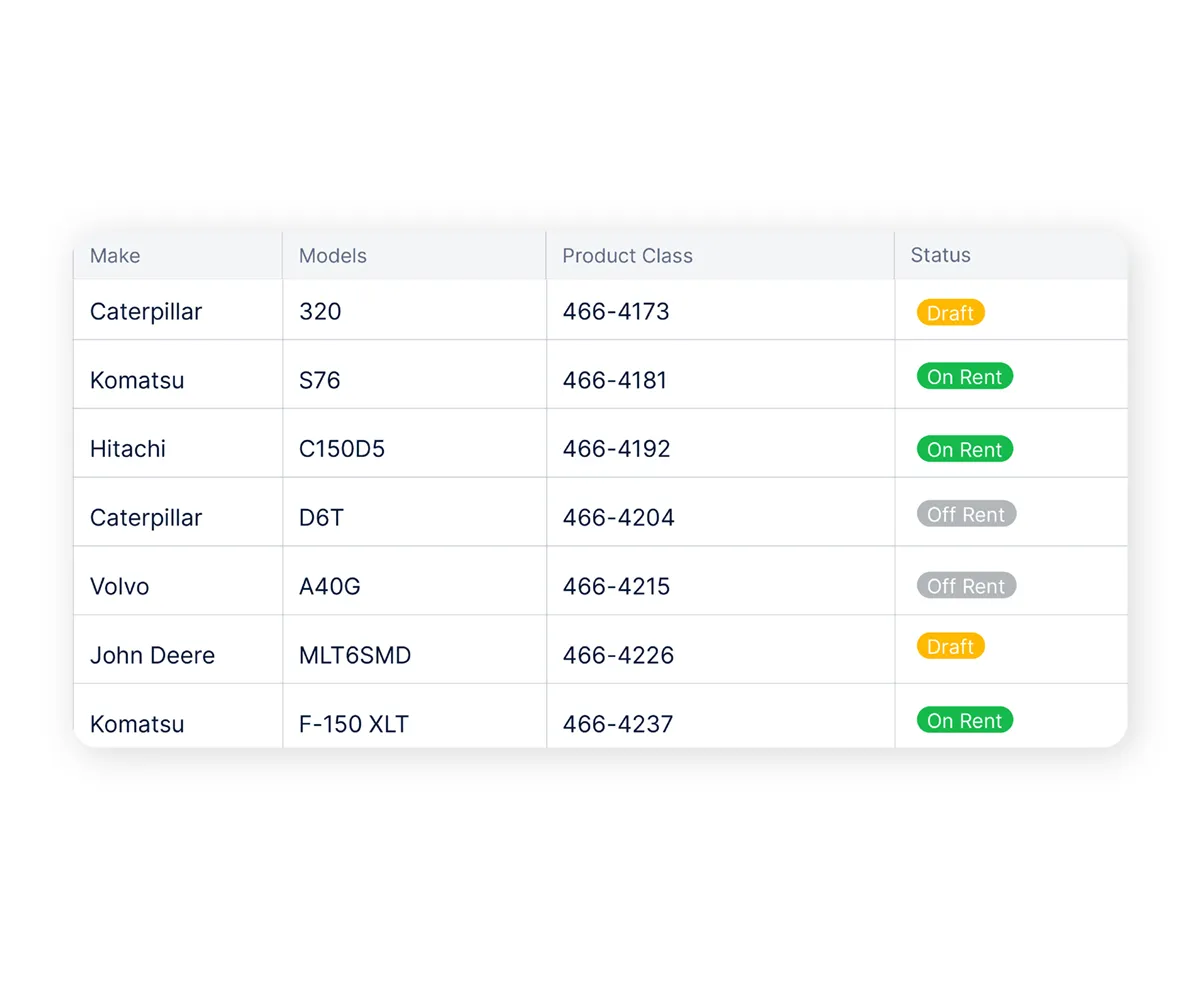
Construction fleets usually need more than one telematics source because most fleets are mixed. A single contractor may have new OEM-connected machines, older equipment, rented assets, on-road trucks, trailers, attachments, and small tools.
The best approach is usually not choosing one device type. It is connecting every reliable data source into one operational system. That is why unified platforms matter. They bring OEM telematics, GPS providers, rental data, maintenance history, inspections, and dispatch into one fleet view.
Key Benefits of Heavy Equipment Telematics in Construction
Heavy equipment telematics creates value by reducing the gap between what teams think is happening and what is actually happening across the fleet.
The strongest fleets do not use telematics as a passive map. They use it as a decision system that tells teams what to inspect, move, service, return, rent, or retire.
Why Construction Sees Outsized Impact from Telematics
Telematics exists across multiple industries, but construction extracts disproportionate value from it for one simple reason. The operating environment is inherently unstable. Equipment moves constantly, ownership is mixed, and workflows depend on tight coordination across people, machines, and timelines.
That combination creates blind spots quickly, and telematics fills them. Three structural realities make it almost unavoidable.
1. Equipment Is Constantly Moving
Unlike fixed environments, construction equipment does not stay in one place or under one team. It moves between jobsites, gets shared across crews, and often includes a mix of owned, rented, and subcontracted assets.
That alone creates a visibility problem.
Without telematics, location is based on assumption, meaning where the machine was assigned rather than where it actually is. With telematics, location becomes a verified input. Teams know exactly where equipment is, whether it is being used, and whether it is even on the right site.
That clarity directly affects dispatch, planning, and whether additional equipment is actually needed.
2. Idle Time Quietly Drains Margins
Idle time is one of the least understood cost drivers in construction. Machines burn fuel, accumulate wear, and shorten maintenance intervals, even when they are not doing productive work.
Idle time is not a minor efficiency issue. It is one of the most measurable sources of wasted cost in heavy construction. Volvo Construction Equipment has cited 28% to 30% average idle time for large construction fleets, while Komatsu reported 38% average idle time across about 75,000 North American machines using 12 months of telematics data.
That matters because idle time still consumes fuel, adds engine hours, accelerates service intervals, and reduces resale value without producing work. A machine that idles too much can look active in hour reports while contributing very little to production. Telematics exposes that gap and helps teams decide whether to shut equipment down, reassign it, return a rental, coach an operator, or change the schedule.
It is what idle time reveals:
- Poor scheduling
- Equipment waiting on crews
- Machines assigned "just in case"
- Lack of coordination between teams
When you start tracking idle time properly, you are not optimizing machines. You are exposing operational inefficiencies. Mature construction equipment utilization tracking goes further than reporting an idle percentage, giving teams thresholds and alerts that turn idle hours into reassignment decisions.
3. Downtime Compounds Across the Jobsite
In construction, equipment failure rarely stays contained.
A single breakdown does not just impact one asset. It affects the entire chain of work tied to it. Crews wait, materials get delayed, and dependent tasks slide. The impact spreads quickly across the jobsite.
This is why telematics is not just about monitoring machine health. It is about protecting continuity across operations.
By identifying early warning signals and enabling timely intervention, telematics reduces the likelihood of disruptions that cascade across teams and timelines.
How Telematics Turns Visibility into Operational Control

Most telematics conversations stop at visibility. "You can see where your equipment is." That is not where the value sits. The real value is what that visibility allows you to change and control.
Telematics shifts operations in three critical ways.
1. It Forces Accurate Utilization Decisions
Without telematics, utilization is estimated. With telematics, it is measured.
That shift directly impacts decisions like whether to rent or buy equipment, whether to reassign underused assets, and whether additional equipment is actually needed.
A widely used construction equipment utilization benchmark puts this into perspective. Under roughly 40% utilization, renting tends to be more efficient. Above 65%, ownership starts to make more sense. The problem is most fleets do not have reliable data to apply this logic.
Telematics fills that gap by grounding utilization in actual usage rather than assumptions.
2. It Enables Condition-Based Maintenance
Traditional maintenance follows fixed schedules. Service every set number of hours, or inspect every few days. While simple, this approach is inefficient.
Some machines get serviced too early, increasing unnecessary cost. Others get serviced too late, increasing the risk of failure.
Telematics changes this by tying maintenance to real operating conditions: actual engine hours, usage patterns, fault codes, and performance changes. Instead of guessing when something might fail, teams act on signals that indicate it will. Modern preventive maintenance software makes this practical at fleet scale by tying every PM plan to live machine data. The implementation logic, including fault classification, recurrence tracking, and execution, is covered later in this guide.
3. It Surfaces Early Warning Signals Before Failure
Breakdowns are rarely sudden. Machines typically show signs before failure, such as subtle changes in temperature, pressure, fuel efficiency, or diagnostic alerts.
Without telematics, these signals often go unnoticed.
With telematics, issues are identified earlier, repairs can be scheduled proactively, and downtime becomes something that can be managed rather than reacted to.
In many cases, preventing just one major failure can justify the cost of telematics across multiple assets.
How to Measure ROI from Heavy Equipment Telematics
Heavy equipment telematics ROI should be measured by the decisions it improves, not by the number of data points it collects.
A practical ROI model should include:
Use this simple formula:
Telematics ROI = avoided rental cost + fuel savings + downtime savings + maintenance savings + recovered billable equipment hours - software, hardware, and implementation cost
The best ROI signal is not a prettier dashboard. It is when telematics changes behavior. If the data helps a team return one unnecessary rental, prevent one major failure, reduce repeated idle time, or assign one underused asset to a job that needs it, the system is producing operational value.
Common Heavy Equipment Telematics Implementation Failures

Most telematics setups fail for three reasons: too much noise, disconnected workflows, and partial visibility.
1. Too Much Data, No Prioritization
Most telematics platforms do not fail because they lack data. They fail because they generate too much of it without hierarchy. Teams get flooded with alerts, metrics, and dashboards. Over time, attention drops. Alerts get ignored, and the system becomes background noise.
What actually works is narrowing telematics down to a small set of signals that directly impact decisions:
- Unexpected movement that indicates misuse, theft risk, or misallocation
- Idle threshold breaches that expose scheduling gaps and underutilization
- Maintenance triggers tied to real usage rather than fixed intervals
- Fault alerts that signal early-stage failures before they escalate
When these signals are clear and consistent, teams act on them. When everything is tracked equally, nothing stands out.
Effective telematics setups are designed around decision-making rather than data collection. If a signal does not lead to a specific action, it does not need to exist.
2. Fragmented Systems Break Execution
Even when telematics data is accurate, it often sits in isolation.
Maintenance is tracked in one tool. Dispatch is managed in spreadsheets. Inspections are completed separately. This creates a gap between insight and execution.
For example, a fault alert might indicate a developing issue. But if that alert does not automatically connect to maintenance scheduling, it relies on someone manually noticing and acting on it. That delay is where breakdowns happen.
The same applies to utilization. Knowing a machine is underused does not matter if that information is not tied to dispatch decisions or equipment allocation.
This is why integration matters more than features. Clue's heavy equipment telematics platform addresses this by consolidating 75+ telematics integrations into the same system where maintenance, inspections, and equipment movement are managed.
When data and workflows are connected:
- Alerts trigger actions instead of notifications
- Maintenance is scheduled based on real conditions
- Equipment decisions are based on live availability
Without that connection, telematics stays observational.
3. Mixed Fleets Create Blind Spots
Construction fleets are rarely standardized, and this is where many telematics strategies fall apart. A typical fleet includes:
- Newer machines with OEM-installed telematics
- Older equipment with no built-in connectivity
- Rental units that change frequently and need their own rental equipment management software workflow
- Smaller assets like attachments that often go untracked
If telematics only covers a portion of this mix, visibility is incomplete. Incomplete visibility leads to incorrect decisions.
For example, a system might show low utilization across tracked assets, prompting a rental request, while untracked equipment sits idle elsewhere.
The solution is not choosing one type of telematics. It is combining them.
A layered approach works best:
- Use OEM telematics for deep, machine-level data where available
- Deploy aftermarket devices to cover older or non-connected equipment
- Bring all data into a unified platform for a complete view
This is what transforms telematics from partial tracking into a reliable operational system.
Why Data Standards Matter for Mixed Fleet Telematics
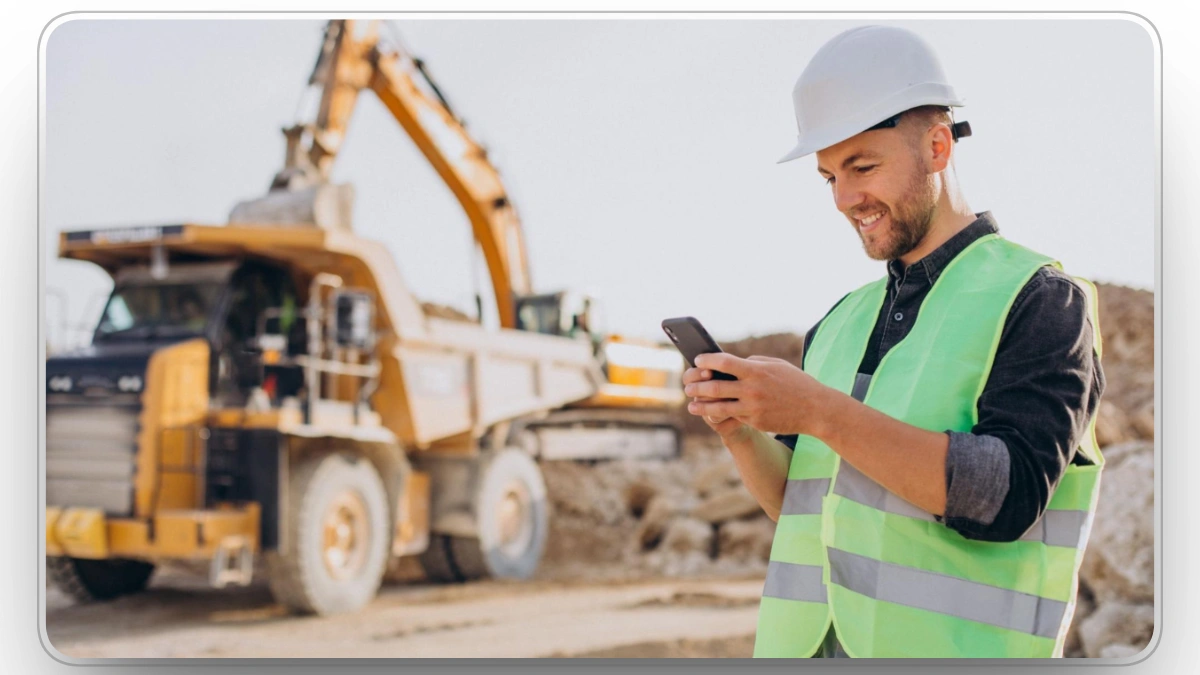
Telematics is becoming baseline infrastructure in construction. Most new heavy equipment now produces machine data through OEM-installed systems, while aftermarket devices help cover older machines, rental units, trailers, attachments, and other mixed fleet assets.
The challenge is no longer whether data exists. The challenge is whether that data can be standardized and used across the fleet.
Mixed fleet telematics depends on three layers:
This is where AEMP 2.0 and ISO 15143-3 matter. These standards help define how machine status data can move from telematics provider systems into customer applications. For contractors, that matters because every OEM portal should not become a separate source of truth.
A unified telematics strategy should answer three questions:
- Can the system ingest OEM and aftermarket telematics data?
- Can it normalize data across brands, providers, and asset classes?
- Can it connect the normalized data to maintenance, dispatch, inspections, rentals, and utilization workflows?
If the answer is no, the fleet may have telematics visibility, but it does not have operational control.
Telematics Alerts Define the Control Logic of the Fleet

In most implementations, telematics is treated as a data layer. In practice, it operates as a rule-based control system. The alert layer is where that control is defined.
Every alert is effectively a conditional rule applied to incoming machine data. The quality of those rules determines whether the system produces usable decisions or continuous noise.
The issue in most fleets is not lack of data. It is the absence of structured alert logic.
Raw signals such as engine hours, idle duration, or diagnostic codes are surfaced without being translated into context-aware triggers. For example, idle time is often flagged using a static threshold, regardless of machine type, job phase, or operating conditions. This leads to false positives and eventual alert fatigue.
Effective systems handle this differently. Alerts are configured using contextual thresholds and conditional dependencies, not fixed values. Idle thresholds vary by equipment class and task type. Fault codes are filtered based on recurrence, severity, and operating state. Movement alerts are tied to geofences that reflect actual jobsite boundaries and working hours, not generic zones. This also doubles as a security layer, flagging unauthorized movement and theft risk in real time.
More importantly, alerts are not treated as notifications. They are treated as inputs into downstream workflows. A fault code does not just appear on a dashboard. It triggers a maintenance classification and feeds into automated work order management. A utilization drop does not remain a metric. It feeds into allocation decisions.
This introduces a second layer most systems lack: state tracking. Instead of evaluating signals in isolation, advanced setups track state over time. State tracking captures whether a machine is consistently underutilized, repeatedly triggering the same fault, or operating outside expected patterns. It prevents overreaction to single events and allows decisions based on trends rather than snapshots.
The result is a system where telematics becomes deterministic, defined by rules that consistently translate machine data into operational actions.
Equipment Identity Standardization in Heavy Equipment Telematics

Once alert logic is defined, system reliability depends on how assets are resolved across data sources.
In a typical construction fleet, telematics data enters the system through multiple pipelines:
- OEM telematics integration APIs keyed on serial number or VIN
- Aftermarket devices keyed on hardware or device ID
- Internal systems keyed on asset ID
- Rental records keyed on contract or temporary identifiers
These identifiers are not inherently linked. As a result, the same physical machine is ingested as separate entities. This creates a key collision and fragmentation problem at the data layer.
Engine hours, fault codes, and location data may be recorded under different identifiers, preventing aggregation at the asset level. Without a consistent primary key, the system cannot:
- Accumulate utilization over time
- Maintain continuous maintenance history
- Track recurring fault patterns
- Attach alerts to a stable asset reference
Most telematics platforms do not solve this. They ingest and display data per source, not per asset. The requirement is an identity resolution layer.
This layer performs deterministic mapping between identifiers:
- Serial numbers are resolved against internal asset IDs
- Device IDs are associated with a unified asset record
- Rental identifiers are normalized into temporary asset mappings within the data model
Once resolved, all incoming data is normalized against a single asset key. This allows stateful tracking, where utilization, faults, and maintenance events are aggregated over time for the same machine.
Without this layer, telematics operates on disjointed records. Metrics appear valid locally but are inconsistent globally.
Condition-Based Maintenance: From Concept to Implementation
Earlier, we covered why condition-based maintenance outperforms calendar-based service. The harder question is how to implement it reliably. That is where most fleets struggle, and where purpose-built construction equipment maintenance software earns its place.
Two machines with identical hour counts can experience completely different wear profiles depending on load, duty cycle, and operating conditions. Engine hours alone are not enough. Reliable implementation depends on three things most systems get wrong.
Fault Classification
Not all diagnostic codes require immediate action. Systems must distinguish between transient alerts and persistent faults. This is typically handled by evaluating severity, frequency, and operating context. A single fault code may not trigger a service event, but repeated occurrences within a defined window can escalate it into a maintenance action.
Recurrence Tracking
This is critical for identifying failure patterns. Instead of reacting to isolated signals, the system evaluates whether a condition is degrading over time. A vibration anomaly that appears once may be noise. The same anomaly across three operating cycles is a signal. For a deeper breakdown of how recurring faults map to specific maintenance categories, see this work order classification guide.
Direct Connection to Execution Systems
Maintenance triggers must connect directly to execution. When a condition is met:
- A service event is generated automatically
- The asset is flagged for inspection or repair
- Scheduling is adjusted based on availability and priority
Without this connection, telematics produces data but not decisions.
At the fleet level, condition-based maintenance produces consistent outcomes:
- Service intervals align with actual usage rather than estimates
- Component wear is managed more predictably across different operating conditions
- Unplanned downtime is reduced through earlier intervention
- Maintenance workload becomes more stable and less reactive
These improvements are not driven by more data, but by how that data is used to define service logic.
How to Evaluate a Heavy Equipment Telematics System

By this point, most telematics platforms collect similar data. The difference is in how that data is standardized, connected, and used to drive decisions. Six criteria separate viable systems from observational ones.
1. Mixed Fleet Normalization
Construction fleets pull data from multiple OEMs, each with its own structure for engine hours, fault codes, and utilization metrics. Without normalization, comparisons across assets break down and fleet-wide insights become unreliable.
A viable system must standardize these inputs into a consistent format so utilization, idling, and performance can be evaluated across all equipment.
2. Identity Resolution Capability
As fleets grow, asset identity becomes fragmented across serial numbers, internal IDs, device IDs, and rental references. When these are not aligned, data splits across records and accuracy degrades.
A strong system maintains a unified asset record, ensuring all data, including usage, maintenance, and location, maps back to the same machine.
3. Alert Configuration and Rule Logic
Most systems generate alerts, but few allow precise control over how those alerts are defined or used. Without structure, alerts become noise.
Effective systems treat alerts as operational triggers, defined by conditions and tied to specific actions.
4. Maintenance Workflow Integration
Telematics data only delivers value when it connects to maintenance execution. If fault signals and usage thresholds do not translate into scheduled work, timing improvements are lost.
The system should automatically convert telematics inputs into service events, inspections, or work orders.
5. Real-Time Operational Integration
Telematics should influence day-to-day decisions, particularly around equipment allocation and dispatch. If utilization and availability data are not integrated into planning workflows, they remain underused.
A capable construction fleet management software connects live equipment status with operational decisions, allowing teams to assign assets based on real conditions.
6. Unified System Architecture
Fragmentation is one of the biggest limitations in telematics adoption. When tracking, maintenance, and dispatch exist in separate tools, data loses impact.
A unified system consolidates these functions, ensuring data flows directly into execution.
How Clue Turns Telematics Data Into Fleet Control
Most telematics tools show equipment data. Clue is different because it connects that data to the workflows construction teams actually use every day.
Clue brings OEM telematics, GPS providers, rental systems, maintenance, inspections, dispatch, utilization, and equipment records into one construction equipment management platform. That matters because the problem for most contractors is no longer whether equipment produces data. The problem is that the data is scattered across too many systems.
Clue helps solve that problem in five ways:
For heavy construction teams, this is the difference between a dashboard and an operating system. A dashboard shows what happened. Clue helps teams decide what to do next.
Final Thoughts
Heavy equipment telematics is no longer just about collecting data. That problem is solved. The remaining challenge is execution, including how well data is structured, interpreted, and embedded into daily operations.
Fleets that treat telematics as a reporting tool stay reactive. Fleets that treat it as a control system start improving utilization, maintenance timing, and overall reliability.
Technology is no longer the constraint. The system built around it is.
That is where platforms like Clue fit. Not as another telematics layer, but as the construction equipment management software that connects data to action. It brings maintenance, inspections, utilization, and dispatch into a single operational workflow.
At this stage, telematics only creates value when it is part of how the fleet actually runs.
FAQs
1. How is telematics data actually pulled from heavy equipment?
Telematics devices connect to a machine's CAN bus or ECU, where operational data is generated. This includes engine hours, load, fuel rate, and diagnostic codes. The device transmits this data via cellular or satellite networks to a central system for processing and analysis.
2. Why is data normalization important in mixed construction fleets?
Different OEMs structure telematics data differently. Engine hours, fault codes, and utilization metrics are not standardized. Without normalization, cross-fleet comparisons become unreliable, making it difficult to evaluate performance or apply consistent maintenance logic.
3. Can heavy equipment telematics work on older or non-connected equipment?
Yes, through aftermarket telematics devices. These units provide core data such as location, engine hours, and basic utilization metrics, allowing older equipment to be integrated into the same system as newer, OEM-connected machines.
4. What is the difference between telematics data and actionable insights?
Telematics data is raw input, including location, hours, and fault codes. Insights are derived when this data is interpreted using thresholds, classifications, and rules. For example, idle time becomes actionable only when it is tied to defined limits and operational decisions.
5. How do telematics systems handle intermittent connectivity on jobsites?
Most systems store data locally on the device when connectivity is lost and transmit it once the connection is restored. This ensures continuity, though real-time decision-making may be delayed in low-coverage areas.
6. How does telematics support rental equipment tracking?
Telematics can track rental equipment by assigning temporary identifiers and integrating them into the same system as owned assets. Purpose-built construction equipment rental management extends this to utilization, location, and cost impact, even for short-term equipment.
7. What role do diagnostic trouble codes play in heavy equipment telematics?
Diagnostic trouble codes provide early indicators of mechanical issues. When tracked over time and classified by severity and recurrence, they help identify developing failures and enable condition-based maintenance instead of reactive repairs.
8. Can heavy equipment telematics help with theft prevention and jobsite security?
Yes. GPS tracking combined with geofencing allows teams to detect unauthorized movement in real time. When equipment leaves a defined zone or moves outside working hours, construction fleet tracking flags it immediately, improving recovery rates and deterring theft.
9. How does telematics impact equipment lifecycle planning?
By tracking actual usage, wear patterns, and maintenance history, telematics provides data for more accurate lifecycle decisions, including when to repair, replace, or retire equipment based on performance rather than estimates.
Transform Your Equipment Management