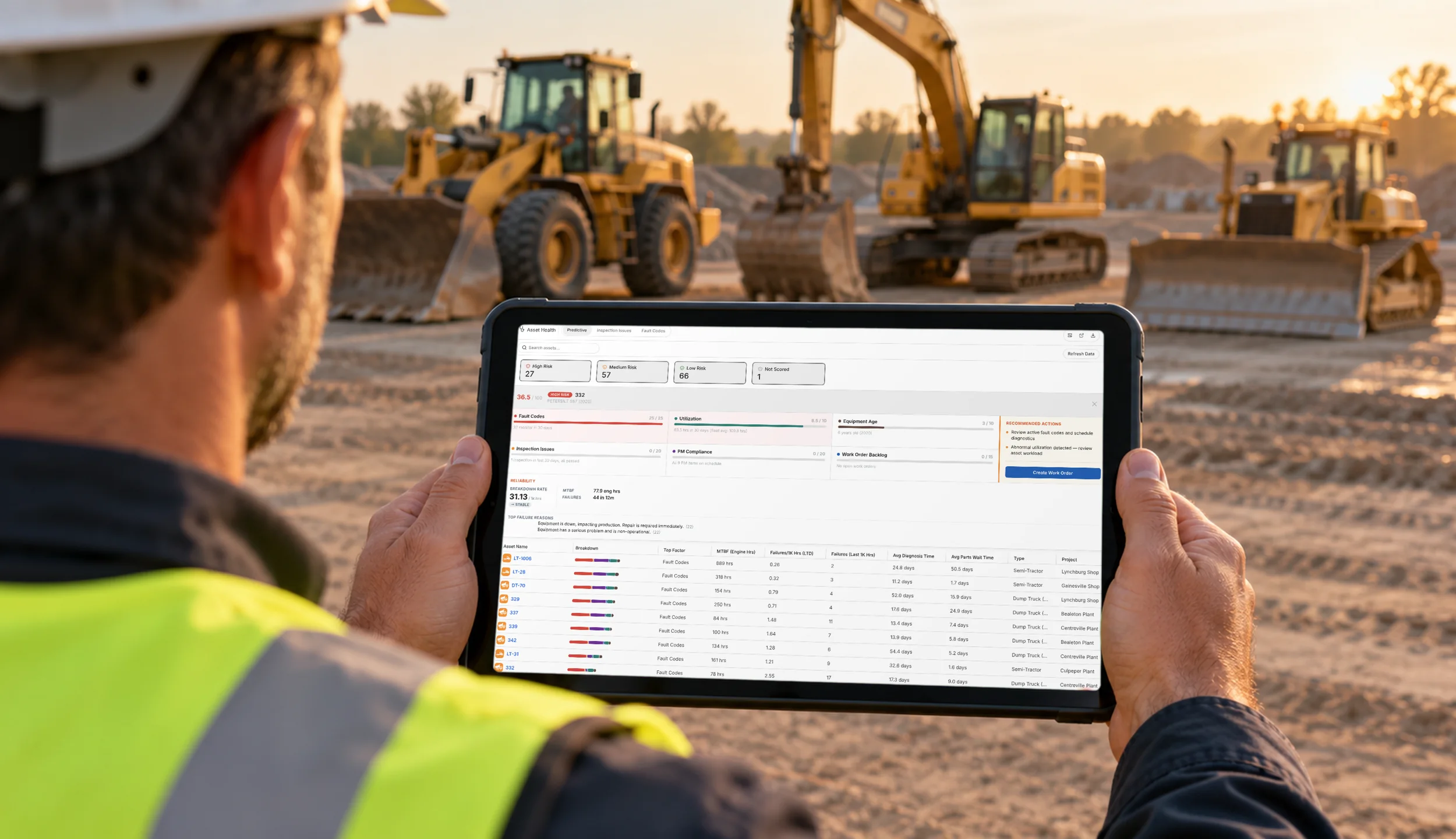
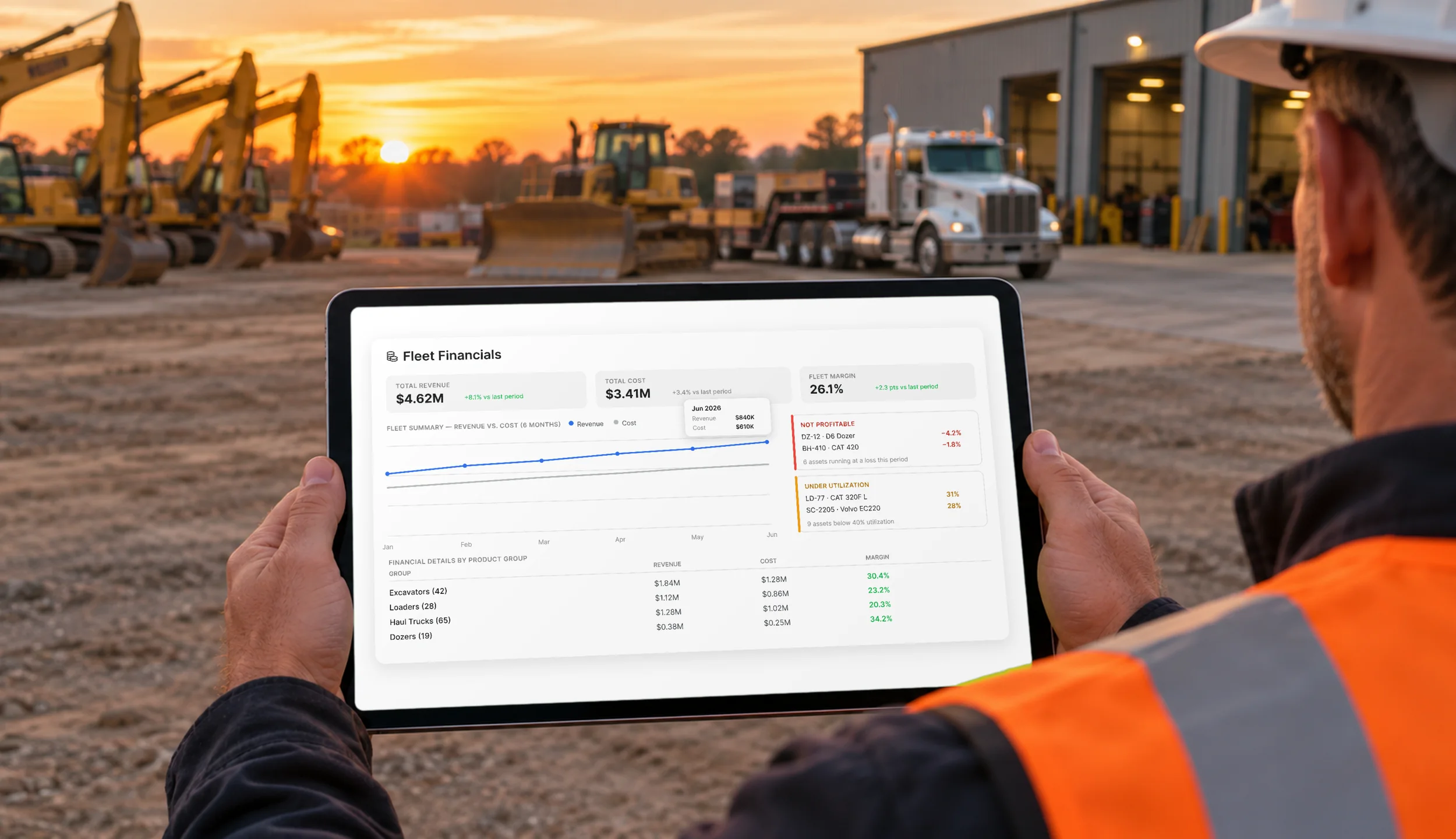
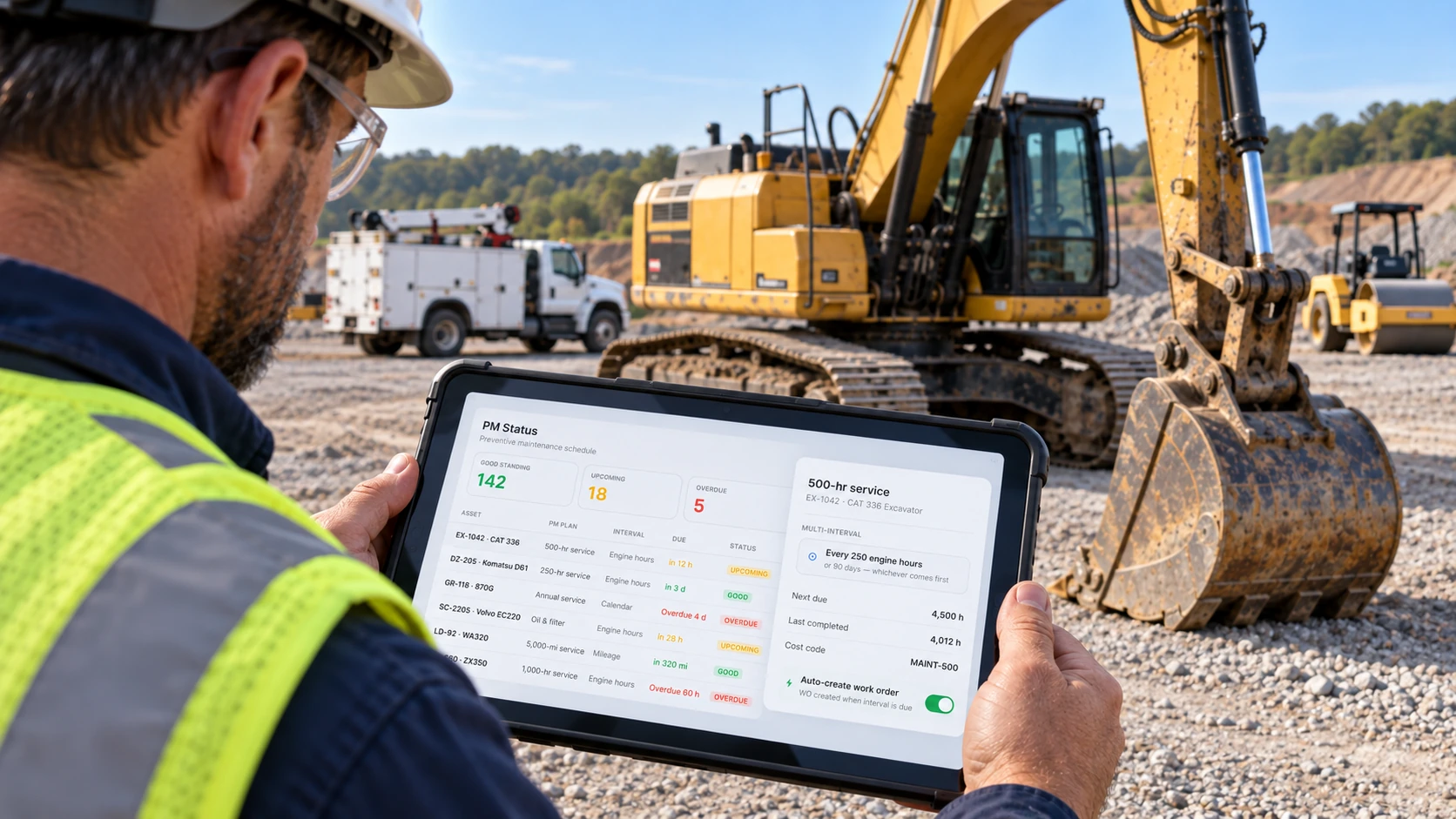
Construction teams do not struggle because they lack data. They struggle because the right person often does not see the right signal fast enough.
That is where exception reporting becomes valuable.
On a construction project, operational data flows in constantly from equipment, inspections, fuel activity, maintenance records, schedules, and field teams. Most of that information is routine and does not require action. Exception reporting filters out the normal activity and surfaces only the issues that fall outside acceptable limits, such as overdue preventive maintenance, abnormal fuel use, failed inspections, idle rented equipment, budget drift, or schedule slippage.
Instead of forcing managers to review everything, exception reporting helps them focus on the few conditions that can affect uptime, cost, safety, and project delivery. That makes it easier to catch issues early, assign ownership quickly, and prevent small problems from turning into delays, breakdowns, or unnecessary spending.
What is Exception Reporting in Construction?

Exception reporting in construction is the process of automatically surfacing only the data points that fall outside acceptable operating limits.
Those limits are set in advance as thresholds for cost, time, equipment utilization, maintenance, fuel, inspections, safety, or compliance. When actual performance crosses one of those thresholds, the system flags the issue so the right person can investigate and respond.
In practical terms, exception reporting helps construction teams answer questions like these:
- Which assets have exceeded their preventive maintenance interval?
- Which rented machines are sitting idle too long?
- Which inspections were missed before equipment went back into service?
- Which jobs are showing unusual fuel consumption or low utilization?
- Which project costs or production metrics have moved outside plan?
The purpose is not to create more reporting. The purpose is to remove noise so managers can focus on the few conditions that require immediate action.
Exception Reporting vs. Traditional Reporting
In construction project management, exception-based tracking offers a more efficient way to monitor project performance compared to traditional reporting methods.
Traditional Reporting in Construction
Traditional reporting involves reviewing all project data, such as budgets, schedules, labor, materials, and equipment. This process is time-consuming and can overwhelm project teams. For example, managers must manually check data like:
- Labor hours worked
- Material usage
- Equipment hours
- Financial expenditures
The issue with this method is that it can be difficult to identify problems quickly, as it requires sifting through large amounts of data that may not be immediately relevant to the project's success.
Exception Reporting in Construction
Exception reporting, also known as anomaly detection, focuses on identifying deviations from predefined thresholds. Instead of reviewing all data, the system flags only anomalies that need attention, such as:
- Budget overruns
- Delayed tasks
- Equipment downtime
This method saves time and allows managers to respond quickly to issues that could impact the project's success.
Key Differences Between Exception Reporting and Traditional Reporting
| Feature | Traditional Reporting | Exception Reporting |
|---|---|---|
| Scope of Data | Reviews all data | Focuses on anomalies and deviations |
| Time Investment | Time-consuming, requires manual analysis | Saves time, focuses only on critical issues |
| Alert System | No alerts, manual detection of problems | Automatic alerts when thresholds are exceeded |
| Decision-Making Speed | Slow decision-making due to large data volume | Faster decisions with immediate identification of issues |
| Efficiency | Less efficient for large projects | More efficient and proactive |
| Risk Management | Higher risk of missing important issues | Reduces risk by quickly addressing problems |
The Role of Exception Reporting in Construction

Construction projects generate large volumes of operational data every day; equipment hours, fuel usage, material deliveries, and crew productivity. Most of this information is routine and does not require action.
This system filters this data by flagging only the metrics that fall outside predefined thresholds. Instead of reviewing full datasets, managers are alerted only when something deviates from expected performance; such as equipment running beyond scheduled hours, abnormal fuel consumption, delayed inspections, or drops in productivity.
Research in construction project management shows that rework can account for 5–15% of total project costs, often due to delayed detection of problems. By highlighting anomalies early, exception-based tracking allows managers to intervene before issues escalate into schedule delays or cost overruns.
The approach follows the management-by-exception principle, widely used in operational control systems, where attention is directed only to deviations from planned performance. This reduces reporting noise and helps construction teams focus on operational risks that require immediate action.
Types of Exception Reports in Construction
Deviation tracking in construction can be applied across various operational aspects, each with its own unique metrics and thresholds. Below are key types of exception reports that help construction teams stay on top of project performance:
1. Budget Exception Reports
These reports focus on monitoring financial performance and alert managers when spending exceeds predefined limits. Common issues flagged include:
- Cost overruns on specific project phases or materials
- Unapproved expenses or discrepancies between actual and projected costs
By tracking financial deviations, teams can take corrective actions before costs spiral out of control.
2. Equipment Maintenance Exception Reports
Equipment is vital to construction projects, and maintenance exceptions highlight when machinery deviates from optimal performance schedules. These reports identify:
- Missed maintenance checks
- Excessive idle time or low utilization rates
- Unplanned downtime or equipment failure
Addressing these issues early helps reduce the risk of delays and extend the lifespan of expensive machinery.
3. Safety Compliance Exception Reports
Safety is a top priority on construction sites, and exception reports help track adherence to safety protocols. These reports flag:
- Missed safety inspections
- Unreported accidents or safety violations
- Non-compliance with PPE regulations
Proactively addressing these exceptions helps mitigate risks and ensure the safety of workers on-site.
4. Schedule Exception Reports
Time is a critical factor in construction, and schedule deviations can affect the entire project timeline. These reports identify:
- Tasks falling behind schedule
- Delays due to labor or material shortages
- Dependencies not being met
This allows project managers to make adjustments to resources or timelines to get back on track.
5. Material Usage Exception Reports
Material waste or shortages can lead to project delays and additional costs. Material usage exception reports highlight:
- Overuse of materials beyond planned quantities
- Underutilization leading to inefficient procurement and stockpiling
- Delivery delays or missing shipments
By identifying material-related exceptions, teams can adjust procurement plans and avoid disruptions.
Examples of Exception Reporting in Construction

Deviation tracking provides a structured approach to identifying issues that could derail a construction project. Rather than combing through vast amounts of data, it focuses only on anomalies that require immediate attention, helping construction managers make faster decisions.
Below are specific examples of how exception monitoring is applied in construction projects, demonstrating its value in real-world scenarios.
1. Budget Overruns Due to Material Price Increases
In construction, material costs are often volatile. This approach allows project managers to quickly spot budget discrepancies when material prices rise unexpectedly. For example, if the cost of cement exceeds the budgeted price by 5% or more, an alert will be generated, notifying the manager of the overage.
This allows the team to take corrective action, whether by renegotiating supplier contracts, sourcing alternative materials, or adjusting project plans to prevent cost overruns.
2. Safety Compliance Violations
Construction sites are subject to strict safety regulations. Such reporting helps ensure compliance by flagging safety issues as soon as they arise. If an inspection is missed or if a safety protocol is violated, such as workers not wearing required protective gear, the system will trigger an alert. This allows project managers to address the issue immediately, ensuring worker safety and maintaining compliance with regulatory requirements.
3. Equipment Maintenance Delays
Keeping equipment properly maintained is crucial for minimizing downtime and avoiding project delays. Exception reporting tracks equipment usage and maintenance schedules, notifying managers when machinery exceeds its recommended operating hours without scheduled maintenance. This allows site supervisors to schedule immediate servicing, preventing unexpected breakdowns and keeping the project on track.
Key Benefits of Exception Reporting for Construction Projects
Exception tracking offers several clear advantages for construction teams, especially those working on large, complex projects. These benefits span various areas of project management, from cost control to compliance monitoring.
1. Enhanced Risk Management
Construction projects inherently carry risks, whether related to safety, equipment failure, or cost overruns. This proactive tracking allows managers to identify and address these risks early, preventing small issues from turning into major setbacks. For instance, an exception report could flag an unexpected delay in the supply chain or an over-budget expense, allowing managers to respond before the problem escalates.
2. Better Resource Allocation
Efficiently managing resources is a critical aspect of construction project management. With exception based reporting, managers can quickly identify inefficiencies in resource allocation, such as equipment underuse or labor shortages, and adjust accordingly. This enables a more proactive approach to managing project assets, ensuring they are used where they’re needed most.
3. Improved Compliance Monitoring
Construction projects are subject to numerous regulations, ranging from worker safety to environmental protection. Exception reporting helps project managers stay on top of compliance by automatically identifying deviations from regulatory standards. If, for example, a safety inspection is overdue, the system will alert the team so they can address the issue before it leads to violations or penalties.
4. Streamlined Communication and Decision-Making
With this type of reporting, construction teams can avoid overwhelming themselves with irrelevant data. Instead of reviewing lengthy reports of day-to-day activities, they are only alerted to the exceptions that require their attention. This streamlined flow of information leads to quicker decision-making, with management focusing only on the issues that matter most.

How Exception Reporting Works in Construction?
Exception-based tracking in construction relies on operational systems that continuously analyze project and fleet data against predefined control thresholds. Instead of reviewing complete reports, managers are notified only when performance deviates from expected limits.
Modern construction operations platforms aggregate data from equipment telematics, maintenance systems, inspections, fuel transactions, and dispatch records. These systems evaluate incoming data in real time and flag anomalies that require intervention.
Clue centralizes equipment, maintenance, and operational data, enabling this type of exception monitoring by continuously comparing fleet activity against defined operational thresholds.
1. Defining Operational Thresholds
The first step is establishing acceptable performance limits for key operational metrics. Examples include:
- Maintenance intervals – flagging equipment operating beyond scheduled service hours
- Fuel usage thresholds – identifying abnormal consumption patterns
- Inspection compliance – detecting missing or overdue safety inspections
- Equipment utilization limits – identifying idle or improperly deployed assets
These thresholds form the baseline against which incoming data is evaluated.
2. Continuous Data Monitoring
Operational systems collect and process data from multiple sources, including:
- Telematics and GPS devices
- Equipment hour meters
- Maintenance records
- Inspection submissions
- Fuel transaction logs
- Dispatch schedules
By consolidating these datasets into a single operational environment, Clue allows continuous monitoring without manual report reviews.
3. Exception Detection
When incoming data exceeds a defined threshold, the system records an exception. Examples include:
- A loader exceeding its scheduled service interval
- Fuel usage that deviates significantly from historical consumption patterns
- A required inspection that was not completed before equipment operation
- Equipment assigned to overlapping jobsite schedules
These deviations are isolated and surfaced instead of being buried within full operational reports.
4. Alerting and Operational Response
Once an exception is detected, the system generates alerts that identify:
- The affected asset or project activity
- The metric that exceeded its threshold
- The magnitude of the deviation
- The time and location of the event
In Clue, these exceptions appear directly within fleet dashboards and operational workflows, allowing equipment managers, dispatchers, or superintendents to respond immediately, whether that means scheduling maintenance, verifying fuel activity, or correcting equipment deployment.
.webp)
The Role of Exception Reporting Software
Implementing exception reporting requires tools that continuously monitor performance, detect deviations, and deliver actionable insights in real time. Software built for this purpose doesn’t just send notifications; it centralizes operational data, automates analysis, and supports faster decisions across multiple workstreams.
Unified Operational Monitoring
Modern exception-based tracking software consolidates data from disparate systems such as equipment telematics, project schedules, and maintenance logs, into a single monitoring interface. This centralized view removes the need to manually compile data from multiple sources, ensuring that performance evaluations are always based on complete, current information.
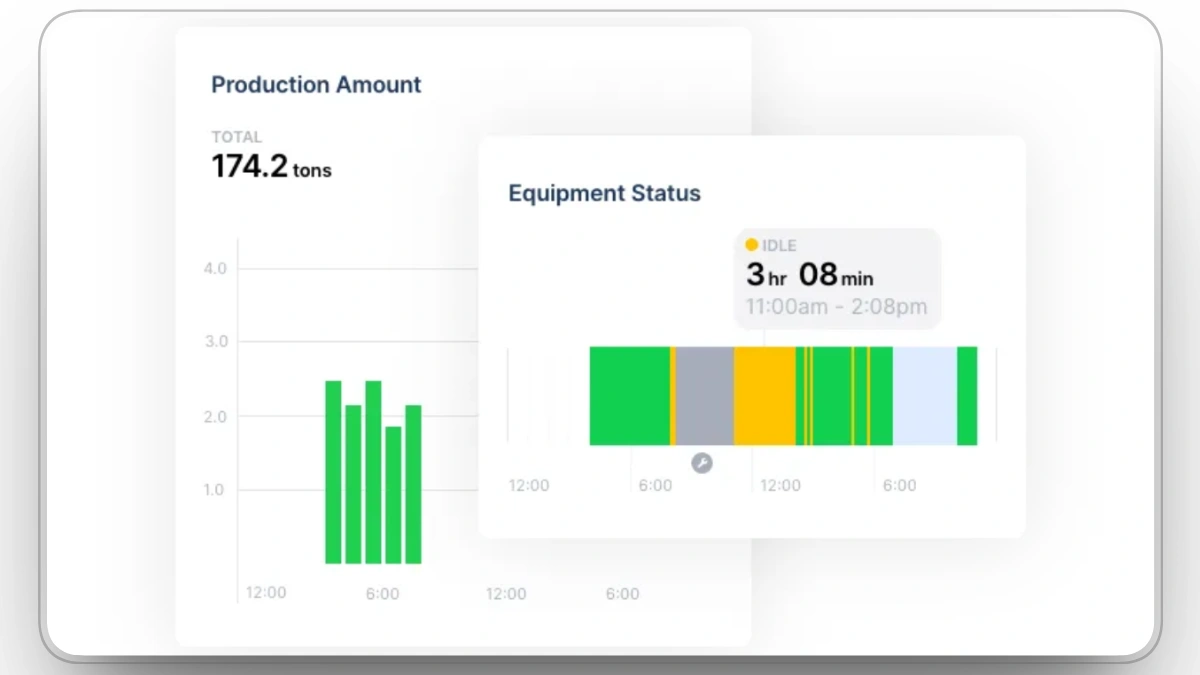
Clue brings together asset utilization metrics, maintenance histories, and operational statuses across job sites.
With this unified data, deviations from performance expectations, such as unexpected idle time, maintenance delays, or equipment inconsistencies are surfaced immediately, allowing teams to respond before issues expand into larger problems.
Custom Threshold Configuration
A key function of any effective exception reporting system is the ability to define specific thresholds that determine what constitutes an anomaly.
Exception reporting software allows construction teams to set these parameters across critical metrics relevant to their workflows. Whether monitoring equipment uptime, maintenance intervals, or utilization patterns, these configurable limits ensure that alerts are meaningful rather than noise.
Clue offers customizable thresholds for equipment performance and maintenance triggers, enabling tailored monitoring aligned with project priorities.
Automated Alerts and Notifications
Once thresholds are defined, the system continuously evaluates incoming data against those limits. When a performance metric falls outside of its acceptable range, the software generates an automated alert.
These alerts include relevant context such as the affected asset, deviation type, and timing, enabling rapid response without manual analysis.
Reporting and Analytics
Exception-based tracking isn’t limited to real‑time detection; it also includes historical insights that help teams understand patterns of deviations. Software with reporting and analytics capabilities allows users to review trends over time, identify recurring performance issues, and assess whether corrective actions are having the desired effects.
Clue’s analytics tools generate detailed reports on equipment usage, maintenance compliance, and operational trends. These analytics support deeper evaluation of performance irregularities, helping teams refine processes and avoid repeat exceptions.
Mobile Access and Field Coordination
This software often includes mobile functionality so alerts and reports are accessible from the field. Mobile access ensures that project teams and field personnel can respond quickly to issues as they arise, without needing to wait until they are back in the office.
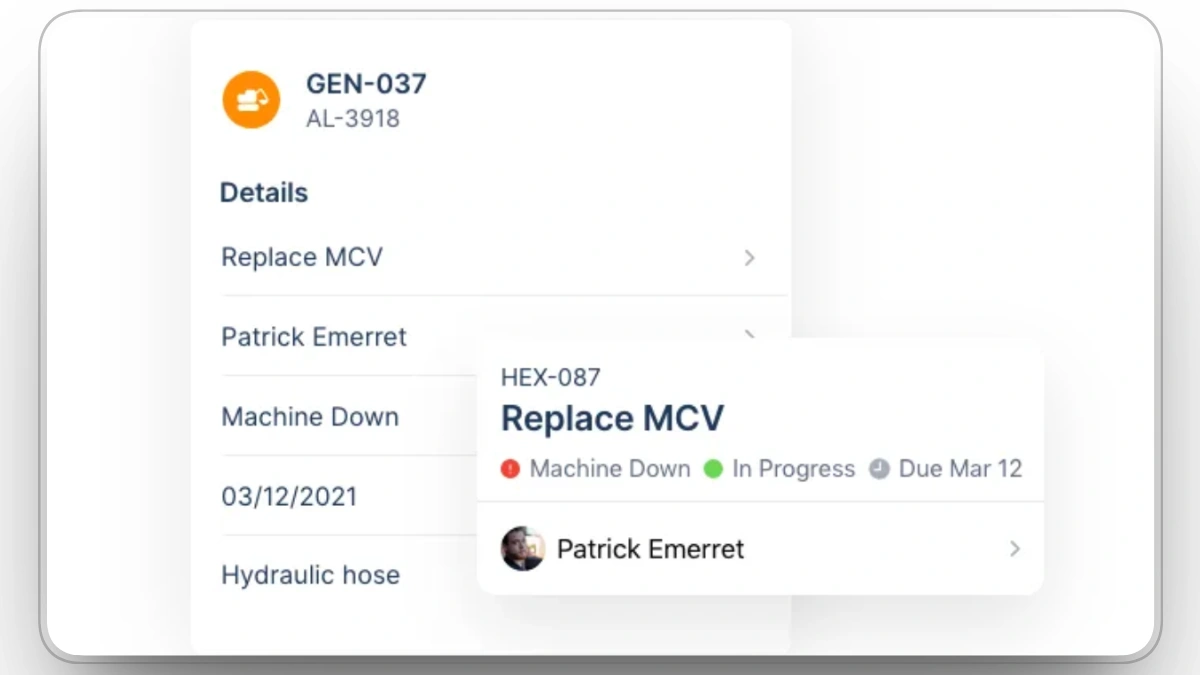
Clue’s iOS and Android app enables teams to receive timely alerts, log updates, and view performance data on site. This supports immediate action and reduces the latency between exception detection and resolution.
Challenges of Implementing Exception Reporting in Construction

While exception-based tracking offers clear advantages, its implementation can present several challenges for construction teams. Recognizing these challenges helps teams overcome barriers and make the most of the system.
- Resistance to Change: Construction teams may resist shifting from traditional methods to automated exception reporting. Overcoming this requires training and clear communication on the benefits.
- Data Quality Issues: Poor data quality can lead to false alerts or missed issues. Ensuring accurate, consistent data is critical for effective exception-based tracking.
- Integration Difficulties: Integrating multiple systems (e.g., project management, equipment tracking) can be challenging. Selecting compatible software or customizing integration is necessary.
- Over-Alerting and Alert Fatigue: Improperly set thresholds can cause excessive alerts, leading to alert fatigue. Proper threshold configuration and regular adjustments are needed to avoid this.
Best Practices for Setting Up Exception Reporting in Construction
By focusing on the right thresholds, involving the right people, and continuously improving processes, teams can optimize their exception-based tracking system for better project outcomes.
1. Set Realistic Thresholds: Ensure thresholds align with project requirements and are based on historical data. Overly broad or narrow thresholds can either miss important issues or overwhelm the team with alerts.
2. Involve Team Members: Collaborate with all relevant team members to define what constitutes an exception. This ensures the system captures meaningful deviations specific to the project's needs.
3. Continuously Refine Monitoring Criteria: Review and adjust thresholds regularly based on past performance and emerging project needs. Fine-tuning helps maintain the relevance and accuracy of exception alerts.
4. Keep Software Updated: Regularly update exception reporting software to take advantage of new features and integrations. This ensures the system remains effective as construction technologies evolve.
Takeaway
Effective project management in construction requires quick identification and resolution of issues that could derail a project. Exception Reporting helps by focusing attention on deviations from predefined thresholds, allowing teams to prioritize critical problems.
By using Clue for exception reporting, construction teams can integrate operational data from various sources, monitor performance in real-time, and receive alerts for any anomalies.
This proactive approach enables teams to address issues such as equipment downtime, budget overruns, or safety violations before they escalate, keeping the project on track and reducing unnecessary costs.
FAQs
1. What is an exception report and why is it used in construction?
An exception report highlights deviations from expected performance or standards in a project, focusing only on those events that require action rather than all data points. It is used to quickly pinpoint issues such as budget deviations, safety non‑compliance, or missed milestones that need corrective action.
2. What are the common pitfalls when implementing exception reporting?
Common pitfalls include setting unrealistic thresholds, leading to alert fatigue; poor data quality, which can generate false positives; and resistance to change from teams accustomed to traditional reporting methods.
3. What triggers an exception in construction exception reporting?
An exception is triggered when actual performance data falls outside set parameters, such as costs exceeding allocated budgets, critical equipment missing maintenance, or inspections not completed by required deadlines. Thresholds are defined based on project requirements.
4. Can exception reporting help with regulatory compliance?
Yes. Reporting can be configured to flag compliance deviations such as safety inspections not conducted, environmental documentation lapses, or contractual delivery timelines missed, offering a documented trail of issues that can support audit readiness.
5. How often should exception reports be generated on a construction project?
The frequency depends on project needs and risk tolerance. Critical projects may require real‑time or daily exception-based tracking, while less dynamic environments may generate reports weekly or monthly. The key is aligning the cadence with operational activity levels.
6. Does exception-based tracking replace human oversight?
No. exception-based tracking automates the identification of deviations but still requires human interpretation and decision‑making. Systems reduce manual burden, but project managers must assess context and determine corrective actions.
7. What data quality issues impact exception-based tracking?
Accuracy and completeness of data are essential. Incomplete, outdated, or incorrect data can lead to false alerts or missed exceptions, undermining the reliability of the system. Data validation processes are necessary for effective reporting.
8. Can exception-based tracking provide trend insights over time?
Yes. Beyond immediate alerts, reporting systems can aggregate data over time to show recurring patterns or chronic issues, helping teams adjust processes and thresholds for better future control and performance monitoring.

Transform Your Equipment Management