Construction organizations operate in one of the most asset-intensive environments in the global economy. Heavy machinery, support systems, and jobsite infrastructure must function reliably under tight schedules and unpredictable conditions. McKinsey has reported that construction has struggled with productivity and remains highly fragmented, which makes it harder to standardize processes and scale operational improvements across projects.
A structured asset management hierarchy addresses this problem. By organizing equipment, subsystems, and components into a logical structure, companies can track performance, diagnose failures faster, and align maintenance workflows with operational goals.
This guide explains what an asset hierarchy is, the structural layers that make it effective, and how construction organizations can implement one aligned with reliability standards like ISO.
What is an Asset Hierarchy?

An asset hierarchy refers to a structured representation of physical assets organized in parent-child relationships. The hierarchy begins at a high-level entity such as a facility or jobsite and progressively breaks down into systems, equipment, and maintainable components.
The purpose of the asset hierarchy structure is operational clarity. Each layer answers a specific question:
- What assets exist in the environment?
- How are those assets functionally connected?
- Which components drive reliability risk?
In construction environments, asset hierarchies typically include:
- Jobsite or facility
- Functional area or department
- System
- Equipment
- Subcomponent
This structure enables organizations to track reliability data and maintenance activity consistently across fleets and projects. Without structured asset data, reliability initiatives fail because maintenance events cannot be traced to root causes.
Parent-Child Relationships in Asset Hierarchy
The defining characteristic of a hierarchy is the parent-child relationship.
A parent asset represents a larger functional unit such as a crushing plant, generator system, or tower crane. A child asset represents the components that enable that unit to function, such as:
- Hydraulic pumps
- Electric motors
- Control panels
- Gear assemblies
Each child belongs to a single parent, while a parent may contain multiple children.
This relationship is critical for operational diagnostics. When a component fails, the hierarchy enables technicians to identify the system context immediately. Instead of troubleshooting in isolation, teams can trace how the failure affects the entire operational chain.
This structural clarity becomes increasingly important as organizations advance their operations maturity model, where decision-making shifts from reactive troubleshooting toward predictive planning.
Asset Hierarchy Examples in Construction Environments

Asset hierarchy design varies depending on the operational environment. However, most industrial frameworks follow a similar structure.
Example 1: Construction Equipment Fleet
Level 1 - Project Site
Level 2 - Earthmoving Fleet
Level 3 - Excavator System
Level 4 - Hydraulic Excavator Unit
Level 5 - Hydraulic Pump
Level 6 - Pump Motor Assembly
This structure allows technicians to isolate failure events quickly. For example, repeated hydraulic pump failures can be tracked across multiple excavators and analyzed for design flaws or operating conditions.
Example 2: Temporary Site Infrastructure
Level 1 - Jobsite
Level 2 - Electrical Distribution System
Level 3 - Generator Unit
Level 4 - Alternator Assembly
Level 5 - Bearing Components
In this hierarchy, operational data such as vibration readings or thermal anomalies can be linked to specific components.
These asset hierarchy examples illustrate how hierarchical structures simplify fault isolation and performance analysis.
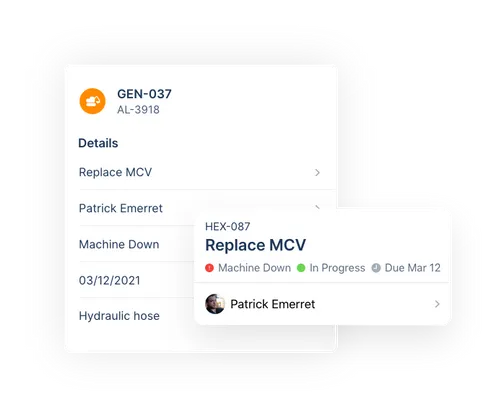
Construction asset management software like Clue helps bring structure to asset management by centralizing all asset data in one platform. This enables construction teams to organize, track, and analyze assets at every level, ensuring that the hierarchy you establish in theory can be effectively applied in practice.
From improving maintenance workflows to identifying failures before they occur, Clue helps align equipment performance with the operational goals defined by your asset hierarchy.
What is the ISO standard for asset hierarchy?

One widely referenced taxonomy for reliability and maintenance data is ISO 14224. It is written for the petroleum, petrochemical, and natural gas industries, but many reliability teams use similar hierarchy principles when structuring equipment data in other asset intensive environments.
Many teams implement a multi-level taxonomy when they build an asset hierarchy. Some industry explainers reference ISO 14224 as a nine-level classification pyramid for structuring reliability data. These range from industry classification down to individual maintainable parts.
The framework ensures that organizations collect consistent reliability data across different equipment classes. For example, ISO 14224 standardizes fields such as:
- Failure modes
- Maintenance actions
- Mean time between failures
- Mean time to repair
By aligning with an asset hierarchy standard, companies gain the ability to benchmark performance across equipment fleets and operating environments.
Consistency in taxonomy is essential because asset data must remain standardized across projects, equipment classes, maintenance systems, and reporting workflows.
Business Impact of a Structured Asset Hierarchy
An effective hierarchy delivers measurable operational advantages.
Faster Failure Diagnosis
When maintenance teams can trace failures through the hierarchy, root cause identification accelerates dramatically. Instead of reviewing isolated work orders, engineers analyze system-level performance.
Research from reliability engineering studies shows that structured maintenance data can reduce troubleshooting time by up to 40 percent.
Predictive Maintenance Enablement
Predictive maintenance depends on historical failure patterns. Without a hierarchy, reliability data becomes fragmented and difficult to analyze.
With a defined asset hierarchy structure, organizations can track failure rates across asset families and implement predictive maintenance strategies.
Improved Maintenance Cost Visibility
Maintenance budgets are often opaque because costs are typically recorded at a general equipment level. A hierarchical model addresses this by enabling precise cost tracking at multiple layers:
- System level
- Asset level
- Component level
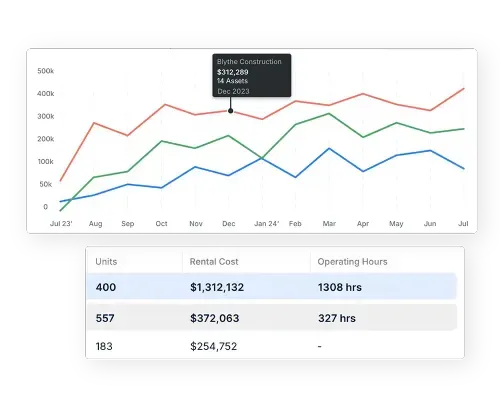
Clue’s Equipment Economics automates this process by integrating ERP data with real-time maintenance logs. This granular visibility helps identify which specific components drive the majority of maintenance expenditure, allowing managers to optimize capital allocation and protect project margins.
Operational Risk Reduction
Construction projects rely heavily on critical equipment availability. When asset dependencies are clearly mapped, maintenance planners can anticipate cascading failures.
This risk-mitigation approach aligns with enterprise governance frameworks such as the legal operations maturity model, where operational documentation and traceability reduce compliance exposure.
How to Build an Asset Hierarchy?
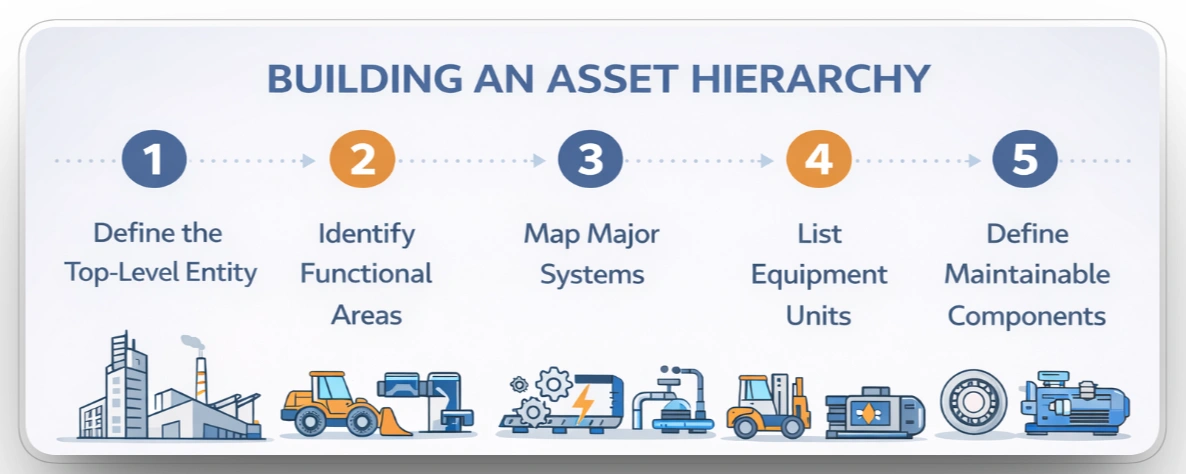
Creating an effective hierarchy requires structured planning rather than ad-hoc asset listing.
Step 1: Define the Top-Level Entity
The highest level usually represents the jobsite, facility, or operating location.
For organizations managing multiple projects simultaneously, each site becomes its own top-level entity within the asset management hierarchy.
Step 2: Identify Functional Areas
Break the site into operational categories such as:
- Earthmoving
- Materials processing
- Temporary utilities
- Transportation
These categories reflect the primary operational systems.
Step 3: Map Major Systems
Each functional area contains systems such as:
- Crushing plants
- Conveyors
- Power generation
- Water pumping
System classification is critical because maintenance events often occur at this level.
Step 4: List Equipment Units
Each system contains individual equipment assets such as loaders, generators, or compressors.
Equipment-level tracking enables performance benchmarking across fleets.
Step 5: Define Maintainable Components
Finally, break equipment into maintainable components.
Examples include:
- Bearings
- Pumps
- Motors
- Sensors
Component-level data enables root-cause analysis and predictive maintenance modeling.
Many organizations use an asset hierarchy template to standardize this process and ensure consistent taxonomy across facilities.
Naming Conventions and Data Governance
Naming conventions determine whether an asset hierarchy is usable in practice.
Effective naming systems follow several principles:
- Consistency across hierarchy levels
- Clear equipment identifiers
- Inclusion of location codes
- Function-based classification
For example:
SITE-EARTH-EXC-001-HYD-PUMP
This structure allows technicians to interpret the asset without searching documentation.
Governance is equally important. Each hierarchy should have a designated owner responsible for:
- Updating asset records
- Retiring obsolete equipment
- Maintaining naming consistency
Without governance, hierarchical structures degrade rapidly.
To keep specs and setups consistent across that hierarchy, learn how equipment configuration management works.
Operational governance frameworks often mirror principles used in enterprise frameworks such as the revenue operations maturity model, where data accuracy directly influences financial reporting.
Best Practices for Naming Conventions in Asset Hierarchy
Effective naming conventions are crucial for asset hierarchy usability. Poor naming systems lead to confusion, inefficiency, and data inconsistency. Here are the essential practices:
1. Consistency Across Hierarchy Levels: Ensure uniform naming conventions from top-level assets to individual components. This allows easy sorting, filtering, and comparison across locations or projects.
Example:
- Top-Level Asset: SITE-EARTH
- Sub-Assets: SITE-EARTH-EXC (Excavator)
2. Clear Equipment Identifiers: Use unique identifiers for each asset. This prevents duplication and ensures accurate tracking of maintenance history.
Example:
- Excavator: EXC-001
- Generator: GEN-101
Clue’s centralized platform ensures that all assets are uniquely identified and easily accessible, reducing the likelihood of duplication and ensuring streamlined maintenance workflows.
3. Location Codes: Incorporate location codes to specify where the asset is used. This helps reduce search time and improves logistics.
Example:
- Project Site: SITE-EARTH-NYC (Earthworks Project in NYC)
- Asset: SITE-EARTH-NYC-EXC-001 (Excavator 001 at Earthworks Project)
4. Function-Based Classification: Classify assets by their functional role within the operation. This ensures quick identification of their purpose.
Example:
- EARTH (Earthmoving Equipment)
- PUMP (Pumping Equipment)
5. Flexibility for Growth: Naming conventions should accommodate new equipment or systems without disruption to the existing structure.
6. Governance: Designate an owner responsible for maintaining naming consistency, updating records, and ensuring accuracy.
What are the common asset hierarchy failures?
Poorly structured hierarchies create operational inefficiencies, such as duplicate records and unclear naming systems.
Missing Assets
When equipment is omitted from the structure, maintenance data becomes incomplete.
Technicians may create work orders without linking them to the correct asset, making reliability analysis impossible.
Duplicate Records
Assets appearing multiple times in different hierarchy locations create conflicting maintenance histories.
Unclear Naming Systems
If technicians cannot easily interpret asset identifiers, the hierarchy becomes difficult to navigate.
Lack of Standardization
Without alignment to an asset hierarchy standard, data collected across projects becomes inconsistent.
These problems often emerge during enterprise system migrations. For this reason, many organizations restructure their hierarchy when upgrading CMMS or EAM platforms.
How Digital Platforms Enable Asset Hierarchy Management?
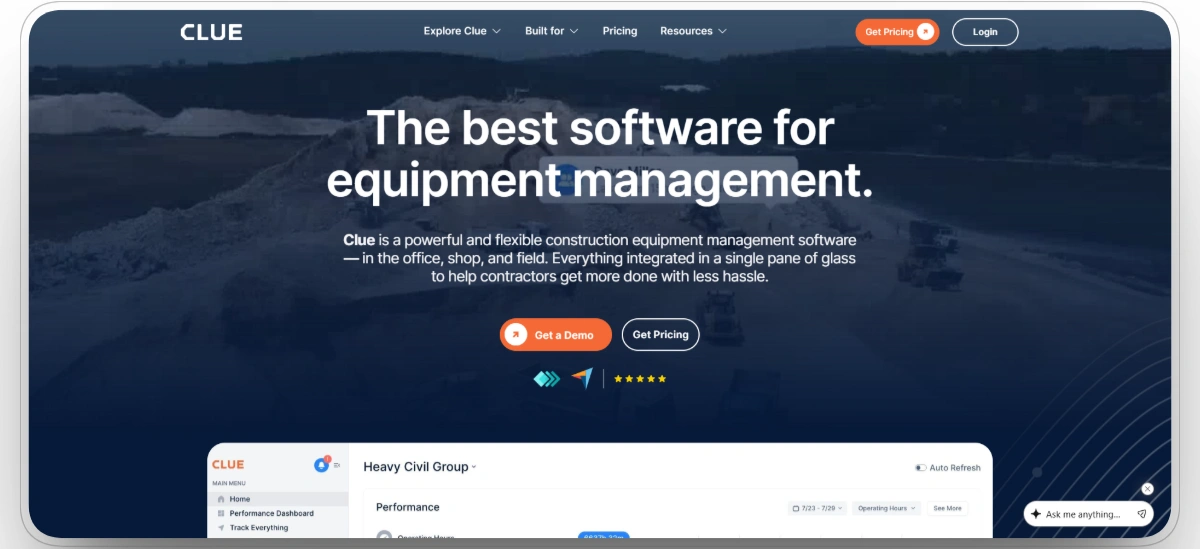
Managing large construction fleets manually is impractical. Digital asset management systems provide the infrastructure required to maintain hierarchy integrity.
Clue centralizes equipment information, telematics data, and maintenance workflows within a single environment. Instead of storing asset information across spreadsheets or disconnected systems, Clue organizes equipment into a unified hierarchy where utilization data, inspections, and work orders link directly to each asset.
This structured environment makes it easier to track component-level performance, identify recurring failures, and align equipment operations with reliability strategies.
Asset Hierarchies and Operational Maturity
A well-defined hierarchy also supports broader organizational frameworks such as the operations maturity model.
Higher maturity levels require:
- Consistent data structures
- Traceable maintenance events
- Integrated operational systems
Without a structured asset framework, these capabilities cannot develop.
Digital asset platforms also connect operational data with enterprise functions such as IT governance and cybersecurity monitoring. This alignment supports frameworks like the IT operations maturity model and security operations maturity model, ensuring that operational systems remain reliable and secure.
Conclusion
Construction organizations rely on equipment performance to deliver projects on time and within budget. Yet many companies still operate without a structured asset classification system.
A disciplined asset hierarchy structure transforms equipment data into operational intelligence. It enables predictive maintenance, cost transparency, and faster fault diagnosis.
Organizations that implement a standardized asset management hierarchy, aligned with frameworks such as the ISO standard for asset hierarchy gain a measurable operational advantage.
Clue further accelerates this progress by providing centralized asset visibility, maintenance tracking, and real-time operational insight. When hierarchy structures and digital platforms work together, companies move beyond reactive maintenance toward a more advanced operations maturity model.
In asset-intensive industries such as construction, that shift is not optional. It is a prerequisite for reliable operations and sustainable growth.
FAQs
1. Can a hierarchy be too detailed, and when should you simplify it?
Yes. A hierarchy that is overly deep or complex becomes difficult to navigate and maintain, and can slow reporting and work order creation. Balance detail with usability by including only assets that require direct maintenance tracking.
2. How does an asset hierarchy support "cost roll-up" and financial analysis?
A well‑structured hierarchy allows costs (labor, parts, downtime) to be aggregated upward, enabling analysis of total cost of ownership at system, equipment, or component levels.
3. Is asset hierarchy design the same across all industries?
No. While the parent‑child logic is consistent, the specific structure varies by industry and use case, industrial plants may include more technical sub‑levels than construction sites, which focus on fleets and portable equipment.
4. What level of traceability should a hierarchy include for CMMS use?
Traceability depends on operational goals. Some organizations track only top‑level assets, while others include moveable components and expensive subsystems to support detailed work history and maintenance analysis.
5. How often should an asset hierarchy be reviewed or updated?
Hierarchy accuracy should be reviewed regularly, typically quarterly or when assets are relocated or retired to ensure asset records reflect current operations and maintain data integrity.
6. What are common mistakes when building an asset hierarchy?
Avoid creating hierarchies that are too complex, using inconsistent naming, or neglecting regular updates. These pitfalls reduce clarity and can undermine maintenance planning and reporting.
7. How does hierarchy design affect maintenance prioritization?
Organizing assets by functional and criticality relationships allows maintenance teams to schedule work based on system dependencies, improving efficiency and reducing unplanned downtime.
8. Can a hierarchy include non‑tangible grouping assets?
Yes. In some frameworks, non‑tangible grouping nodes are used to organize assets without direct physical representation, aiding classification and navigation within the CMMS.

Transform Your Equipment Management


