



Single Pane of Glass for Construction Equipment Management
Clue brings tracked and untracked equipment, location data, maintenance, dispatch, inspections, fuel, utilization, and Fleet Financials into one operating view. Equipment teams can manage work, spot gaps, and make faster asset decisions from one connected system.


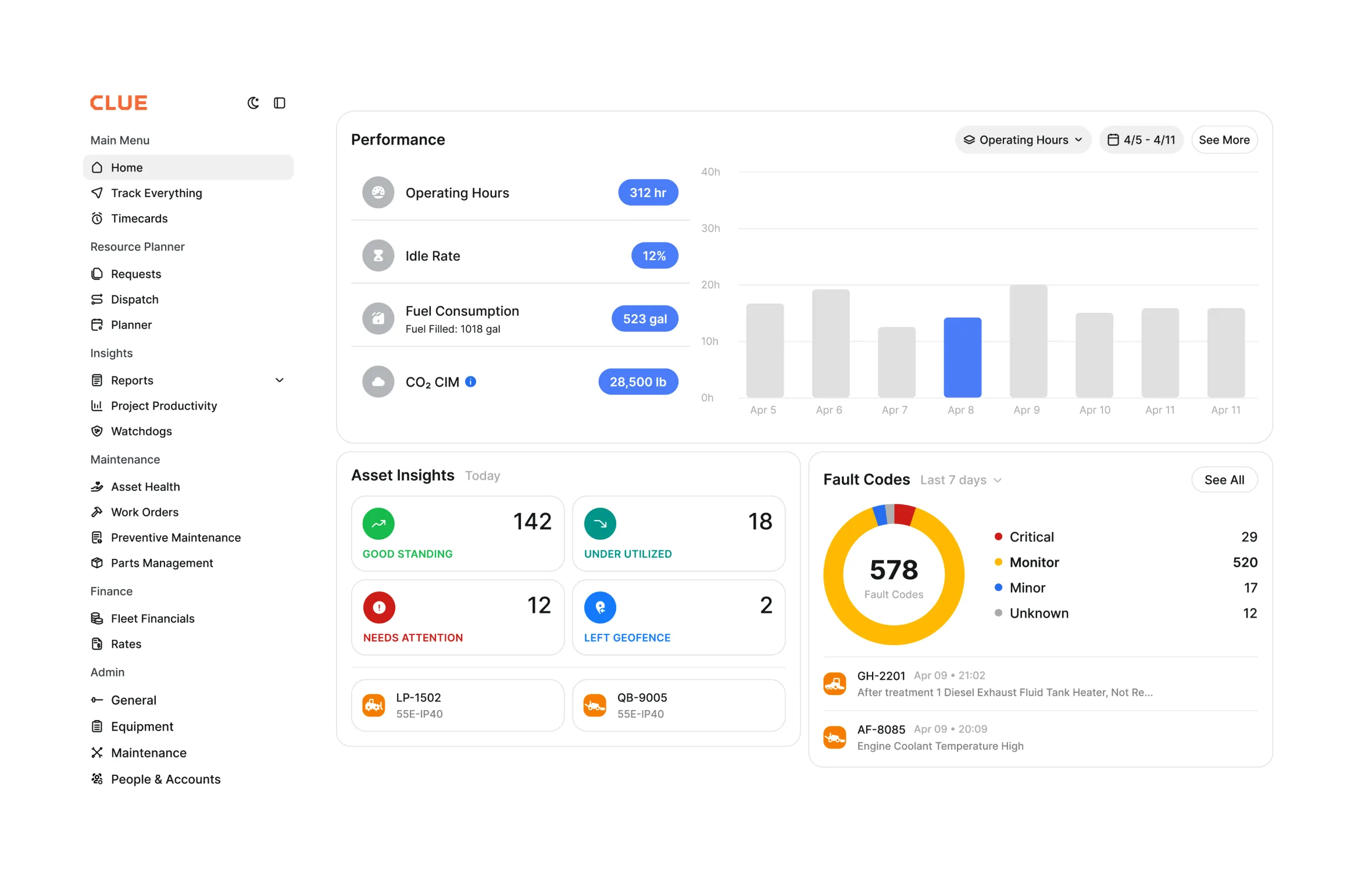


Single pane of glass
Everything about an asset. In one place.
See Tracked and Untracked Equipment in One Asset View
Mixed fleets need one asset record for both GPS-connected and manually managed equipment. Clue keeps each asset tied to the work, history, and records teams need to manage it.
Equipment profile: Review location, hours, status, maintenance history, documents, and inspection records from the asset page.
Mixed fleet support: Manage tracked and untracked equipment side by side.
Map and location context: Review GPS-connected assets with status, location history, and supported telematics data.
Utilization context: Keep usage and hour records connected to utilization reporting across the fleet.
Asset documents: Attach photos, manuals, inspection certificates, purchase orders, and vendor invoices to the asset profile.
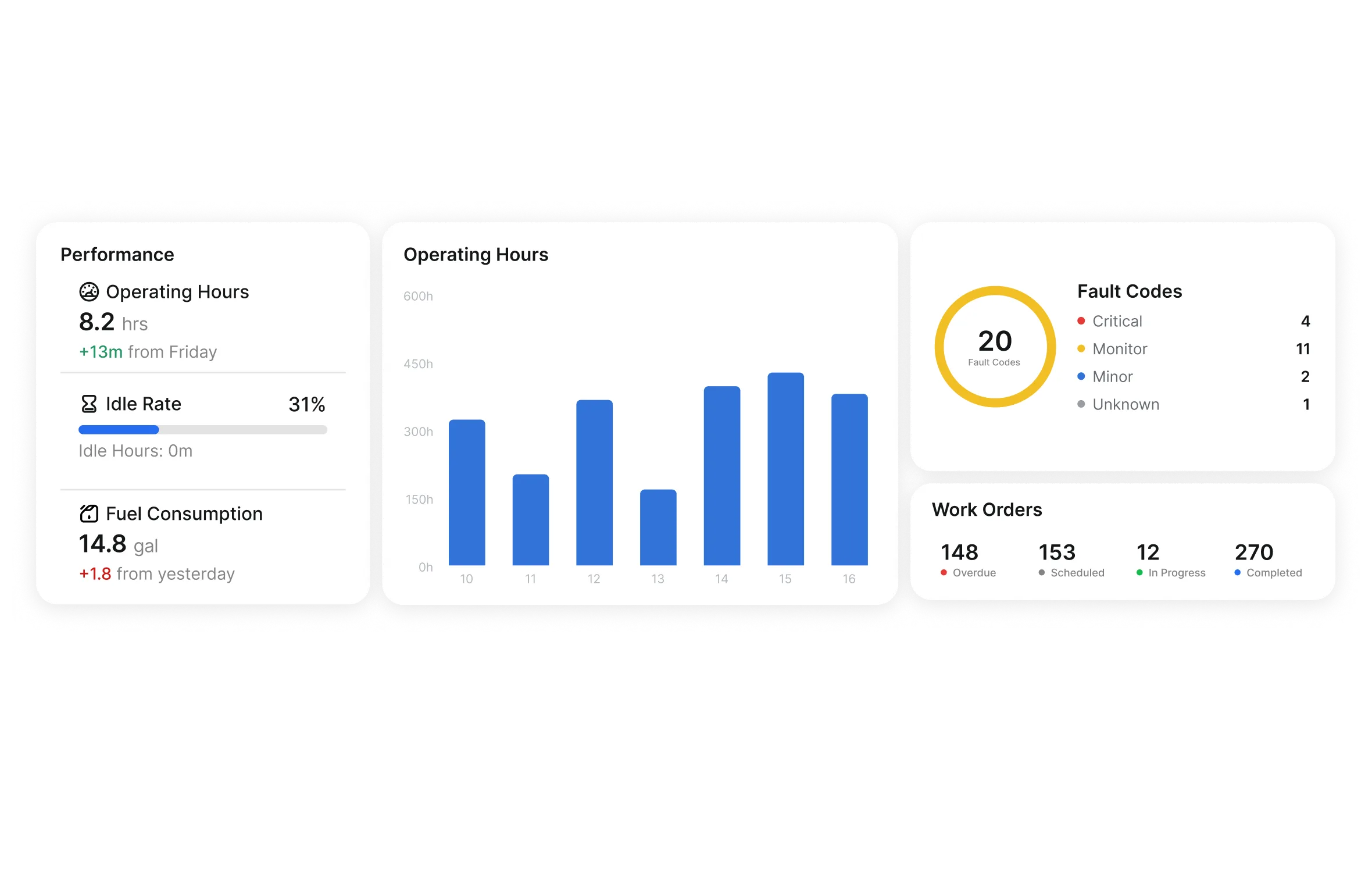
Bring GPS and Telematics Data Into the Asset Record
Provider data works best when it flows out of GPS portals. Location, hours, odometer readings, fault codes, and utilization signals need to feed the asset record that maintenance, dispatch, inspections, and financial workflows depend on.
Connected telematics sources: Connect supported GPS, OEM, and telematics systems, including Samsara, John Deere, Caterpillar, Komatsu, Ford Telematics, TitanGPS, NextTraq, and AEMP-supported sources.
Rental data connection: Bring supported United Rentals data into the equipment view used for owned and rented assets.
GPS and telematics feeds: Bring supported location, engine-hour, odometer, utilization, and fault-code data into the asset record.
Mixed fleet support: Manage GPS-connected, OEM-connected, rented, and manually managed assets in the same equipment view.
AEMP support: Use ISO 15143-3 connections where available to bring mixed-fleet telematics data into a standard equipment view.
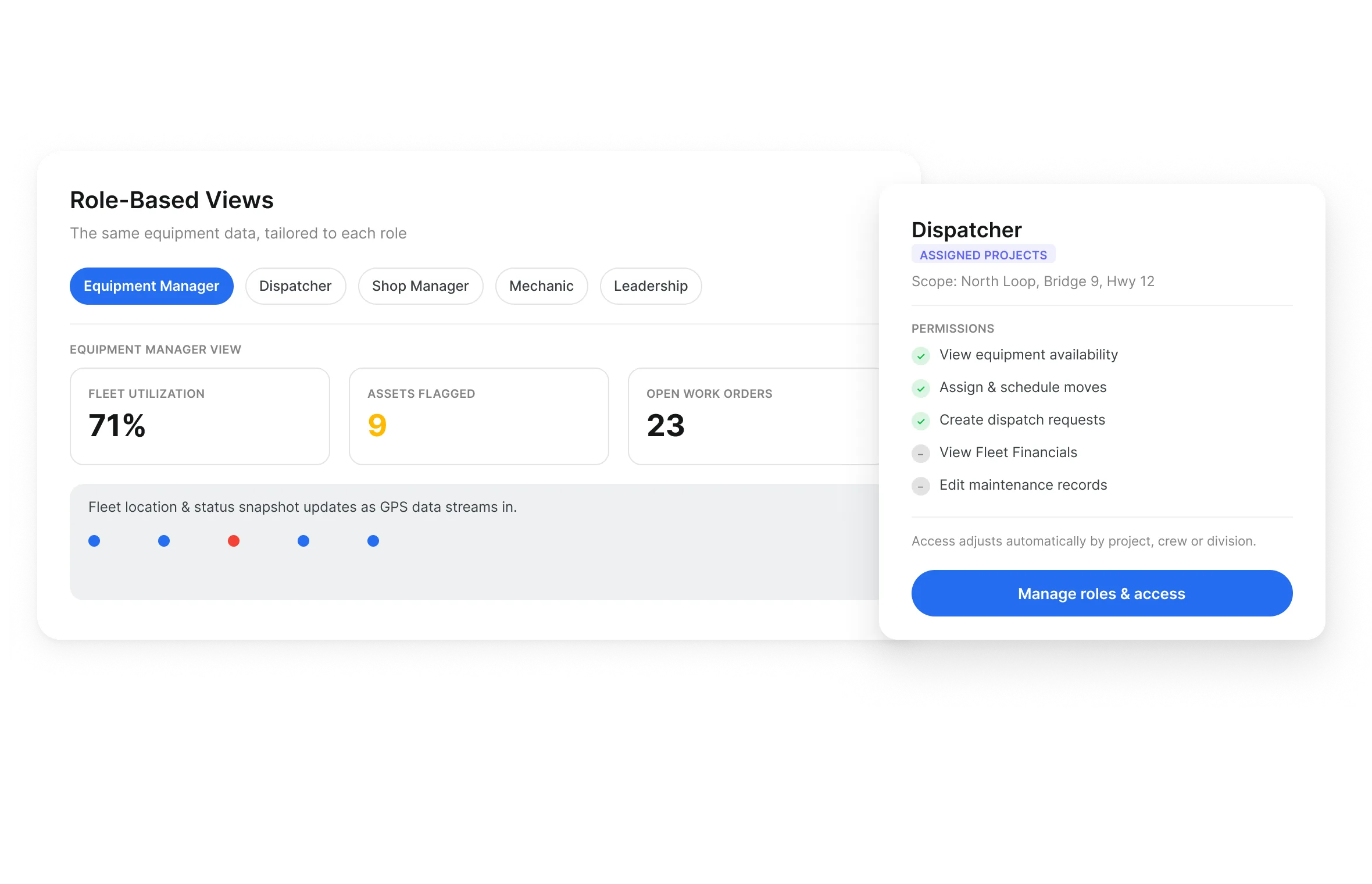
Give Each Role the Equipment View They Need
Different teams use the same equipment data for different work. Equipment managers need fleet visibility, dispatchers need availability and moves, shop teams need maintenance status, and leadership needs cost and utilization context.
Equipment manager view: Review fleet location, utilization, asset status, and maintenance visibility.
Dispatcher view: Manage resource planning, equipment requests, assignments, and delivery activity.
Shop manager view: Review work orders, PM schedules, inspection issues, and parts visibility.
Mechanic view: Access assigned work orders, asset details, inspection issues, and service history.
Leadership view: Review Fleet Financials, utilization, cost, and asset performance reporting.
Role-based access: Control what users can view or manage based on role, project, crew, division, or assigned scope.
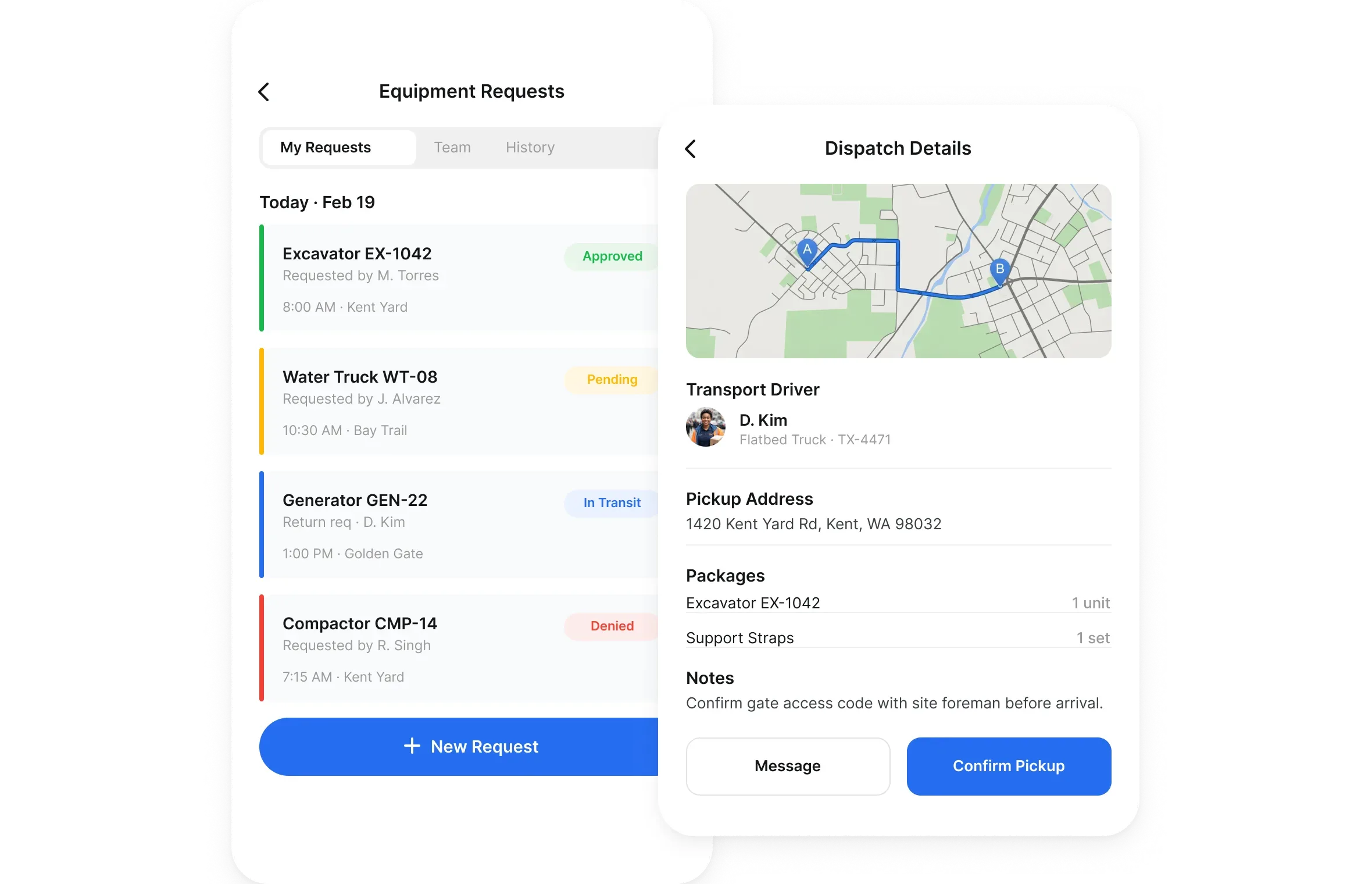
Keep Field Work Connected From Mobile
Equipment records gain value when jobsite activity flows into the system. Mobile access keeps field updates closer to the work, giving shop, dispatch, and office teams a more current operating view.
Mobile work orders: Create, update, add parts, log time, and mark work complete from mobile.
Mobile inspections: Complete inspection forms, capture pass/fail items, add notes, and attach photos from the field.
Mobile timecards: Submit driver or field timecard entries from the mobile app.
Dispatch and request updates: Receive push notifications for dispatch status changes, submitted requests, approvals, and work order activity.
Offline and draft support: Save interrupted inspections and other inputs as drafts when signal drops or work is interrupted.
Mobile PDF sharing: Export inspection reports as PDFs and share them from mobile.
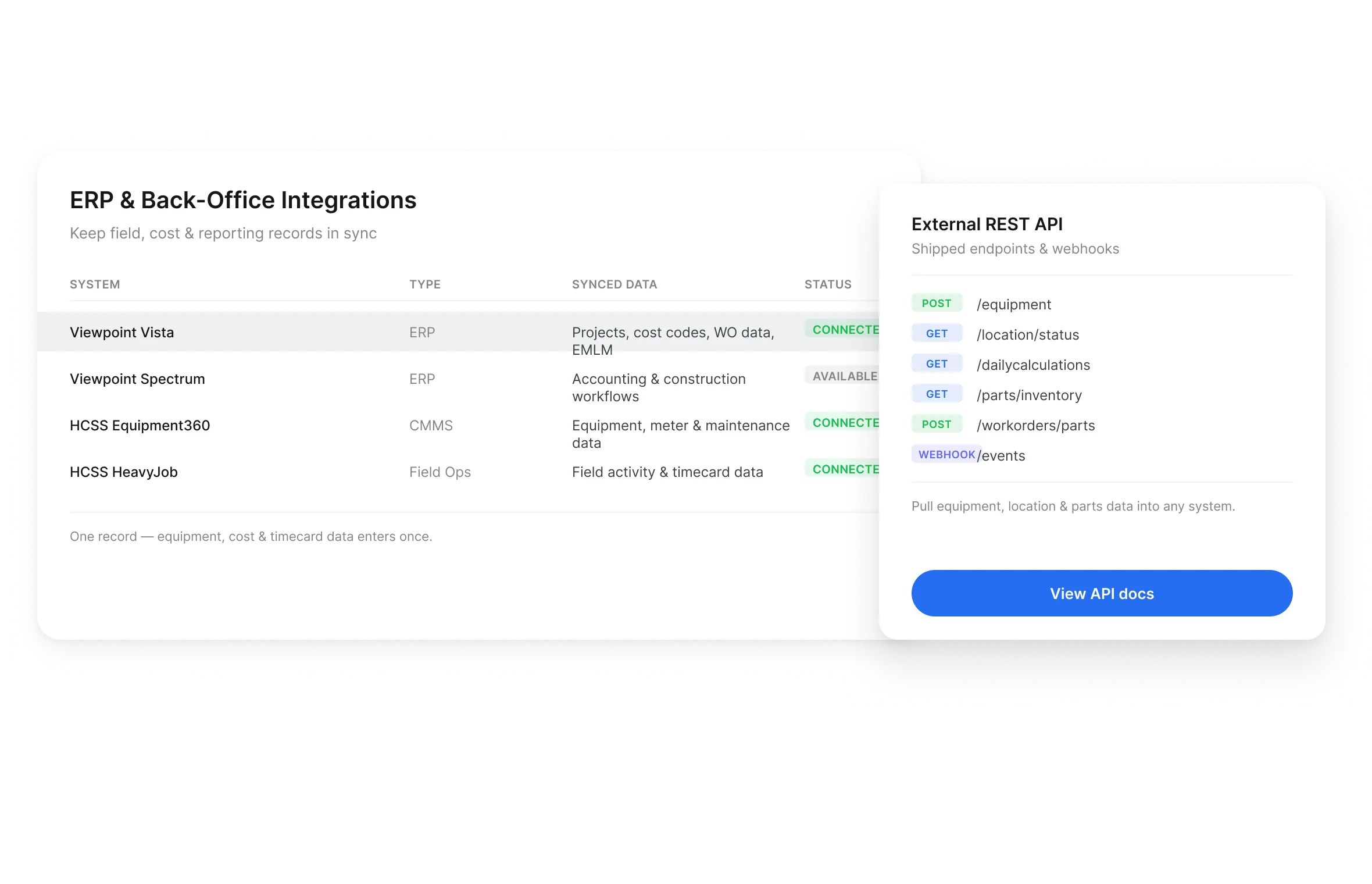
Connect Equipment Data to Back-Office Systems
Back-office systems often carry the financial record, while equipment teams manage the operational record. The integration layer connects field activity, maintenance work, cost tracking, and reporting.
Viewpoint Vista: Sync projects into Clue, push completed work order data back to Vista, map cost codes, and feed equipment location into Vista EMLM.
Viewpoint Spectrum: Connect Clue with Spectrum workflows for construction ERP and accounting data where supported.
HCSS integration: Connect supported HCSS Equipment360 and HeavyJob workflows with equipment, meter, maintenance, and field activity data.
External REST API: Use shipped endpoints for equipment creation, location status, historical utilization, parts and inventory, work order parts, and webhooks.
Prioritize Work From Equipment Signals
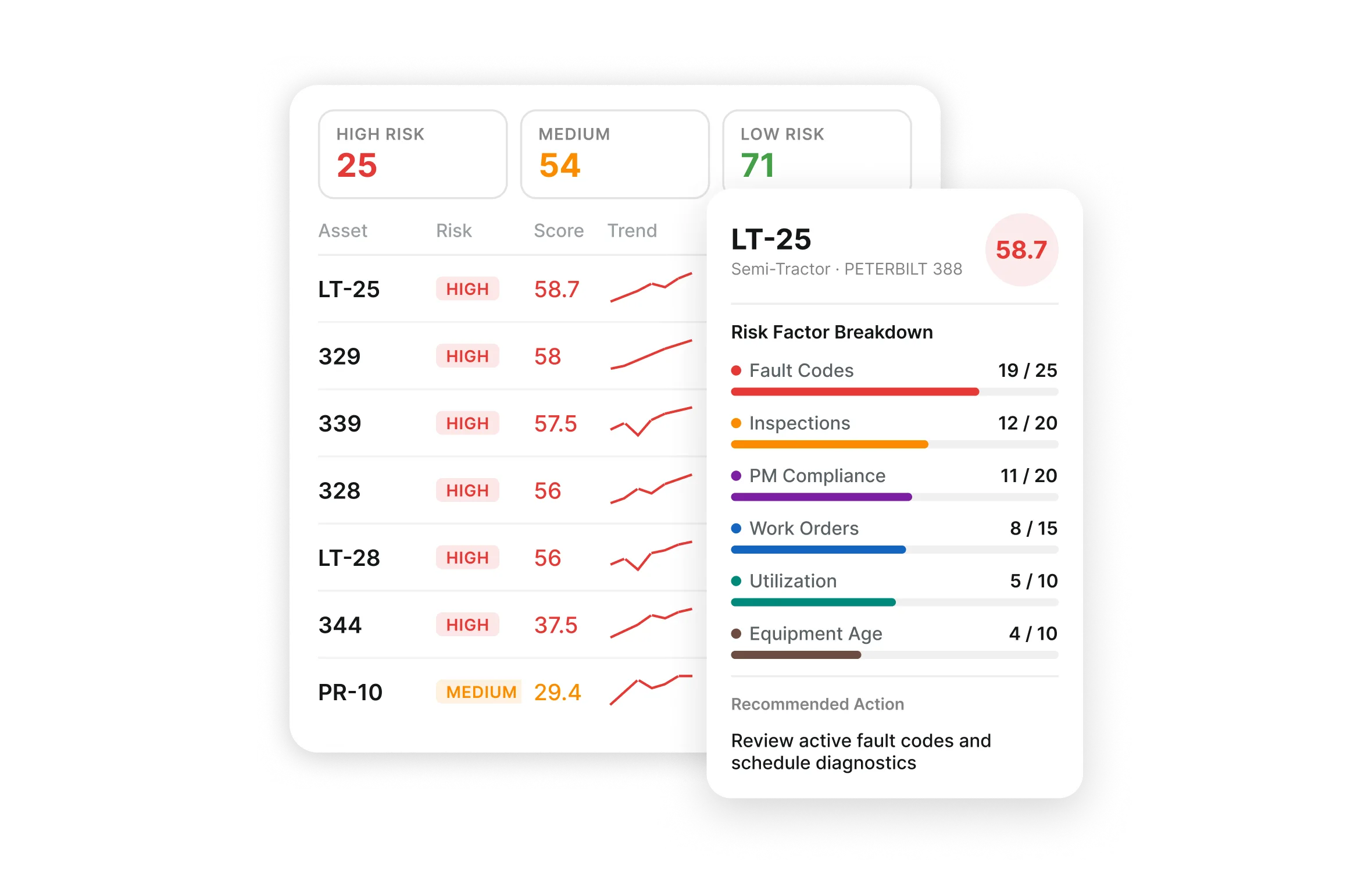
Equipment risk rarely comes from one signal alone. A clearer operating view helps teams connect service needs, idle time, open issues, and cost trends before they grow across the fleet.
PM dashboard: Review Good Standing, Upcoming, and Overdue PM status across the fleet.
Asset Health: Review high, medium, low, and not-scored assets with risk breakdowns and score trend visibility.
Fault code alerts: Receive alerts when connected equipment generates a fault code.
Failed inspection follow-up: Create a work order task when an inspection item is marked failed.
Automatic WO generation: Create work orders when a preventive maintenance interval is due.
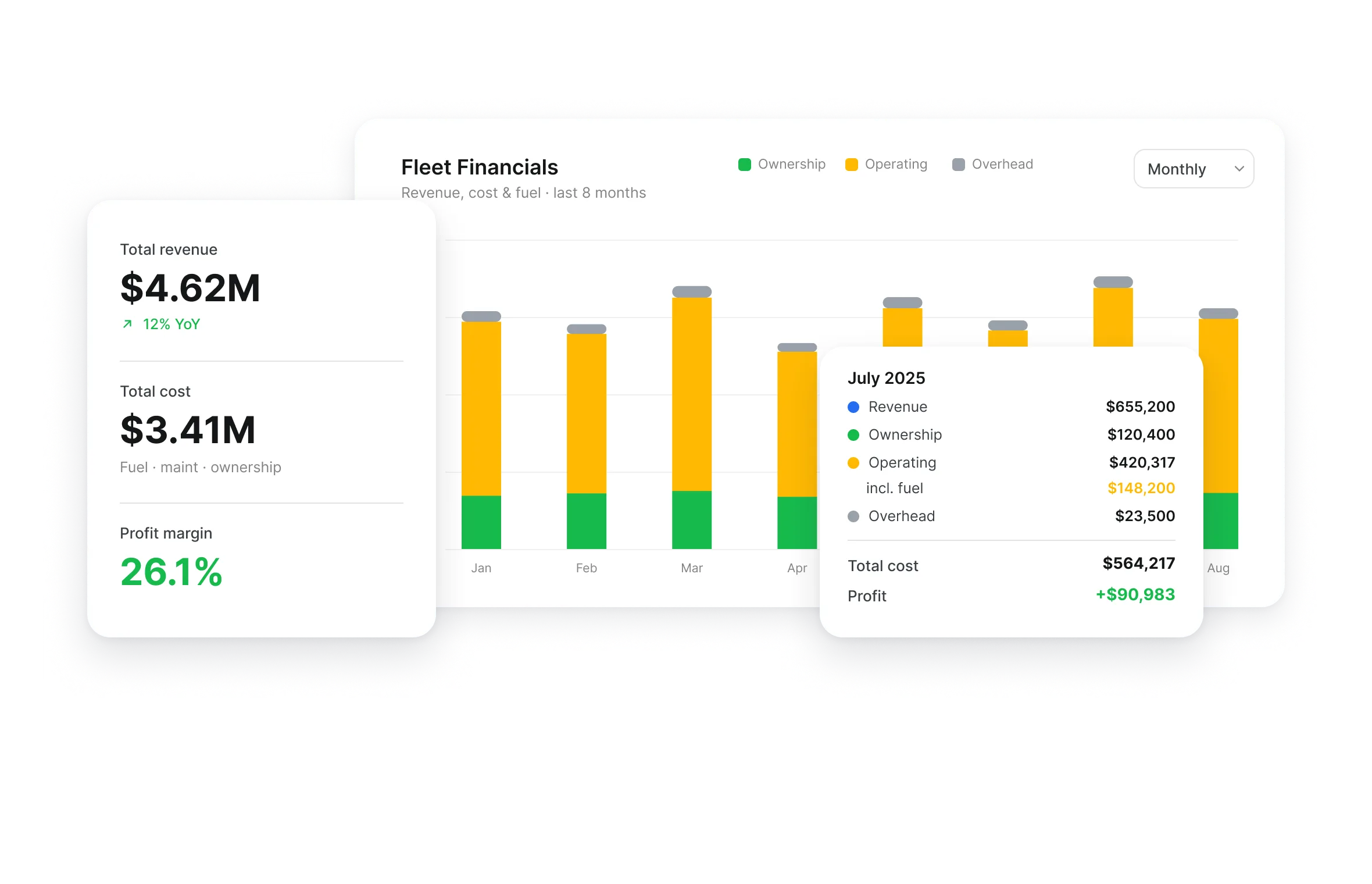
Fleet Financials: Review revenue, cost, and profitability by asset, fleet, and project.
Built for every role
Solutions for every team.
Construction runs on equipment. Clue runs equipment for every team. From mechanics to executives, every role gets the visibility, intelligence, and automation to run modern equipment operations.

Equipment Manager
“It's a single pane of glass where you see everything across your fleet, from the field to the phone to the computer.”
Abe Sharaf
Equipment Manager, Pulice Construction
Read Pulice’s story

Fleet Manager
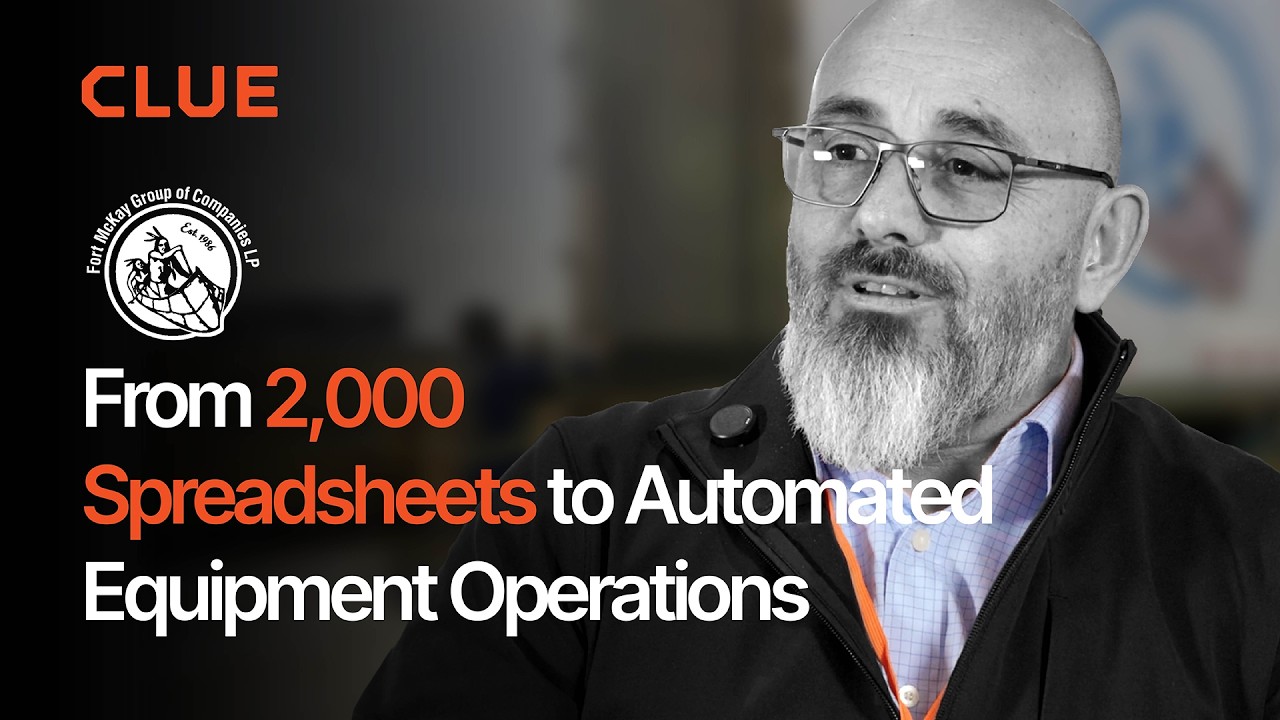
“Imagine receiving 2,000 spreadsheets that needed to be approved individually in an email. There were entire teams dedicated to that. Now the system is fully automated, completely automated from beginning to end.”
Julio Lopez
Fleet Manager, Fort McKay Group
Read Fort McKay’s story

CFO
“You went from doing two services a day to six services a day. That right there is priceless to me.”
Darrin Sheriff
Director of Maintenance & Purchasing, Palmetto Corp
Read Palmetto’s story

VP of Operations
“The big thing with Clue is that we're able to bridge the gap between our field, our operators in our shop, and other departments. Everybody's bought into Clue now.”
Eric Sellman
COO, Brent Scarbrough & Co
Read Brent Scarbrough’s story

Executive
“We had 20 different logins between all our different softwares and web platforms. Now all that information pulls into one spot and we're able to see it in a single place.”
John Igel
CEO, George Igel Co.
Read Igel’s story

Operations Manager
“The operator's in control of his own destiny. That was a huge reason why not only did I buy into it, but I'm also investing into it for the future.”
Ben Benoit
Operations Manager, Onshore Companies
Read Onshore’s story
Why teams choose Clue
Why Construction Teams Choose Clue as Their Single Platform
When field, shop, dispatch, and cost records live apart, equipment work slows down. Clue keeps the operating record connected from jobsite activity to back-office review.
Faster Issue Follow-Up
Failed inspections and fault code alerts can move into repair review before equipment problems disappear in texts, paper forms, or provider portals.
Stay Ahead of Service Windows
Good Standing, Upcoming, and Overdue PM status helps maintenance teams find due service work while there is still time.
Stronger Mixed Fleet Visibility
Tracked, untracked, owned, rented, and operated assets can stay visible in the same equipment system, even when part of the fleet has no telematics.
Faster Field-to-Shop Updates
Mobile inspections, work orders, timecards, requests, and dispatch updates keep jobsite activity closer to the asset record the shop uses.
Enter Data Once
Supported ERP, HCSS, API, and timecard workflows keep equipment activity, cost records, and reporting systems in sync.
Clearer Asset Financial Review
Fleet Financials helps teams review revenue, cost, profitability, and negative-margin assets before repair, rental, or redeployment decisions.
One Asset View Across
Every Data Source.
GPS, OEM telematics and business records can feed the same asset record. Clue connects OEM telematics, GPS and aftermarket trackers, and ERP, accounting and CMMS systems, and keeps hand-entered equipment in the same fleet view.












.png)






From the people who use it every day
What contractors see in the work.
“The big thing with Clue is that we’re able to bridge the gap between our field, our operators in our shop, and other departments.”
Brent Scarbrough & Company
“There were entire teams dedicated to approving spreadsheets one by one.”
Fort McKay First Nation
“The biggest difference has been the user friendliness.”
William A. Hazel
“It exposes dead cost or overhead that maybe we don’t know about because it gets lost in those three different systems.”
Moss Utilities
“Clue’s real-time data capability has completely changed the way we manage our assets.”
Darrin Sheriff, Director of Maintenance and Purchasing
“It was probably taking the better part of a day to combine all the data from the telematics.”
Derek Wolfe, Equipment Manager, George Igel Co.
“Clue allows us to effectively control our operations: financially, effectively and safely.”
Joseph Yammine, Project Manager, Graham
“QR codes have been a game changer for us with regards to operator inspections.”
Ben Benoit, Operations Manager
“It’s a single pane of glass where you see everything across your fleet, from the field to the phone to the computer.”
Abe Sharaf, Corporate Equipment Engineer
“Our field guys were tired of having a new product, a new something to learn each time.”
Rob Judge, Sr. Procurement & Program Manager
“Our equipment is in far better shape since we started using Clue, for sure.”
Jake Farley, Equipment Manager, Silver Star Construction














Parts Management in Clue: Requests, Delivery Tracking & Inventory
Template Manager in Clue: Inspection Templates, AI Import & Shared Categories
Preventive Maintenance in Clue: Build a PM Plan, Automate Work Orders
Work Orders in Clue: Repair History, Parts, and Labor Costs
Asset Directory in Clue: Saved Views, Bulk Edits & Meters
Common questions
Single pane of glass questions.
What does a single pane of glass mean for construction equipment management?
A single pane of glass for construction management means equipment teams can review asset location, maintenance, inspections, dispatch activity, utilization, costs, and reporting from one connected operating view. For construction equipment management, that reduces the need to jump between GPS portals, spreadsheets, maintenance tools, and back-office records.
Can Clue show tracked and untracked assets in the same view?
Yes. Clue supports mixed fleet management by keeping tracked and untracked assets side by side. GPS-connected assets can carry location and telematics data, while untracked assets can still carry records, inspections, maintenance history, documents, utilization context, and assignment details.
Does Clue update equipment data in real time?
Connected GPS and telematics data can update equipment location, hours, fault codes, and related signals as provider data comes in. Maintenance, inspection, dispatch, timecard, and work order records update as teams complete activity in Clue.
Can different team members see different views in Clue?
Yes. Clue supports role-based access for teams such as equipment managers, dispatchers, shop managers, mechanics, operators, drivers, fuelers, and administrators. Each user can work from the equipment data, workflows, and permissions relevant to their role.
See dispatch management softwareIs Clue available on mobile?
Yes. Clue has iOS and Android apps for field workflows such as mobile work orders, inspections, timecards, dispatch requests, request updates, and push notifications. This keeps jobsite activity connected to the same equipment record used by the shop, dispatch, and office teams.
Does Clue integrate with existing ERP or accounting systems?
Yes. Clue supports construction equipment software integrations with systems such as Viewpoint Vista, Viewpoint Spectrum, HCSS workflows, and external API connections. These integrations help equipment, work order, location, cost code, timecard, and reporting data stay closer to the back-office systems teams already use.
See all Clue integrationsCan Clue dashboard data be exported or shared?
Yes. Clue supports scheduled report delivery, report sharing, inspection PDF exports, and external API access for historical utilization, equipment, location, parts, inventory, work order parts, and webhook data. Teams can send recurring reports on daily, weekly, or monthly schedules.
How long does it take to onboard a fleet into Clue?
Onboarding depends on fleet size, data quality, integrations, and the workflows being implemented. Clue supports faster setup through asset records, VIN auto-lookup, templates, integrations, role-based access, and data import workflows that help teams move equipment information into the platform.
Does Clue support SSO for enterprise teams?
Yes. Clue supports SSO for enterprise customers, so teams can authenticate through their own identity provider. Clue also supports role-based access, and SCIM provisioning is available for managing users at scale where configured.
Can the construction equipment management dashboard be customized?
Clue supports role-based views, configurable reports, filters, scheduled reporting, and access controls. Teams can review equipment data by the views and reporting workflows that matter to their work, including utilization, maintenance, inspections, dispatch, financials, and asset records.
See equipment utilization software