



Construction Equipment Utilization Software for Smarter Fleet Decisions
Track utilization across every asset, including equipment with telematics and equipment without connected data. Clue helps construction fleets review utilization rate, idle time, meter readings, usage gaps, and target performance so teams can right-size the fleet with cleaner usage data.




Utilization management
One view for every asset. From work to idle.
Track Utilization From Telematics and Manual Readings
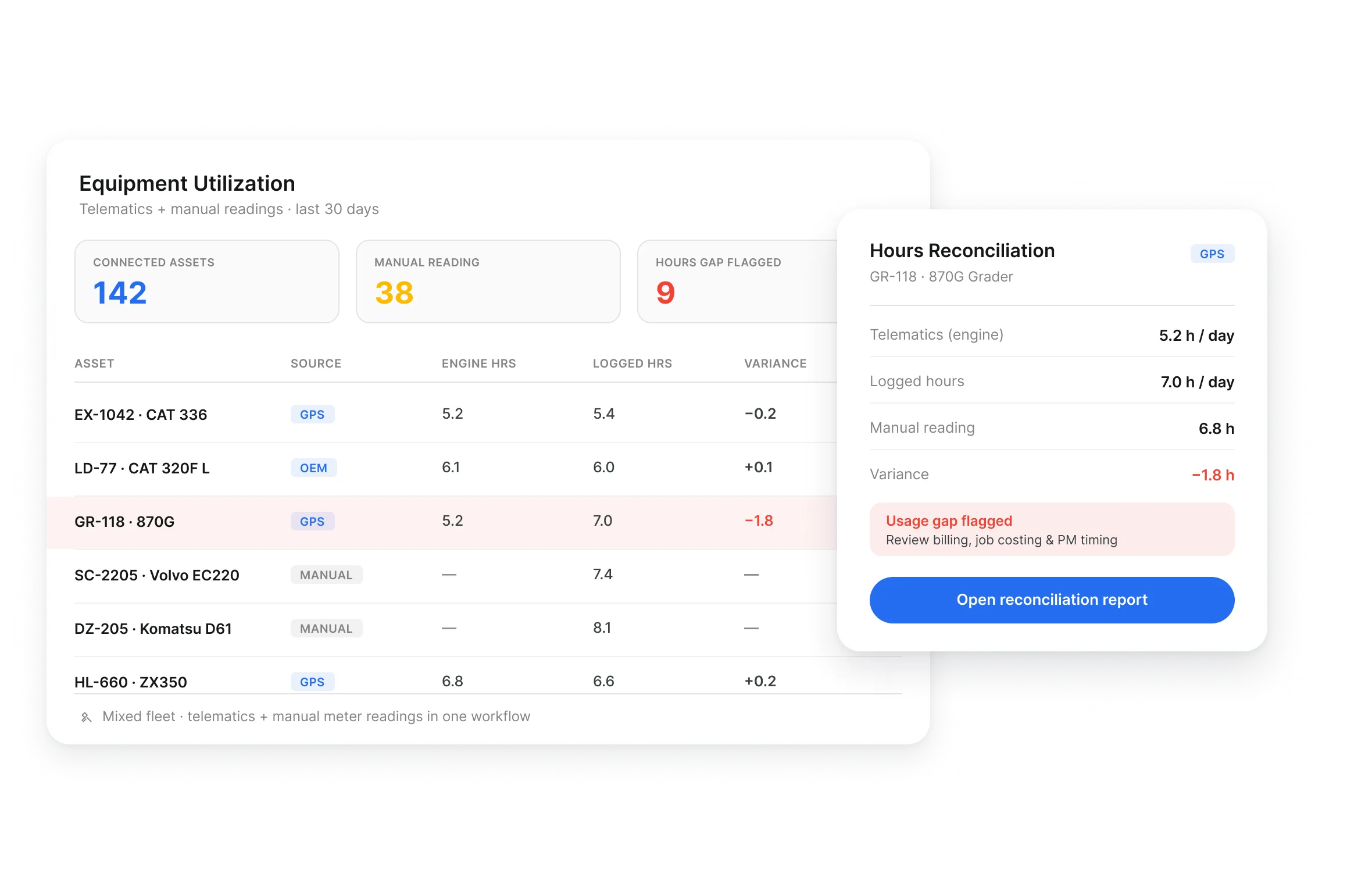
A reliable equipment utilization report has to account for both connected and untracked equipment. Telematics hours, odometer readings, logged hours and manual meter readings give fleet teams the usage record they need to compare every asset while keeping the fleet in one view.
Telematics hours: pull engine hours, odometer readings and usage data from supported GPS and OEM telematics sources.
Manual readings by asset: capture meter readings for equipment without connected telematics, so connected and untracked assets stay in one construction fleet utilization workflow.
Hours Reconciliation: compare telematics hours against logged hours to identify usage gaps.
Review Utilization by Fleet, Project, Asset, and Target
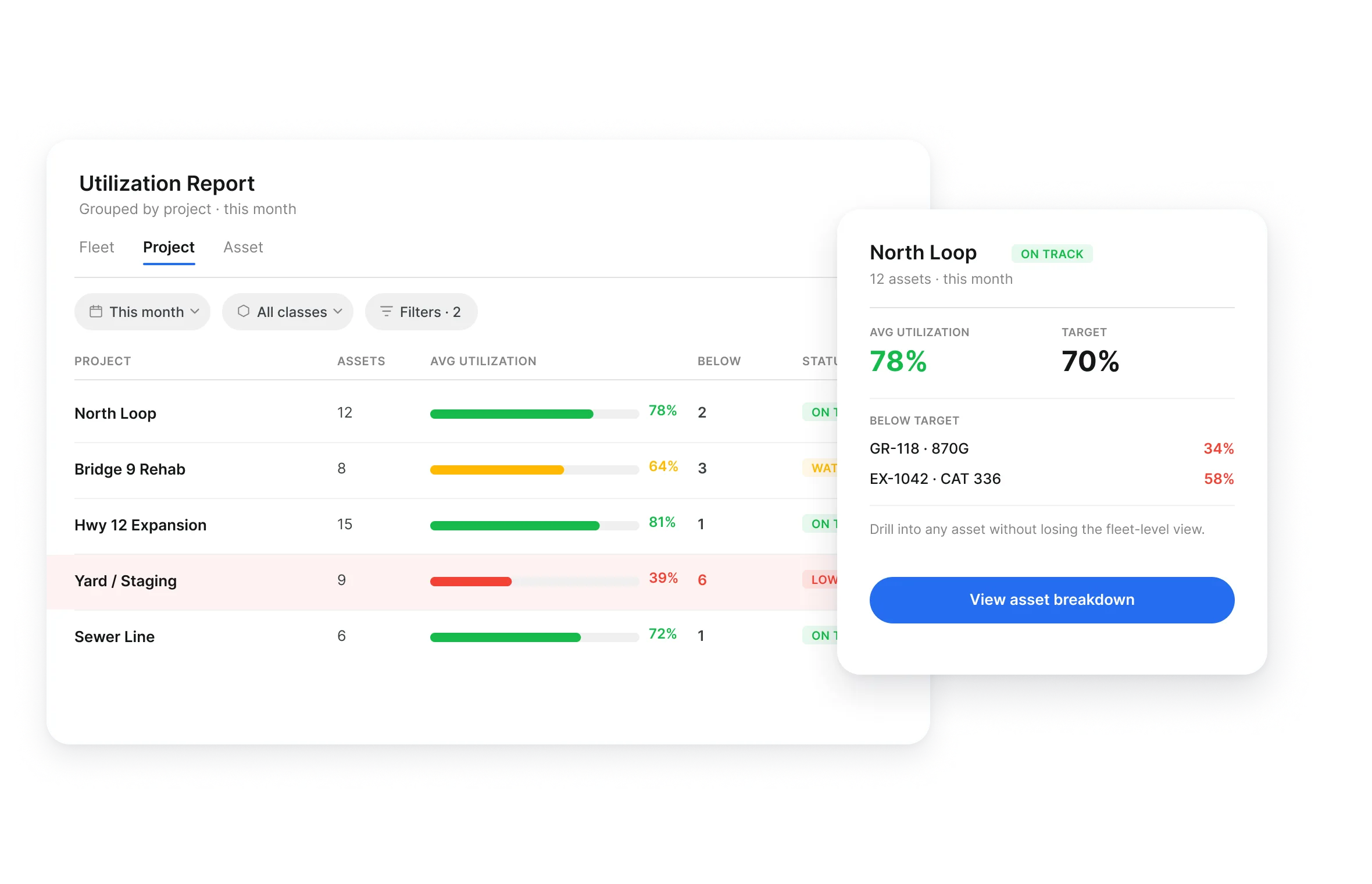
Utilization reporting should show more than a total hour count. Fleet teams need asset-level, project-level and target-based views to see which equipment is meeting plan, falling short, sitting idle, or worth closer review before the next planning cycle.
Asset-level review: review utilization by individual asset without losing the fleet-level view.
Project-level view: compare utilization across jobsites by day, week, month or a selected reporting period.
Utilization targets: set expected usage targets by asset and review equipment falling below plan.
Track Equipment Idle Time and Working Hours
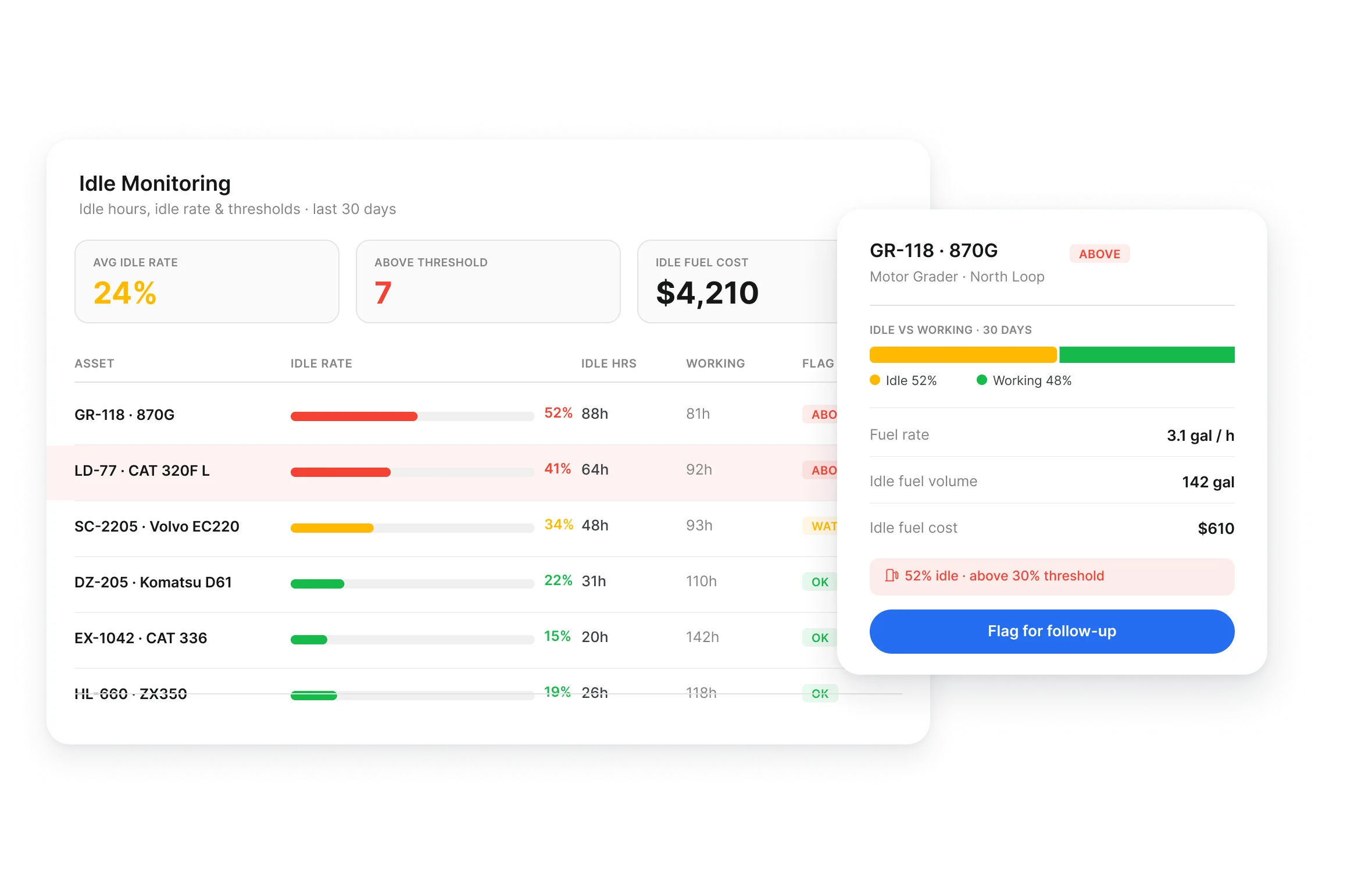
Idle time is one of the clearest signs that equipment utilization is drifting from plan. Fleet teams need to compare idle activity, working hours, fuel use and utilization targets to see which assets can put more of their hours to work.
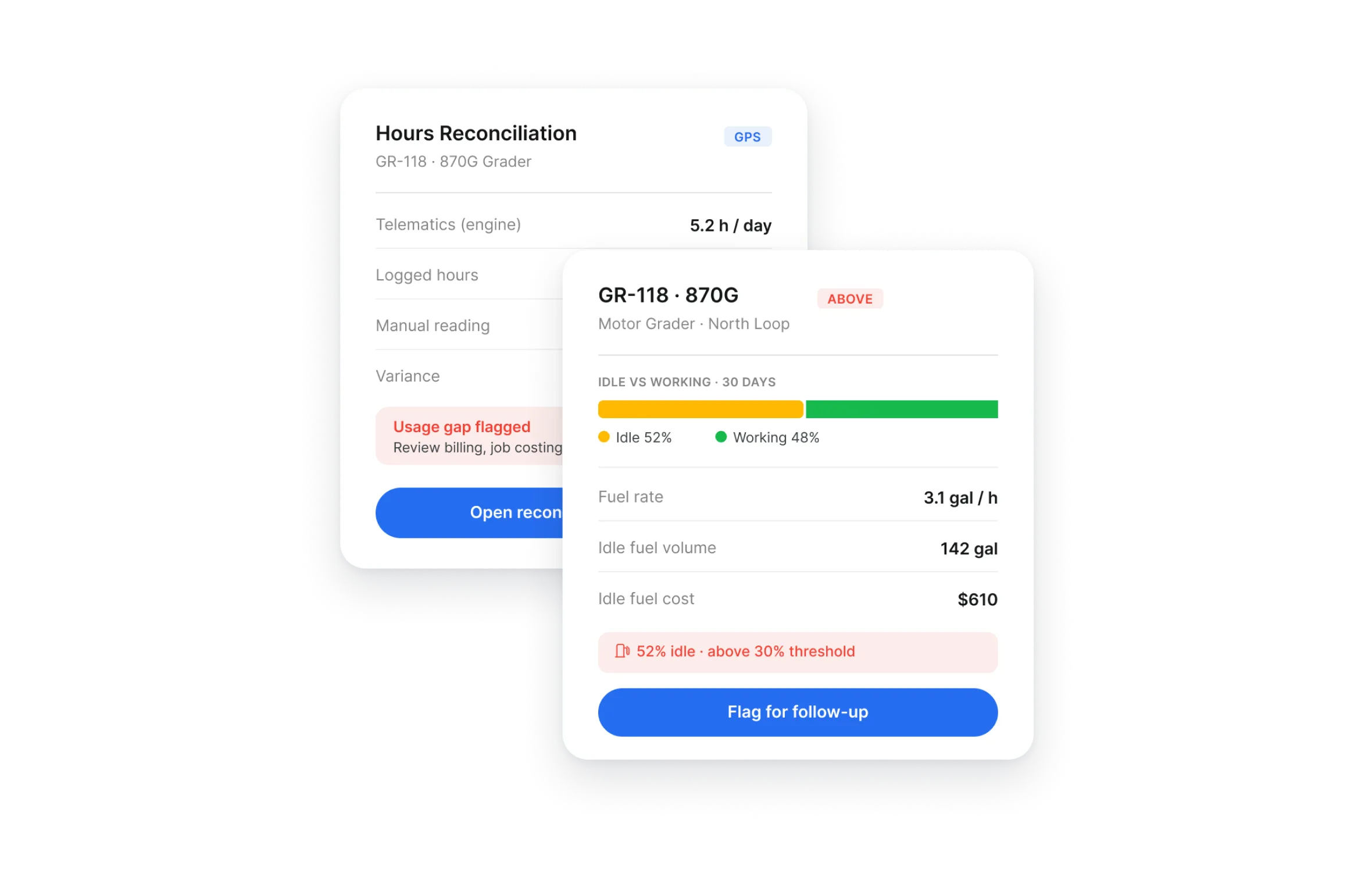
Idle vs working hours: review idle activity across equipment and fleet groups next to active operating hours.
Fuel usage: review fuel rate, volume and cost alongside utilization and idle activity where supported.
Idle follow-up: compare idle-heavy assets against expected usage targets with equipment idle time software, then plan reassignment, rental return, service review or dispatch follow-up.
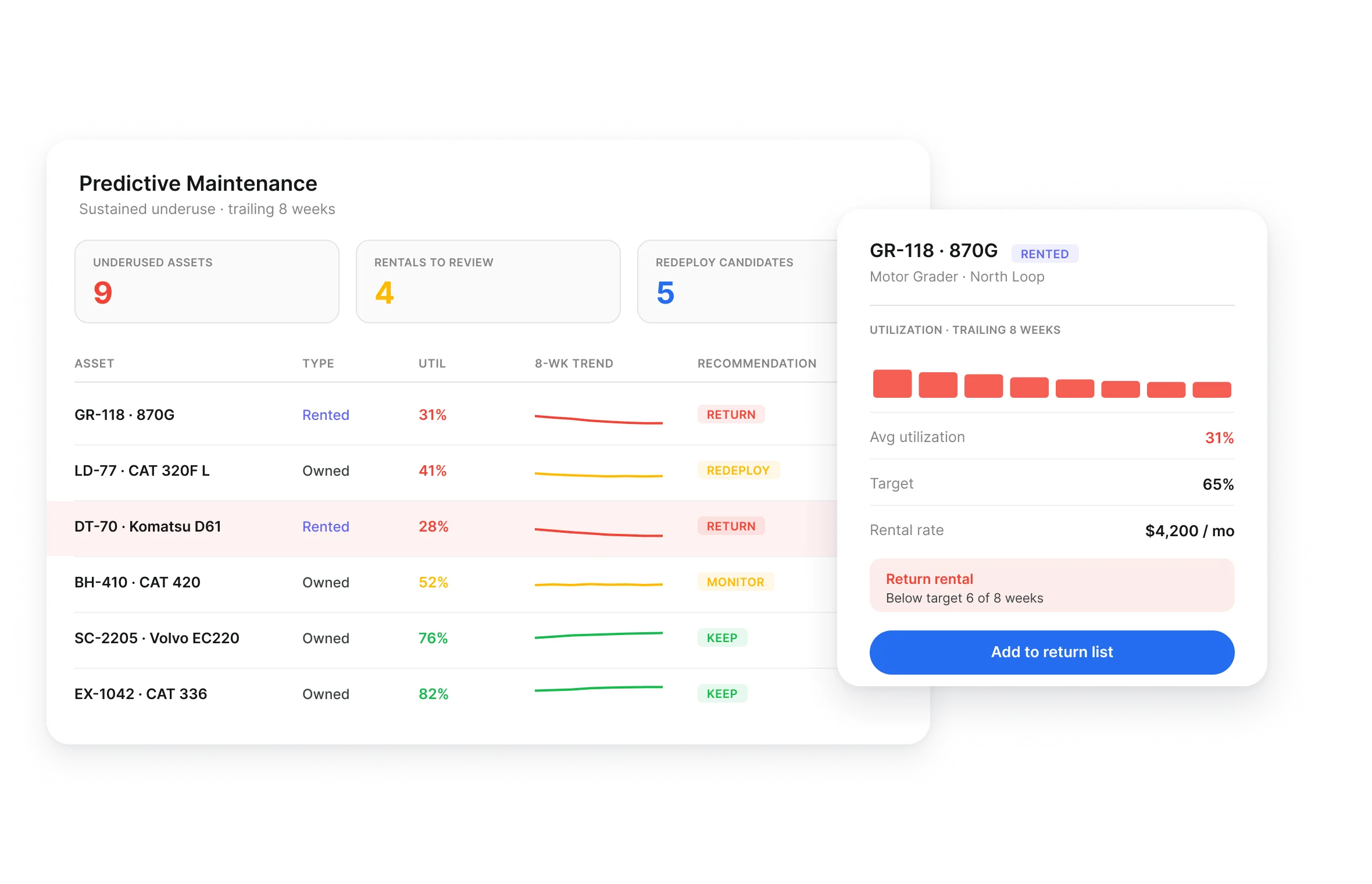
Use Utilization Trends for Fleet Rightsizing Decisions
Short-term staging and sustained underuse are not the same thing. Utilization targets, rental hours and usage history help fleet teams separate equipment that is temporarily parked from assets that may need reassignment, rental return, replacement review or closer cost evaluation.
Underutilization review: identify equipment tracking below configured utilization targets.
Rental utilization: review operating hours on rented equipment before renewal, return or billing decisions.
Trend history: track utilization over time with fleet rightsizing software and build a review list of assets to redeploy, return, replace or evaluate further.
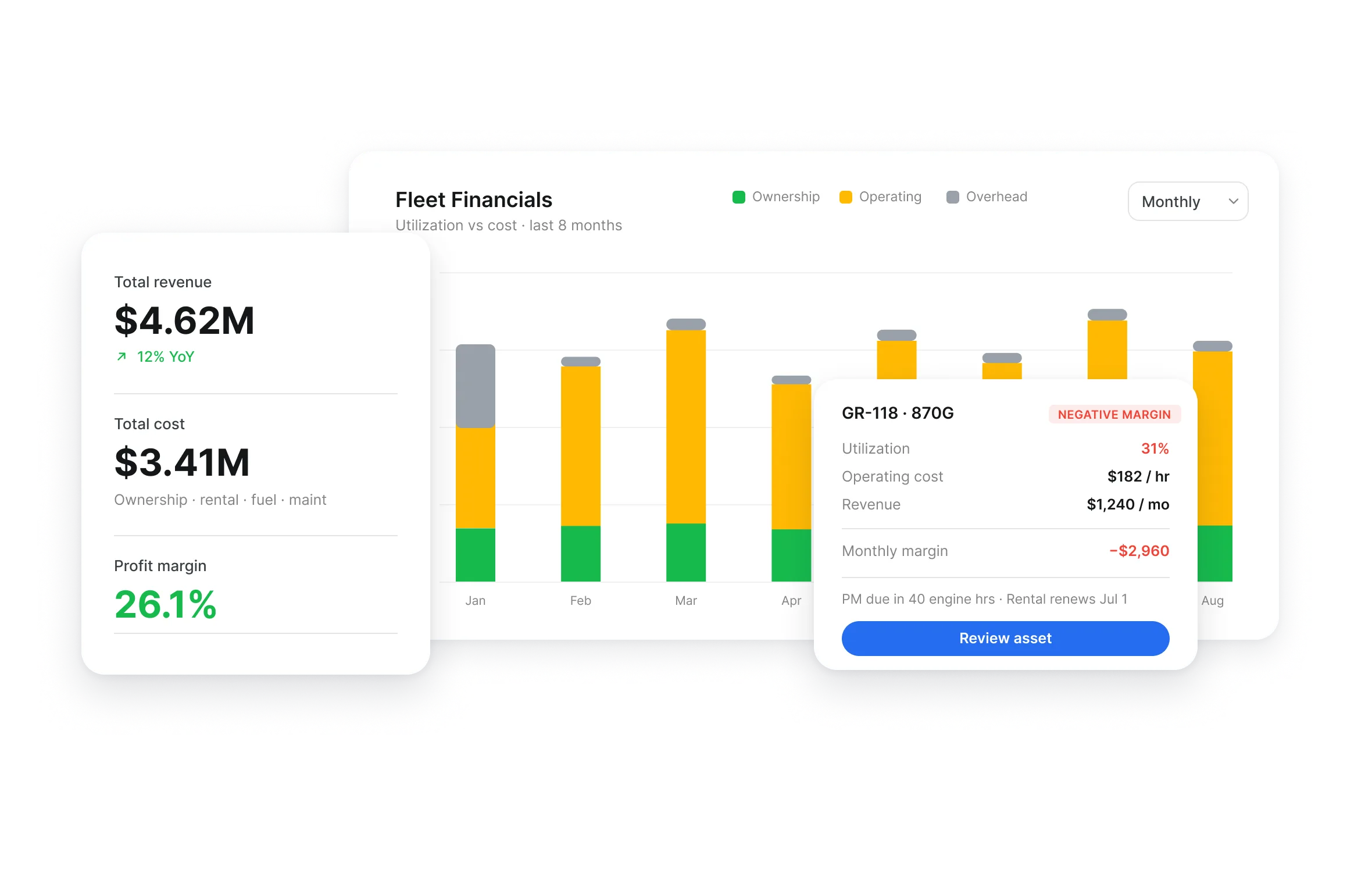
Connect Utilization to PM, Rentals, and Cost Review
Utilization is more than a usage metric. Engine hours, operating history, rental activity and target variance help teams plan PMs, review rental value, compare asset performance and understand whether equipment is supporting the cost of keeping it in the fleet.
PM planning: use engine hours and usage activity to support preventive maintenance scheduling and rental return decisions.
Fleet Financials: review utilization alongside revenue, cost and profitability by asset, fleet or project.
Asset history: keep usage, PM activity, repairs, rentals and cost signals tied to the asset record for fuel, maintenance, rental and ownership cost review.
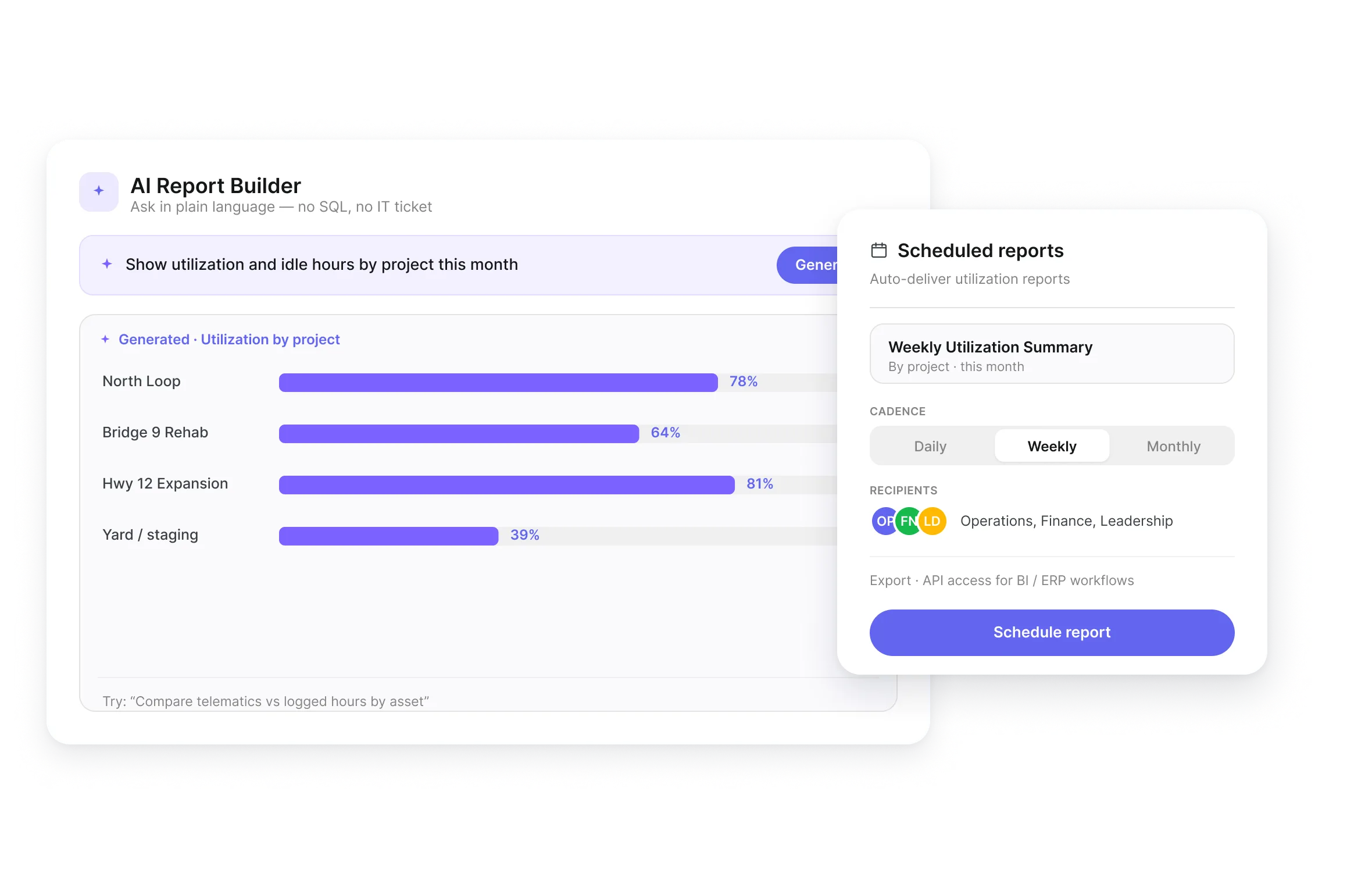
Schedule Equipment Utilization Reports for Fleet Review
Weekly utilization review needs the same usage signals every time: operating hours, target performance, idle activity and asset-level trends. Scheduled reports and filtered views give operations, finance and leadership a consistent way to review fleet performance and reuse the same report each cycle.
Scheduled reports: send utilization reports to selected recipients on a daily, weekly or monthly cadence.
Filtered views: review utilization by asset, project, fleet group, date range or available reporting fields against configured target utilization.
AI Report Builder: create utilization reports from plain-language requests without SQL or an IT ticket, then share summaries with operations, finance and leadership.
Built for every role
Solutions for every team.
Construction runs on equipment. Clue runs equipment for every team. From mechanics to executives, every role gets the visibility, intelligence, and automation to run modern equipment operations.

Equipment Manager
“It's a single pane of glass where you see everything across your fleet, from the field to the phone to the computer.”
Abe Sharaf
Equipment Manager, Pulice Construction
Read Pulice’s story

Fleet Manager
“Imagine receiving 2,000 spreadsheets that needed to be approved individually in an email. There were entire teams dedicated to that. Now the system is fully automated, completely automated from beginning to end.”
Julio Lopez
Fleet Manager, Fort McKay Group
Read Fort McKay’s story

CFO
“You went from doing two services a day to six services a day. That right there is priceless to me.”
Darrin Sheriff
Director of Maintenance & Purchasing, Palmetto Corp
Read Palmetto’s story

VP of Operations
“The big thing with Clue is that we're able to bridge the gap between our field, our operators in our shop, and other departments. Everybody's bought into Clue now.”
Eric Sellman
COO, Brent Scarbrough & Co
Read Brent Scarbrough’s story

Executive
“We had 20 different logins between all our different softwares and web platforms. Now all that information pulls into one spot and we're able to see it in a single place.”
John Igel
CEO, George Igel Co.
Read Igel’s story

Operations Manager
“The operator's in control of his own destiny. That was a huge reason why not only did I buy into it, but I'm also investing into it for the future.”
Ben Benoit
Operations Manager, Onshore Companies
Read Onshore’s story
Across the fleet
Why Construction Fleets Track Utilization With Clue
Clue turns utilization data into focused review paths for hour accuracy, idle time, rental spend, asset planning and fleet reporting.
Precise Hour Data for Better Decisions
Combine telematics hours, manual meter readings and logged hours so you can review connected and untracked assets in one utilization workflow.
More Hours Put to Work
Review idle activity, working hours, fuel usage and utilization targets to find equipment that can put more of its hours to work.
Smarter Rental Return Decisions
Use rental operating hours and usage trends to identify equipment to return, reassign or review before the next billing cycle.
Stronger Fleet Rightsizing Signals
Compare utilization targets, usage history, owned assets and rented assets to identify what to redeploy, replace, return or evaluate further.
Better Maintenance Timing
Use engine hours, operating activity and usage history to support PM planning around actual equipment use instead of static schedules alone.
Repeatable Fleet Review
Schedule utilization reports and filtered views so operations, finance and leadership can review the same usage signals on a consistent cadence.
Equipment Data Stays
With the Plan.
Equipment data and business records can feed the same utilization view. Clue connects OEM telematics, GPS and aftermarket trackers, and ERP, accounting and maintenance systems, and keeps hand-entered equipment in the same view.















.png)







From the people who use it every day
What contractors see in the work.
“The big thing with Clue is that we’re able to bridge the gap between our field, our operators in our shop, and other departments.”
Brent Scarbrough & Company
“There were entire teams dedicated to approving spreadsheets one by one.”
Fort McKay First Nation
“The biggest difference has been the user friendliness.”
William A. Hazel
“It exposes dead cost or overhead that maybe we don’t know about because it gets lost in those three different systems.”
Moss Utilities
“Clue’s real-time data capability has completely changed the way we manage our assets.”
Darrin Sheriff, Director of Maintenance and Purchasing
“It was probably taking the better part of a day to combine all the data from the telematics.”
Derek Wolfe, Equipment Manager, George Igel Co.
“Clue allows us to effectively control our operations: financially, effectively and safely.”
Joseph Yammine, Project Manager, Graham
“QR codes have been a game changer for us with regards to operator inspections.”
Ben Benoit, Operations Manager
“It’s a single pane of glass where you see everything across your fleet, from the field to the phone to the computer.”
Abe Sharaf, Corporate Equipment Engineer
“Our field guys were tired of having a new product, a new something to learn each time.”
Rob Judge, Sr. Procurement & Program Manager
“Our equipment is in far better shape since we started using Clue, for sure.”
Jake Farley, Equipment Manager, Silver Star Construction














Parts Management in Clue: Requests, Delivery Tracking & Inventory
Template Manager in Clue: Inspection Templates, AI Import & Shared Categories
Preventive Maintenance in Clue: Build a PM Plan, Automate Work Orders
Work Orders in Clue: Repair History, Parts, and Labor Costs
Asset Directory in Clue: Saved Views, Bulk Edits & Meters
Common questions
Construction equipment utilization software FAQ.
What is construction equipment utilization software?
Construction equipment utilization software, also called heavy equipment utilization software, tracks how equipment is being used across jobsites, yards, rentals and mixed fleets. It supports equipment utilization tracking by reviewing operating hours, idle hours, utilization rate, manual meter readings, telematics activity and usage targets.
How does Clue calculate equipment utilization?
Clue uses available usage inputs such as engine hours, odometer readings, telematics activity, manual meter readings, logged hours, idle activity and configured utilization targets. Teams can review construction fleet utilization by asset, project, fleet group, date range and available reporting fields.
Can Clue track utilization for equipment without telematics?
Yes. Clue supports mixed fleets where some assets have GPS or OEM telematics and others rely on manual readings or asset records. This keeps connected and untracked equipment in the same utilization workflow.
Can I set utilization targets for different equipment types?
Yes. Teams can set utilization targets by asset or asset class so different equipment can be measured against realistic usage expectations. Target performance helps teams identify assets that may need reassignment, rental return, replacement review or closer monitoring.
What utilization metrics can teams review in Clue?
Teams can review operating hours, idle hours, idle rate, utilization rate, engine hours, odometer readings, fuel rate where supported, daily utilization and target performance. Available metrics depend on the connected data sources and reporting setup.
Can equipment idle time software help reduce idle time?
Yes. Equipment idle time software helps teams review idle hours, idle rate, excessive idling thresholds and usage patterns. Clue helps surface equipment that is idling, sitting or falling below expected utilization so teams can review reassignment, rental return, service follow-up or dispatch follow-up.
How does Clue support equipment hours tracking?
Clue tracks equipment hours from supported telematics sources, OEM data, manual meter readings and logged hours. Teams can use Hours Reconciliation to compare telematics hours against logged hours and identify usage gaps before they affect billing, job costing, maintenance timing or chargebacks.
How does utilization data connect to maintenance scheduling?
Utilization data helps maintenance teams plan service around actual usage signals such as engine hours, odometer readings and operating activity. This supports preventive maintenance timing and keeps service planning closer to how equipment is being used.
How does utilization data help with rental management?
Rental utilization shows whether rented equipment is being used enough to justify continued cost. Clue helps teams review rental operating hours, idle activity and usage trends before renewal, return, reassignment or cost review decisions.
Can utilization software help with fleet rightsizing?
Yes. Fleet rightsizing software helps teams compare operating hours, idle activity, rental utilization, utilization targets and trend history. Clue gives fleet teams cleaner usage data to identify assets that may need reassignment, rental return, replacement review or closer evaluation.
Can Clue generate custom equipment utilization reports?
Yes. Clue supports equipment utilization reports by asset, project, fleet group, date range and available reporting fields. Teams can schedule reports for daily, weekly or monthly delivery, export utilization summaries, and use AI Report Builder to create custom reports from plain-language requests without SQL or an IT ticket.
Can utilization data be exported or connected to other systems?
Yes. Clue supports exportable reports and API access for approved utilization data workflows. Enterprise teams can use historical utilization data in external dashboards, BI tools, ERP reporting workflows or other connected systems where configured.
Why use Clue instead of only using telematics dashboards?
Telematics dashboards show equipment activity, but utilization decisions often need more context from asset records, manual readings, logged hours, rentals, maintenance, fuel, cost review and reporting workflows. Clue brings those utilization signals into one construction-focused workflow.
How much does Clue equipment utilization software cost?
Current plans and included features are listed on the pricing page.
See Clue pricingWhat does setup involve?
Setup starts with your asset list and your usage sources. A Clue analyst works through telematics connections, manual meter readings and utilization targets with your team, so your first utilization reports run on your own data.