



Construction Equipment Economics Software That Supports Every Fleet Decision
Know the true cost of every piece of equipment before you buy, lease, or hold it. Clue equipment economics gives fleet managers and CFOs the data to make smarter asset decisions, from total cost of ownership to replacement timing.


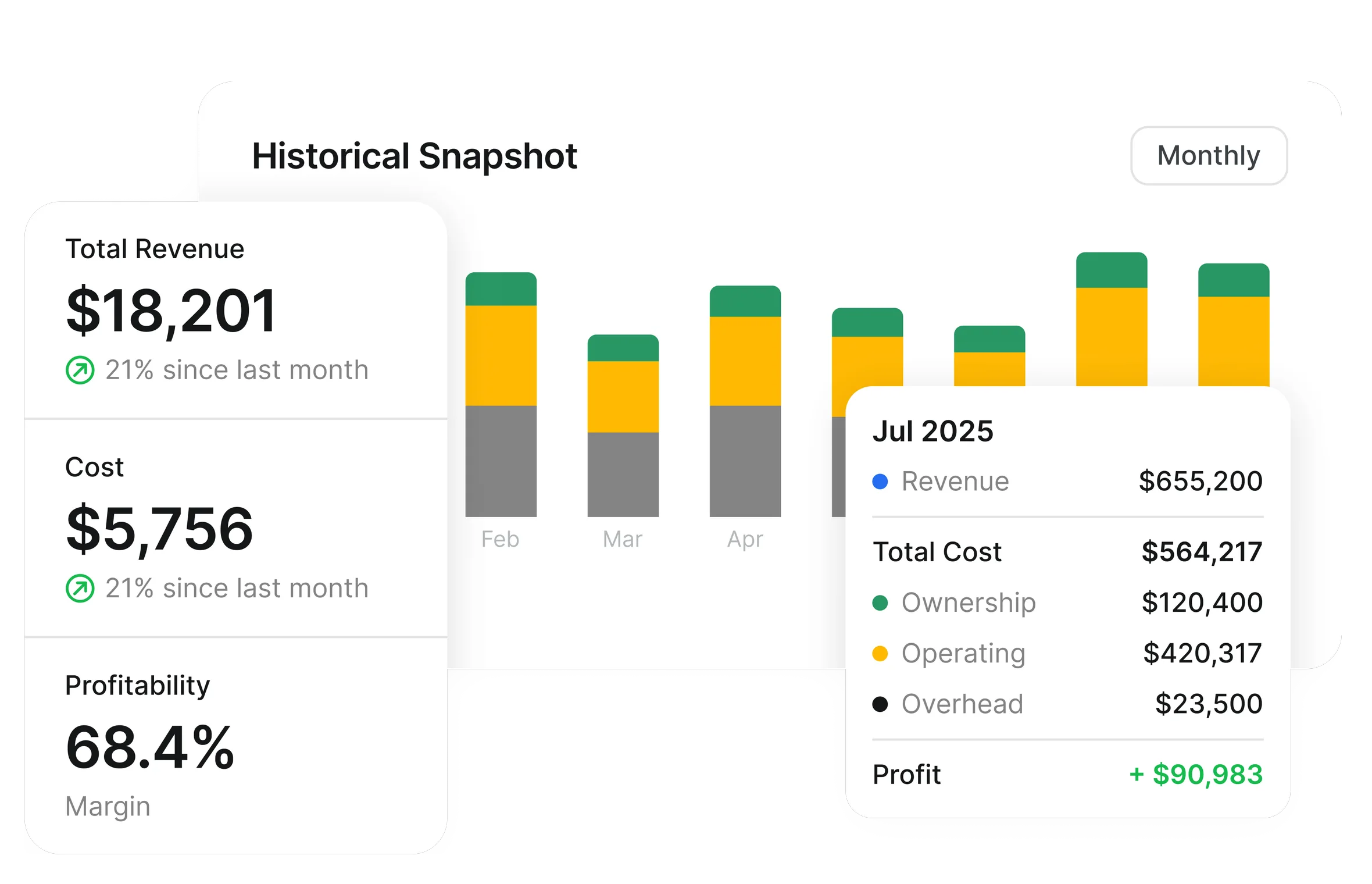


Equipment economics
Every cost, per asset. Every decision, on data.
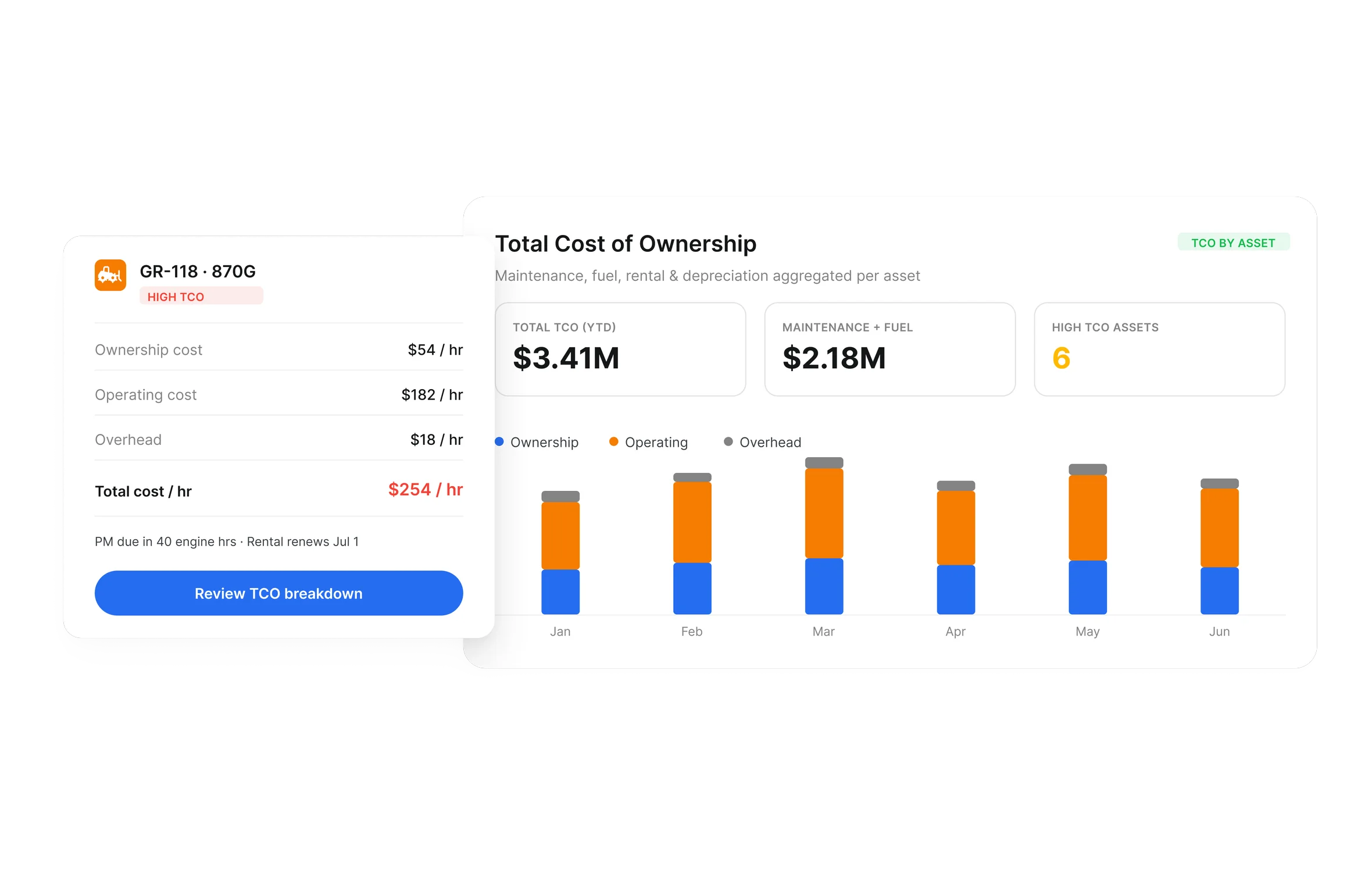
Total Cost of Ownership for Every Asset
The sticker price of equipment is only the beginning. Clue aggregates maintenance costs, fuel spend, rental rates, and depreciation into a total cost of ownership view so you know what every asset actually costs to operate over time.
TCO per asset: All cost categories aggregated per piece of equipment
Maintenance cost rollup: All WO labor and parts costs tracked against the asset
Fuel cost per asset: Fuel spend per engine hour per asset from telematics
Rental cost tracking: Rental fees tracked separately from owned asset costs
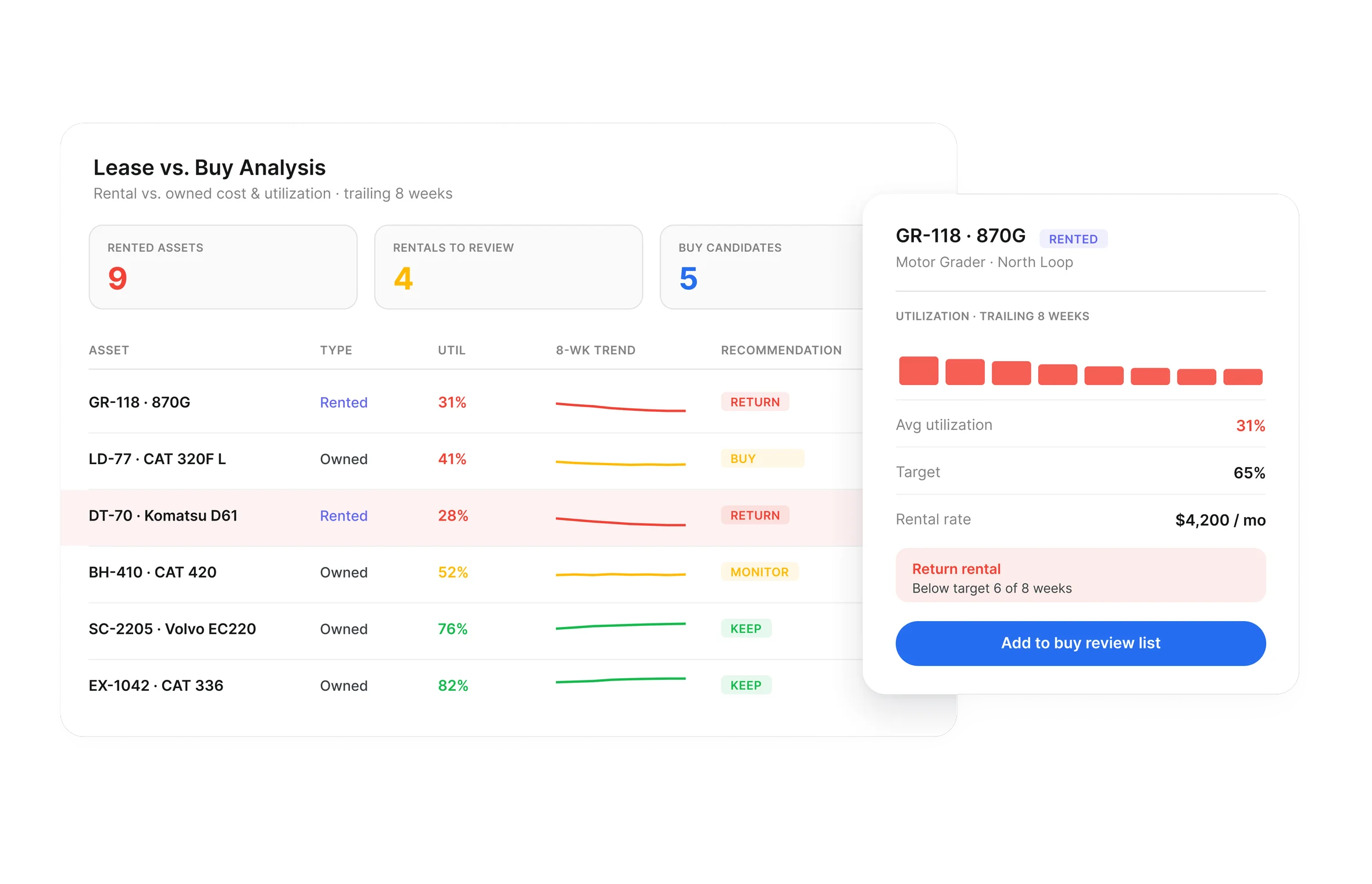
Lease vs. Buy Analysis With Real Fleet Data
The lease vs. buy decision works best on real data. Clue provides the actual utilization, maintenance, and cost data for existing owned and rented assets so your analysis starts from real numbers, not industry averages.
Rental cost vs. owned cost: Side-by-side comparison for the same asset class
Utilization factor: Include actual utilization in the cost-per-hour calculation
Maintenance cost by asset age: See how maintenance costs change as equipment ages
Decision support export: Download cost data for CFO and ownership review
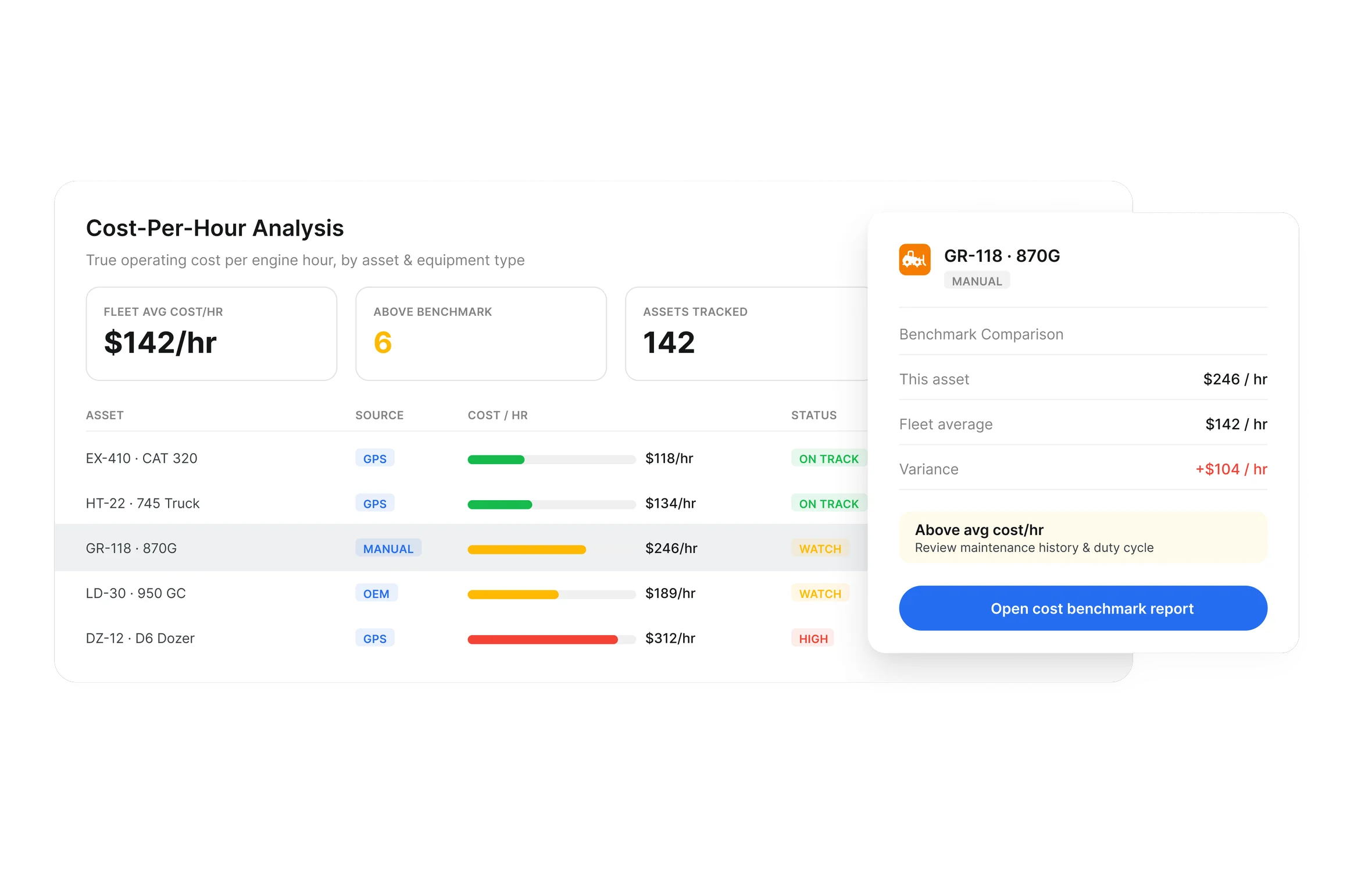
Cost-Per-Hour Analysis by Equipment Type
Cost per hour is the universal metric for comparing equipment value. Clue calculates true cost per hour by dividing total cost (ownership, maintenance, fuel) by actual engine hours from telematics for every asset in your fleet.
Cost-per-hour by asset: True operating cost per engine hour per piece of equipment
Cost-per-hour by equipment type: Compare average cost efficiency across asset categories
Trending over time: Track how cost per hour changes as equipment ages
Benchmark comparison: Compare your cost per hour against similar assets in the fleet
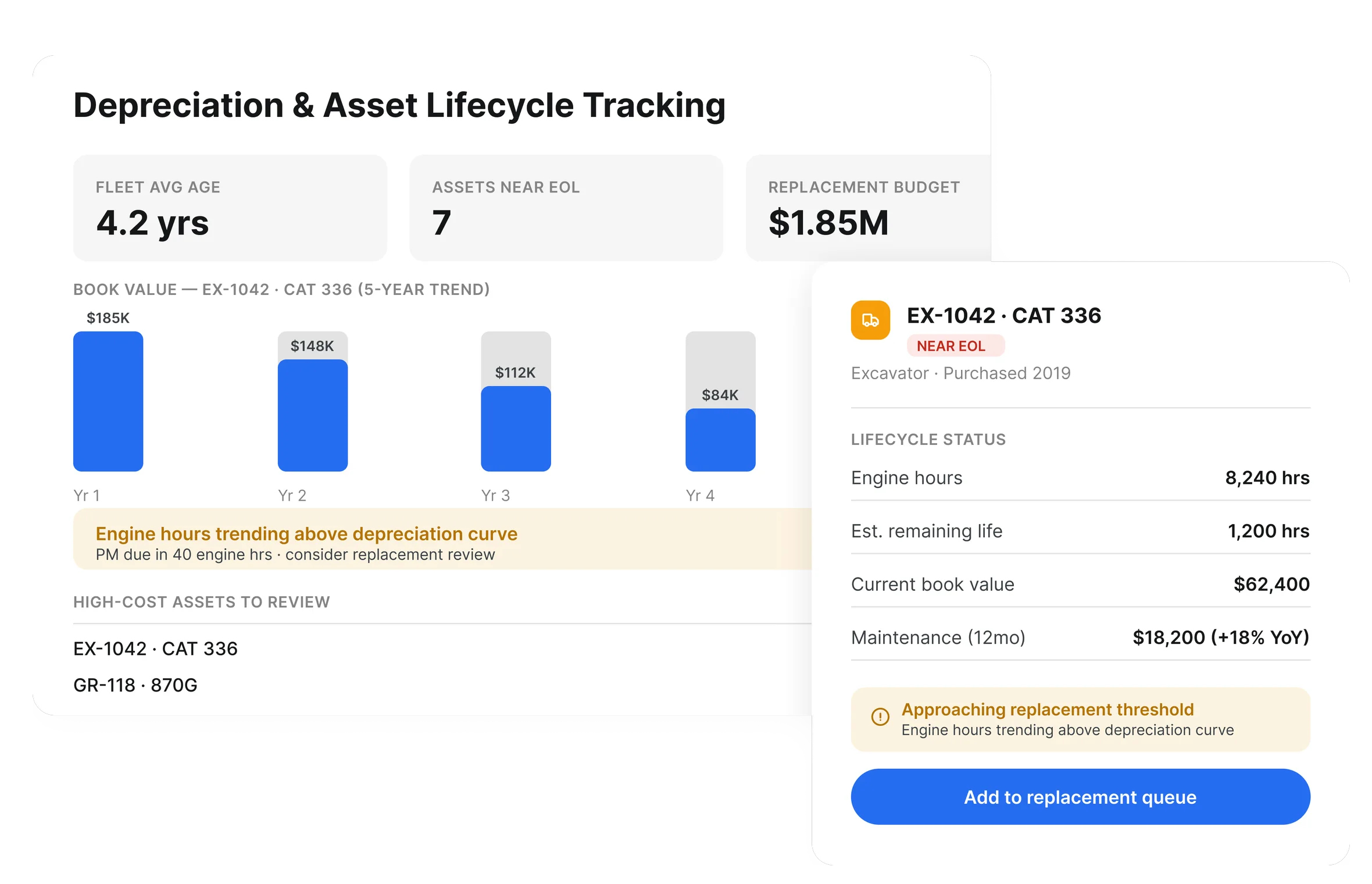
Depreciation and Asset Lifecycle Tracking
Equipment loses value every year regardless of whether you track it. Clue connects usage data such as engine hours, maintenance history, and condition to asset value so fleet managers can time replacements and capital investments more accurately.
Engine hours as depreciation signal: Real usage-based wear data per asset
Maintenance cost increase tracking: See when repair costs begin to outpace asset value
High-cost asset alerts: Flag assets approaching or exceeding replacement thresholds
Replacement decision data: Export lifecycle cost data to support CapEx planning
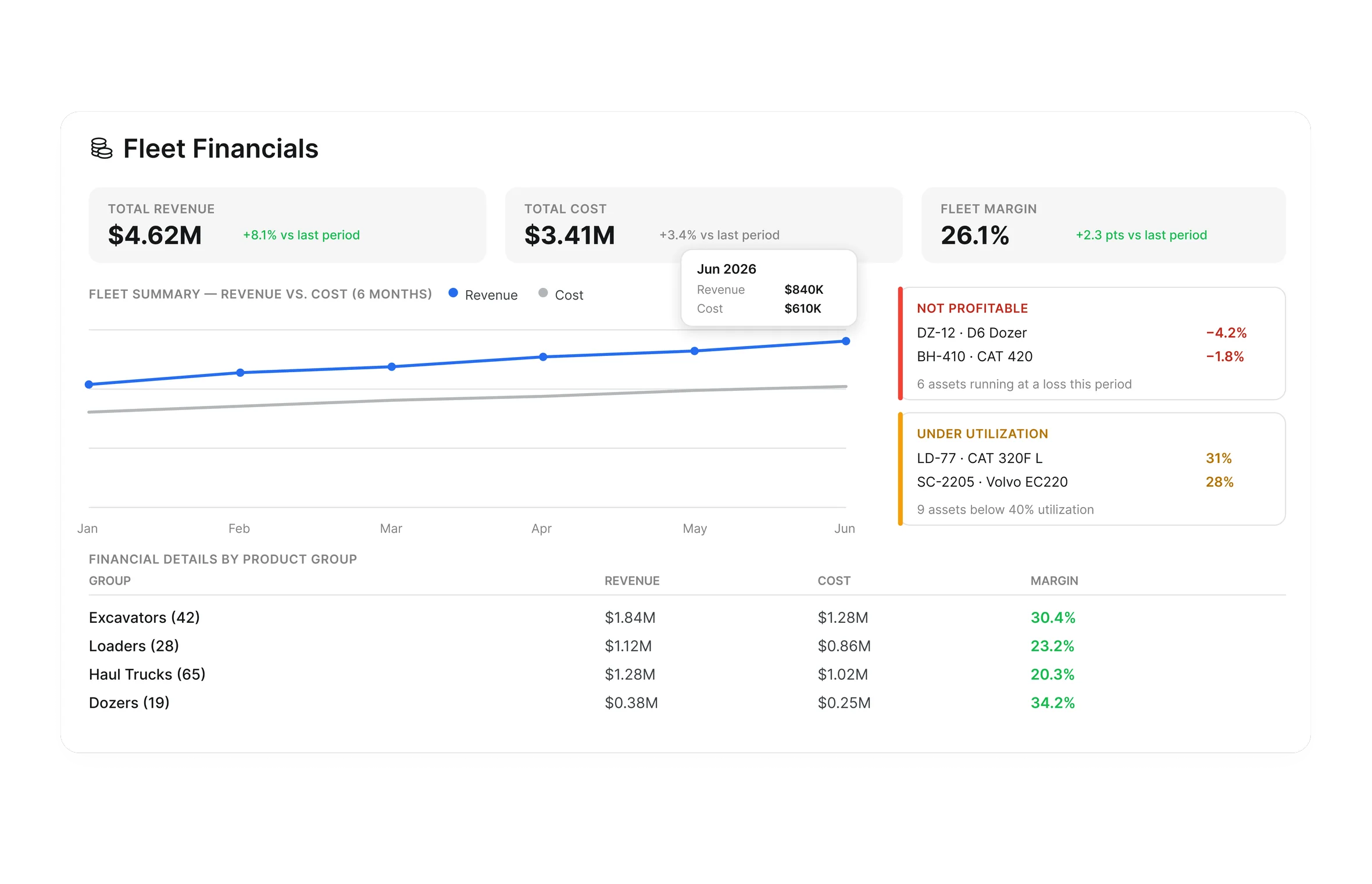
Fleet Financials Dashboard for Finance and Leadership
Fleet economics belong in financial conversations. Clue delivers a Fleet Financials dashboard that summarizes costs across the fleet in a format CFOs, VPs, and owners can use directly. No data analyst required.
Fleet Financials card: Maintenance, rental, and fuel costs at the fleet level
Cost trend charts: Month-over-month and year-over-year fleet cost trends
Executive summary view: Top-level fleet economics for leadership reporting
Export for board review: Download fleet cost data for capital planning discussions
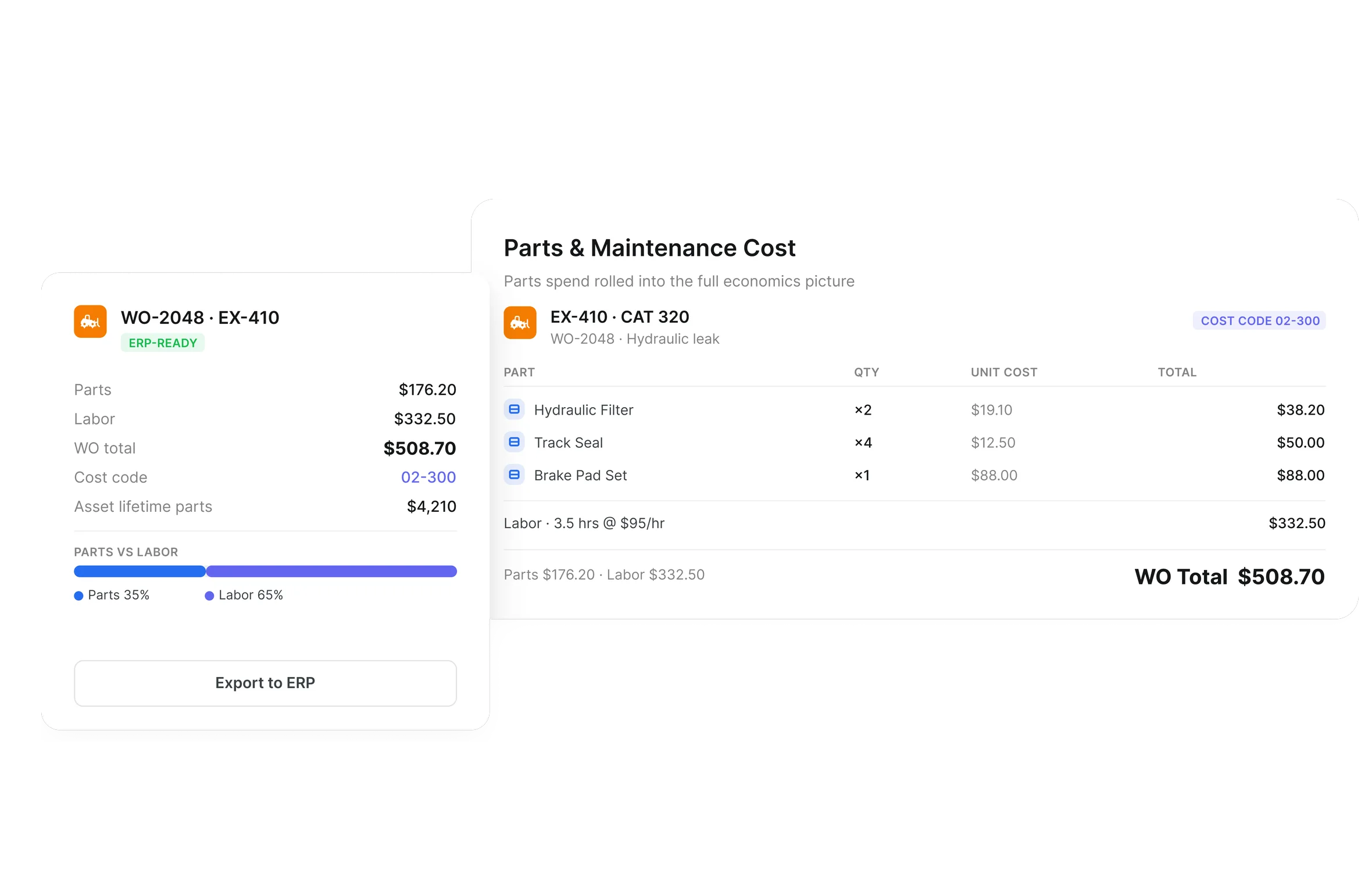
Parts and Inventory Cost in the Economics View
Parts are often the largest variable maintenance cost. Clue includes parts spend in the equipment economics view so the full picture of what an asset costs includes both labor and materials.
Parts cost per asset: All parts consumed aggregated against the asset record
Parts cost trends: See if parts spend is increasing as equipment ages
Parts turnover ratio: Inventory efficiency metric for shop cost management
Total maintenance cost: Labor plus parts equals true maintenance cost per asset
Built for every role
Solutions for every team.
Construction runs on equipment. Clue runs equipment for every team. From mechanics to executives, every role gets the visibility, intelligence, and automation to run modern equipment operations.

Equipment Manager
“It's a single pane of glass where you see everything across your fleet, from the field to the phone to the computer.”
Abe Sharaf
Equipment Manager, Pulice Construction
Read Pulice’s story

Fleet Manager
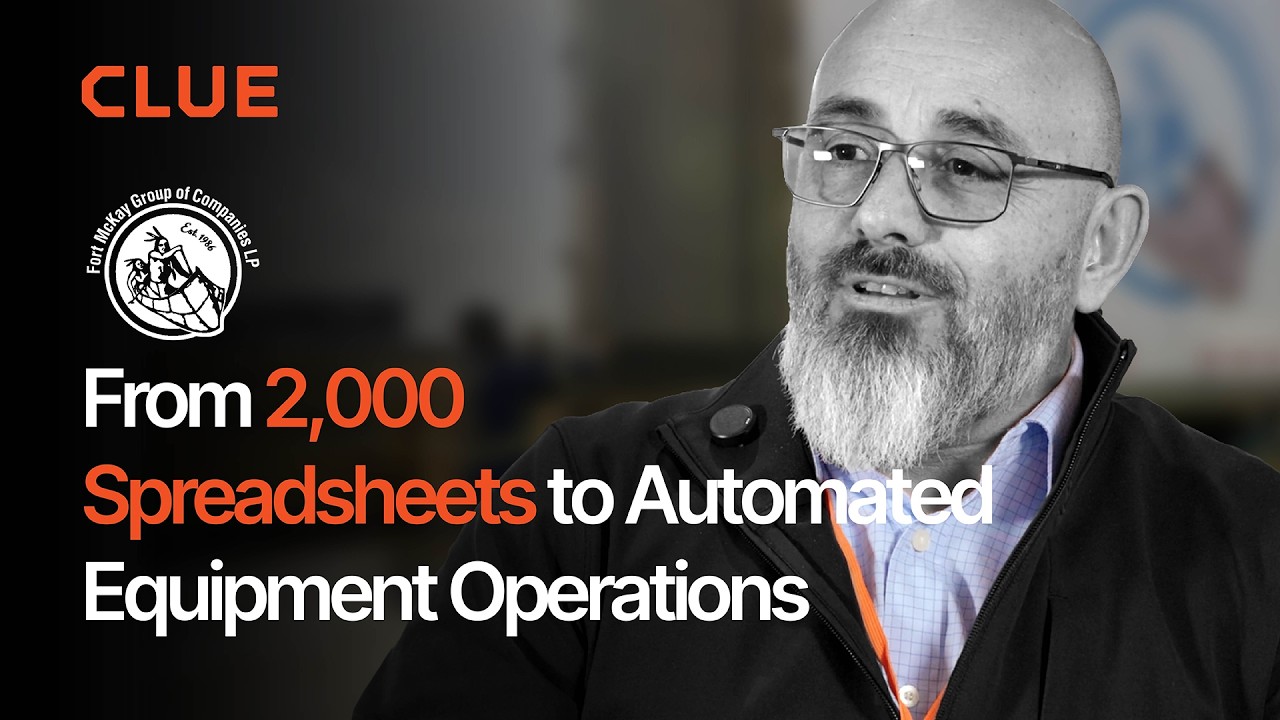
“Imagine receiving 2,000 spreadsheets that needed to be approved individually in an email. There were entire teams dedicated to that. Now the system is fully automated, completely automated from beginning to end.”
Julio Lopez
Fleet Manager, Fort McKay Group
Read Fort McKay’s story

CFO
“You went from doing two services a day to six services a day. That right there is priceless to me.”
Darrin Sheriff
Director of Maintenance & Purchasing, Palmetto Corp
Read Palmetto’s story

VP of Operations
“The big thing with Clue is that we're able to bridge the gap between our field, our operators in our shop, and other departments. Everybody's bought into Clue now.”
Eric Sellman
COO, Brent Scarbrough & Co
Read Brent Scarbrough’s story

Executive
“We had 20 different logins between all our different softwares and web platforms. Now all that information pulls into one spot and we're able to see it in a single place.”
John Igel
CEO, George Igel Co.
Read Igel’s story

Operations Manager
“The operator's in control of his own destiny. That was a huge reason why not only did I buy into it, but I'm also investing into it for the future.”
Ben Benoit
Operations Manager, Onshore Companies
Read Onshore’s story
Through the cost picture
Why Construction Finance Teams Love Clue Equipment Economics
Real numbers. Real decisions. Not spreadsheet estimates.
True TCO In-House
Total cost of ownership calculated from actual operational data, not industry estimates.
Lease vs. Buy From Real Data
Make the own-vs-rent decision with actual fleet utilization and cost data.
Cost Per Hour for Every Asset
Know which equipment is the most and least cost-efficient in your fleet.
Replacement Timing Intelligence
Maintenance cost trends and usage data signal when holding costs exceed replacement value.
CFO-Ready Dashboards
Fleet economics formatted for financial leadership review, with no report building by hand.
CapEx Planning Support
Lifecycle cost data exports that support capital planning and equipment committee reviews.
Cost Data Stays With the Asset.
Equipment economics only works when the cost data is complete. Clue connects OEM telematics, GPS, fuel, ERP and accounting systems so maintenance, fuel, rental and parts spend all land against the same asset record.













.png)






From the people who use it every day
What contractors see in the work.
“The big thing with Clue is that we’re able to bridge the gap between our field, our operators in our shop, and other departments.”
Brent Scarbrough & Company
“There were entire teams dedicated to approving spreadsheets one by one.”
Fort McKay First Nation
“The biggest difference has been the user friendliness.”
William A. Hazel
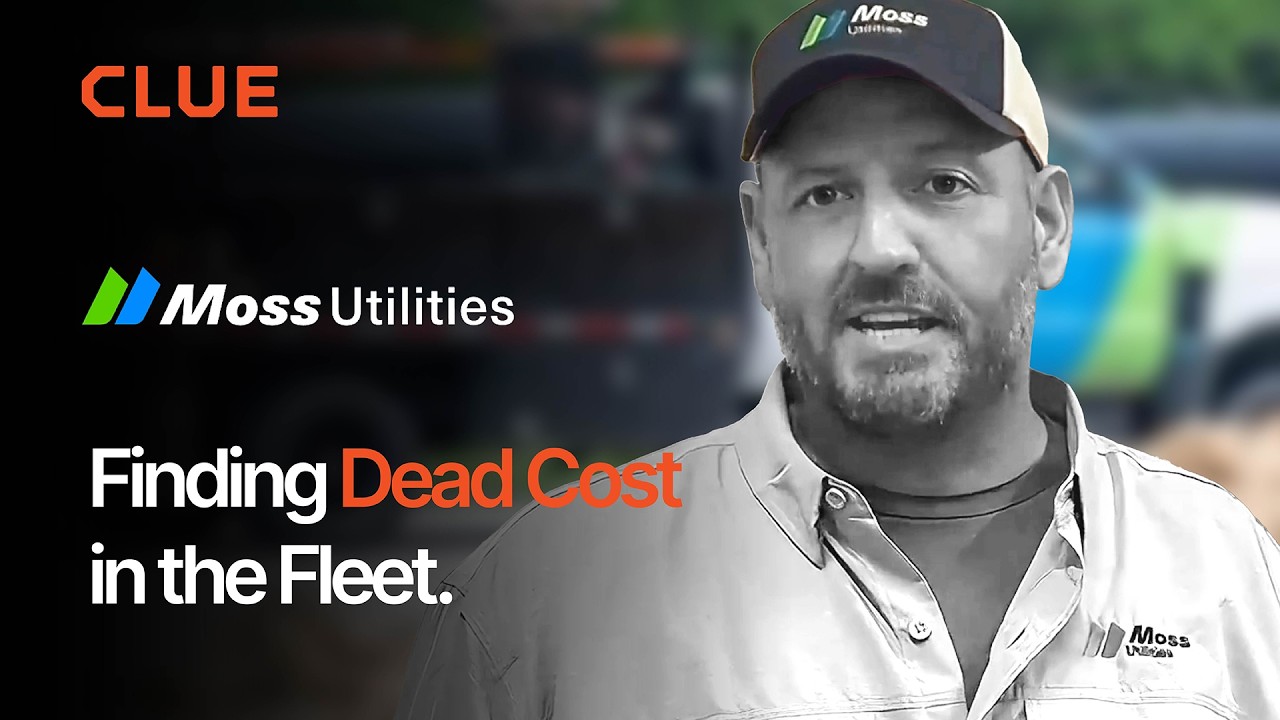
“It exposes dead cost or overhead that maybe we don’t know about because it gets lost in those three different systems.”
Moss Utilities
“Clue’s real-time data capability has completely changed the way we manage our assets.”
Darrin Sheriff, Director of Maintenance and Purchasing
“It was probably taking the better part of a day to combine all the data from the telematics.”
Derek Wolfe, Equipment Manager, George Igel Co.
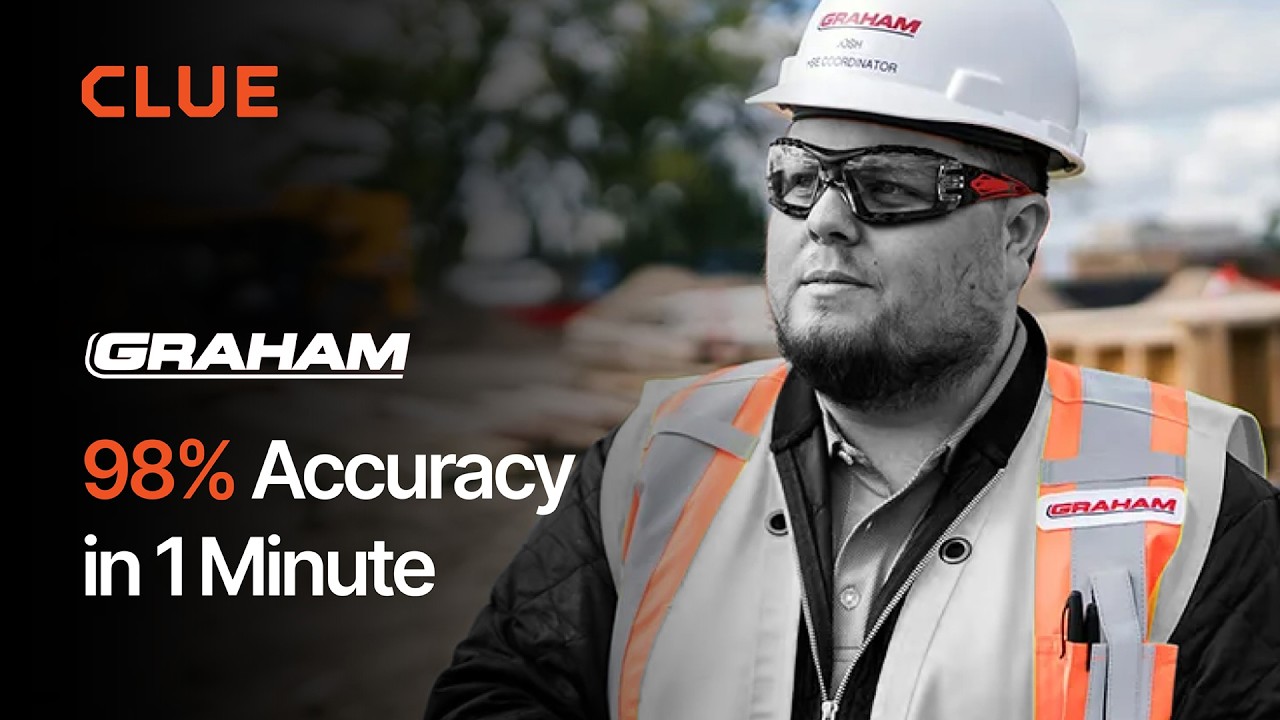
“Clue allows us to effectively control our operations: financially, effectively and safely.”
Joseph Yammine, Project Manager, Graham
“QR codes have been a game changer for us with regards to operator inspections.”
Ben Benoit, Operations Manager
“It’s a single pane of glass where you see everything across your fleet, from the field to the phone to the computer.”
Abe Sharaf, Corporate Equipment Engineer
“Our field guys were tired of having a new product, a new something to learn each time.”
Rob Judge, Sr. Procurement & Program Manager
“Our equipment is in far better shape since we started using Clue, for sure.”
Jake Farley, Equipment Manager, Silver Star Construction








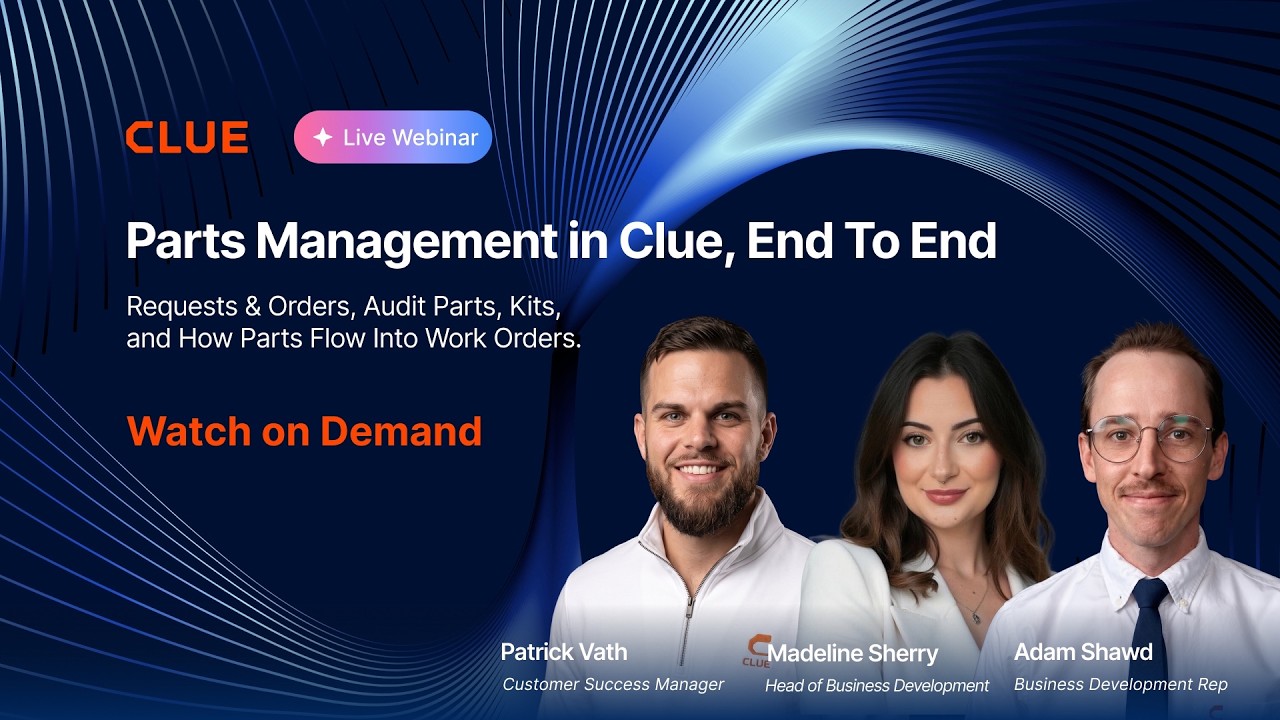

Parts Management in Clue: Requests, Delivery Tracking & Inventory
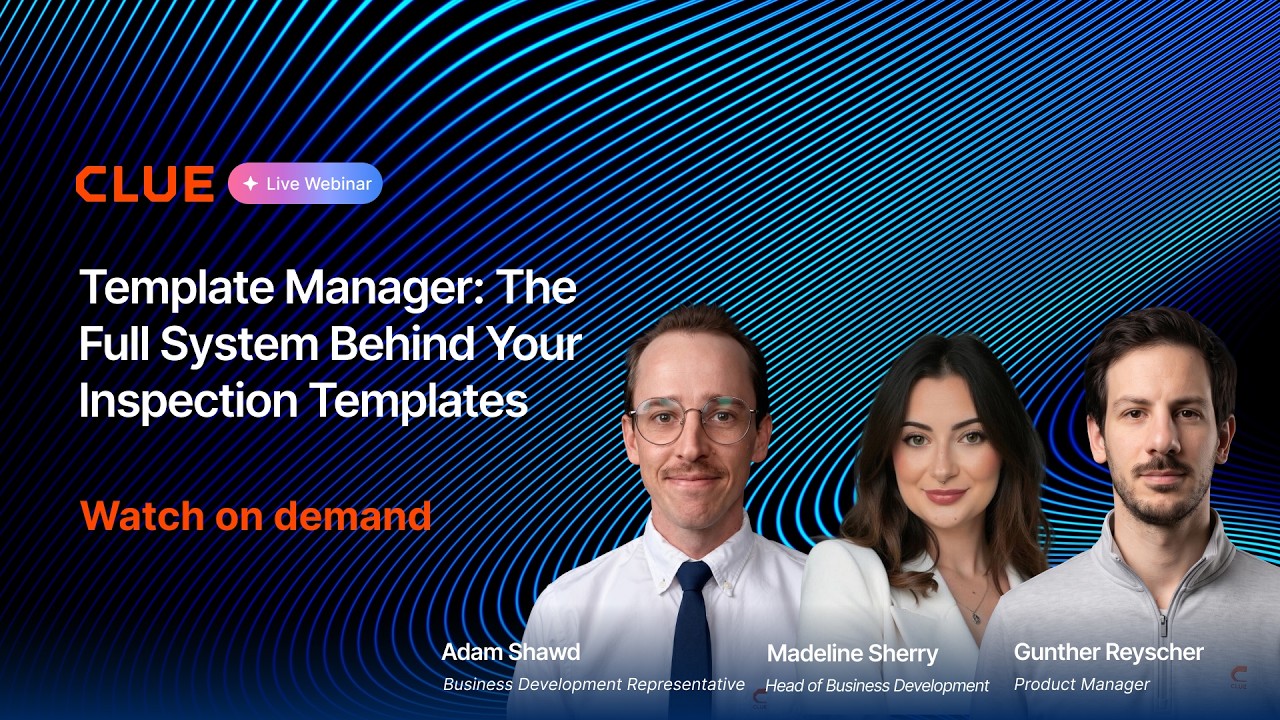
Template Manager in Clue: Inspection Templates, AI Import & Shared Categories
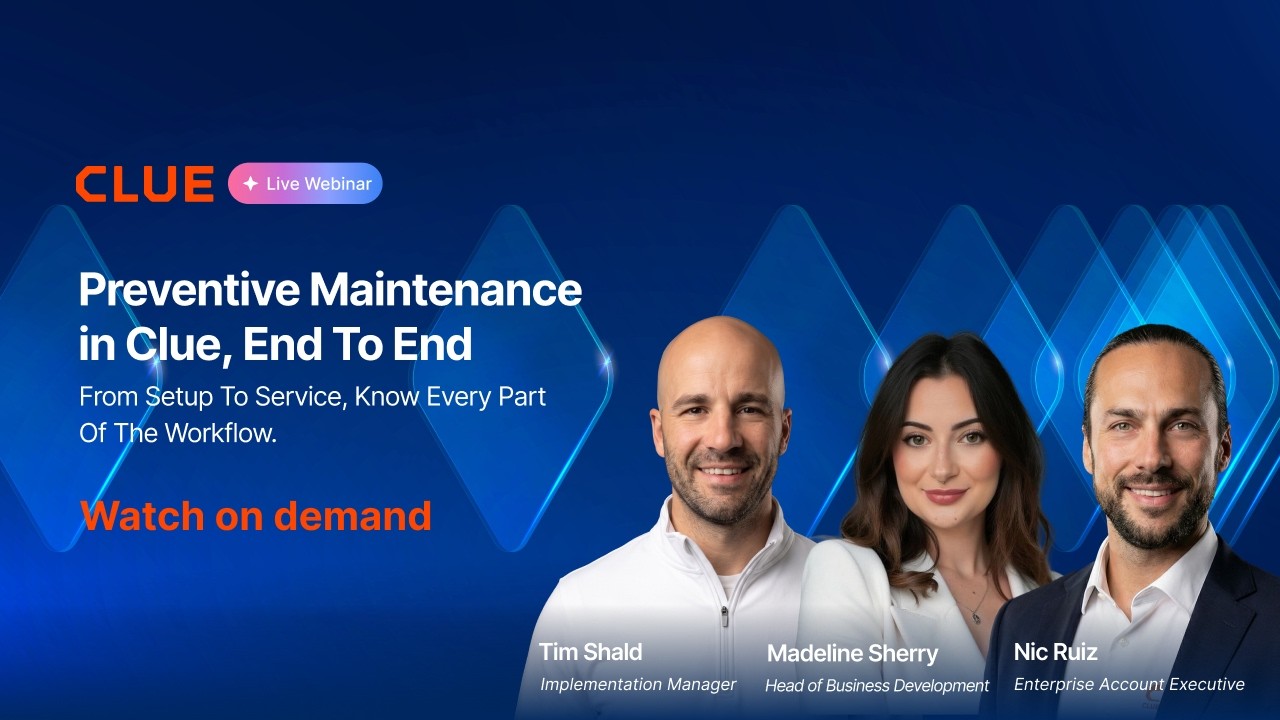
Preventive Maintenance in Clue: Build a PM Plan, Automate Work Orders
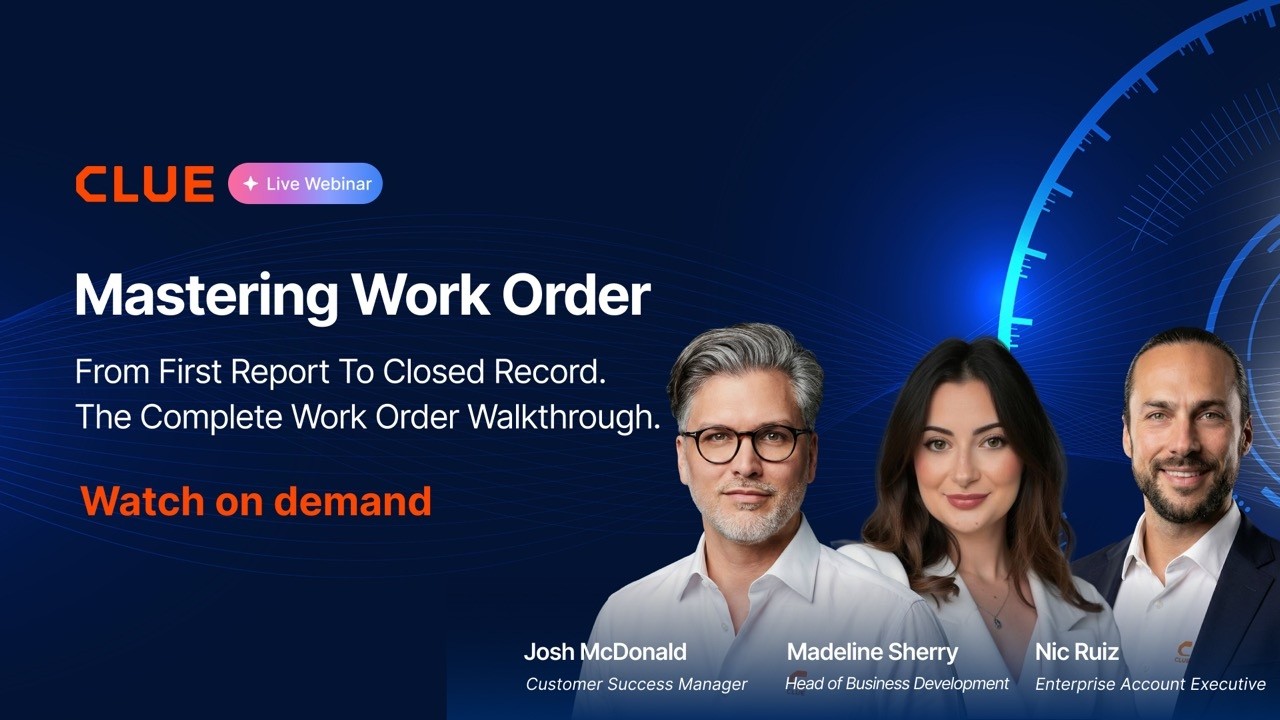
Work Orders in Clue: Repair History, Parts, and Labor Costs
Asset Directory in Clue: Saved Views, Bulk Edits & Meters
Common questions
Frequently Asked Questions
What is equipment economics in construction fleet management?
Equipment economics is the practice of measuring and analyzing the full cost of owning, operating, and maintaining construction equipment to make smarter fleet decisions. It includes total cost of ownership calculation, cost-per-hour analysis, lease-vs-buy comparison, depreciation tracking, and replacement timing. Clue provides all of these through the Fleet Financials and analytics modules.
How does Clue calculate total cost of ownership for equipment?
Clue aggregates all cost categories per asset: maintenance labor and parts (from work orders and parts requests), fuel consumption (from telematics), rental fees (for rented equipment), and any other operating costs recorded in the platform. This gives a true TCO figure per asset without manual spreadsheet calculations.
How does Clue support the lease vs. buy decision?
Clue provides actual utilization data (engine hours from telematics), maintenance costs, and rental expense tracking side by side. For any asset class, you can compare the cost-per-hour of a rented asset versus an owned asset of the same type based on actual fleet data, not industry estimates.
Can Clue help time equipment replacement decisions?
Yes. Clue tracks maintenance cost trends over time per asset. As equipment ages, repair costs typically increase. Clue flags assets where maintenance spend is climbing and provides the lifecycle cost data needed to compare the cost of continued ownership against the cost of replacement.
How does Clue integrate with existing ERP or financial systems?
Clue allows you to upload finance data directly from your ERP or spreadsheets, then cleans and standardizes it for seamless integration. This ensures all equipment financials are in one place, with no data silos.
Can Clue track the profitability of individual assets?
Yes, Clue provides visibility into asset-level profitability, including detailed financial activity from purchase to the last repair, helping you optimize asset performance and make informed decisions.
How does Clue help prevent overcharging or undercharging for equipment usage?
Clue tracks utilization-based costs and compares them against set rates, ensuring you're recovering full costs. It highlights whether your rates make sense, helping to avoid undercharging or overcharging clients.
How does Clue help CFOs and equipment managers collaborate effectively?
Clue provides clear reporting and financial insights that both teams can access, ensuring alignment. By breaking down costs and performance metrics, CFOs and equipment managers can make informed decisions together.
How do contractors identify hidden costs in the equipment fleet?
Hidden costs typically live in idle fuel burn, untracked repair labor, and rental equipment sitting on site past its return date. Clue surfaces all three by pulling fuel and usage data from telematics, linking parts and labor costs to every work order, and tracking rental expenses per asset alongside owned equipment costs in one dashboard.