



Construction Geofencing Software for Equipment Boundaries and Alerts
Keep jobsites, yards, and dispatch zones easier to monitor with geofences built around how construction equipment actually moves. Clue helps teams spot boundary crossings, confirm arrivals, review after-hours movement, and keep fleet operations moving with less manual follow-up.


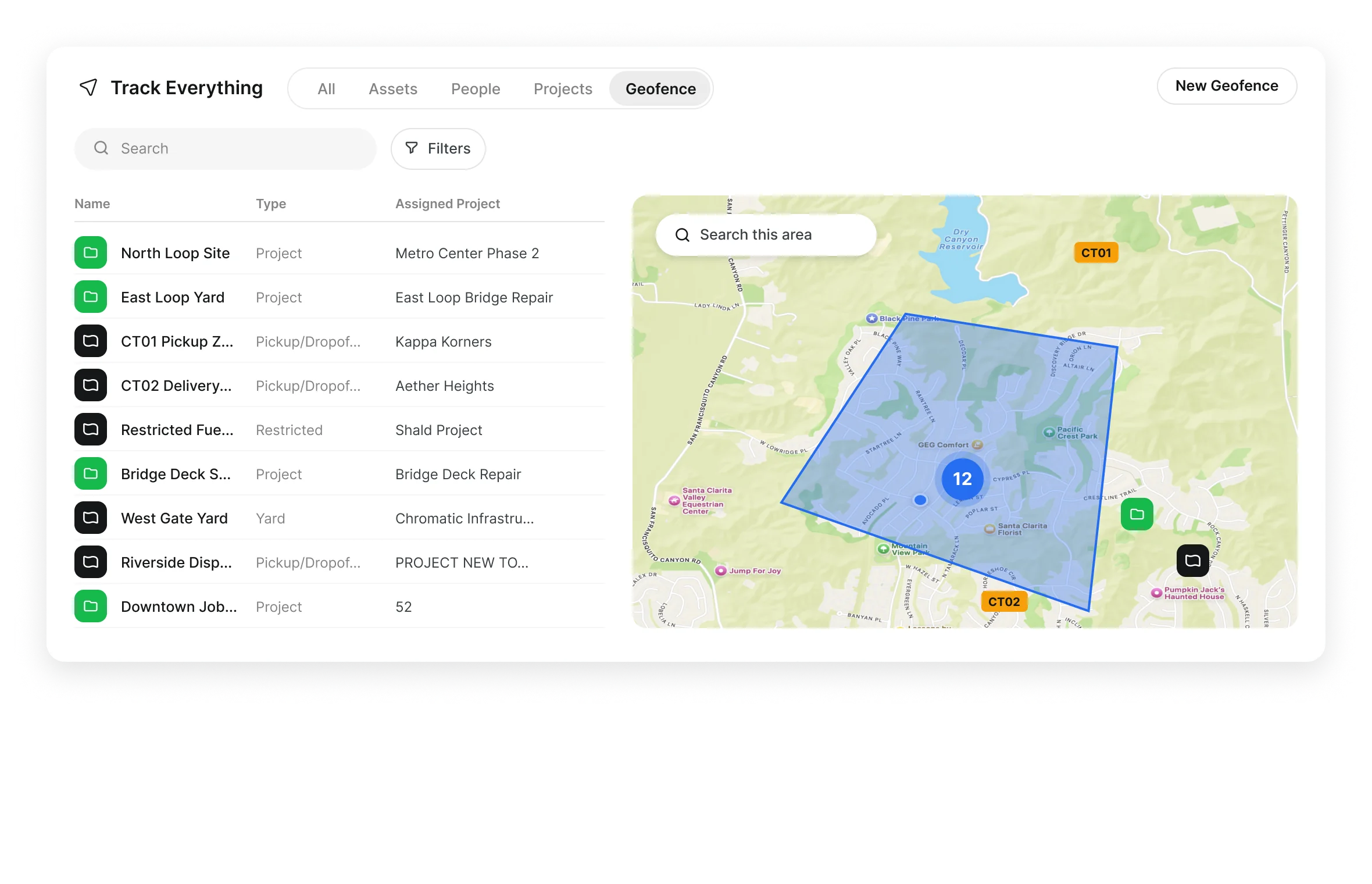


Asset geofencing
Draw the line once. Know every time it is crossed.
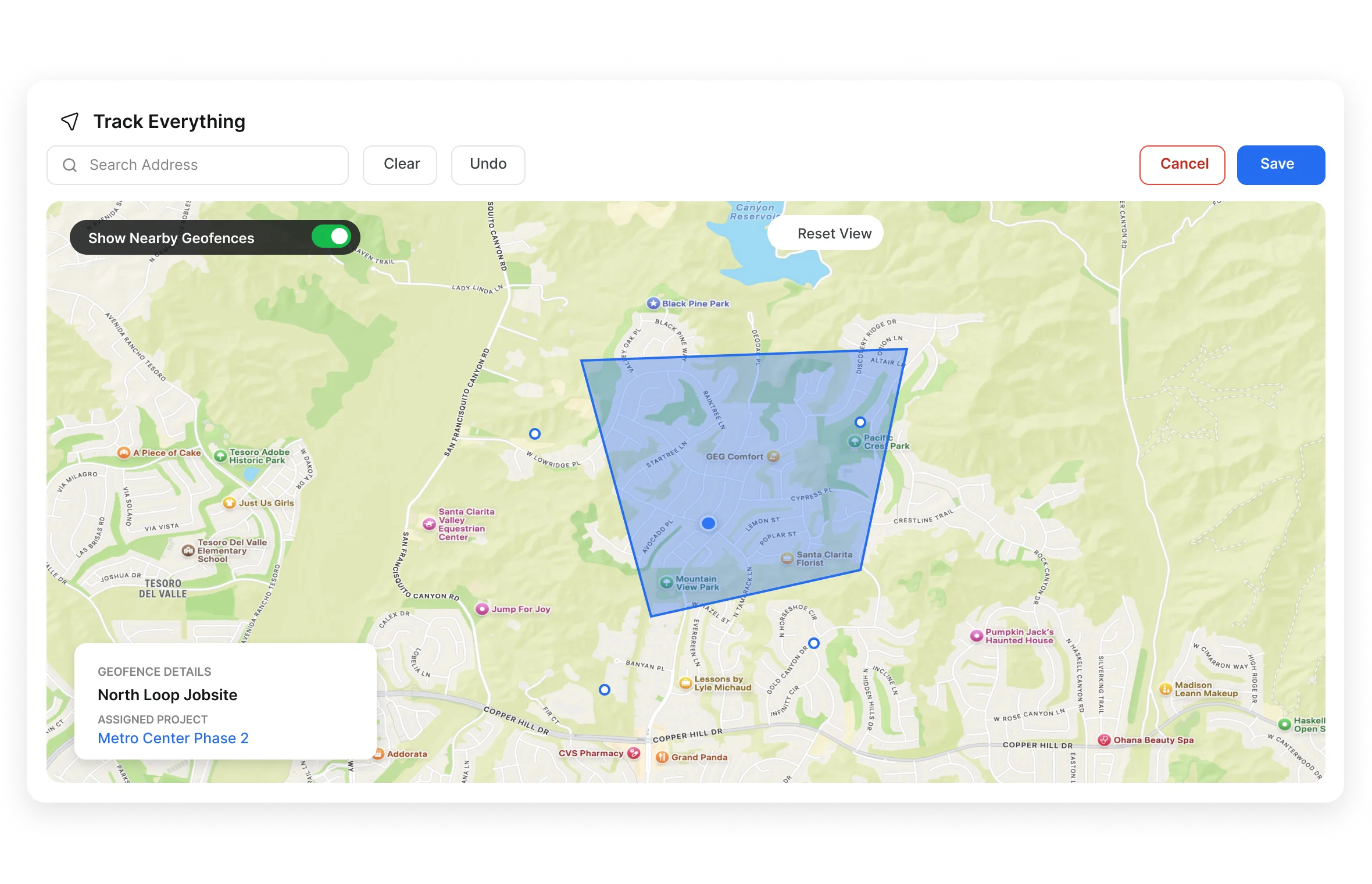
Custom Geofence Zones for Jobsites and Yards
Create jobsite, yard, staging, and restricted-area geofences instead of rebuilding every boundary from scratch.
Custom shape drawing: Draw polygon or circle geofences around jobsites, yards, staging areas, and restricted zones
Bulk KML/KMZ import: Import existing site boundaries from KML or KMZ files instead of drawing every geofence by hand
Project and team assignment: Assign geofences to projects or business units for cleaner filtering and reporting
Track Everything map: View geofences alongside equipment activity from Clue’s live map
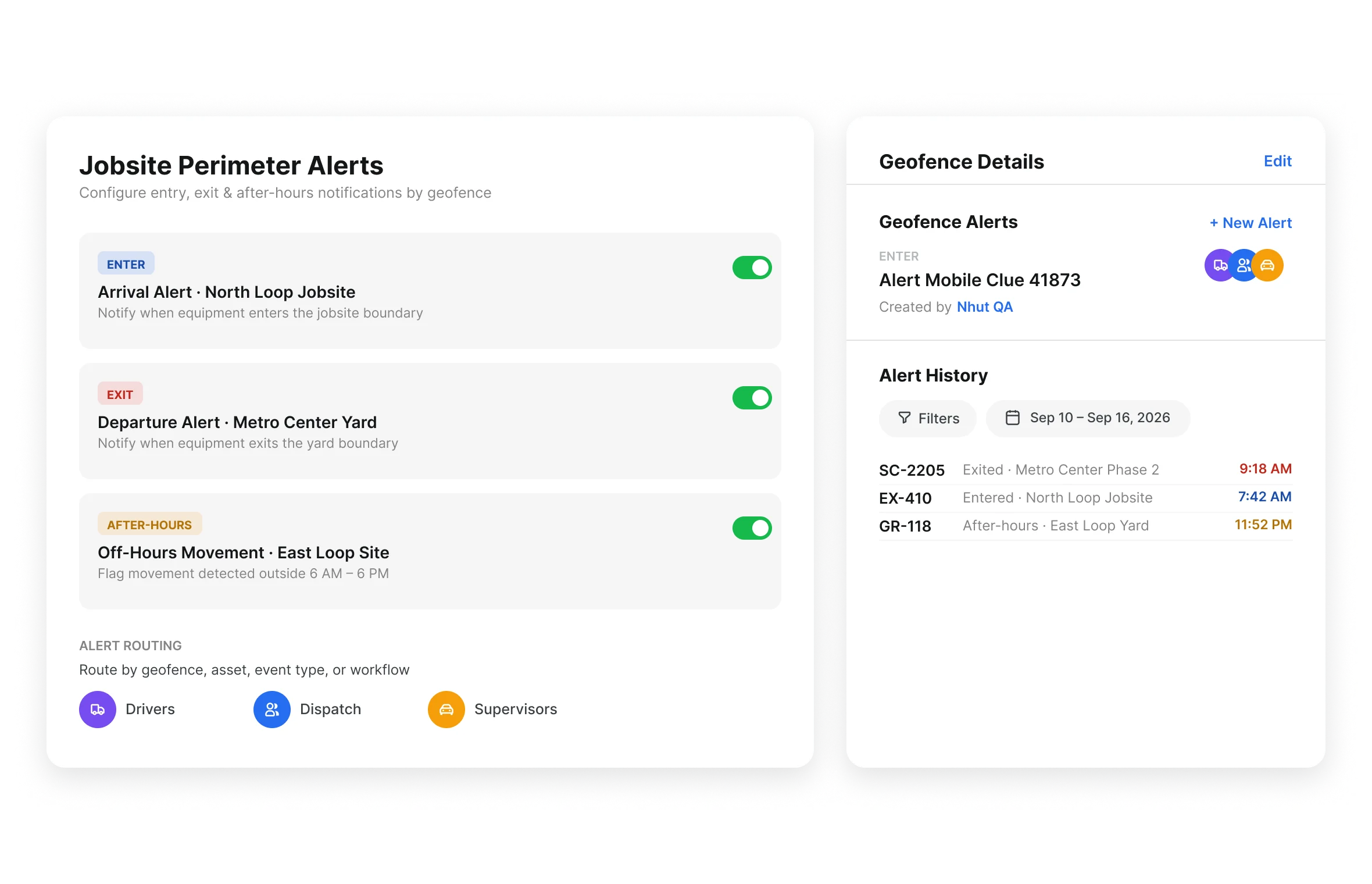
Jobsite Perimeter Alerts for Equipment Movement
When equipment crosses a jobsite boundary, the right team knows right away instead of waiting for a phone call. Geofence alerts help confirm arrivals, flag exits, and surface after-hours movement for review.
Arrival alerts: Notify teams when equipment enters a selected geofenced zone
Departure alerts: Flag when equipment exits a jobsite, yard, or restricted-area boundary
After-hours movement alerts: Surface movement outside configured time windows
Alert routing: Send alerts to selected recipients by geofence, asset, event type, or workflow
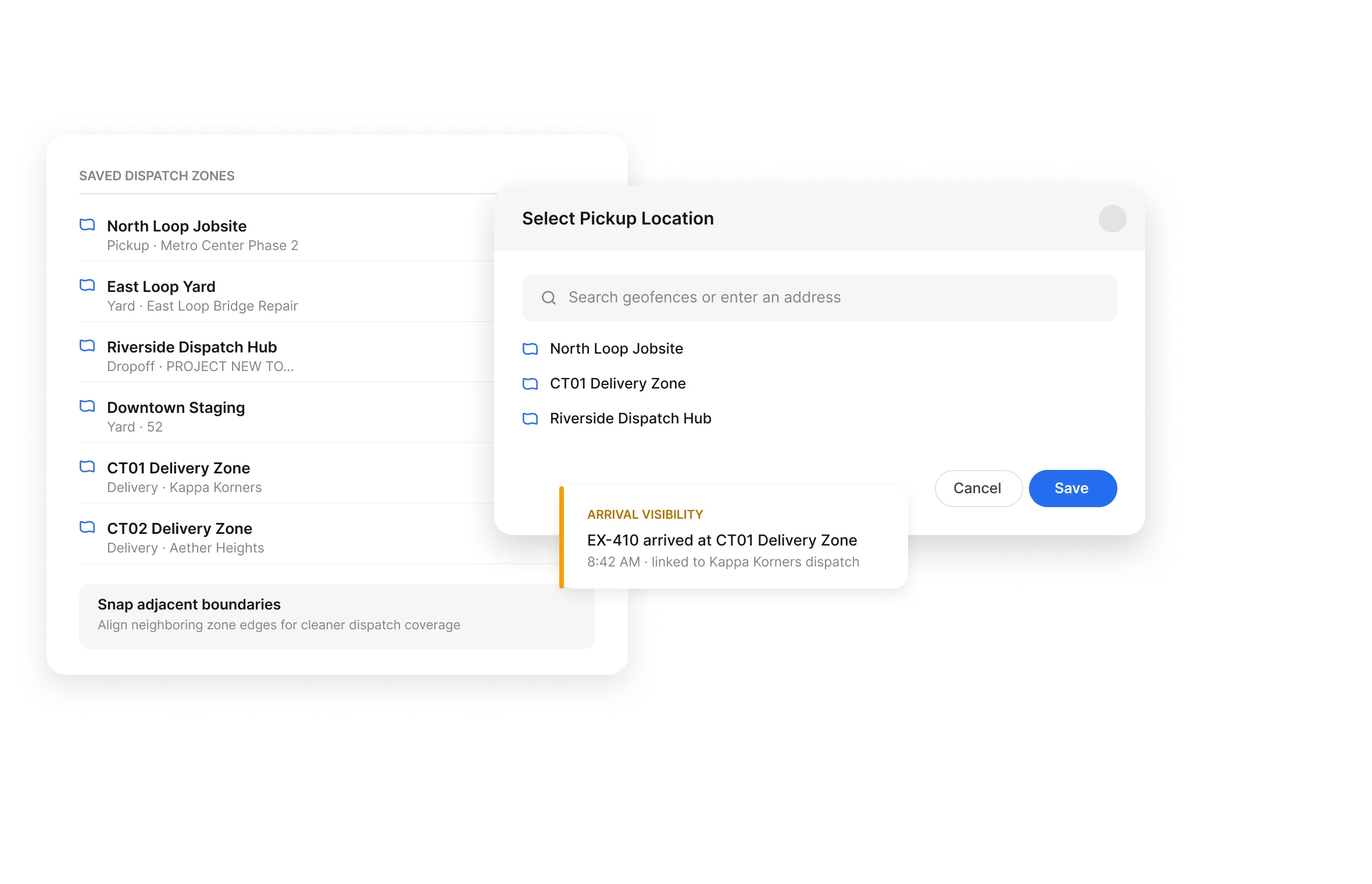
Dispatch Region Geofencing for Multi-Site Coordination
Create mapped pickup, dropoff, yard, and delivery zones that dispatch teams can use when planning equipment moves across active sites.
Dispatch region geofences: Define saved zones for jobsites, yards, pickup points, and delivery areas
Snap adjacent boundaries: Align neighboring geofence edges for cleaner dispatch region coverage
Pickup and dropoff zones: Use saved geofences when planning where equipment needs to move
Dispatch arrival visibility: Review arrival activity when equipment reaches a linked destination geofence
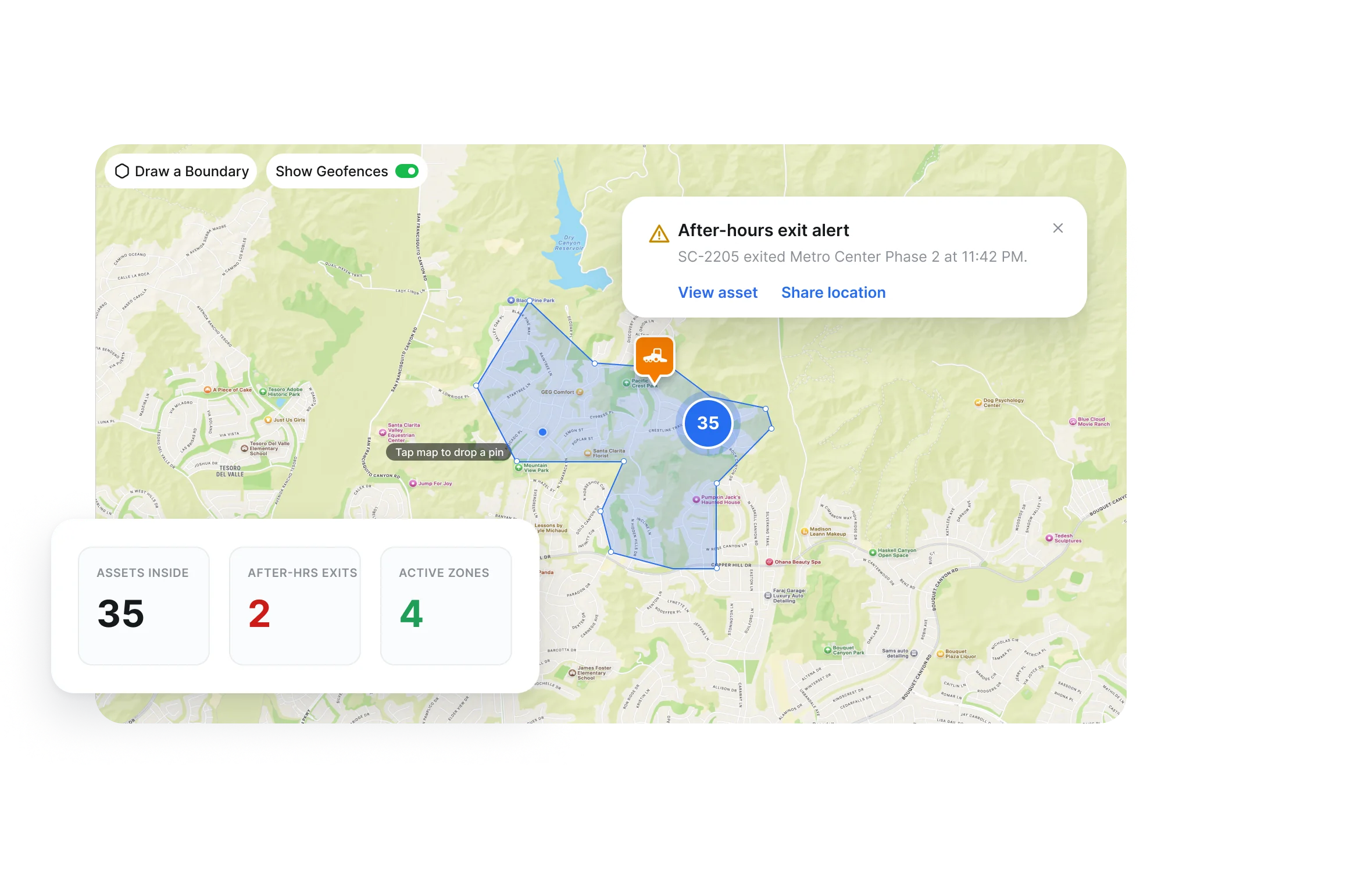
After-Hours Movement and Theft Response Alerts
Unexpected equipment movement after hours needs fast review. Geofence alerts help teams see when equipment exits a site boundary, moves outside configured operating windows, or enters a restricted-area geofence.
After-hours movement alerts: Surface movement outside configured operating windows
Unexpected departure alerts: Notify teams when equipment exits a defined boundary after hours
Movement history: Review recorded location activity after a geofence event
Location sharing follow-up: Share a live equipment location link when a faster response is needed
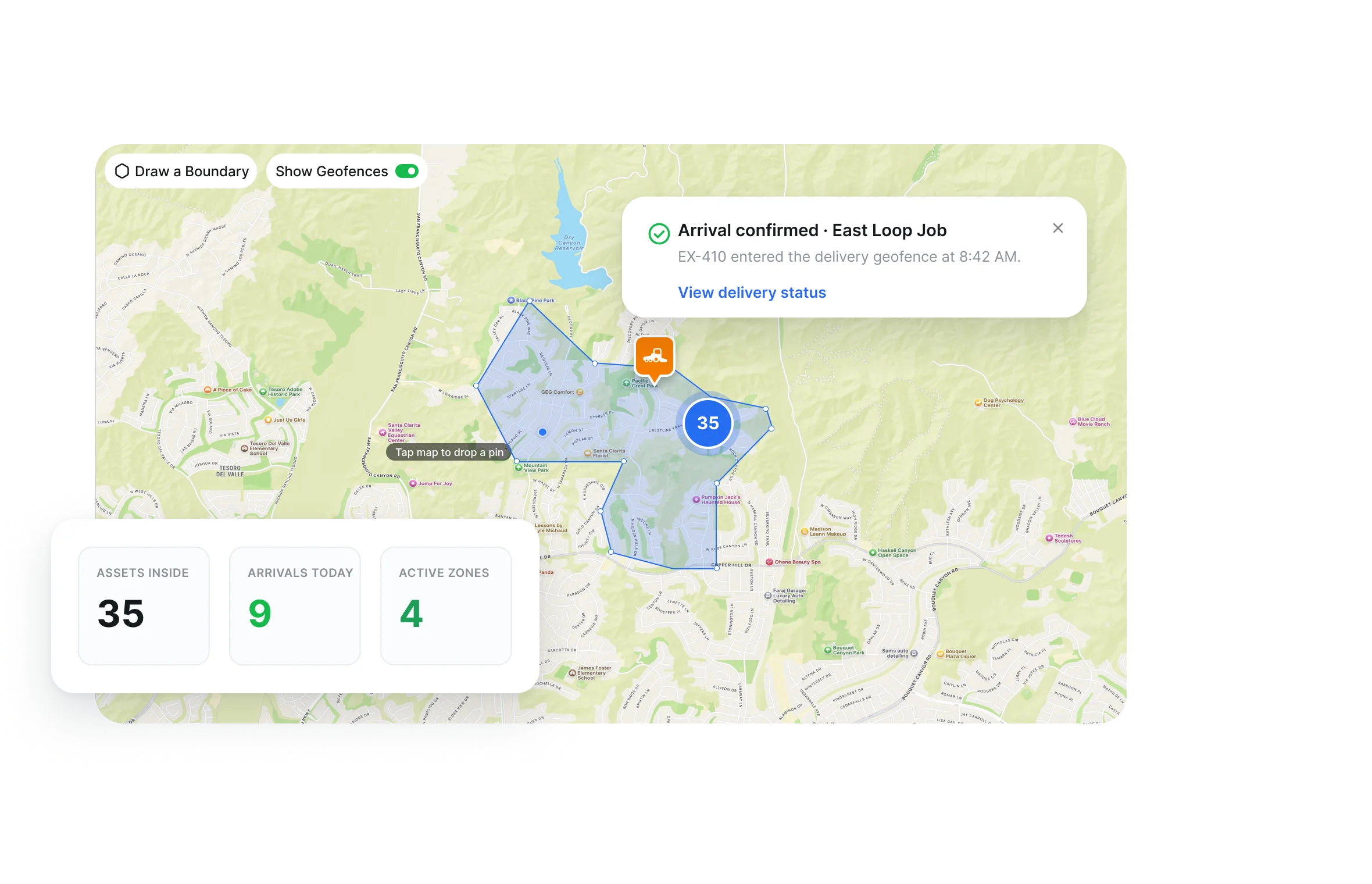
Delivery Confirmation via Geofence Trigger
Manual delivery confirmation requires phone calls and check-ins. Clue automates delivery confirmation by triggering an event when equipment enters the dispatch destination geofence, giving dispatchers real-time confirmation, no calls needed.
Geofence arrival alerts: Notify teams when equipment enters a destination geofence
Dispatch location support: Use saved geofences or map pins when setting pickup and dropoff locations
Delivery status review: Help dispatchers check whether equipment reached the expected site or zone
Automatic arrival confirmation: Skip follow-up calls when location activity already shows the asset reached the destination
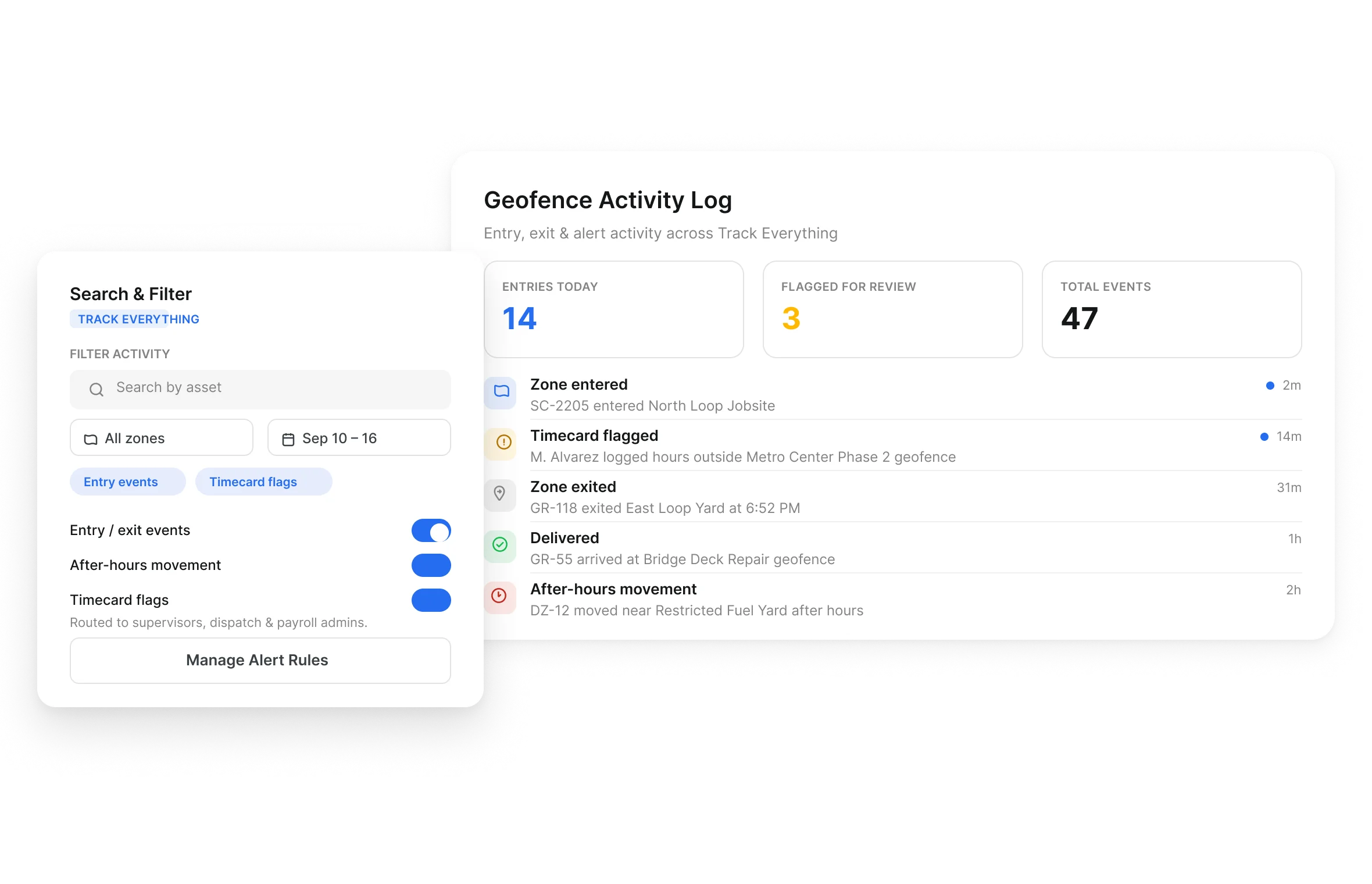
Geofence Activity Records in Track Everything
After a boundary alert, managers need a clear way to review the event. Track Everything keeps geofence activity visible with asset location, zone details, and recorded entry or exit activity in one live map view.
Geofence activity log: Review entry, exit, and alert activity tied to assets and zones
Track Everything view: See geofences alongside equipment location on the live map
Search and filtering: Find geofence activity by asset, zone, or date where available
Movement review: Use recorded activity to support internal follow-up after a geofence alert
Built for every role
Solutions for every team.
Construction runs on equipment. Clue runs equipment for every team. From mechanics to executives, every role gets the visibility, intelligence, and automation to run modern equipment operations.

Equipment Manager
“It's a single pane of glass where you see everything across your fleet, from the field to the phone to the computer.”
Abe Sharaf
Equipment Manager, Pulice Construction
Read Pulice’s story

Fleet Manager
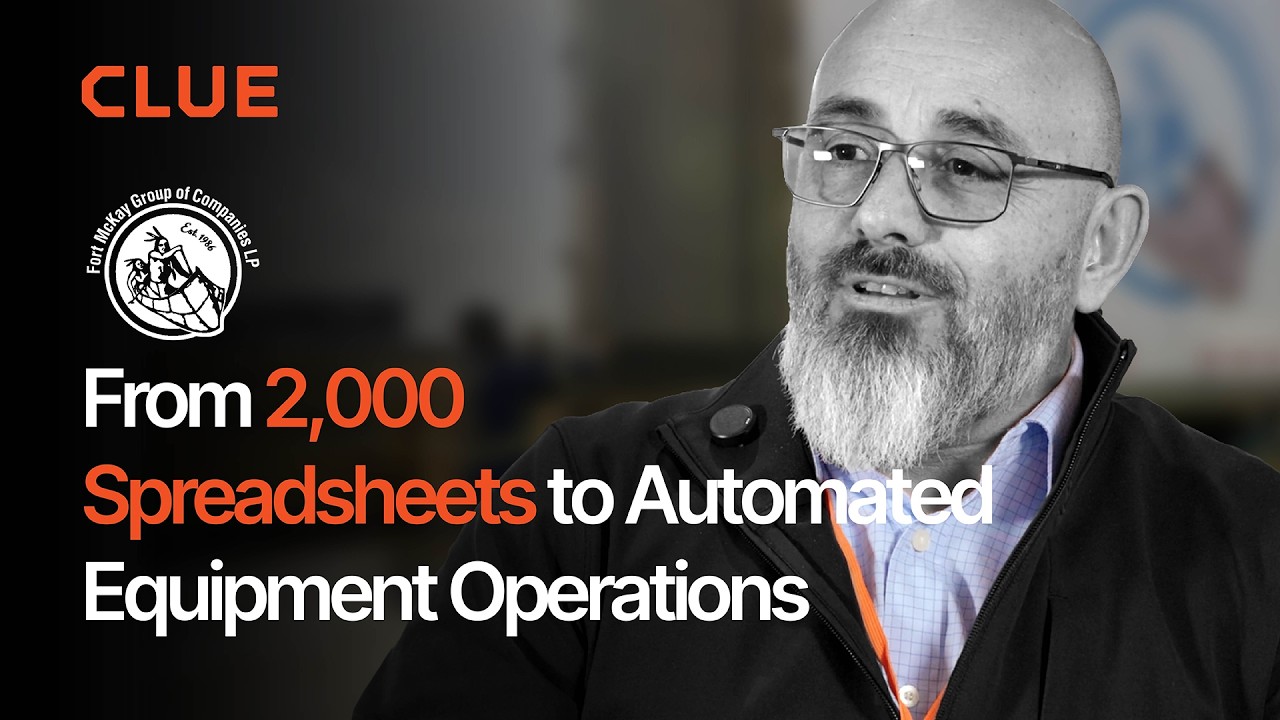
“Imagine receiving 2,000 spreadsheets that needed to be approved individually in an email. There were entire teams dedicated to that. Now the system is fully automated, completely automated from beginning to end.”
Julio Lopez
Fleet Manager, Fort McKay Group
Read Fort McKay’s story

CFO
“You went from doing two services a day to six services a day. That right there is priceless to me.”
Darrin Sheriff
Director of Maintenance & Purchasing, Palmetto Corp
Read Palmetto’s story

VP of Operations
“The big thing with Clue is that we're able to bridge the gap between our field, our operators in our shop, and other departments. Everybody's bought into Clue now.”
Eric Sellman
COO, Brent Scarbrough & Co
Read Brent Scarbrough’s story

Executive
“We had 20 different logins between all our different softwares and web platforms. Now all that information pulls into one spot and we're able to see it in a single place.”
John Igel
CEO, George Igel Co.
Read Igel’s story

Operations Manager
“The operator's in control of his own destiny. That was a huge reason why not only did I buy into it, but I'm also investing into it for the future.”
Ben Benoit
Operations Manager, Onshore Companies
Read Onshore’s story
Across every boundary
Why Construction Companies Use Clue Geofencing
Geofencing helps equipment teams protect high-value assets, spend less time on manual follow-up, and keep better control of where equipment moves.
Respond Faster to Theft
After-hours movement and unexpected boundary alerts help teams respond faster when equipment leaves a jobsite, yard, or restricted zone.
Confirm Arrivals Faster
Geofence arrival activity helps dispatchers confirm equipment reached a destination instead of chasing every move by phone.
Speed Up Jobsite Setup
KML/KMZ imports help teams create multiple jobsite boundaries faster instead of drawing every geofence manually.
Catch Off-Site Hours Early
Geofence-based timecard flags help supervisors review labor entries logged outside expected jobsite boundaries before approval.
Always Know Where Equipment Is
Jobsite, yard, staging, and dispatch-zone geofences make it easier to see when equipment is not where it is expected to be.
Improve Movement Accountability
Track Everything gives teams a record of geofence activity so boundary crossings can be reviewed by asset, zone, and date.
Equipment Data Stays
With the Plan.
Equipment data and business records can feed the same dispatch workflow. Clue connects OEM telematics, GPS and aftermarket trackers, and ERP, accounting and CMMS systems, and keeps hand-entered equipment on the same board.


















.png)










From the people who use it every day
What contractors see in the work.
“The big thing with Clue is that we’re able to bridge the gap between our field, our operators in our shop, and other departments.”
Brent Scarbrough & Company
“There were entire teams dedicated to approving spreadsheets one by one.”
Fort McKay First Nation
“The biggest difference has been the user friendliness.”
William A. Hazel
“It exposes dead cost or overhead that maybe we don’t know about because it gets lost in those three different systems.”
Moss Utilities
“Clue’s real-time data capability has completely changed the way we manage our assets.”
Darrin Sheriff, Director of Maintenance and Purchasing
“It was probably taking the better part of a day to combine all the data from the telematics.”
Derek Wolfe, Equipment Manager, George Igel Co.
“Clue allows us to effectively control our operations: financially, effectively and safely.”
Joseph Yammine, Project Manager, Graham
“QR codes have been a game changer for us with regards to operator inspections.”
Ben Benoit, Operations Manager
“It’s a single pane of glass where you see everything across your fleet, from the field to the phone to the computer.”
Abe Sharaf, Corporate Equipment Engineer
“Our field guys were tired of having a new product, a new something to learn each time.”
Rob Judge, Sr. Procurement & Program Manager
“Our equipment is in far better shape since we started using Clue, for sure.”
Jake Farley, Equipment Manager, Silver Star Construction













Parts Management in Clue: Requests, Delivery Tracking & Inventory
Template Manager in Clue: Inspection Templates, AI Import & Shared Categories
Preventive Maintenance in Clue: Build a PM Plan, Automate Work Orders
Work Orders in Clue: Repair History, Parts, and Labor Costs
Asset Directory in Clue: Saved Views, Bulk Edits & Meters
Common questions
Frequently Asked Questions
What is construction geofencing software?
Construction geofencing software helps equipment teams create virtual boundaries around jobsites, yards, staging areas, dispatch zones, and restricted areas. When GPS-tracked equipment enters or exits a boundary, teams can receive alerts, review movement activity, and use those events in dispatch, timecard, and fleet workflows.
Can I import geofences from KML or KMZ files?
Yes. Clue supports KML and KMZ geofence imports, so teams can create multiple jobsite boundaries from existing map or GIS files instead of drawing every geofence manually. This is useful for contractors managing many sites, yards, or project areas.
Can geofences be linked to projects or teams?
Yes. Geofences can be connected to project and team workflows so equipment movement is easier to filter, review, and manage by jobsite, yard, or operating group.
Does geofencing work with all GPS and telematics providers?
Geofencing depends on the GPS or telematics data available for each asset. Clue works with supported GPS, OEM telematics, and fleet data providers, so teams should confirm provider coverage, update frequency, and asset compatibility during implementation.
Can I set different alerts for arrivals, departures, and after-hours movement?
Yes. Geofence alert rules can be configured around entry, exit, and after-hours movement events. Teams can route alerts to the right people based on the geofence, asset, event type, or workflow.
Can geofences help review timecards?
Yes. Clue can flag timecards where hours were logged outside the expected jobsite geofence for manager review. It does not block the entry. It gives supervisors another signal to review before approval.
Can geofences be used to confirm equipment deliveries?
Yes. Geofences can support dispatch workflows by defining pickup and dropoff locations. When equipment reaches a linked destination geofence, dispatch teams can review arrival activity and reduce manual follow-up.
How is Clue different from GPS-only geofence tools?
GPS-only tools usually stop at location alerts. Clue connects geofences with equipment records, dispatch workflows, timecard review, projects, and fleet operations, so boundary events become part of the larger equipment workflow.